Bangladesh is a country of enormous rivers, greener-than-green paddies and a history that stretches from 3rd-century cities to Mughal palaces. It rewards travellers who accept slow roads and crowded markets in exchange for tea hills, tiger country and the longest natural sea beach on earth.
Dhaka: Mughal Forts, Rickshaw Chaos and the Buriganga Riverfront
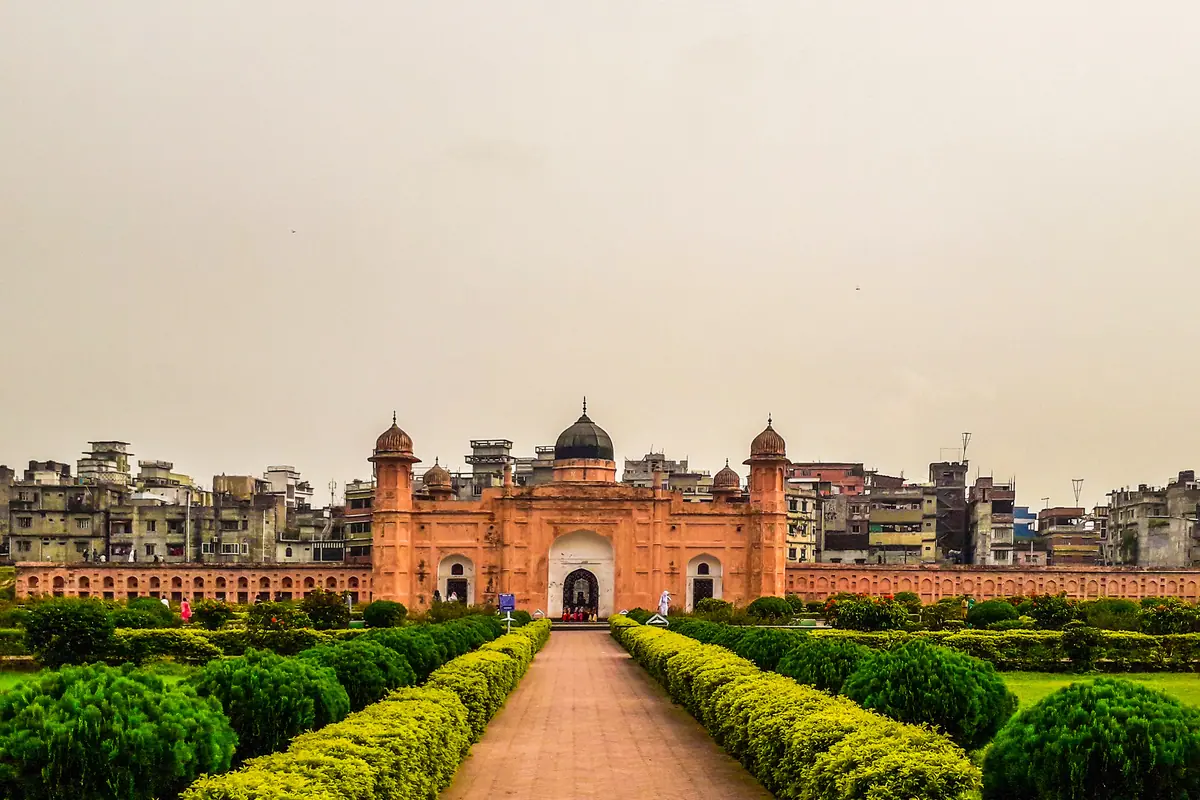
Most journeys begin in the capital, and Old Dhaka alone justifies a full day. Start at Lalbagh Fort, an unfinished 17th-century Mughal complex with a domed tomb, a hammam and a garden that is quietest before nine in the morning. A short walk away stands Ahsan Manzil, the pink riverside palace that once belonged to Dhaka's wealthiest merchant family and now holds a well-labelled museum of furniture, coins and photographs. Nearby, the Star Mosque glitters with broken-china mosaic work, the Armenian Church in Armanitola sits behind a walled garden, and Dhakeshwari National Temple remains the city's most important Hindu shrine.
The beating heart of the old city is Sadarghat, a river terminal where hundreds of wooden launches load passengers, livestock and sacks of rice. A one-hour boat ride on the Buriganga at sunrise — or a sunset crossing to the opposite bank — is the single best introduction to how water shapes life here. Follow it with a wander through Chawkbazar's spice lanes and a plate of rich mutton biryani, then ride a cycle rickshaw through the backstreets to see the painted rickshaw art the city is famous for.
New Dhaka is a different mood: broad avenues, university campuses and the monolithic National Parliament complex, one of the country's most photographed works of modern architecture. The Bangladesh National Museum gives useful context on archaeology, folk art and the 1971 Liberation War, while Ramna Park offers a green breather. Allow two nights minimum, and expect traffic to eat into any schedule — mornings are golden, mid-afternoons are not.
The Sundarbans: Boat Safaris Through the World's Largest Mangrove Forest
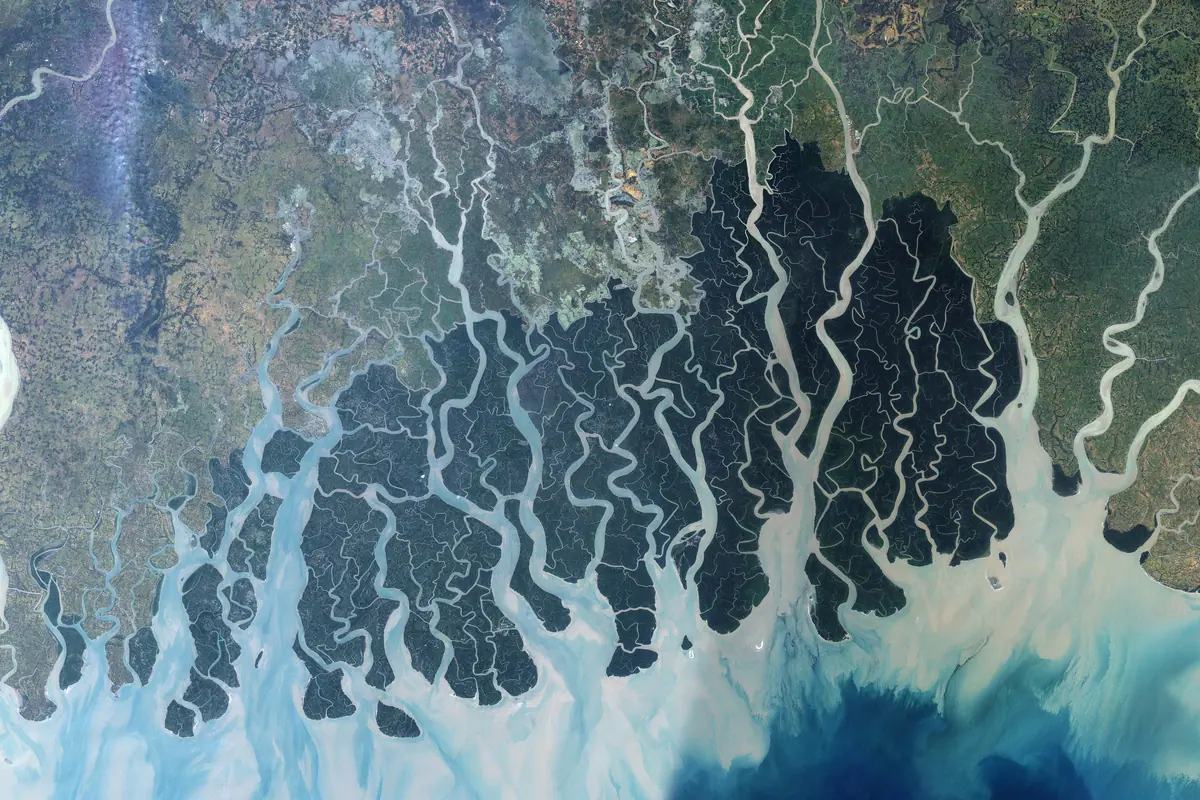
South-west of the capital, where the Ganges delta dissolves into the sea, lies the Sundarbans — the largest continuous mangrove forest on the planet and Bangladesh's undisputed wildlife headline. The usual approach is via Khulna or Mongla, from where licensed operators run two- to three-day cruises on sturdy wooden boats. Foreign visitors must travel with a registered guide and obtain a forest permit, which is normally arranged by the operator; independent wandering is not permitted.
Days are spent gliding down silent channels, stopping at watchtowers and jetties such as Karamjal, Harbaria, Dobanki and Katka, where canopy walkways and viewing platforms look over mudflats patrolled by spotted deer, wild boar and troops of rhesus macaques. Estuarine crocodiles bask on the banks, kingfishers and eagles work the water, and the possibility — always slim — of a Bengal tiger sighting is what keeps everyone scanning the treeline at dawn. Kochikhali and Hiron Point sit deeper in the forest and feel genuinely remote.
Go between November and March, when the air is cool, the water calmer and the mosquitoes less ferocious. Nights are spent on board, meals are simple rice, dal and fish, and phone signal fades fast. In November, the Rash Mela pilgrimage on Dublar Char draws crowds of devotees to a sandy island at the forest's edge — a vivid, purely local festival that few outsiders ever see.
Cox's Bazar and Saint Martin's Island: Sand, Surf and Coral Water
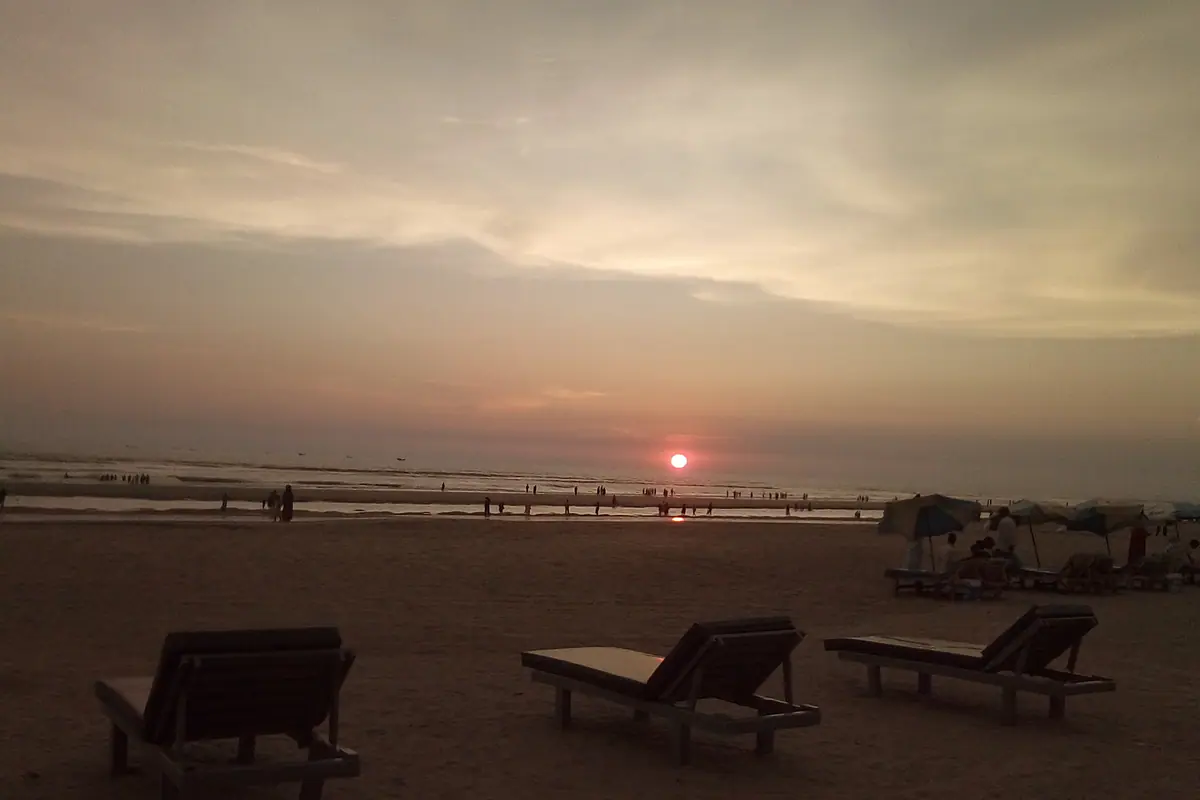
Cox's Bazar stretches along more than 120 kilometres of unbroken sand, making it the longest natural sea beach anywhere. The main strips — Laboni, Sugandha and Kolatoli — are busy, brash and full of seafood stalls, but push south and the crowds thin out fast. Himchari offers a hillside viewpoint and seasonal waterfalls, while Inani Beach, with its coral-strewn shoreline and shallow turquoise water, is where most travellers end up spending the whole afternoon. Further south, Teknaf marks the road's end and the edge of the Naf River.
From Teknaf, a two- to three-hour boat crossing reaches Saint Martin's Island, Bangladesh's only coral island and its most relaxed destination. Locals call it Narikel Jinjira, or coconut island, and it lives up to the name: narrow lanes, coconut groves, fishing boats and water clear enough to snorkel. A short boat hop takes you to Chera Dwip, a slender spit of sand that disappears at high tide. There are simple guesthouses rather than resorts, and electricity can be intermittent.
The season runs from November to March. Outside those months the sea is often too rough for the crossing, and the island largely shuts down. Finish a beach trip with a detour to Maheshkhali Island for the hilltop Adinath Temple, and plan at least three nights to make the long journey from Dhaka worthwhile — most visitors fly to Cox's Bazar and travel onward by road.
Chattogram, Rangamati and Bandarban: Lakes, Hills and Cloud-Level Viewpoints
Chattogram, the country's second city and main port, is the gateway to the south-east. Break the journey at Patenga Beach where the Karnaphuli River meets the Bay of Bengal, the calm lake at Foy's Lake, and the Ethnological Museum, which explains the diverse communities of the surrounding hill districts. The hill tracts themselves — Rangamati, Khagrachari and Bandarban — are the most beautiful part of Bangladesh, a landscape of ridgelines, bamboo villages and reservoirs.
In Rangamati, Kaptai Lake is the centrepiece: hire a boat for the day and stop at Shuvolong Falls, the long hanging bridge and the Rajbari of the Chakma royal family. Tribal markets sell handwoven textiles and bamboo crafts. Bandarban is higher and cooler, with the Nilgiri and Nilachal viewpoints gazing over ridgelines into Myanmar, the placid Boga Lake ringed by hills, and the trek to Keokradong, one of the country's highest peaks. Nafakhum and Amiakhum waterfalls reward anyone willing to tackle rough roads and a river walk.
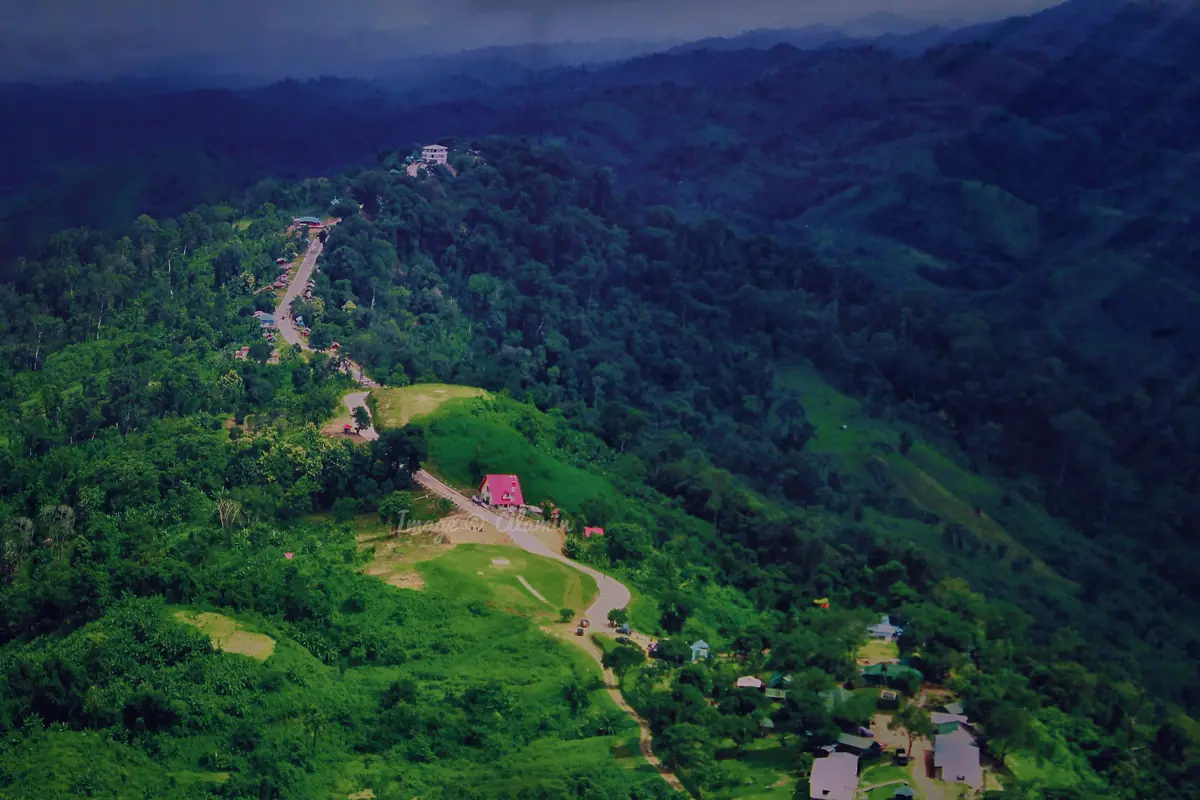
Sajek Valley, on the border of Rangamati and Khagrachari, is famous for a sea of clouds at sunrise — worth the notoriously bumpy drive if you go between October and March. Foreign visitors need permits for all three hill districts and must register with local authorities; arrange this through a licensed tour operator, and expect to travel with a guide in more remote areas. Give the region four to five days.
Sylhet, Sreemangal and the Haors: Tea Gardens, Swamp Forest and Wetlands
The north-east is where Bangladesh turns lush. Around Sylhet, the Ratargul Swamp Forest is a flooded woodland best visited in the monsoon, when boats slip between half-submerged trees — it is at its most atmospheric from July to September. Nearby, the clear shallows of Bichnakandi and the river port of Jaflong sit at the foot of the Meghalaya hills, where stone collectors work the water and tea stalls serve sweet, milky brews.
Sreemangal is the country's tea capital, a patchwork of clipped green estates rolling to the horizon. Walk or cycle the garden paths, then head into Lawachara National Park, a semi-evergreen forest that shelters hoolock gibbons, hornbills and langurs on a gentle two-hour trail. Madhabpur Lake, ringed by tea slopes, is the prettiest spot for a late-afternoon picnic, and Madhabkunda waterfall makes an easy half-day trip from town.
Further north, the haors — vast seasonal wetlands around Sunamganj and Moulvibazar — are at their most dramatic when the monsoon turns them into inland seas, with villages and roads reduced to thin strips of land. Tanguar Haor is the most accessible, and houseboat stays are increasingly popular from August to October. Come in winter instead and the same water fills with migratory ducks, geese and raptors; the Niladri watchtower and the Jadukata river give the best views.
Ancient Bengal: Paharpur, Bagerhat and Mahasthangarh
Bangladesh's archaeology is quietly extraordinary. In the northern village of Paharpur stands Somapura Mahavihara, an 8th-century Buddhist monastery whose terraced, cross-shaped central shrine and surrounding cells once housed hundreds of monks. It is the largest such monastery south of the Himalayas and a designated World Heritage Site; the on-site museum holds terracotta plaques and bronzes worth an hour of anyone's time. Pair it with Vasu Bihar nearby and the museum town of Bogra, the usual base between November and February.
South-west of Dhaka, the mosque city of Bagerhat is another World Heritage Site and an easy stop en route to the Sundarbans. The Sixty Dome Mosque, despite its name, carries 77 domes across a vast prayer hall, and the surrounding complex includes the mausoleum of the saint who founded the city in the 15th century. It is at its best in the soft light of early morning.
For the deepest layer of history, head to Mahasthangarh in Bogra district, a fortified city site occupied from at least the 3rd century BCE, with crumbling ramparts and a small museum of sculpture. Elsewhere, Rajshahi's Puthia Rajbari complex offers ornate Hindu temple architecture, the Kantanagar Temple near Dinajpur is famous for its terracotta panels, and Sonargaon's Panam City, an hour from Dhaka, preserves a haunting street of abandoned merchant mansions. These sites need patience and long drives, but they are the reason Bangladesh rewards a second, slower visit.
Frequently asked questions
What is the best time of year to visit Bangladesh?
November to February is the sweet spot: dry, cool and comfortable, with temperatures often between 10°C and 28°C, and the best conditions for the Sundarbans, Cox's Bazar, Saint Martin's Island and the hill tracts. March to May turns hot and humid, with highs pushing towards 40°C in the interior. June to September brings the monsoon — spectacular for the haors and Ratargul Swamp Forest, but rough seas, flooded roads and closed island crossings are common. October is a pleasant shoulder month.
Do I need a permit to visit the Chittagong Hill Tracts?
Yes. Rangamati, Khagrachari and Bandarban all require foreign visitors to register with local authorities, and some areas — including remote trekking routes and parts of Sajek Valley — need additional permission. In practice this means booking through a licensed local operator who handles the paperwork and provides a guide. Carry your passport and visa copies, and allow extra time for checkpoints along the roads.
How long do I need to see the main highlights?
Two weeks is a realistic minimum for Dhaka, the Sundarbans, Cox's Bazar or the hill tracts and one heritage site or tea region. Three weeks lets you add Sylhet, Sreemangal, the haors and the northern Buddhist and Mughal sites without rushing. Distances look short on a map, but traffic, ferries and narrow hill roads make travel slow — domestic flights and overnight trains between Dhaka, Chattogram, Sylhet and Cox's Bazar save a lot of time.
Is Bangladesh safe and easy for independent travellers?
It is generally very welcoming, with low rates of violent crime against visitors and plenty of people happy to help. The main practical risks are petty theft in crowded markets, chaotic traffic, and political strikes, which can shut down roads and transport with little warning. Avoid large political gatherings, keep cash in small notes, and accept that some journeys will take far longer than planned. Women travellers often report feeling safe but conspicuous; modest clothing is appreciated everywhere and required at religious sites.
What should I pack and how should I handle money?
Bring light, loose clothing that covers shoulders and knees for mosques and temples, a rain shell if travelling between May and September, strong mosquito repellent, oral rehydration salts and a water filter or purification tablets. Cards are accepted in upmarket city hotels and restaurants, but almost everything else runs on the local taka in cash. ATMs exist in cities and larger towns but are scarce around the Sundarbans, Saint Martin's Island and the hill districts — withdraw a comfortable buffer before heading out.
Plan it — experiences in Bangladesh
Live search, booked directly with trusted providers.
Sort the rest of your trip
Everything for Bangladesh, in one place
Stay in Bangladesh
Hotels, guesthouses and apartments — compared in one search.
Search hotels
Transfer in Bangladesh
Private driver waiting on arrival — no queues, no surprises.
Book a transfer
Stay online in Bangladesh
Travel eSIM — data the moment you land, no roaming bills.
Get an eSIM