Algeria is Africa's largest country and one of its least-visited, which means Roman cities you can wander almost alone, a Casbah that still smells of coffee and cardamom, and domestic flights that drop you from Mediterranean clifftops into Saharan oases in an afternoon. This seven-day route uses the country's internal air network as its skeleton — land in Algiers, sweep the coast west, cut inland to Constantine and the Roman highlands, then finish where the desert begins.
Day 1: Landing in Algiers — Flights, the Casbah and the White City
Most visitors reach Algeria through Europe or Istanbul, with direct services from several French cities, Madrid, Tunis and Cairo. The main gateway is Houari Boumediene Airport, roughly 20 kilometres east of the centre; a suburban rail link and taxis run into the city, and it's worth changing money at the official bank counters before you leave the terminal, since cards are accepted in very few places and street exchange is best avoided. Build in a buffer: immigration can be slow at peak arrival times, and domestic connections out of Algiers usually need a fresh check-in.
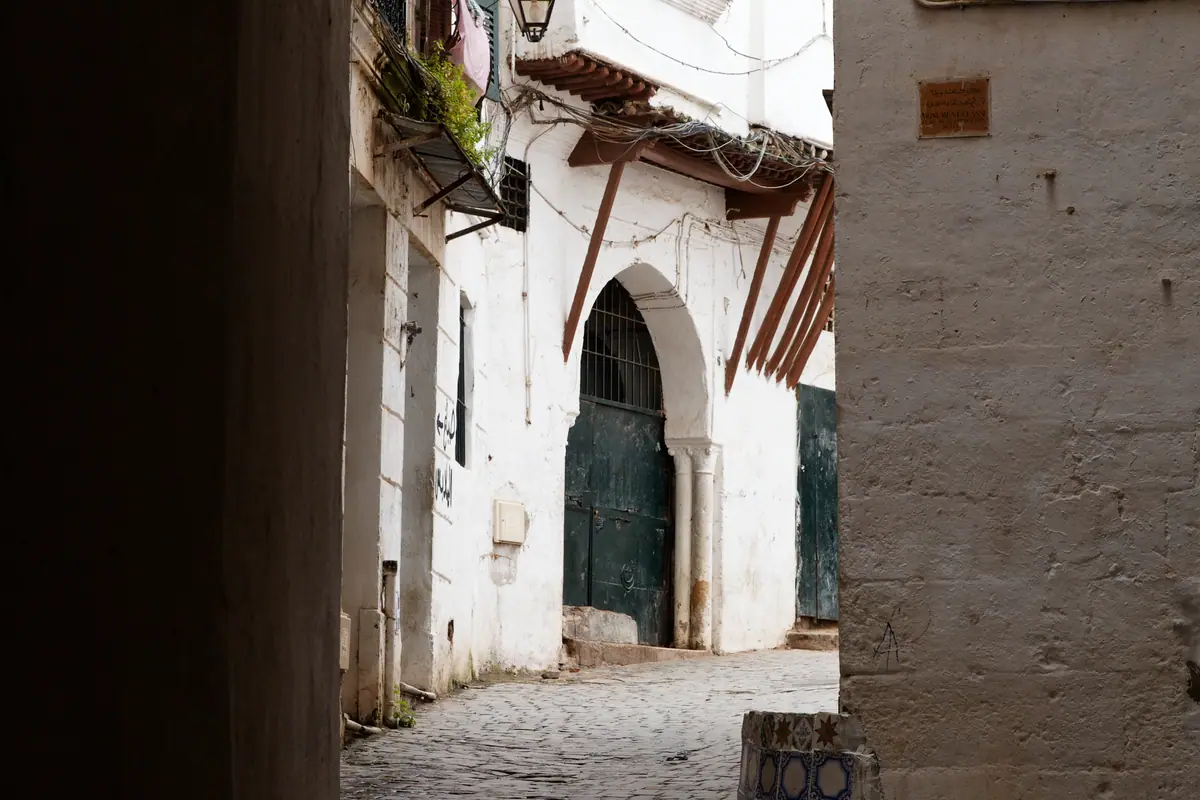
Algiers itself rewards a full day. The UNESCO-listed Casbah climbs steeply above the bay in a tangle of stepped lanes, Ottoman palaces and workshops, with the Ketchaoua Mosque and the Palais des Raïs near its base. Below, the palm-shaded Jardin d'Essai offers a cool hour, while the Martyrs' Memorial monument on the heights above the city and the white-and-blue basilica of Notre-Dame d'Afrique give you the two classic panoramas of the bay.
A local guide is genuinely useful in the Casbah, both for the history and for finding the family-run doors that open onto rooftop terraces. Note that the weekend here is Friday and Saturday: Friday mornings are quiet and atmospheric, but many shops and museums stay shut. Keep the evening free for the seafront promenade, where families stroll until well after dark.
Days 2–3: Tipaza, Cherchell and the Roman Coast
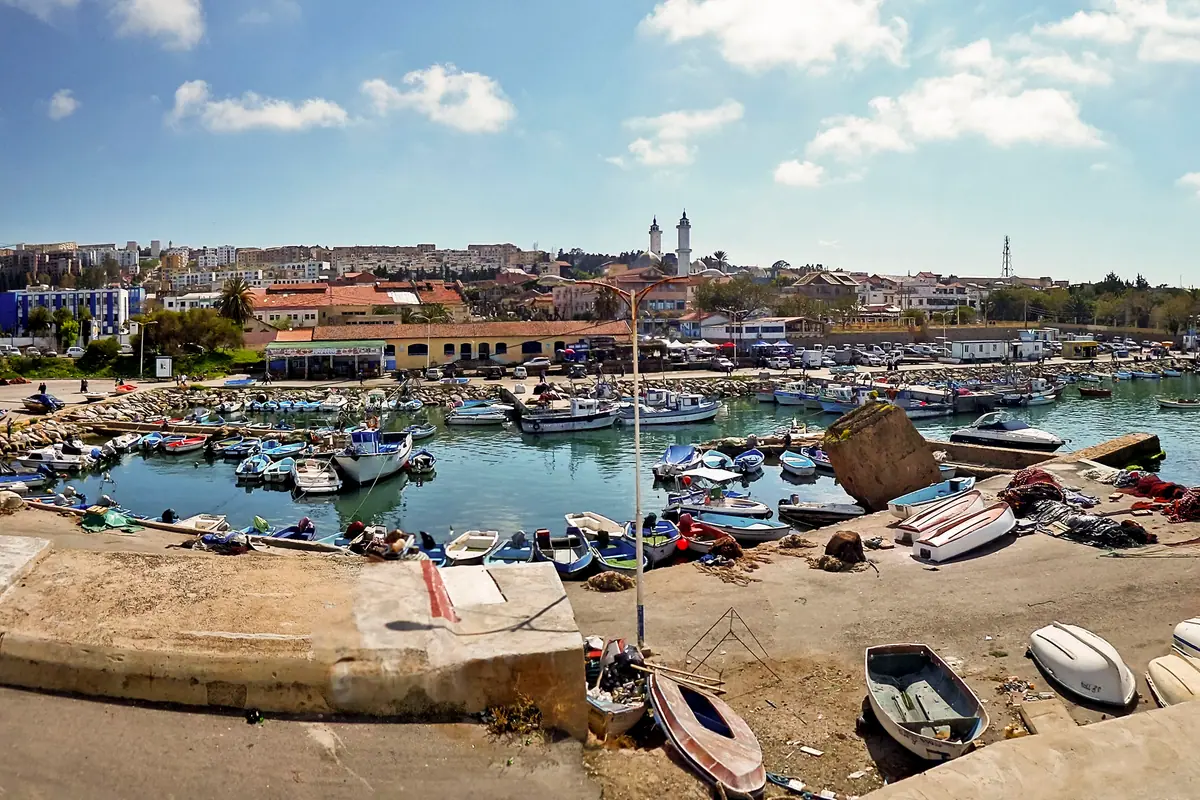
West of Algiers, the coast road runs through orange groves and pine to Tipaza, a Phoenician trading post turned Roman city whose columns, baths and basilicas stand almost on the sand. It's a UNESCO site and, unusually for ruins of this scale, you can walk it in an hour and a half with the sea hissing below. On the ridge above, the vast Royal Mausoleum of Mauretania — a circular stone tomb known locally as the Tomb of the Christian Woman — is visible for miles and takes another half-hour to explore.
Continue a short way to Cherchell, the Roman Caesarea, whose museum holds some of the finest classical sculpture and mosaic work in North Africa; the collection is small enough to see properly in an hour. Most travellers base themselves in Algiers and do this as a long day trip by car, leaving early and returning by late afternoon, when the light on the ruins turns golden.
If you have an extra day, push further west to Oran, either by a short domestic flight or by road. The hillside chapel of Santa Cruz gives sweeping views over the port, and the old quarter of Sidi El Houari, with its crumbling Spanish walls and Andalusian echoes, is a reminder of how layered this coastline really is.
Days 3–4: Constantine, the City of Bridges
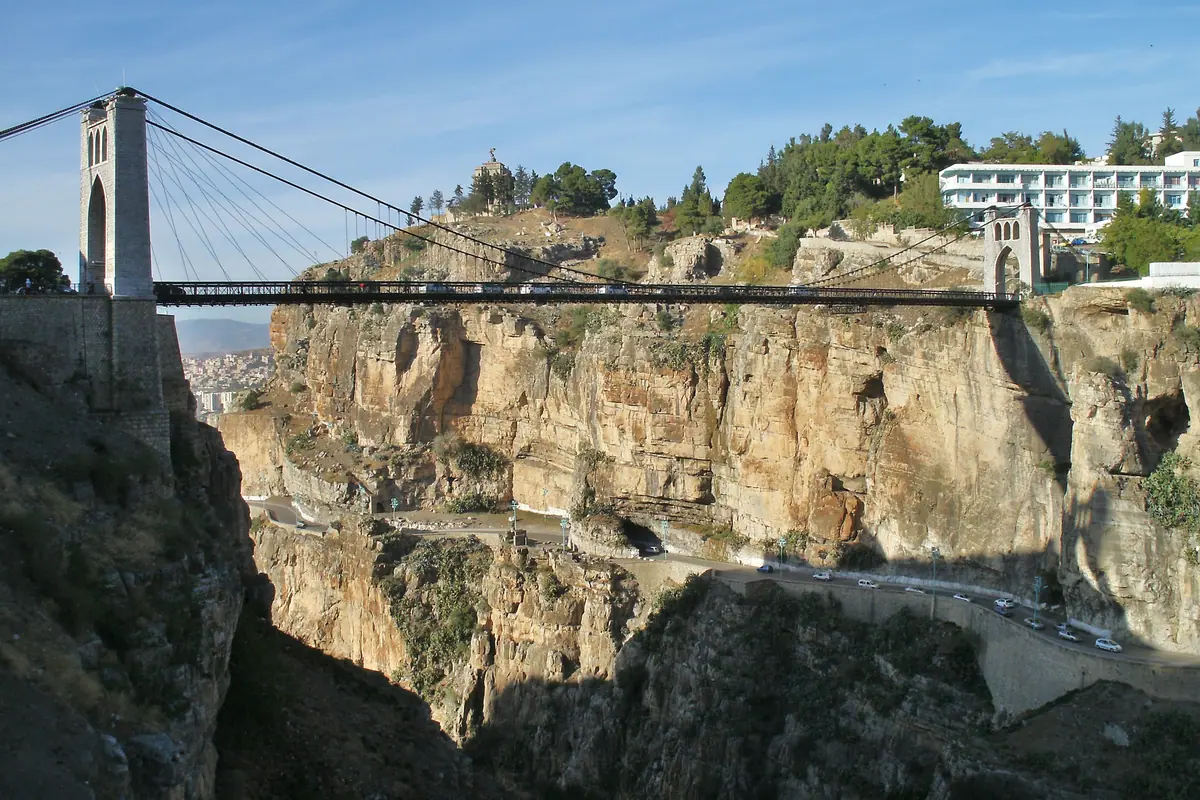
A short domestic flight — about 50 minutes — or a long rail journey takes you east to Constantine, a city built on a plateau split by the Rhumel gorge and stitched back together by a series of dramatic bridges. Walk the Sidi M'Cid bridge, suspended terrifyingly high over the ravine, cross the Mellah Slimane footbridge, and look down into the chasm from the Pont des Chutes, where the river vanishes into a cave system beneath the streets.
Above the gorge, the Emir Abdelkader Mosque is one of the largest in the country and accepts respectful visitors outside prayer times, while the Palace of Ahmed Bey preserves courtyards, tiled galleries and painted ceilings from the last Ottoman ruler of the region. The Souika medina below it is dense, lived-in and largely untouristed — a good place to buy spices and listen to malouf music drifting from doorways.
Give Constantine a night and a morning, then use it as your launchpad for the Roman east. The nearby site of Tiddis, cut into a hillside outside the city, is a fine half-day detour and far quieter than the famous ruins further south.
Day 5: Timgad, Djemila and Rome in the Highlands
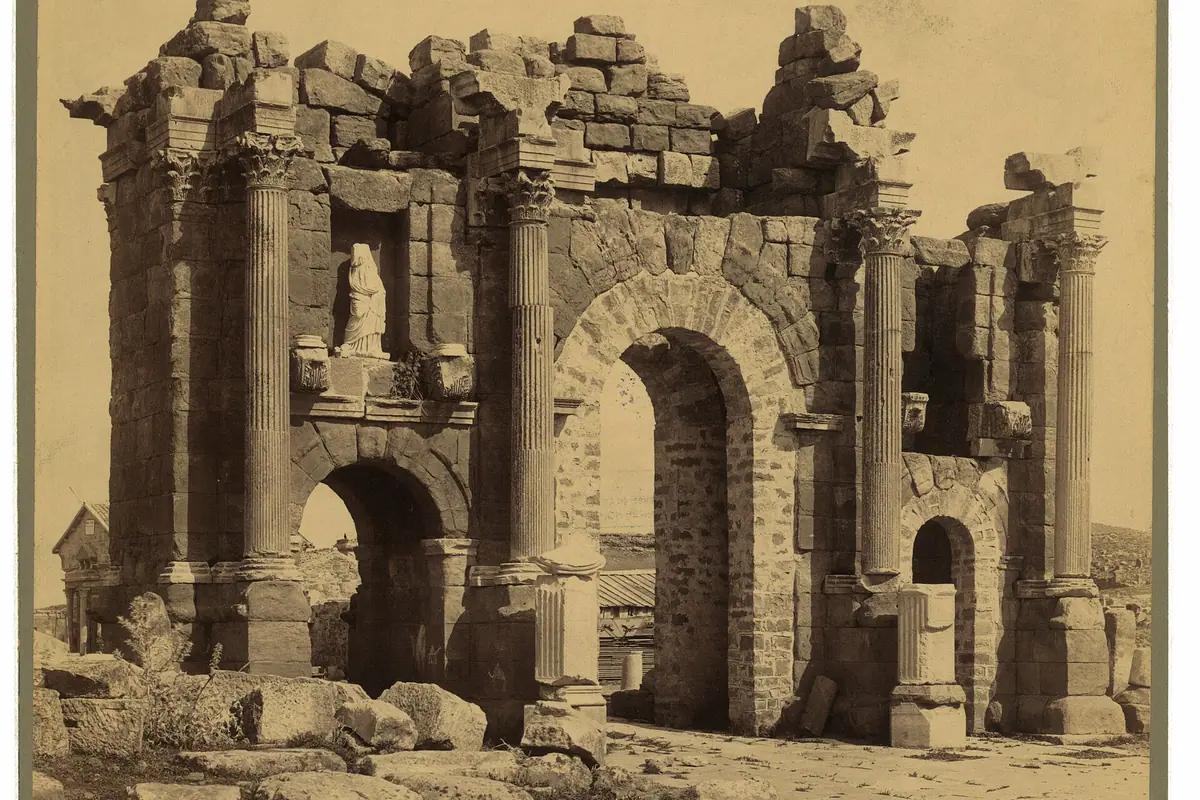
Algeria's Roman heritage is its strongest card. Timgad, founded by Trajan around AD 100 and laid out on a perfect grid, sits on the high plateau near Batna: the Arch of Trajan still marks the main street, and the theatre, library, markets and forum are legible enough that you can mentally rebuild the city as you walk. Come in the morning in summer, when the plateau heat is still gentle, and in warm layers in winter, when snow occasionally dusts the Aurès mountains behind it.
Djemila, further west near Sétif and also UNESCO-listed, is a hill town of temples, baptisteries and a museum packed with mosaics. The two sites are about a day's drive apart, so with only a week choose one: Timgad fits neatly after Constantine, whereas Djemila suits a route that continues west towards the coast. Either way, hire a driver for the day — public transport to the ruins themselves is thin.
A domestic flight back to Algiers or on to your next stop is the sensible end to this day. Domestic departures are usually quick and cheap, but schedules thin out in the afternoon, so book ahead and reconfirm the day before.
Day 6: South by Air to Ghardaïa and the M'Zab Valley
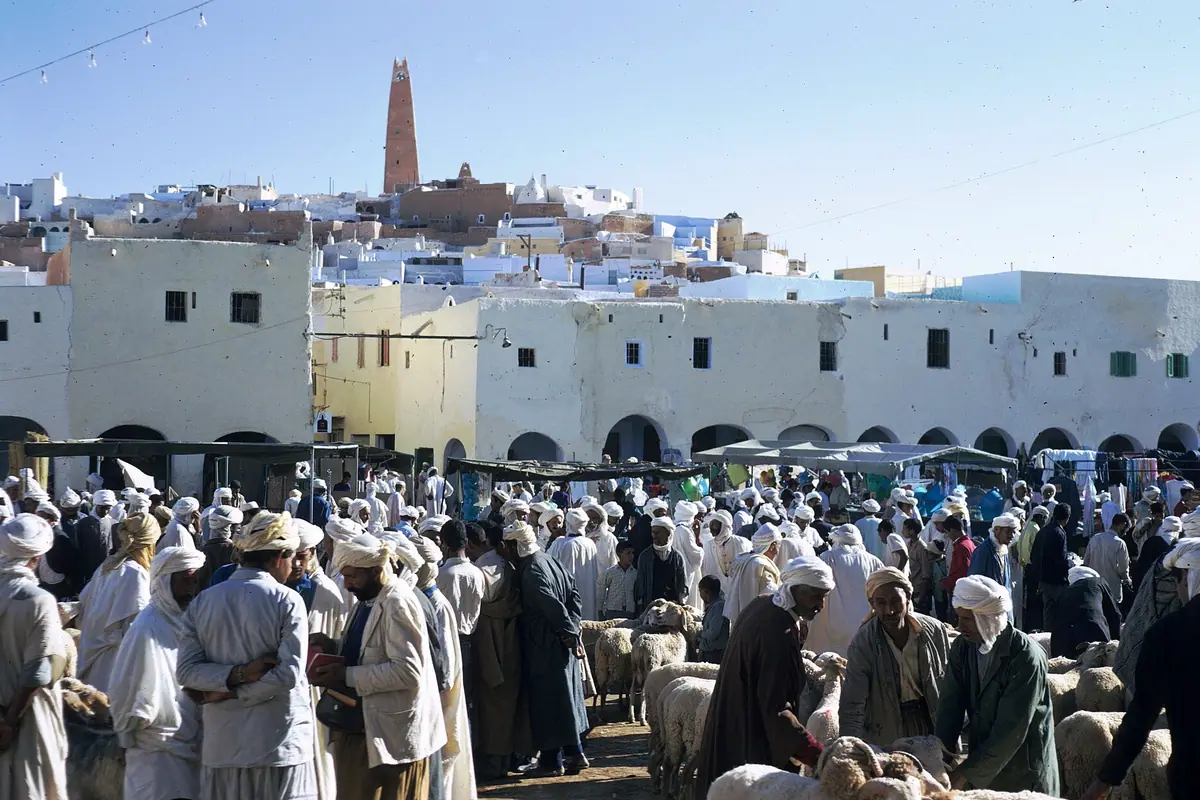
An hour and a quarter in the air from Algiers puts you in Ghardaïa, gateway to the M'Zab Valley, where five fortified desert towns — Ghardaïa, Melika, Bou Noura, El Atteuf and Beni Isguen — spiral around their mosques in ochre, white and pale blue. The whole valley is UNESCO-listed, and its architecture, with its tiered houses and minarets, influenced modern desert design far beyond Algeria.
Beni Isguen is the most strictly traditional of the five and can only be entered with a local guide, who will also explain the etiquette: dress modestly, ask before photographing people, and expect the market square to empty at midday prayer. Climb to a rooftop in Ghardaïa's own old town for sunset, when the palm groves turn gold and the call to prayer rolls from one hilltop to the next.
Flights to Ghardaïa also run from Constantine and Oran, though timings shift and early-morning departures are common. If the air schedule doesn't suit, an overnight coach or a private car from Algiers is possible, but it eats a full day of a short trip.
Day 7 and Beyond: Sahara Extensions, Flights and Practicalities
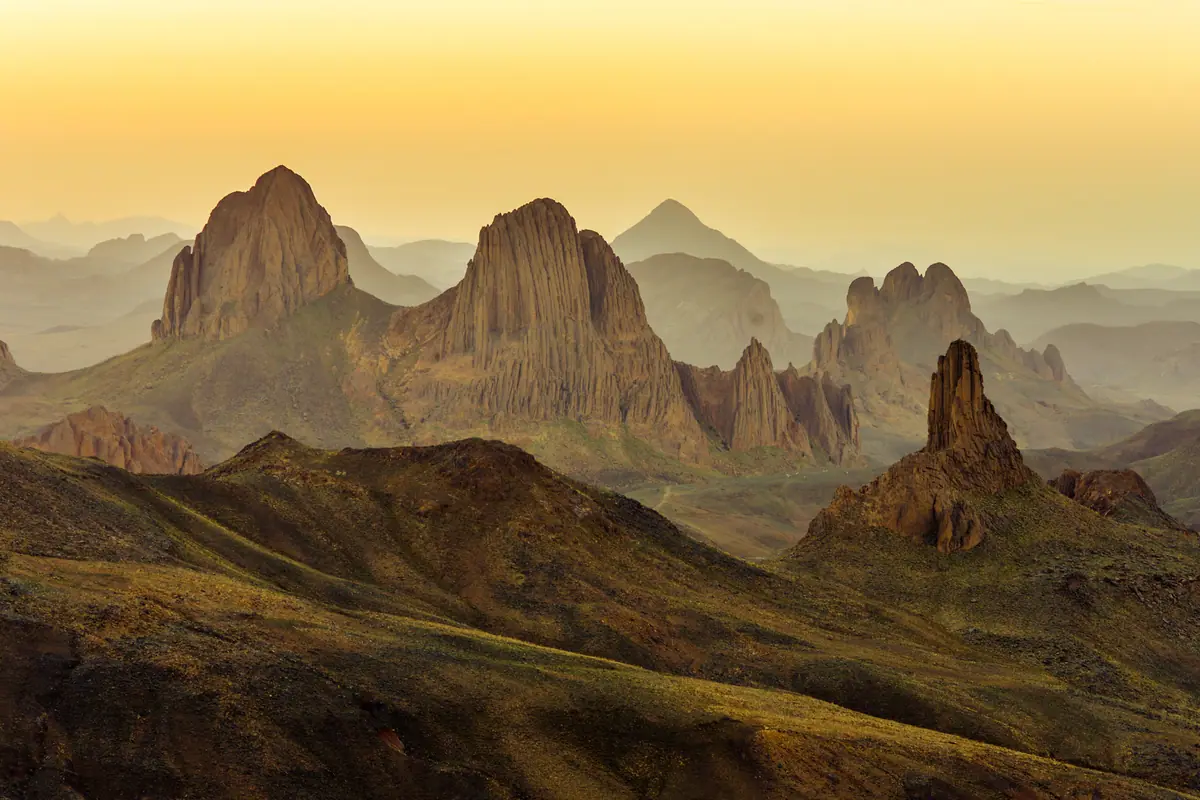
Seven days covers Algeria's north and a taste of the desert edge; the true Sahara needs more. From Algiers, flights reach Tamanrasset in the deep south in about two hours, from where a 4x4 and a licensed guide can take you to the Hoggar Mountains and the sunrise viewpoint at Assekrem, a bare volcanic plateau with a small hermitage that may be the most spectacular dawn in the country. Djanet, further east, opens onto the rock art and dunes of the Tadrart. Add three to four days for either.
On the practical side: October to April is the sweet spot, with mild coastal weather, crisp desert nights and comfortable temperatures in the highlands; high summer is punishing in the south and humid on the coast. The north sees rain between November and February. Algeria runs on cash — carry dinars, keep small notes, and don't rely on ATMs outside major hotels. French and Arabic carry you almost everywhere; English is patchy away from international hotels.
Modest clothing is appreciated everywhere and expected in the M'Zab and in mosques, and alcohol is limited and mostly confined to larger hotels. During Ramadan, expect daytime cafes to close and evening life to start late. Finally, allow a full half-day on your last day for the return to Algiers and international check-in — internal and international terminals are separate, and connections are rarely instantaneous.
Frequently asked questions
Do I need a visa to visit Algeria?
Most nationalities need a visa arranged in advance through an Algerian consulate, usually with proof of accommodation, a return ticket and sometimes an invitation or itinerary. Processing can take several weeks, so apply early. A few passport holders qualify for limited visa-on-arrival arrangements, so confirm your own case with the nearest consulate before booking flights.
Should I fly or drive between Algerian cities?
Fly for the long hops. Distances are enormous — Algiers to Tamanrasset is roughly 1,900 kilometres — and the domestic network based in Algiers reaches Constantine, Oran, Ghardaïa, Tamanrasset, Djanet and Annaba. Flights are frequent but schedules change, so reconfirm the day before. For shorter stretches, such as Algiers to Tipaza or Constantine to Timgad, a car with a driver is far more rewarding than public transport.
When is the best time to visit Algeria?
October to April suits almost the whole country: mild, occasionally rainy weather on the Mediterranean coast, clear skies in the highlands and tolerable desert days. March and April are lovely for the Aurès around Timgad. Avoid June to August in the Sahara, when daytime heat is extreme, and expect cold desert nights from November to February, when you'll want a down jacket at Assekrem.
Is it safe to travel around Algeria as a tourist?
The classic northern circuit — Algiers, Tipaza, Constantine, Timgad and the M'Zab Valley — is generally straightforward, though you should check current government advice before booking. Some border zones and remote desert regions require permits or a licensed guide, and independent travel in the deep Sahara is not permitted. Solo women often report respectful treatment, but modest dress and local guides in conservative areas make life easier.
What should I pack and how much cash should I carry?
Bring layers, sun protection and comfortable walking shoes for uneven Roman paving and steep Casbah steps; a light scarf is useful for mosques and desert wind. Cards work in larger hotels only, so carry Algerian dinars in small notes for taxis, guides, entry fees and market purchases, and budget generously because ATMs are scarce. Electricity is 230V with European-style plugs.
Sort the rest of your trip
Everything for Algeria, in one place
Stay in Algeria
Hotels, guesthouses and apartments — compared in one search.
Search hotels
Transfer in Algeria
Private driver waiting on arrival — no queues, no surprises.
Book a transfer
Travel insurance
Medical cover, delays and lost baggage — sorted before you go.
Get covered