Vietnam stretches more than 1,600 kilometres from mountain terraces to mangrove deltas, and no single itinerary does it justice. What it does offer is a rare density of icons: limestone bays, imperial citadels, lantern-lit trading towns and the largest cave systems on earth. Pick your season, pick your region, and the country rewards you with landscapes that look invented.
Hanoi: Lakes, Temples and the Old Quarter
Most journeys begin in the capital, where the Old Quarter's 36 ancient guild streets still bend around their original trades — tin, silk, herbs, tombstones. Walk five minutes and you reach Hoan Kiem Lake, the city's green heart, with the scarlet Huc Bridge crossing to Ngoc Son Temple on its tiny island. Arrive at dawn and you'll share the shoreline with locals doing tai chi and badminton before the heat settles in.
A short ride west lies the Temple of Literature, a serene Confucian complex of courtyards and stelae dating to 1070 and Vietnam's first university. Nearby, the Ho Chi Minh Mausoleum and the One Pillar Pagoda anchor a broad, ceremonial square, while the Museum of Ethnology gives context to the country's 54 recognised ethnic groups before you head into the hills. In the evening, catch a water puppet performance, an art form born in flooded rice fields, then squeeze past a slow-moving train on the famous Train Street for a coffee.
Give Hanoi two to three full days. October to November and March to April bring the kindest weather — mild, occasionally misty, rarely torrential. Crossing the road is a skill: walk at a steady pace and let the motorbikes flow around you.

The Northern Highlands: Sapa, Fansipan and Ha Giang
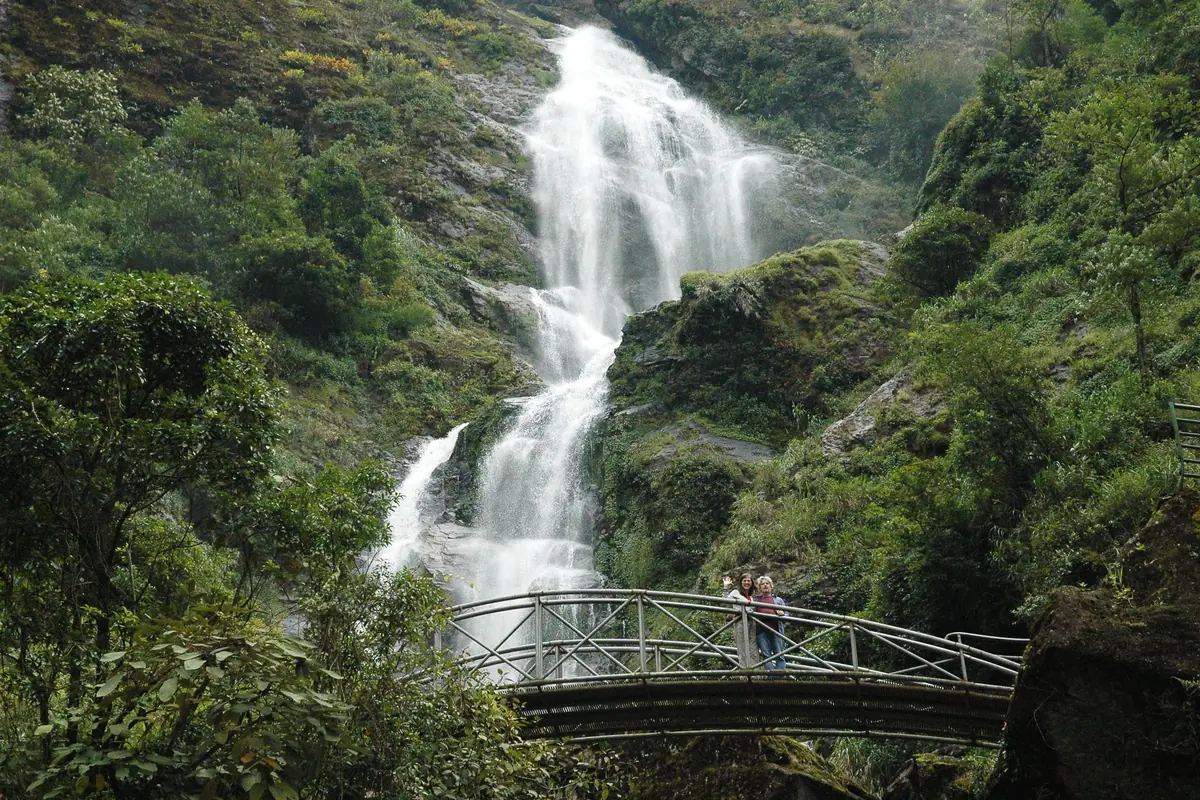
North of Hanoi the land folds upward into terraced valleys. Sapa is the classic base, a former hill station surrounded by Hmong and Dao villages and staircases of rice that turn gold in September. From here a cable car climbs to the summit of Fansipan at 3,143 metres, the highest point in Indochina, where cloud can swallow the whole range in minutes.
Further north, the Ha Giang Loop is the country's great road trip: a four-day motorbike circuit through the Dong Van Karst Plateau Geopark, past the vertiginous Ma Pi Leng Pass, where the Nho Que River cuts a turquoise slit through grey rock. Riders who'd rather not drive themselves can join an easy-rider tour with a local guide. Inland, Mu Cang Chai's sculpted terraces offer a quieter, equally photogenic alternative.
Time your visit for the golden rice of September and October, or the blossom and clear skies of March to May. December and February nights can drop near freezing, so pack layers. Budget three to five days for Ha Giang and two or three for Sapa, including travel.
Ha Long Bay, Lan Ha Bay and Cat Ba Island
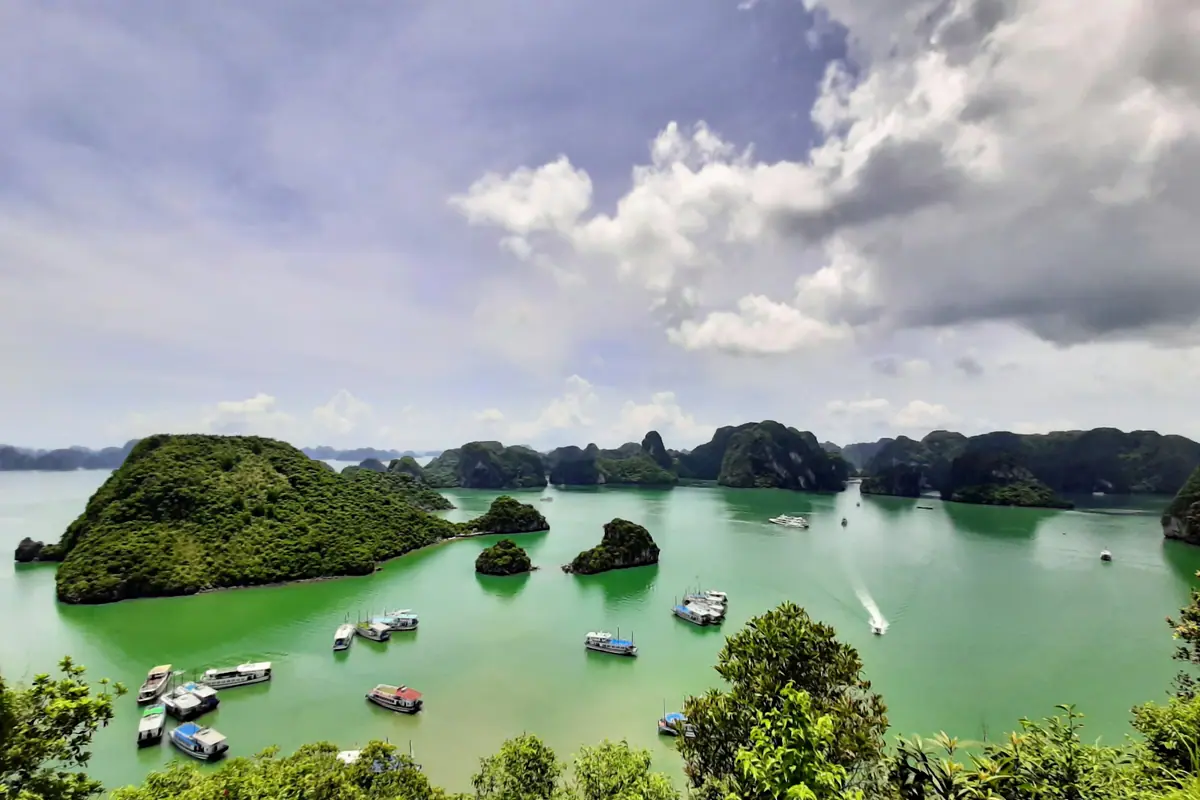
Ha Long Bay is Vietnam's signature image: roughly 1,600 limestone islands and islets rising from emerald water in the Gulf of Tonkin. The classic experience is an overnight on a wooden junk, sailing between karsts, kayaking into hidden lagoons, and climbing into Sung Sot Cave, a cathedral-sized chamber of stalactites. A stop at Titop Island rewards a steep stair climb with a panoramic sweep of the bay.
For a quieter version, head to neighbouring Lan Ha Bay and Cat Ba Island, where the same geology continues with a fraction of the boat traffic. Cat Ba National Park protects forested hills and the endangered Cat Ba langur, and the island's fishing villages still string lanterns over the water. Bai Tu Long Bay, further northeast, is the most peaceful option of all.
Two days and one night is the minimum; three days and two nights lets you add cycling, a floating village visit and a night on Cat Ba. October to April offers cooler, clearer conditions. Summer brings heat and occasional storms, and cruise schedules can shift at short notice — build in a buffer day if you're flying onward.
Ninh Binh and Phong Nha: Limestone Country and Colossal Caves
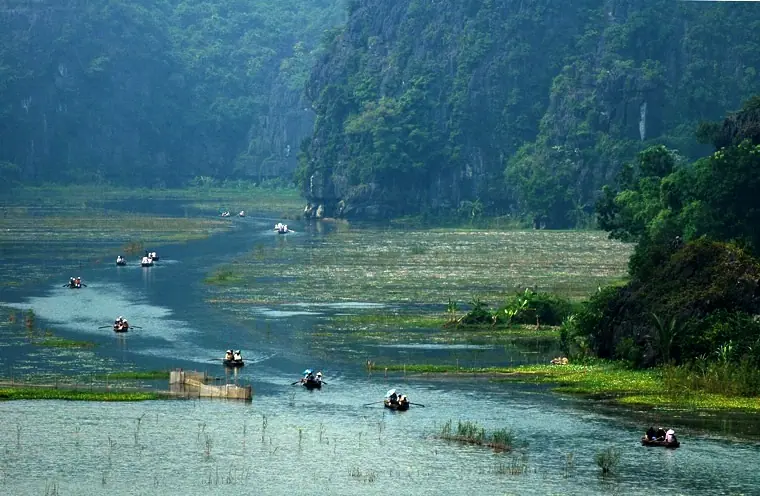
Two hours south of Hanoi, Ninh Binh delivers the same karst drama without the sea. At Trang An, rowers — often using their feet — propel sampans through a maze of flooded caves and temple-lined valleys. Tam Coc offers a similar ride between rice paddies, while the 500 steps up to the Hang Mua viewpoint give you the postcard shot of the Ngo Dong River threading through the cliffs. Add the vast Bai Dinh Pagoda complex and, for wildlife lovers, the primate rescue work inside Cuc Phuong National Park.
Further south in Quang Binh province, Phong Nha-Ke Bang National Park holds some of the planet's most spectacular underground landscapes. Paradise Cave runs for over 30 kilometres with cathedral-scale formations, and Phong Nha Cave is explored by boat straight into the mountain. Son Doong, the largest known cave passage on earth, requires a multi-day expedition with a licensed operator and permits that sell out many months ahead; Hang En and Tu Lan are rewarding, more accessible alternatives.
Allow two days in Ninh Binh and two to three in Phong Nha. February to May and September to November are the sweet spots; midsummer heat and autumn rains make cave trips muddier and less comfortable.
The Central Coast: Hue, Da Nang, Hoi An and My Son
Hue, the old imperial capital, is built around the Citadel and the Forbidden Purple City, a moated walled compound where Nguyen emperors ruled until the 1940s. Across the Perfume River, the Thien Mu Pagoda rises in seven tiers, and royal tombs such as those of Tu Duc and Khai Dinh sit in pine-scented parkland. Give Hue two days to do it properly, ideally in the drier months from February to August.
South over the Hai Van Pass — one of the world's great coastal drives — lies Da Nang, with the long sweep of My Khe Beach, the marble caves and pagodas of the Marble Mountains, and the fire-breathing Dragon Bridge. Inland, the Golden Bridge curves above the Ba Na Hills on giant stone hands, an architectural spectacle that's best visited early before the crowds arrive.
Half an hour further south, Hoi An Ancient Town is a preserved trading port of yellow-washed shophouses, the Japanese Covered Bridge and thousands of silk lanterns that glow at dusk. It's also a tailoring and cooking-class hub, with An Bang beach and the Tra Que vegetable village nearby. Don't skip My Son Sanctuary, a cluster of red-brick Cham towers in a jungle valley. Avoid October to December, when central Vietnam floods.
Ho Chi Minh City and the Mekong Delta
The southern metropolis is Vietnam at full volume. Start at the War Remnants Museum and the Reunification Palace for modern history, then admire the French colonial lines of Notre-Dame Cathedral Basilica of Saigon and the Central Post Office beside it. Ben Thanh Market covers the souvenir-and-street-food bases, while Bui Vien's backpacker strip handles the late-night energy. A half-day trip to the Cu Chi Tunnels, a vast underground network from the war years, is a sobering counterpoint to the city's buzz.
Southwest of the city, the Mekong Delta turns liquid: coconut canals, fruit orchards, stilt houses and boats piled with rice. Base yourself in Can Tho to catch the Cai Rang floating market at sunrise, or in Ben Tre and My Tho for cycling between canals and homestay nights. Chau Doc, near the Cambodian border, adds a slower, riverine pace.
Three days covers Ho Chi Minh City comfortably; add two more for the delta. December to April is dry and hot, while the Tet holiday in late January or February empties the cities and fills the transport. Domestic flights, the north–south railway and sleeper buses all link the main stops, so a two- to three-week trip can comfortably cover north, centre and south.
Frequently asked questions
When is the best time to visit Vietnam?
Vietnam has three distinct weather zones, so there's no single best month. The north (Hanoi, Sapa, Ha Long Bay) is most comfortable from October to April. Central Vietnam (Hue, Da Nang, Hoi An) is at its best from February to August and prone to flooding from October to December. The south (Ho Chi Minh City, Mekong Delta) is dry and hot from December to April. If you're travelling the whole country in one trip, March and April usually strike the best balance.
How many days do I need in Vietnam?
Two weeks is the realistic minimum for a first visit covering north, centre and south without constant rushing. Three weeks lets you add the northern highlands, Phong Nha's caves and a proper Mekong Delta stay. If you only have one week, choose a single region — the north around Hanoi, Ha Long Bay and Ninh Binh, or the central coast from Hue to Hoi An.
Do I need a visa for Vietnam?
Many nationalities can enter visa-free for a limited stay, and an electronic visa is available online for a wide range of passports, usually valid for up to 90 days with single or multiple entry. Rules and eligibility change periodically, so check the official requirements for your passport well before booking flights.
Is Vietnam easy to travel around?
Yes, though distances are long. Domestic flights connect Hanoi, Da Nang, Hue and Ho Chi Minh City in about an hour each, the north–south railway is a scenic overnight option, and sleeper buses and open-ticket coaches fill the gaps. Overnight journeys save a hotel night but can be bumpy — book a lower berth if you're tall.
What should I pack for Vietnam?
Light, breathable clothing for the south and coast, plus a warm layer and rain shell for the northern highlands, where winter nights near Sapa can be genuinely cold. Bring sandals you can slip off for temple visits, modest clothing that covers shoulders and knees, mosquito repellent for delta and cave areas, and a reusable water bottle. Cash is still king in markets and small towns, even though cards work in cities.
Plan it — experiences in Vietnam
Live search, booked directly with trusted providers.
Sort the rest of your trip
Everything for Vietnam, in one place
Stay in Vietnam
Hotels, guesthouses and apartments — compared in one search.
Search hotels
Transfer in Vietnam
Private driver waiting on arrival — no queues, no surprises.
Book a transfer
Stay online in Vietnam
Travel eSIM — data the moment you land, no roaming bills.
Get an eSIM