Vietnam is a country you feel before you understand — the roar of a thousand motorbikes in Hanoi, the smell of woodsmoke and lemongrass in a highland market, the sudden hush inside a limestone cave. It stretches more than 1,600 kilometres from the Red River delta to the Mekong, and its climates, kitchens and landscapes shift completely as you move south.
Hanoi and the Red River Delta: Where Vietnam Begins
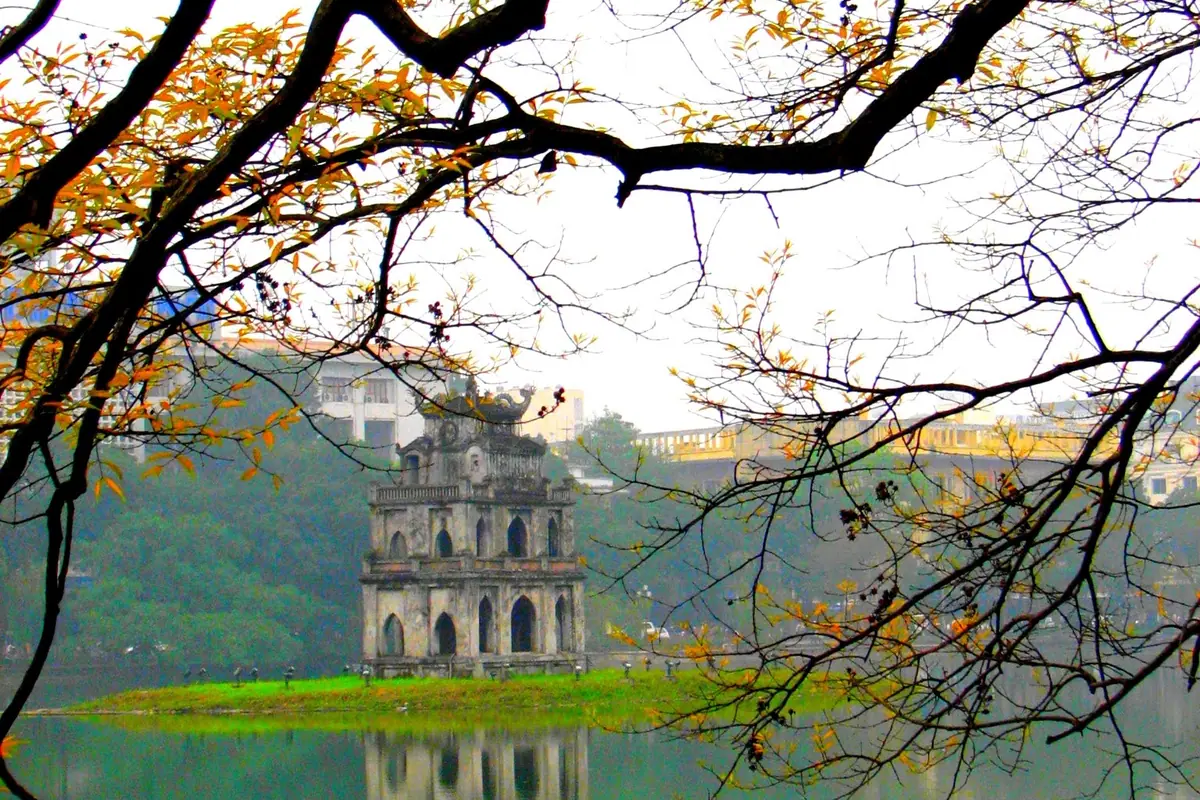
Most journeys start in Hanoi, and the city rewards slow wandering. The Old Quarter is a knot of lanes named for the guilds that once worked them — Hang Bac for silversmiths, Hang Ma for paper goods — and it opens, unexpectedly, onto Hoan Kiem Lake, where a red wooden bridge leads to the small island temple of Ngoc Son. Early mornings here belong to tai chi practitioners and groups of women doing calisthenics; evenings belong to teenagers eating ice cream on the lakeside steps.
West of the lake, the Temple of Literature is the city's most graceful sight: a series of walled courtyards, lotus ponds and stelae recording scholars who passed imperial exams from the 11th century onward. Further north sits the vast, grey Ho Chi Minh Mausoleum complex, with the stilt house where the country's founding leader lived and the tiny One Pillar Pagoda balanced on a single stone column. Walk the railway tracks of the famous Train Street only when signs and locals permit, and finish a day with bun cha, a bia hoi corner, or a thick egg coffee in a second-floor café overlooking the chaos.
Plan on three nights minimum, and treat the first day as jet-lagged drifting rather than sightseeing. Traffic looks lethal and isn't: walk at a steady pace and it flows around you.
Ha Long Bay, Lan Ha and the Karst Seascape
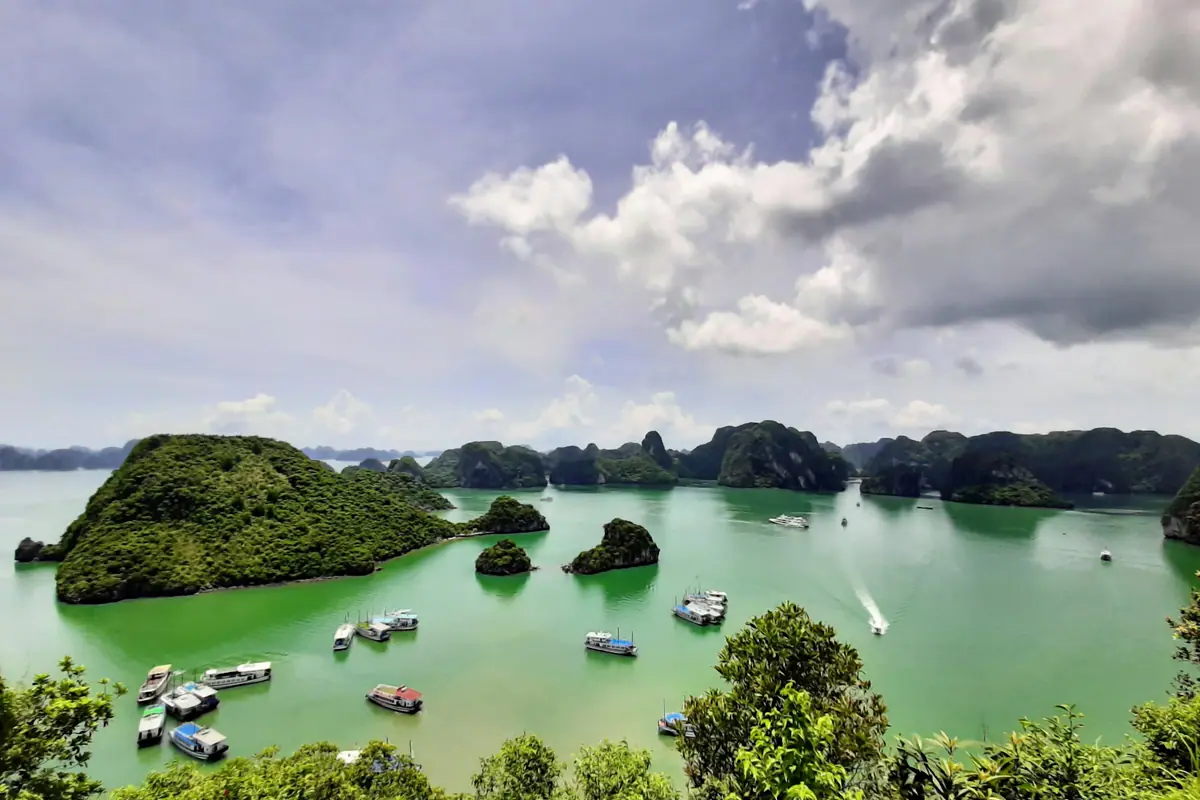
The limestone towers of Ha Long Bay are Vietnam's postcard, and they live up to it if you choose your route carefully. Nearly 2,000 islands and islets rise from green water, many hollowed into caves — Sung Sot, the biggest, is a cathedral-scale chamber of stalactites. Climb the steps on Titop Island for the classic panorama of anchored boats among the peaks, or paddle a kayak into hidden lagoons where the only sound is water dripping from the rock.
The bay gets busy, so consider Lan Ha Bay or Bai Tu Long Bay instead, which offer the same geology with fewer vessels and cleaner swimming. Most visitors take an overnight or two-night boat from the harbour town of Halong or from Cat Ba Island, where you can also hike in the national park and spot the rare Cat Ba langur.
The sweet spot is October to April, when skies are cooler and clearer; July to September brings typhoon risk and cancelled sailings. Whatever the season, check that your operator is licensed and that the itinerary avoids the most congested hours in the central bay.
Ninh Binh and the Northern Highlands
Two hours south of Hanoi, Ninh Binh is often called the inland Ha Long Bay, and it earns the comparison. At Tam Coc and Trang An, rowers — many of them using their feet on the oars — glide you through rice paddies and limestone tunnels past temples tucked into cliff walls. Above it all, the Hang Mua viewpoint demands around 500 stone steps, repaid with a sweep over the Ngo Dong River and the Tam Coc valley. Nearby Bai Dinh Pagoda is one of the largest temple complexes in the country, and Cuc Phuong National Park protects some of Vietnam's oldest forest.
North and west of Hanoi, the terrain rises fast. Sapa sits among terraced valleys carved by Hmong and Dao communities, with day hikes to villages like Cat Cat and Lao Chai, and the cable car to Fansipan, at 3,143 metres the highest peak in Indochina, when clouds allow the view. Further north still, the Ha Giang loop is the country's great motorbike ride — four or five days of hairpin passes, cave-mouth villages and viewpoints such as Ma Pi Leng, where the Nho Que River cuts a green thread through the gorge.
Time it for September to November, when rice turns gold, or March to May for wildflowers and clear skies. Winter at altitude is genuinely cold — bring layers you would not expect to need in Vietnam.

The Central Spine: Hue, Da Nang and Hoi An
Central Vietnam holds the country's densest concentration of history and beach. Hue, the Nguyen dynasty capital, is dominated by the Imperial Citadel and its Forbidden Purple City, still scarred by war but steadily restored. Across the Perfume River, the Thien Mu Pagoda and the elaborate tombs of emperors Tu Duc and Khai Dinh sit among pine and lotus, and a dragon boat ride between them is a slow, lovely half-day.
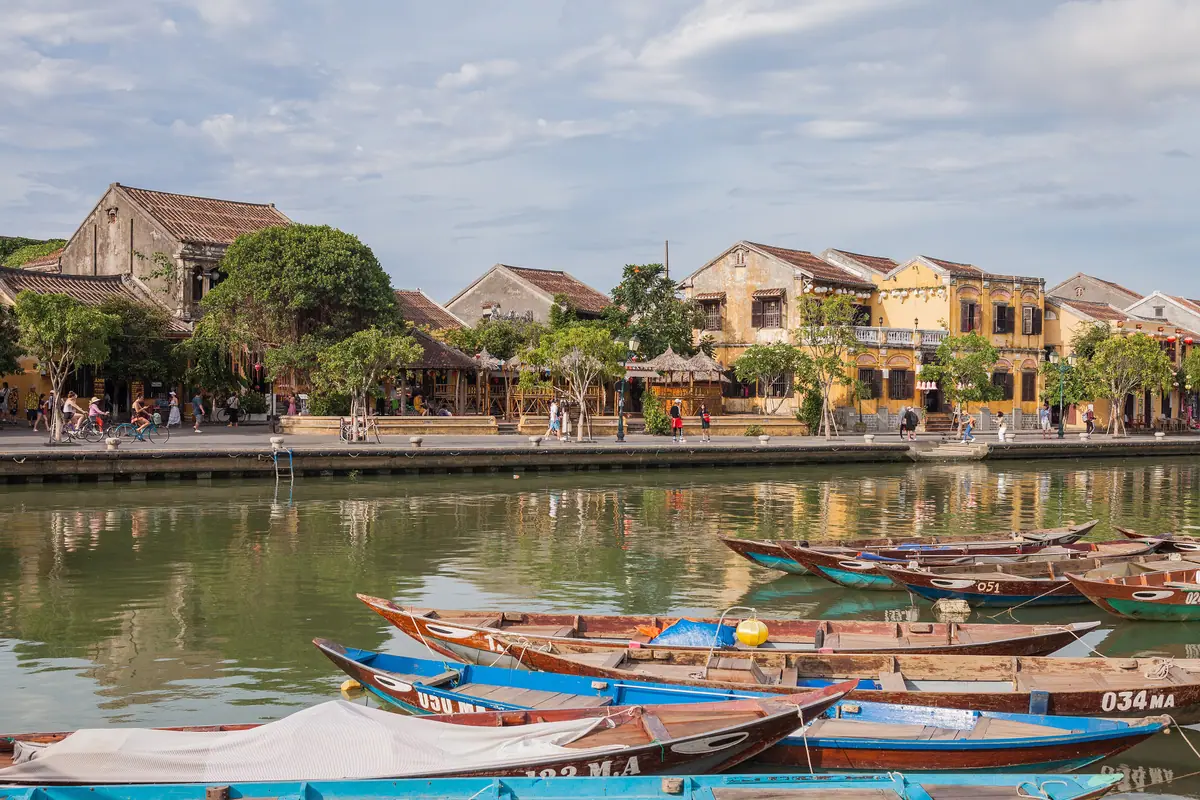
South of Hue, the Hai Van Pass climbs through cloud forest between the sea and the mountains — do it by hired car or motorbike rather than by bus if you can. Da Nang, on the other side, mixes the broad sands of My Khe Beach with the marble caves and pagodas of the Marble Mountains. Then comes Hoi An: a UNESCO-listed trading port of yellow shophouses, the covered Japanese Bridge, assembly halls built by Chinese merchants, and tailor shops that turn out a suit in 24 hours. Hire a bicycle for the rice fields and An Bang beach, and take a half-day trip to the Hindu temple ruins of My Son.
February to May is the driest, brightest window here. September to November can bring heavy rain and flooding, especially in Hoi An's riverside lanes.
The South: Ho Chi Minh City, the Delta and the Islands
Ho Chi Minh City is Vietnam at full throttle. The War Remnants Museum is sobering and essential; the Independence Palace preserves 1960s state rooms as if the clock stopped; the neo-Romanesque Notre-Dame Cathedral Basilica of Saigon and the French colonial post office face each other across a plaza ringed by bookshops. Ben Thanh Market handles the souvenirs, but the food is better in the alley stalls of District 3 and 4 after dark. A half-day trip to the Cu Chi Tunnels reveals the astonishing underground network of crawl-ways, kitchens and hospitals used during the war.
West of the city, the Mekong Delta unfolds in a maze of channels, coconut groves and floating markets. Can Tho is the base for an early-morning boat to Cai Rang market, where traders sell pineapple and noodles from sampans and the river becomes a street. Beyond the delta, Vietnam's coast turns resort-bright: Nha Trang for diving, Mui Ne for kitesurfing and red dunes, the cooler hill town of Da Lat for coffee farms and pine forest, Phu Quoc for long beaches and sunsets, and Con Dao for turtles and near-empty sand.
December to April is the south's dry season and the best time for beaches and delta trips. The Mekong is hot and humid year-round, so start market excursions at dawn.
When to Go and How to Link It All Together
Vietnam has three climates, so there is no single best month — only a best route for the season. Northern Vietnam is pleasant from October to April; the centre is driest from February to May; the south stays warm and dry from December to April. July to September is hot and storm-prone in the north and centre but fine in the south, while October and November bring rain and occasional typhoons to the central coast. Tet, the lunar new year, falls in late January or February: expect transport to book out, many family shops to close, and prices to rise.
A classic first trip runs 12 to 14 days: three nights in Hanoi, two in Ha Long or Lan Ha Bay, one or two in Ninh Binh, then a flight or overnight train south to Hue, three nights in Hoi An, and a final few days in Ho Chi Minh City with a Mekong extension. Distances are long, so domestic flights and the north–south railway — slower, scenic, and worth one leg in a sleeper carriage — are your friends.
Travel gently and it goes smoothly: carry small notes for markets, agree motorbike or boat prices in advance, and buy travel insurance that covers scooters. Visitors from many countries can arrange an e-visa online before arrival, but rules change — verify your own eligibility close to departure. Keep cash for the highlands and islands, and always leave one unscheduled day; Vietnam's best moments are usually the ones you didn't plan.
Frequently asked questions
What is the best time of year to visit Vietnam?
It depends on where you go. October to April suits the north, February to May is best for the central coast around Hue and Hoi An, and December to April is ideal for Ho Chi Minh City, the Mekong Delta and the southern beaches. If you want one trip that works everywhere, late February to April is the safest compromise.
How many days do I need in Vietnam?
Ten days is the minimum for a comfortable north-to-south taste: Hanoi, Ha Long Bay, one central stop such as Hoi An, and Ho Chi Minh City. Two to three weeks lets you add Ninh Binh, Hue, the Mekong Delta or the northern highlands without living on overnight transport.
How do I get around between regions?
Domestic flights are cheap and fast for long hops such as Hanoi to Da Nang or Da Nang to Ho Chi Minh City. The north–south railway is slower but beautifully scenic, especially the Hai Van Pass section, and sleeper carriages save a hotel night. Within regions, buses, private drivers and rented scooters cover most ground.
Is Vietnam expensive to travel in?
Vietnam remains one of Southeast Asia's most affordable destinations. Local food, guesthouses, buses and intra-city taxis are gentle on the budget, while boutique hotels, private guides and island resorts push costs up quickly. Cash still rules in markets, small towns and on boats.
Do I need a visa for Vietnam?
Many nationalities can apply for an online e-visa before travel, and some enjoy short visa-free stays. Rules and eligible countries change regularly, so check the current requirements for your passport shortly before booking flights, and make sure your passport has at least six months of validity.
Plan it — experiences in Vietnam
Live search, booked directly with trusted providers.
Sort the rest of your trip
Everything for Vietnam, in one place
Stay in Vietnam
Hotels, guesthouses and apartments — compared in one search.
Search hotels
Transfer in Vietnam
Private driver waiting on arrival — no queues, no surprises.
Book a transfer
Stay online in Vietnam
Travel eSIM — data the moment you land, no roaming bills.
Get an eSIM