Sudan holds more pyramids than Egypt, a holy mountain on a Nile bend, and a coral-stone port that once launched pilgrim ships across the Red Sea — yet most of it sees a handful of visitors a year. This is a country of desert silence, Nubian hospitality and archaeological sites so unfenced you can walk right up and put your hand on a 2,500-year-old relief.
The Pyramids of Meroë: Sudan's Great Burial Ground
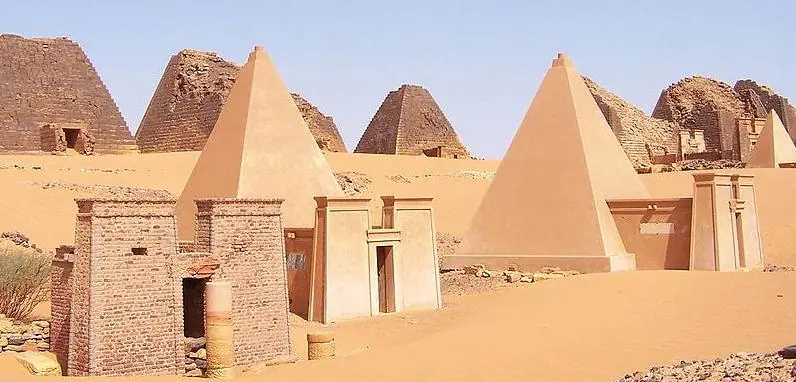
Roughly three hours' drive northeast of the capital, out where the desert turns the colour of milky tea, the pyramids of Meroë rise in tight, steep-sided clusters. Around two hundred of them stand here, built over some six centuries as tombs for the kings and queens of Kush — smaller and sharper than their Egyptian cousins, with narrow offering chapels carved into their bases and the faint ghosts of painted scenes still clinging to the stone. Because there is no fence, no queue and often no one else at all, the site has a strange intimacy: you can walk the dunes at sunrise and have an entire royal necropolis to yourself.
The pyramids sit in three cemeteries — North, South and West — and are best explored on foot in the cool early hours, then revisited at dusk when the sandstone glows orange. Bring water, a hat and a local guide who can point out the queens' pyramids, whose chapels show rulers like Amanishakheto receiving the gods. A short drive away lies the Royal City, the Meroitic capital's own ruins of temples, bath houses and palatial halls, still largely unexcavated.
Most travellers base themselves in Shendi or Atbara and visit over two days, combining Meroë with the desert temples further south. There are simple guesthouses in both towns and the option of desert camping near the site, which is the most atmospheric way to do it. November to February is the sane season; by April the sand is hot enough to burn through a thin sole.
Naqa and Musawwarat es-Sufra: The Island of Meroë's Desert Temples
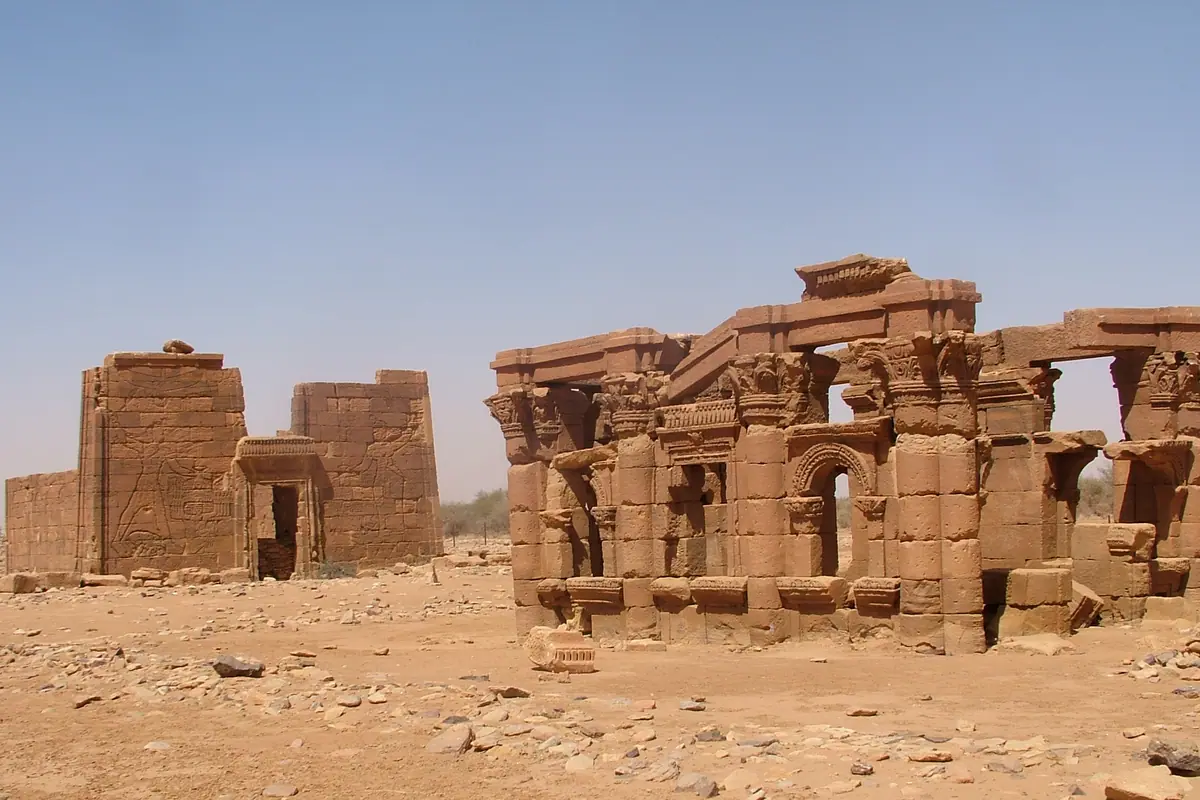
The stretch of semi-desert between the Nile and the Atbara is scattered with the Kushite kingdom's strangest monuments. At Naqa, a Temple of Amun in Egyptian style stands beside the Lion Temple of Apedemak, a distinctly Meroitic god rendered with a lion's head and a body dressed in royal regalia, its walls crowded with reliefs of kings and queens smiting enemies. Nearby lie a Roman-style kiosk and the ruins of a temple to the goddess Hathor, all reached by sandy track rather than tarmac.
Further east, hidden in a valley, Musawwarat es-Sufra holds the Great Enclosure — a labyrinth of low walls, ramps and corridors whose purpose still divides scholars — and the Temple of the Elephant, decorated with carvings of the animals that were trained and traded through this region. Elephants appear again and again in Meroitic art here, a reminder that this was a kingdom with African, Mediterranean and Arabian connections rather than a footnote to Egypt.
Realistically these are 4x4 days. Naqa and Musawwarat are usually visited from a camp near Meroë or from Shendi, with a guide who knows the unmarked turnings, and the heat is brutal from March onwards. Take more water than feels necessary, and expect the silence to be broken only by sand grouse and the wind in the acacia.
Jebel Barkal and the Napatan Royal Cemeteries
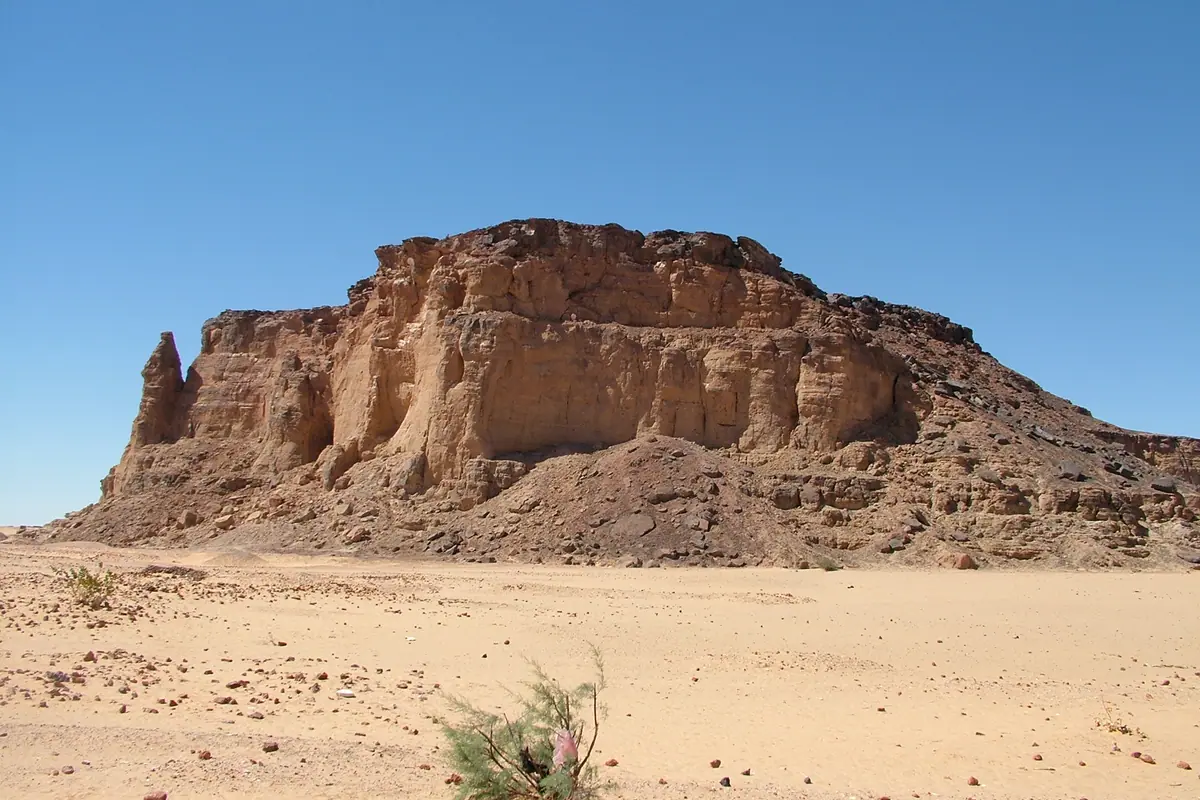
At Karima, beside the fourth cataract, a flat-topped sandstone butte rises abruptly from the palm gardens. Jebel Barkal was considered the dwelling place of Amun and the spiritual heart of the Kushite world, and its base is ringed with temple ruins, rock inscriptions and the rubble of shrines built and rebuilt over more than a thousand years. Climb it in the late afternoon — the path is loose but short — and you are rewarded with a view over the Nile's wide bend, the date palms, and the pinnacle of rock that ancient worshippers read as a rearing cobra.
The mountain is only half the story. Around Karima lie the royal cemeteries of Nuri, El-Kurru and Sanam: at Nuri, roughly twenty pyramids include the tomb of Taharqa, the largest ever raised in Sudan; at El-Kurru, you can descend a staircase into the painted burial chamber of Tanwetamani, its ceiling still carrying figures of the king before the gods. These are the tombs of the kings who ruled Egypt as its Twenty-fifth Dynasty, and walking between them feels like handling the far edge of Egyptian history.
Give the area two full days at least. Accommodation in Karima is basic but friendly — simple hotels and guesthouses with rooftop terraces over the Nile — and the town's date market and riverbank ferry life are worthwhile in their own right. The ferries across to the far bank and the tracks to the cemeteries need a vehicle and, for some stretches, a permit arranged in advance.
Kerma, Soleb and the Nubian North
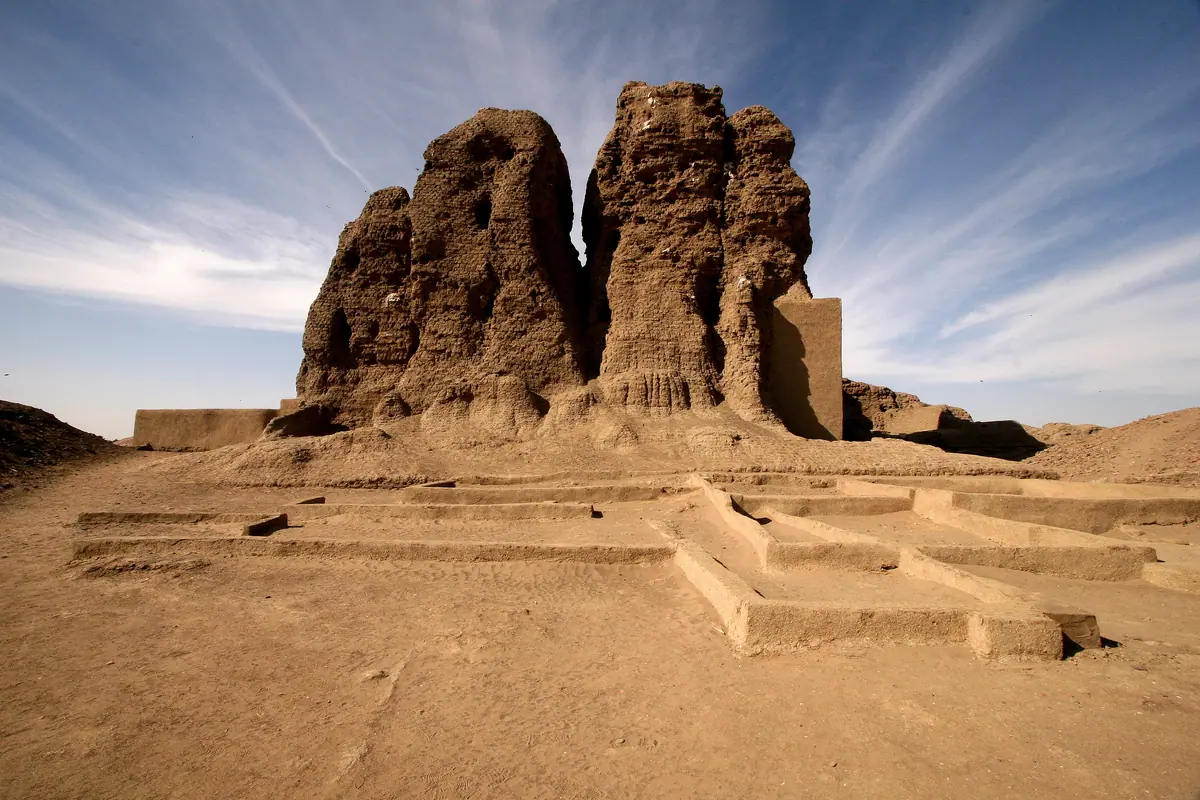
South of the third cataract, the city of Kerma was the capital of a powerful kingdom centuries before Kush moved its centre to Meroë. Its monumental Western Deffufa — a towering mass of mud brick that has survived four thousand years of sun and flood — is unlike anything else in the Nile Valley, and the small site museum displays the extraordinary royal burials found nearby, including beds and ivory inlays from tombs that once held hundreds of retainers. Standing beside that cracked, hand-moulded wall at golden hour is one of Sudan's quietest thrills.
Further north along the Dongola Reach, Old Dongola preserves the ruins of a medieval Nubian capital, with the columns of a throne hall, church foundations and a mosque built into the shell of a cathedral. Beyond it, at Soleb, the Temple of Amenhotep III still carries columns with carved Nubian captives and names of the lands they came from; at Sedeinga, a field of small pyramids marks the cemetery of a queen. At Tombos, granite rapids squeeze the Nile into a corridor of black rock and white water.
The villages along this stretch are as memorable as the ruins. Nubian houses are painted in blues and ochres, with doors decorated in geometric patterns and courtyards shaded by date palms. Hospitality here means a glass of spiced tea, a plate of ful, and long conversation; a few words of Arabic go a very long way, and photographing people without asking is considered rude everywhere in the country.
Khartoum, Omdurman and the Confluence of the Two Niles
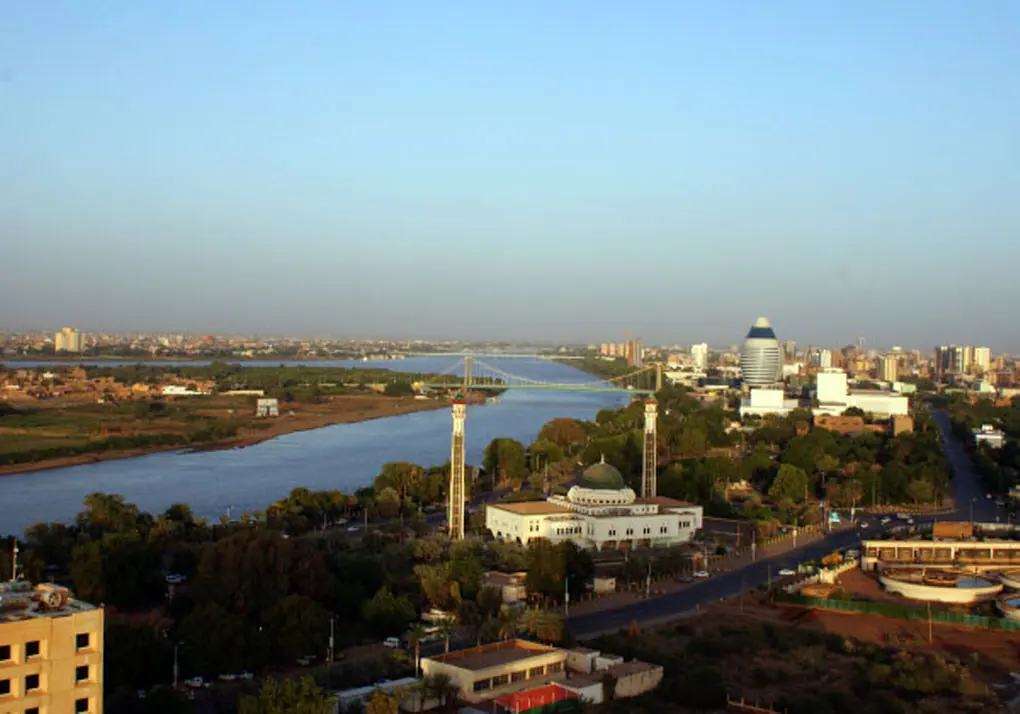
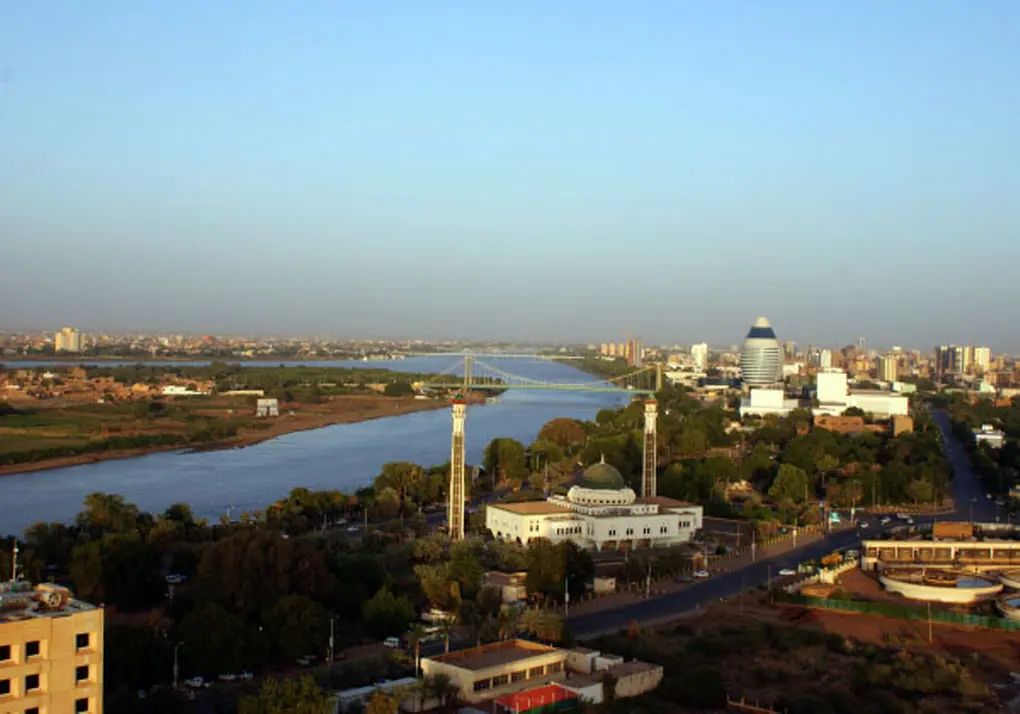
Khartoum's defining sight is water. At al-Mogran, the Blue Nile arrives green and fast while the White Nile slides in pale and silty, and for a while the two run side by side in a single channel, divided by a visible seam of colour. Tuti Island sits in the middle of the meeting point, an old farming community of mango and lime gardens reachable by bridge, and the Nile Street corniche is the city's evening promenade. Inland, the National Museum of Sudan holds entire temples rescued from the rising waters of Lake Nubia, along with Meroitic gold, Christian frescoes from Faras and one of the region's finest collections of Nubian material.
Across the river, Omdurman is the emotional capital: a vast souq where you can buy everything from incense to camel saddles, the domed tomb of the Mahdi, and the Khalifa's house with its displays of nineteenth-century arms and banners. On Friday afternoons, crowds gather at the tomb of Sheikh Hamed al-Nil for a drumming, chanting ceremony where men in green and red spin themselves into trance — one of the most striking spectacles in the country. Early mornings at the camel market are equally vivid, with herds driven in from the desert and traders haggling in the dust.
This is, however, the part of Sudan that has suffered most. Since fighting erupted in April 2023, Khartoum and Omdurman have seen heavy destruction, many museums have been closed or emptied, and the capital region should be treated as off-limits until conditions genuinely change. Plan these sights as part of a future trip and confirm the situation locally and with official travel advice before booking anything.
Suakin, the Red Sea Reefs and the Eastern Mountains
On Sudan's Red Sea coast, the island of Suakin is one of the strangest places in Africa: a walled Ottoman-era port built entirely of coral stone, with tall houses, carved wooden verandahs and arched shafas now half-collapsed into dunes and salt air. For centuries this was the point of departure for pilgrims sailing to Arabia and a crossroads for trade from the interior, and walking its abandoned alleys — especially at low tide, when you can cross from the mainland on foot — feels like wandering a city caught mid-exodus. Nearby Port Sudan serves as the base, with boat trips out to the reefs.
The diving here is exceptional and largely unknown. Sanganeb Atoll rears out of deep water with sheer walls and prolific fish life, while Dungonab Bay and Mukkawar Island shelter seagrass meadows, dugongs, giant clams and dolphins in calm, shallow water. Liveaboard and day-boat trips run from Port Sudan, with the clearest conditions typically between February and May and again from September to November, when the water is warm and the wind manageable.
Inland, the eastern mountains rise in granite domes around Kassala, whose fruit gardens, spice market and Taka Mountains make a rewarding detour; the hills at Erkowit have long been a summer escape from the coastal heat. Further west, Sennar sits on the Blue Nile amid irrigated fields, and Dinder National Park, best visited between December and April, protects savannah woodland where lion, leopard, roan antelope and huge bird flocks still hold on.
When to Go, How to Travel and What to Expect
The season matters more than almost anything else. From November to February the north is genuinely pleasant — cool mornings, days in the high twenties, nights that need a jacket in the desert. March to June brings fierce heat and dust, with daytime temperatures well above 40°C in the Nile Valley. July to September is the khamsin season in the north and the rainy season in the south, and it is also when the Red Sea coast becomes humid and windy. Serious archaeology-focused trips need ten days to two weeks to cover Khartoum, Meroë, Karima and the northern Nubian sites without rushing.
Distances are long and public transport is slow, so most visitors hire a 4x4 with a driver-guide, or use domestic flights for the big hops and drive the rest. Permits and photography permissions are part of life here: some archaeological areas, border zones and bridges require paperwork arranged in advance, and officials are sensitive about photographing anything military, police, airports or infrastructure. Carry cash, expect patchy mobile coverage outside towns, dress modestly, and be scrupulous about drinking only sealed or treated water.
The biggest consideration is security. The conflict that began in April 2023 has made large parts of the country — including the capital region, Darfur and Kordofan — unsafe, and conditions shift constantly. Travel to the northern archaeological sites and the Red Sea coast has been possible at times, but access, road routes and site openings change with the situation. Check your government's current travel advice, arrange travel insurance that actually covers the region, work with local operators who know the ground, and be ready to change plans. Sudan rewards patience — but only when the timing is right.
Frequently asked questions
Is it safe to travel to Sudan right now?
Large parts of the country, including Khartoum, Omdurman, Darfur and Kordofan, have been affected by armed conflict since April 2023 and should be avoided. Some northern archaeological areas and parts of the Red Sea coast have been calmer at times, but the situation changes quickly. Check your government's latest travel advice and speak to local operators before considering any trip.
When is the best time to visit Sudan?
November to February is by far the most comfortable window, with cool mornings, mild days and cold desert nights. March to June is punishingly hot in the Nile Valley, and July to September brings dust and humidity in the north plus rain in the south.
How long do I need to see the main archaeological sites?
Allow ten days to two weeks for a Nile Valley itinerary covering Khartoum, Meroë and the temples of Naqa and Musawwarat, plus Karima with Jebel Barkal and the royal cemeteries at Nuri and El-Kurru. The far northern sites around Kerma and Soleb add several more days of desert driving.
How do I get around Sudan?
Most travellers use domestic flights for long hops and a hired 4x4 with a driver for the rest, since roads between sites are often sandy tracks. Some sites, border areas and bridges require permits arranged in advance, and photography of military, police and infrastructure is prohibited.
What should I know about Nubian etiquette and daily life?
Hospitality is central: expect offers of spiced tea and shared meals, and accept them where you can. Dress modestly, especially in towns and villages, always ask before photographing people, and carry cash since card payments are rare outside a few city hotels. Food is simple and good — ful, grilled Nile fish, fresh dates and strong sweet coffee.
Plan it — experiences in Sudan
Live search, booked directly with trusted providers.