Sudan holds more pyramids than Egypt, a Nile that slides past forgotten Kushite capitals, and a Red Sea coast of coral-stone ruins and near-empty reefs — yet you will often have the whole scene to yourself. This is a country for travellers who like their history unpolished and their horizons wide, where a temple relief can be three thousand years old and nobody is selling tickets at the gate. Here is where to go, and when.
The Meroe Pyramids: Sudan's Desert Crown
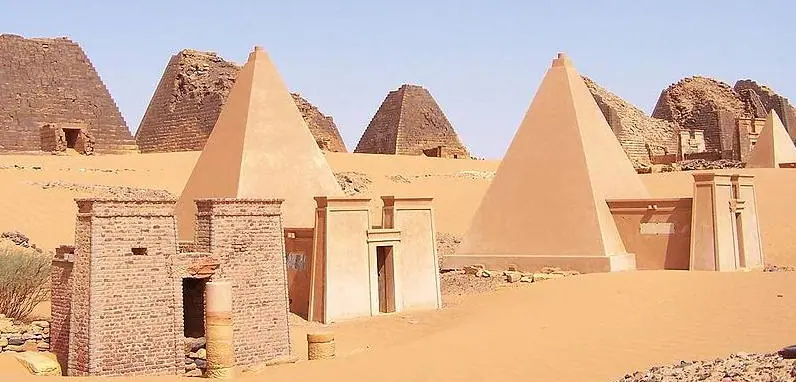
About three hours' drive north-east of Khartoum, the desert at Begrawiya breaks into a ridge of steep, narrow pyramids — close to two hundred of them, the tombs of the kings and queens of Kush. They rise sharper and steeper than their Egyptian cousins, straight out of orange sand, with no fences, no ticket queue and no crowd, just a few camel herders and the wind. Come at sunrise or in the last hour of light, when the dark stone turns amber and every pyramid throws a long shadow across the dunes.
The pyramids are only half the story. A short walk away lie the ruins of Meroe's Royal City — palace walls, temple foundations, a royal bath complex and the stub of a great staircase. Nineteenth-century treasure hunters dynamited the tops of several royal pyramids in search of gold, which is why so many now end in a ragged point rather than a clean capstone.
Base yourself at Shendi or in one of the simple rest houses near the site and allow a full day at minimum; the heat between noon and three is punishing and there is no shade anywhere. Permits are normally arranged in Khartoum before you travel, and the best months are November to February, when mornings are cool and the sky is a hard, cloudless blue.
Jebel Barkal and the Nubian Nile at Karima
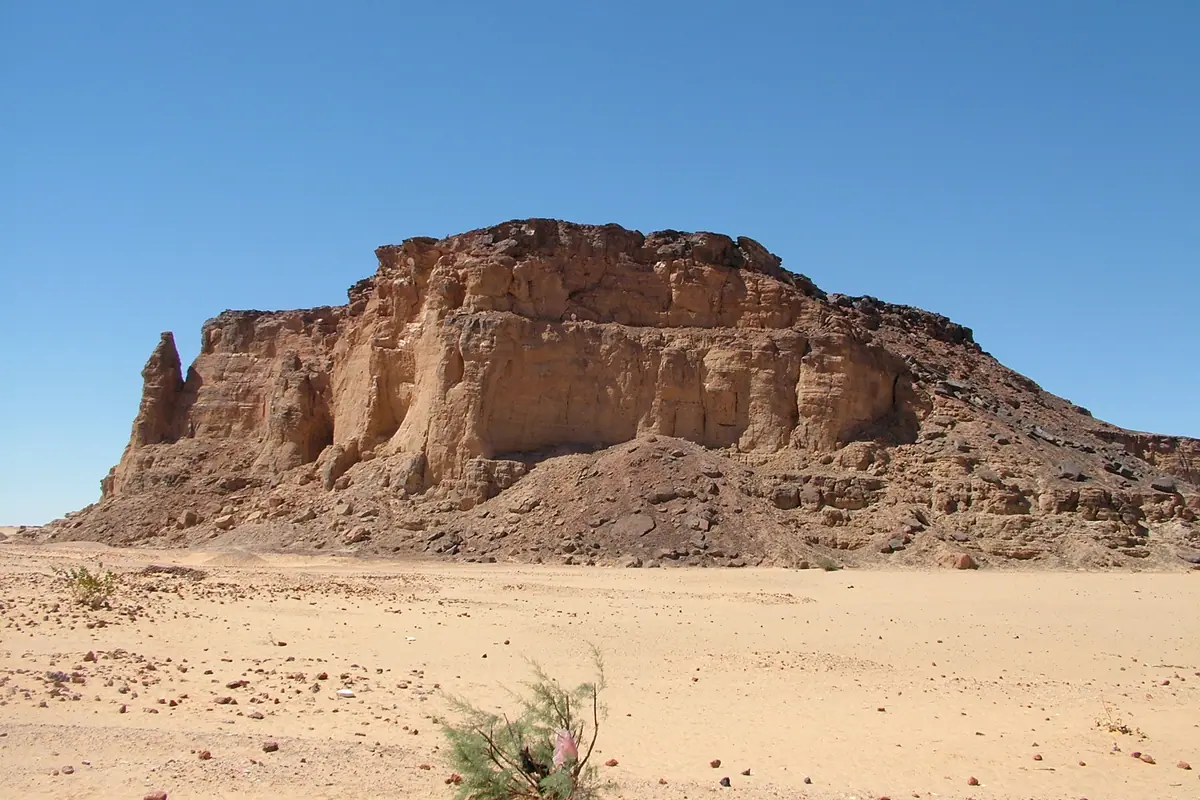
At Karima, a flat-topped sandstone butte called Jebel Barkal rises straight out of a belt of date palms beside the Nile. The Kushites believed their god Amun lived inside the rock, and they built temples at its foot — colonnades, sanctuaries and carved reliefs of kings and winged goddesses — all still standing in the open air. Walk to the base at sunset and the whole massif glows apricot; from the wadi behind it, the pinnacle on the summit looks uncannily like a rearing cobra, which is exactly what the ancients thought too.
Karima is the gateway to a string of sites. Nuri holds the royal pyramids of the Napatan kings, including the largest ever raised in Sudan, while nearby El Kurru hides rock-cut tombs with painted ceilings of stars and deities. Continue north and the Nile narrows into a cataract, then Kerma's Western Deffufa appears — a colossal mud-brick temple older than the pyramids — followed by the ruins of Old Dongola and the surviving columns of Amenhotep III's temple at Soleb, near the shores of Lake Nubia.
Practically, Karima is a long day's drive north of Meroe, or a shorter run across the Bayuda Desert if you have a 4x4 and a driver who knows the sandy tracks. The town has a handful of basic guesthouses, a lively evening market and some of the sweetest dates in the country. Hire a local vehicle for a day to link Jebel Barkal, Nuri and El Kurru — all three fit comfortably.
Naqa and Musawwarat es-Sufra: Temples of the Butana
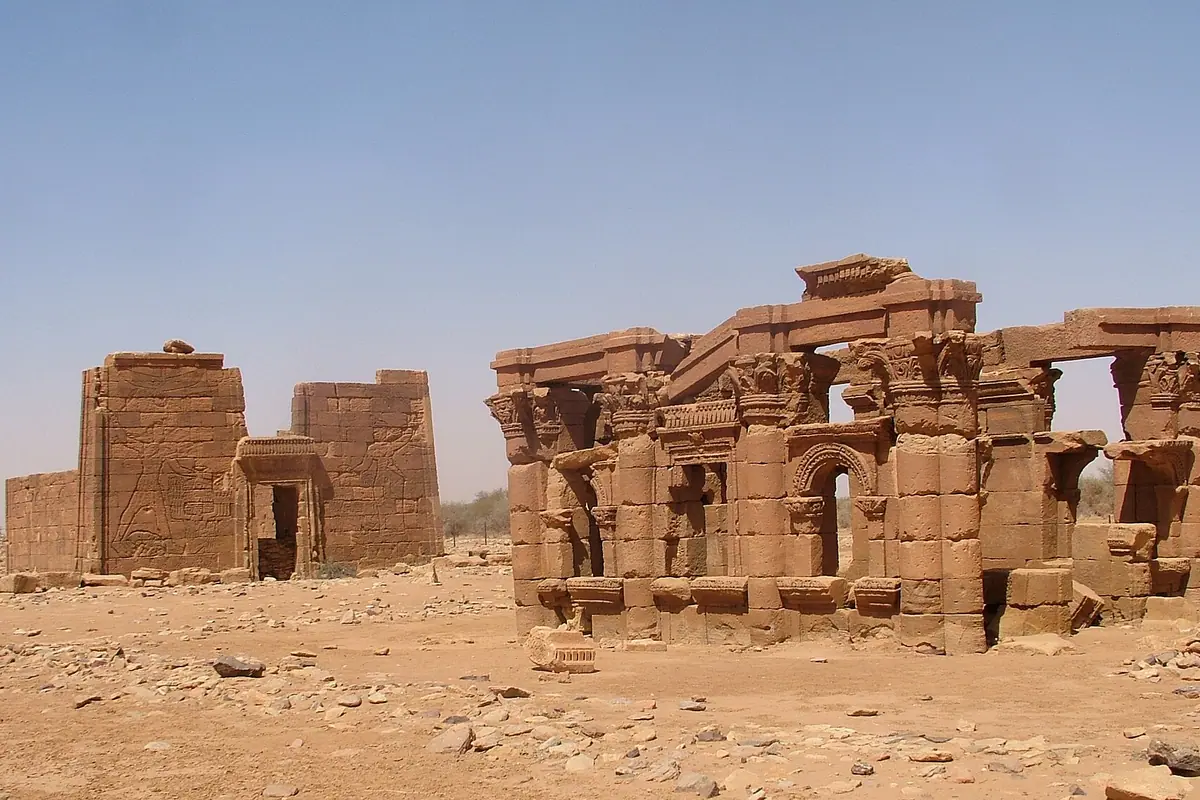
East of the Nile, out in the Butana grasslands, Naqa is a scatter of temples in empty sand: the Temple of Amun fronted by a row of ram statues, and the Lion Temple of Apedemak, where the lion-headed god is carved in profile, gripping captives and bundles of arrows. The reliefs look Egyptian at first glance, then you notice the proportions and the costumes, and you realise you are looking at something entirely Nubian.
A short drive away, Musawwarat es-Sufra is stranger still. The Great Enclosure is a labyrinth of low sandstone walls, ramps and corridors with no obvious roof, decorated with elephants and lions. It may have been a pilgrimage centre or a training ground for the war elephants the Kushites used; either way, standing inside its maze with nobody else for miles is one of Sudan's great travel moments.
These are desert sites — sandy tracks, no facilities, no shade and no water. Most travellers reach them as a guided day trip or an overnight camp from Shendi or Karima, travelling by 4x4 with a licensed guide and permits arranged in advance. December and January are ideal; by April, midday walking becomes genuinely unpleasant.
Khartoum and Omdurman: Confluence, Souqs and Dervishes
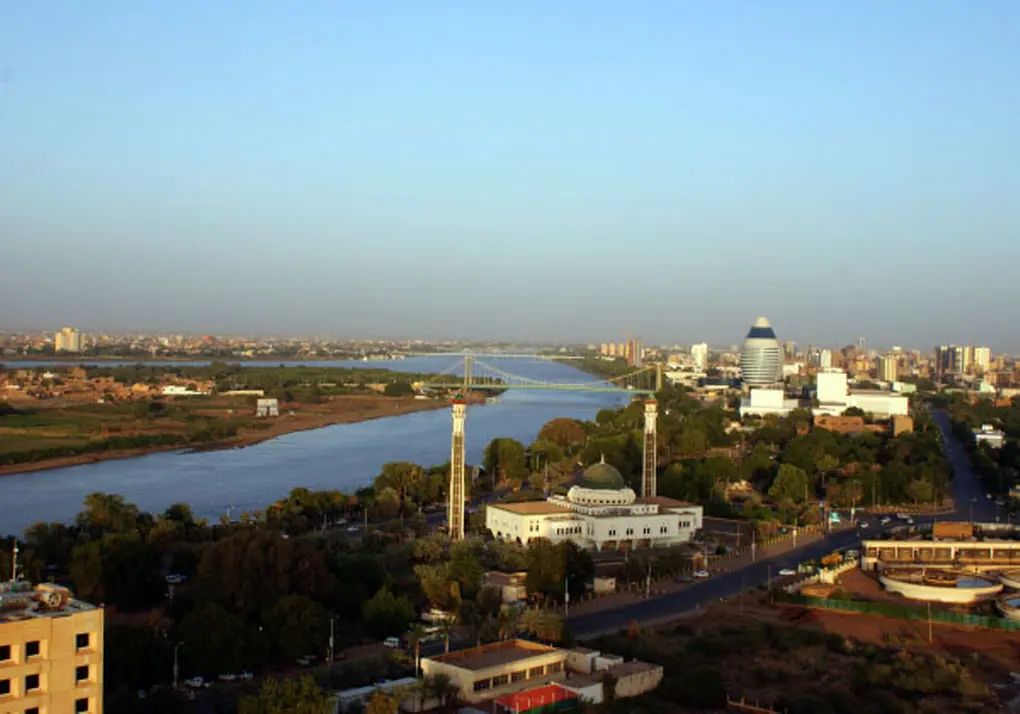
Khartoum itself is modest — wide Nile Street, government buildings, a scatter of hotels — but its setting is extraordinary. At Al-Mogran, the Blue Nile and the White Nile slide alongside each other in two distinct colours before merging, and Tuti Island sits in the middle of the junction, still farmed and still reached by small ferry. Take a seat at a Nile-side café at dusk as the light drops behind the confluence.
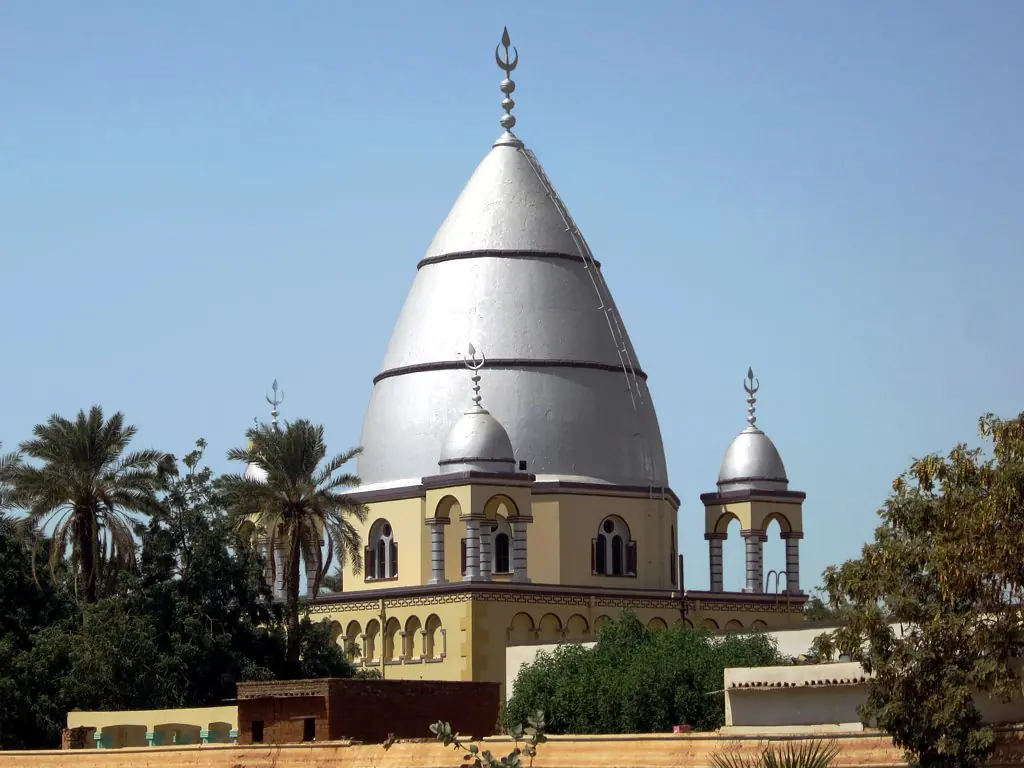
The real life of the capital lies across the river in Omdurman, where the souq runs for kilometres — spices, incense, silver filigree, leather, sacks of gum arabic — and the camel market on the edge of town is a spectacle in itself. Above the market stands the domed tomb of the Mahdi, and beside it the Khalifa's house, now a small museum of nineteenth-century Sudan.
Time your visit to a Friday afternoon, when crowds gather at the tomb of Sheikh Hamed al-Nil for the Sufi ceremony: drums, chanting, green and red flags, and lines of men whirling until their robes blur. The national museum on Nile Street holds remarkable Nubian collections, so check locally whether it is open before building a day around it. Do also check current travel advice — Sudan's recent years have been turbulent, and airports, roads and permits can change at short notice.
Suakin and the Red Sea: Coral Ruins and Reefs
South of Port Sudan, Suakin was once the great pilgrim port of the Red Sea, its houses built from blocks of coral cut straight from the reef. Today it is half ghost town: arcaded facades, carved wooden doors, roofless rooms full of salt air and stray goats, linked to the mainland by a causeway. Wander it in the early morning when the coral stone turns pink, and you have one of the most atmospheric ruins on the African coast.
The sea is the other draw. Sanganeb, an atoll with a lighthouse on its rim, drops into sheer reef walls, while Dungonab Bay shelters dugongs, dolphins and wide seagrass beds. Diving and snorkelling here are world-class and almost empty of boats, with visibility that often reaches thirty metres.
October to May is the season — calm water, comfortable air and the best light. By June the coast turns fiercely hot and humid. Port Sudan has the airport, hotels and dive operators, Suakin is an easy drive south, and the road continues along the coast; arrange diving through your hotel or a local operator, and bring reef-safe sunscreen.
Kassala, the Taka Mountains and Dinder National Park
In the east, Kassala sits beneath the Taka Mountains — smooth granite domes that rise straight out of the plain, with the sharp peak of Toteil dominating the skyline. Climb partway up at dawn for the view over the town's minarets and the Gash riverbed, then spend the afternoon in the market, where Eritrean and Ethiopian traders sell coffee, fruit, silver and bright printed cloth. After the July-to-September rains, the mountains and plain turn improbably green.
Further south and west, Dinder National Park protects a swathe of savannah and floodplain on the Blue Nile's edge — one of the few places in this region where you can do a proper game drive. Lion, roan antelope, tiang, reedbuck and hundreds of bird species move through the acacia and maya flats. It is not the Serengeti, and that is exactly the point: you may be the only vehicle out there.
Dinder is roughly a day's drive from Khartoum and is normally visited between December and April, once the tracks dry out, with a guide, a permit and camping gear. Above Kassala, the hill station of Erkowit offers cooler air and misty mornings when the lowlands are stifling — a good place to break the journey.
Frequently asked questions
When is the best time to visit Sudan?
November to February suits the northern desert and Nile sites, with cool mornings and clear skies. The Red Sea coasts are at their best October to May, and Dinder National Park is usually accessible December to April. Avoid March to June, when dust storms and climbing heat make long days outdoors exhausting.
How many days do I need for Sudan's highlights?
Around ten to fourteen days covers the classic northern circuit: two to three days in Khartoum and Omdurman, a day or two at the Meroe pyramids, two days around Karima and Jebel Barkal, a day for Naqa and Musawwarat es-Sufra, and three or four on the Red Sea. Add a week if you want Kassala and Dinder.
Do I need permits or a guide for the archaeological sites?
Yes. Permits for archaeological sites and desert regions are normally arranged in Khartoum before you set off, and a licensed local guide is expected at places such as Naqa and Musawwarat es-Sufra and on cross-desert routes. If you carry professional camera gear, sort out photography permission in advance and always register when heading into remote areas.
How do I get around Sudan?
Domestic flights link Khartoum with Port Sudan, and long-distance buses and shared minivans cover the main highways. For the pyramids, Jebel Barkal and the Butana temples, hire a 4x4 with a driver — the tarmac roads north are good, but desert tracks need high clearance and local knowledge of the sand.
What should I pack and wear?
Loose, modest clothing covering shoulders and knees is the norm; women may find a light scarf useful in markets and villages. Bring strong sun protection, a dust scarf, a headlamp, water purification, and enough cash in clean notes, since cards rarely work outside a few city hotels. Flexibility matters more than any single item.
Plan it — experiences in Sudan
Live search, booked directly with trusted providers.