Nauru is a single plug of coral and phosphate rock in the middle of the Pacific, roughly 21 square kilometres with one ring road, one runway and a coastline of sheer coral cliffs. It is the world's smallest island republic, and it rewards travellers who come for the oddity as much as the scenery: rusting Second World War guns on a ridge, a green lagoon hidden inland, a mined-out moonscape of stone pinnacles and one improbably perfect sandy bay. Three or four days is enough to see all of it.
Command Ridge: World War II Relics at Nauru's Highest Point
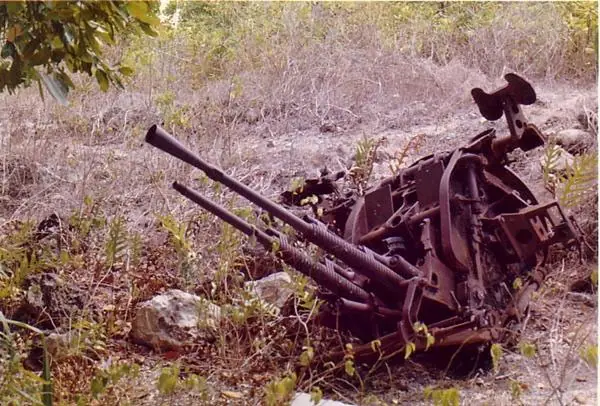
Command Ridge, in the Aiwo district on the western side of the island, is Nauru's highest ground at just over 60 metres — a modest bulge of coral limestone that happens to hold the country's most absorbing historical site. Japan occupied Nauru from 1942 until the end of the Second World War, and this ridge served as a command post. Today you can walk among concrete bunkers, a collapsed tunnel entrance and a heavy naval gun that still swivels on its mount, its barrel rusted orange against the sky. From the top the whole island unrolls: the green bowl of Buada Lagoon inland, the reef line whitening along the coast, and on a clear day an uninterrupted horizon in every direction.
There is no shade and no ticket office — you simply drive up and wander, which is part of the appeal. Go in the early morning or the last hour before sunset, when the light is soft and the heat bearable, and wear closed shoes because the rock is sharp. Allow an hour. Other wartime traces are scattered around: a Japanese cemetery and memorial near the coast road, and plaques in the Yaren area remembering the Nauruan families deported to Micronesia during the occupation, a chapter locals still discuss with quiet gravity.
Buada Lagoon: The Island's Green Heart
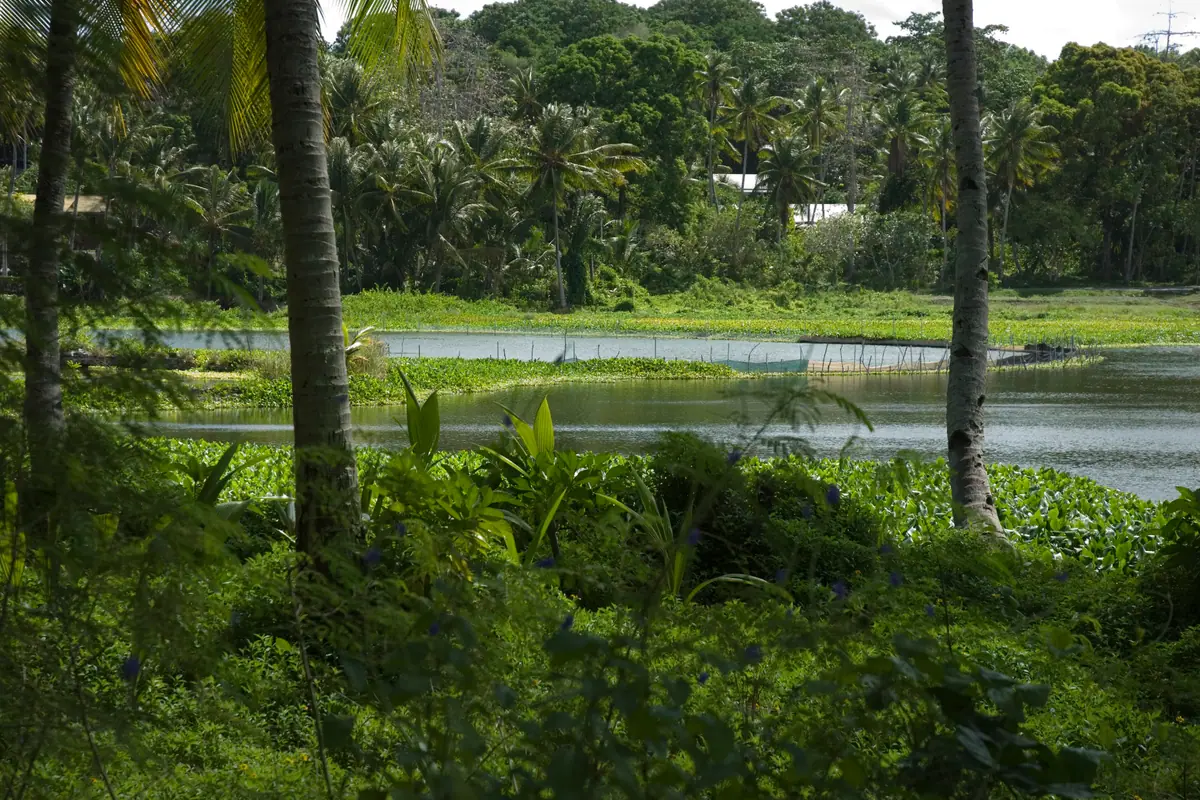
Buada Lagoon sits in a shallow depression in the interior, the closest thing Nauru has to a classic tropical scene: a landlocked sheet of dark, faintly brackish water fringed with coconut palms, pandanus, banana and breadfruit. The fertile belt around it survived the phosphate digging that stripped so much of the rest of the island, and it remains the greenest, coolest corner of the country.
A single road loops the lagoon, and walking or driving it takes well under an hour. Come at dawn for the birdlife — the Nauru reed warbler is found nowhere else on earth, and white terns, black noddies and frigatebirds work the palms above the water. Local families fish the lagoon for milkfish and gather at the picnic shelters at weekends. Swimming is possible, though the water is dark and the bottom soft. Pair it with a stop in the surrounding villages, where traditional thatched meeting houses still anchor community life.
Anibare Bay: Beach, Harbour and Sunrise on the East Coast
Anibare Bay is where Nauru shows off. Most of the shoreline is a narrow reef flat backed by coral cliffs, but here the coast opens into a broad sweep of pale sand with a harbour tucked into its northern end, built at the turn of the millennium and now home to the island's fishing boats. Because the bay faces east, sunrise is the moment to be there — locals walk and jog the beach in the cool early hours, and the light on the water is superb.
Swimming is pleasant in the shallows near the harbour, but the reef drops away quickly and currents can run strong further out, so ask locally before heading far. The harbour is the base for deep-sea fishing trips, and a half-day out typically brings tuna, wahoo or mahi-mahi. Late afternoon is the time to sit with a cold drink and watch the boats come home.
Topside: Coral Pinnacles and the Phosphate Moonscape
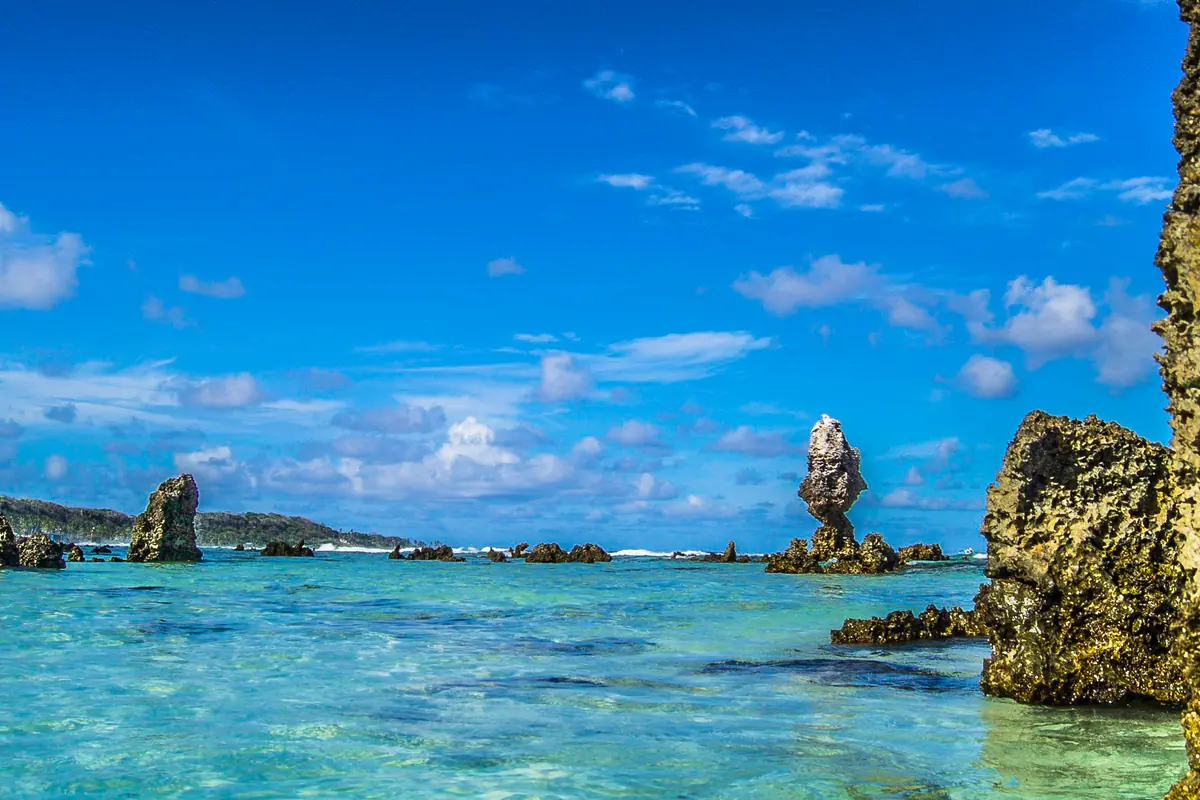
Topside is the local name for the raised interior plateau, and it is unlike anywhere else in the Pacific. A century of phosphate mining stripped away the soil and left behind a surreal field of jagged coral limestone pinnacles, some more than ten metres tall, standing in ranks across the centre of the island. It looks like a forest of stone teeth, and walking among it feels genuinely otherworldly.
Getting there is easy — the ring road climbs up from the coast, and the old phosphate railway, once used to haul ore down to the loading facilities, still cuts across the landscape. Mining has largely stopped, but roughly four-fifths of Nauru's surface was worked over, and the contrast with the green coastal belt is stark. Take water, wear grippy shoes and go early; there is no shade and heat radiates off the rock. Allow an hour or two to drive and wander, and keep clear of machinery still in use.
Yaren: Parliament House, Moqua Well and the National Museum
Yaren is Nauru's de facto capital, a loose ribbon of government buildings, houses and the international airport along the south-western coast. The white Parliament House is the island's most photographed building, flying the Nauruan flag beside the road, with Government House and the Civic Centre a short walk away. The small national museum is worth an hour: wartime relics, shell and shark-tooth ornaments, and photographs of the island before the diggers arrived.
Just outside the district centre, Moqua Well — often called Moqua Cave — is a subterranean pool that once supplied drinking water and sheltered people during the war. It is wrapped in local legend, and the steps down into the cool dark are a fine antidote to the midday sun. Yaren is also where public life plays out: Independence Day on 31 January, Constitution Day in May and Angam Day on 26 October all bring sport, feasting and dancing to the district.
Aiwo, the Old Cantilever and West-Coast Sunsets
Aiwo, on the western coast, is the island's commercial heart and the place to see the machinery of the phosphate years up close. The old loading cantilever — a skeletal arm of steel reaching out over the water where ships once took on ore — is the strangest and most melancholy landmark on the island, and the little boat harbour beside it is still busy with outriggers and skiffs. This coast faces west, so it is where Nauru watches the sunset.
Sport is the other reason to linger. Australian rules football is the national passion, played on ovals in Aiwo and Meneng, and weightlifting is close to a religion — this tiny island has produced world-record lifters out of all proportion to its size, and evening training sessions are easy to find. Plan around the essentials: the drier months from roughly May to October are most comfortable, though it stays hot and humid year-round and the wet season from December to March brings heavy downpours. There is no real public transport, so hire a car or accept lifts — and remember the ring road crosses the airport runway, where traffic stops whenever a plane lands.
Frequently asked questions
How many days do you need in Nauru?
Two or three full days covers Command Ridge, Buada Lagoon, Anibare Bay, Topside and Yaren comfortably. Most visitors stay three or four nights because flights are limited, which leaves time for a fishing trip or a second lazy lap of the ring road.
When is the best time to visit Nauru?
The drier stretch from about May to October is the most comfortable for walking and driving. It is hot and humid year-round, with the heaviest rain between December and March. Independence Day on 31 January and Angam Day on 26 October are the liveliest times to be on the island.
How do you get to Nauru?
There is essentially one air link, a weekly service from Brisbane, occasionally with a second rotation. Most nationalities need a visa arranged in advance, so start the paperwork early — the aircraft is small and seats fill quickly.
How do you get around Nauru?
A single ring road circles the island in roughly 19 kilometres — about half an hour by car. There is little public transport, so hiring a vehicle or relying on lifts from locals is the norm. The road crosses the airport runway, and traffic pauses whenever a plane is landing or taking off.
What should you know about money and services in Nauru?
The Australian dollar is used, ATMs are very limited and cards are not accepted everywhere, so bring enough cash for your stay. Accommodation is a handful of small hotels and guesthouses, mostly on the west coast, and shops and eateries are few and close early. Mobile data can be patchy.
Plan it — experiences in Nauru
Live search, booked directly with trusted providers.