Nauru is a single speck of coral and phosphate rock in the equatorial Pacific: 21 square kilometres, one ring road, fourteen districts and a population you could fit into a modest stadium. There is no resort strip and no chain hotel here — accommodation is a handful of low-rise properties and guesthouse rooms — which is precisely why choosing the right base matters, and why the island's sights, not its beds, are the real reason to come.
Hotels in Nauru: What Accommodation Here Is Actually Like
Start with expectations. Nauru has roughly two proper hotels — one low-rise complex of around a hundred rooms on the east coast near Anibare Bay, and a smaller, simpler property on the west coast at Aiwo — plus a scattering of motel-style rooms, guesthouse units and self-contained flats that open and close depending on demand. There is no international chain, no resort and no room-service culture; what you get is a clean bed, air conditioning, an en-suite bathroom, a small bar or restaurant, and staff who will almost certainly know your name by day two.
Rooms are functional rather than styled: tiled floors, heavy curtains, wall-mounted air-con units, a kettle if you're lucky, and televisions picking up a handful of channels. Wi-Fi exists but is slow and occasionally drops out, and mobile data is patchy and expensive, so plan to be offline far more than you would at home. Pools are small and shaded by palms; the best asset of the east-coast property is simply that you can walk to the water.
Because demand is driven by visiting delegations, contractors and officials, rooms can vanish for weeks at a time. Book as far ahead as you can, confirm by email or phone rather than trusting a web form, and ask three specific questions: is the kitchen open during your dates, is the airport transfer included, and is there a vehicle available to hire? Getting those answers before you fly removes most of the small frustrations the island can throw at a visitor.
Where to Stay: Choosing Your Corner of the Island
Nauru's fourteen districts wrap around a single ring road, so nothing is genuinely far — you can drive the entire coastline in well under half an hour. Even so, each district has a distinct character, and picking the right one shapes your stay. Yaren, in the south, is the administrative heart: Parliament House, the government offices, the small national museum and the international airport all sit here, which makes it the sensible base for anyone visiting on official business.
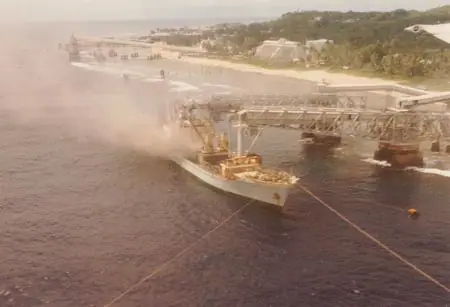
Aiwo, on the west coast, is the island's working port district and its commercial strip. The cantilever that once loaded phosphate onto waiting ships stretches out over the water, and the smaller hotel sits within easy reach of the harbour, the shops and the best sunsets on the island. If you want to walk to the water's edge at the end of the day and watch the light go orange behind the loading boom, this is where to plant yourself.
The east coast — Meneng and Anibare — is where most leisure visitors end up, thanks to the large low-rise hotel and its position a short stroll from Anibare Bay, the island's only true swimming beach. Denigomodu and Buada, further inland and up on the plateau, are residential and have no hotels, but Buada Lagoon is worth the drive and those districts give you a feel for everyday Nauruan life. In practice, a hire car or a bicycle makes any base convenient.
The Must-See Sights: What to Build Your Days Around
Anibare Bay is the postcard: a wide crescent of pale sand and shallow turquoise water on the east coast, sheltered by headlands and at its best around mid to high tide. At its southern end sits Anibare Harbour, a small boat basin cut into the coral where local fishermen head out at dawn and where the sunrise is worth setting an alarm for. Swimming here is gentle in normal conditions, though there are no lifeguards, so keep an eye on the swell.
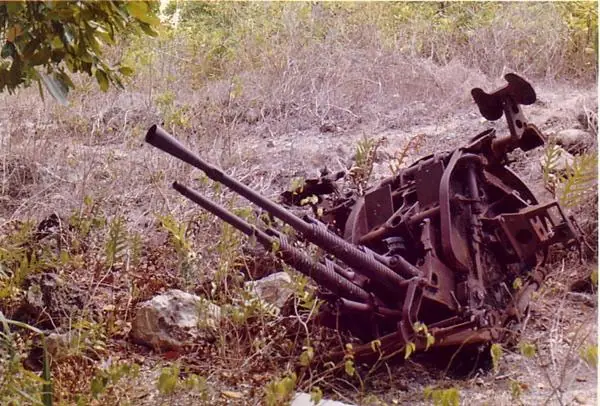
Head inland and up to Topside, the raised plateau that yielded the phosphate which shaped modern Nauru. Buada Lagoon lies in a green bowl of coconut palms, pandanus and taro patches — it's brackish, so no swimming, but a slow circuit of its edge takes about forty-five minutes and is the quietest corner of the island. Close by, Command Ridge marks Nauru's highest point at roughly 65 metres, crowned with Japanese Second World War bunkers and two large coastal defence guns; from up there the whole island, its reef line and the open ocean unfold at once.
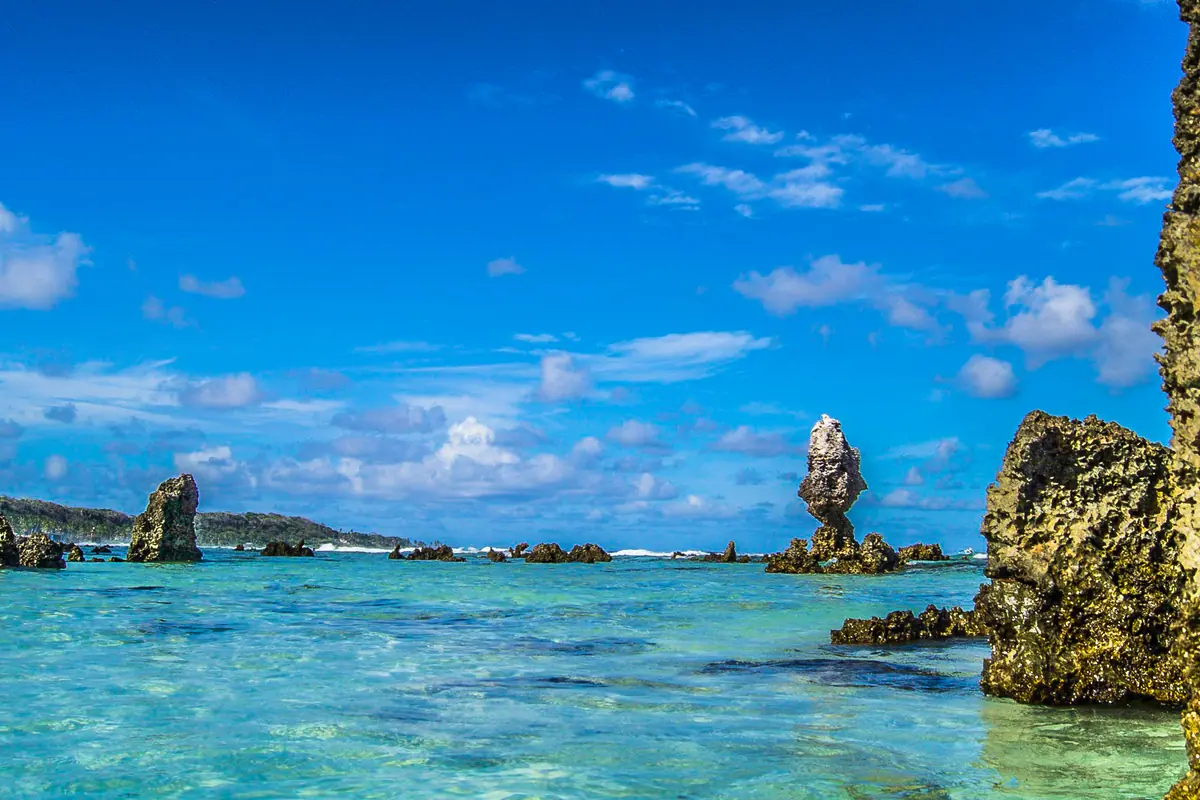
In Yaren, the Moqua Caves hide an underground freshwater lake reached by a short flight of steps — bring a torch and shoes with grip. Back on the west coast, the Aiwo cantilever and the surrounding phosphate works form the island's industrial landmark, best photographed from the ring road. And on the north-east coast, Anabar Bay's coral flats and tide pools reveal a different world at low tide, with hermit crabs, small reef fish and the occasional noddy tern patrolling the shallows.
Reefs, Wrecks and Tide Pools: Nauru from the Water's Edge
Nauru sits alone in deep ocean, so the reef falls away sharply and the water clears fast once you leave the shallows. Anibare Bay is the easiest introduction: snorkel the sandy flats inside the bay at high tide for parrotfish, surgeonfish and the occasional turtle, and stay clear of the channel near the harbour, where currents accelerate noticeably.
More experienced divers come for the wartime wreckage lying off the west and south coasts, where the remains of vessels and aircraft from the Second World War rest in relatively shallow water alongside drop-offs that plunge into blue. Swell and currents can be strong, equipment is limited and there is no large-scale dive industry, so arrange trips through your hotel well in advance and never dive unguided without local knowledge.
The coral coast north of Anibare and around Anabar is at its finest at low tide, when the reef platform emerges into a maze of pools and channels — wear reef shoes, watch for sharp coral and urchins, and go with someone who knows the tide times. Evenings belong to the west coast, where the sun sinks into the sea behind Aiwo and frigatebirds drift home along the cliffs.
When to Go: Seasons, Flights and Entry Basics
Nauru is equatorial, so temperatures hover between roughly 25°C and 32°C all year, with high humidity and a UV index that punishes carelessness. The wetter months run from about November to February, when the northwest monsoon brings heavy afternoon downpours and sticky nights; the drier stretch from around May to October delivers trade winds, slightly cooler evenings and the clearest water for snorkelling and diving.
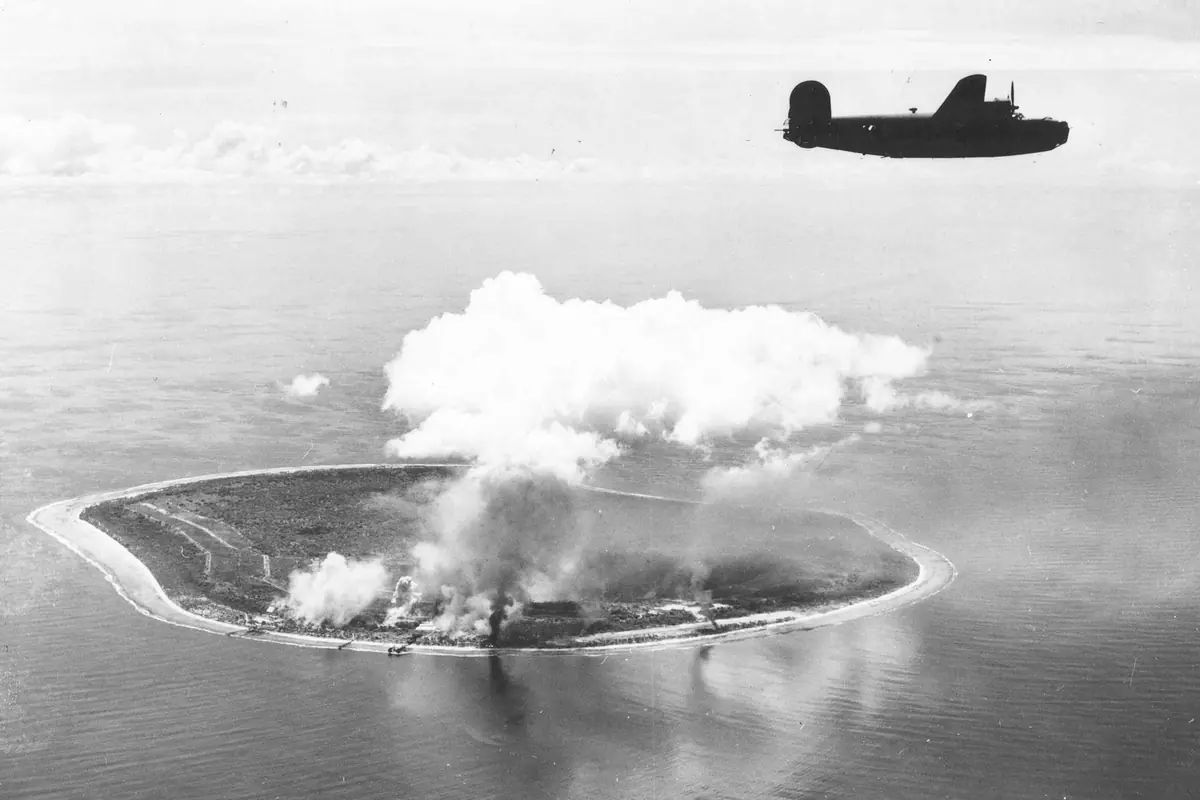
Getting there is the real constraint. Flights are few — typically a limited number of weekly services linking the island with Australia, with Brisbane the most common gateway — and schedules change at short notice. Book months ahead, keep your dates flexible, and reconfirm your flight a few days out. Because the runway slices across the south of the island near Yaren, arriving aircraft are a spectacle in themselves.
Most visitors need a visa arranged before travel through the immigration authorities, and you may be asked for proof of accommodation and an onward ticket; stays of up to 30 days are typical for tourists. Travel insurance that covers medical evacuation is worth having: there is a hospital on the island, but serious cases are usually transferred overseas.

Practical Tips: Food, Money, Transport and Etiquette
Eating out is limited. Hotel restaurants are the most dependable option for a full meal, while a handful of small family-run places around Aiwo and Denigomodu serve rice, noodles, Asian-style dishes and fresh fish. Much of the produce is imported, so menus are short and items do run out; ask what's actually available rather than what's printed. Sundays are quiet, with many businesses closed and church services well attended — plan ahead for food and fuel.
Nauru uses the Australian dollar, and cash is king. ATMs are scarce and often empty, card acceptance outside the hotels is patchy at best, and there is no way to be casual about money here. Bring more cash than you think you'll need, in clean notes, and keep it somewhere secure — fuel, taxis, small shops and plenty of meals are all cash transactions.
Transport becomes simple once you understand the ring road: local buses loop the island in both directions during the day for a flat fare, taxis are few and best booked by phone, and hire cars usually come through the hotels. Driving is on the left, speed limits are low, and potholes and wandering dogs demand attention. Dress modestly away from the beach, ask before photographing people or government buildings, and remember that on an island this small, courtesy travels faster than you do.
Frequently asked questions
How many hotels are there in Nauru?
Only two proper hotels operate on the island — a larger low-rise property on the east coast near Anibare Bay and a smaller one in Aiwo on the west coast — supplemented by a few motel-style rooms and guesthouse units. Availability is limited and rooms are often taken by visiting officials, so book as far ahead as possible and confirm directly.
What is the best time of year to visit Nauru?
The drier months from roughly May to October bring trade winds, cooler evenings and the clearest water for snorkelling and diving. November to February is wetter and more humid, with heavy afternoon downpours, though temperatures stay warm year-round at about 25–32°C.
Do I need a visa to visit Nauru?
Most visitors must arrange a visa in advance through the immigration authorities before travelling, and you may be asked to show proof of accommodation and an onward ticket. Tourist stays of up to 30 days are typical. Because flights are infrequent, sort your visa well before booking anything non-refundable.
How do I get around Nauru?
The island's single ring road makes everything reachable: local buses circle it in both directions during the day for a flat fare, and hire cars can usually be arranged through your hotel. Driving is on the left, distances are tiny — a full circuit takes well under half an hour — and walking or cycling the coast road is genuinely enjoyable.
Can I use credit cards and ATMs in Nauru?
Cash is essential. ATMs are scarce and frequently empty, and cards are accepted mainly at the hotels, so bring plenty of Australian dollars in clean notes and budget more than you expect to spend. There is little scope for relying on digital payments during your stay.
Sort the rest of your trip
Everything for Nauru, in one place
Transfer in Nauru
Private driver waiting on arrival — no queues, no surprises.
Book a transfer
Things to do in Nauru
Skip-the-line tickets, guided tours and standout experiences.
See experiences
Stay online in Nauru
Travel eSIM — data the moment you land, no roaming bills.
Get an eSIM