Kyrgyzstan is a country built almost entirely of sky, pasture and stone — a place where a morning in a capital square gives way to an afternoon at a 3,000-metre lake fringed with yurts. Few destinations pack Silk Road ruins, glacier trekking and horse-herding culture into such a short distance. Here is how to see the best of it without rushing the good parts.
Bishkek and Ala-Too Square: Where Every Kyrgyz Journey Begins
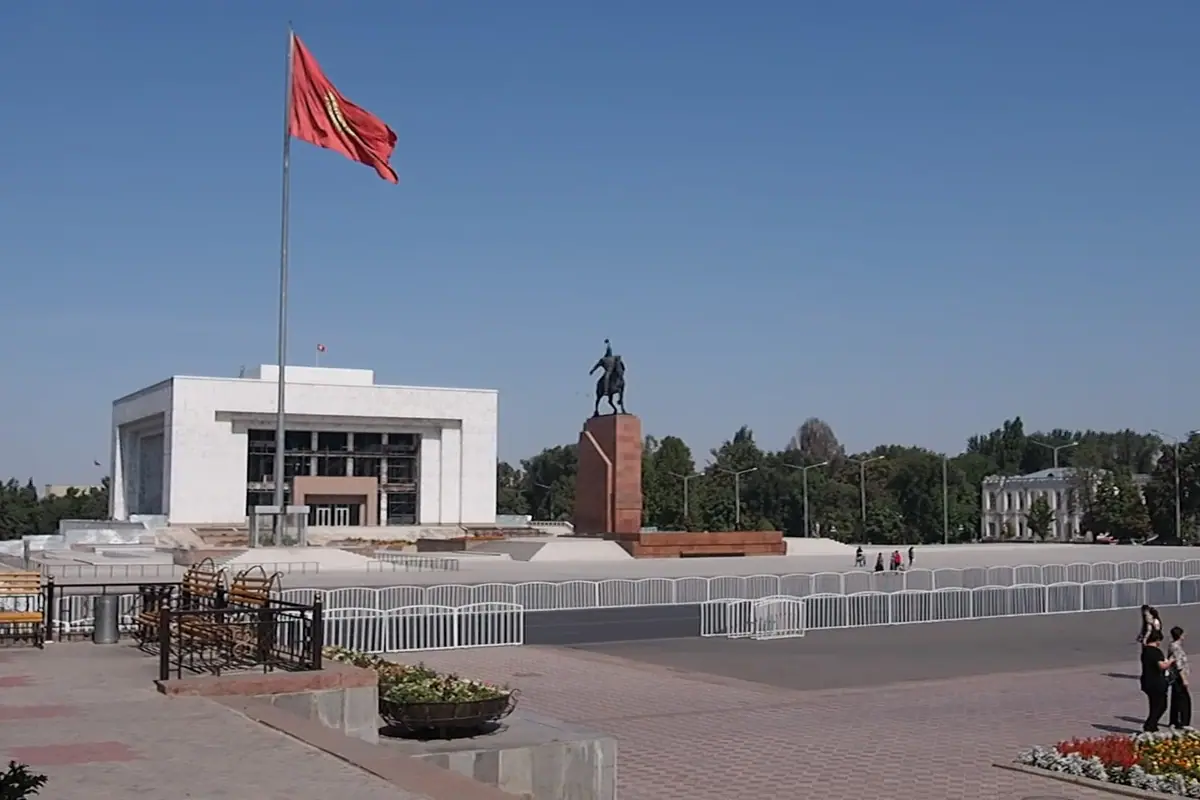
Most trips start in the capital, and Bishkek rewards a relaxed day or two before the mountains take over. The city's ceremonial heart is Ala-Too Square, a broad plaza anchored by the towering statue of Manas, the legendary warrior whose epic poem runs to hundreds of thousands of lines and shapes the national identity. Nearby stands the State History Museum, whose collection moves from Bronze Age petroglyphs through nomadic felt-making to Soviet-era photography. At the square's edge, the changing of the guard draws a small crowd each hour, and on warm evenings families drift past fountains and ice cream vendors until well after dark.
Walk twenty minutes north to Oak Park, a shaded grid of century-old trees, open-air sculptures and a small ferris wheel, then continue to Osh Bazaar — not the city in the south, but Bishkek's sprawling market of the same name. This is where you buy dried apricots by the kilo, honey from mountain apiaries, kalpak felt hats and embroidered shyrdak rugs. It is loud, cheap and vastly more interesting than any souvenir shop. Sunday mornings are the fullest and the most fun.
Allow one full day for the centre and half a day for the bazaar. Bishkek sits at roughly 800 metres, so it is a gentle introduction before higher ground. Buses, trolleybuses and cheap shared taxis make getting around simple, and pretty much everything central is walkable.
Burana Tower and the Chuy Valley: Silk Road Relics an Hour from the Capital
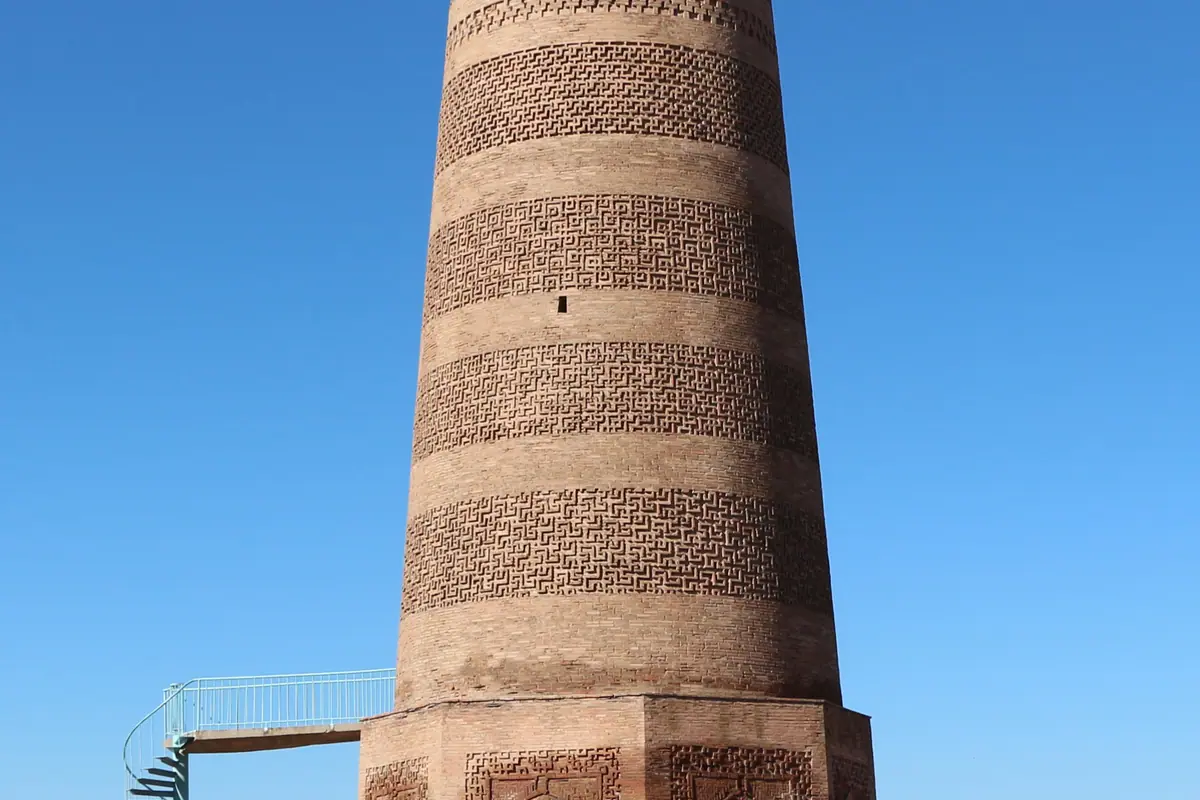
About 80 kilometres east of Bishkek, near the town of Tokmok, the Burana Tower rises out of flat farmland like a lonely lighthouse. Built in the eleventh century as the minaret of a Karakhanid city called Balasagun, it once stood far taller; earthquakes reduced it, and today it measures roughly 24 metres, with a steep, dark internal staircase that rewards anyone willing to squeeze up to the top for views across the valley to the snow line. Outside, a field of balbals — carved stone figures marking ancient graves — and a small museum of excavated finds give the site real depth.
Because it is so close to the capital, Burana works beautifully as a half-day trip, either on the way to Lake Issyk-Kul or as a standalone outing with a stop at the nearby Kegeti or Alamedin gorges for a picnic. Spring brings poppies and green wheat; autumn turns the poplar avenues gold. Bring cash for the small entry fee and a little extra if you want a local guide to explain the carvings.
Combine it with a stroll through Tokmok's fruit market, where the Chuy Valley's apricots, peaches and melons are sold in absurd, wonderful quantities through the summer. Two to three hours on site is plenty, leaving the rest of the day free.
Lake Issyk-Kul: Beaches, Petroglyphs and the Road to Karakol
Issyk-Kul is one of the largest alpine lakes on the planet, a vast, slightly saline sheet of water that never freezes despite sitting at 1,600 metres and being ringed by snow-capped ranges. The northern shore is the resort side — sandy bays, guesthouses and a distinctly holiday mood in July and August — while the southern shore is quieter, wilder and better for camping. Near the town of Cholpon-Ata, an open-air field of petroglyphs scattered across glacial boulders preserves ibex, snow leopards, hunters and sun symbols carved over many centuries, some of them thousands of years old.
Continue east to Karakol, the gateway to the Tian Shan's finest trekking. The town itself surprises first-time visitors with its Chinese-style Dungan mosque, built without a single nail, and the wooden Holy Trinity Cathedral. From here you can head into the Jeti-Ögüz valley, where a wall of red sandstone cliffs known as the Broken Heart rises above grazing horses, or push further up to Altyn-Arashan, a hot-spring valley reached by a rough track or a half-day walk. The classic Ala-Kul trek, typically three to four days, crosses a high pass to a turquoise glacial lake and is the region's signature hike.
Plan two to four days around the lake if you want both the beach and the mountains. The main ring road is paved and shared taxis connect Bishkek, Cholpon-Ata and Karakol; July and August are warmest, though June and September offer quieter trails and clearer light.
Song-Kul and the Summer Pastures: Yurt Stays and Horse Treks
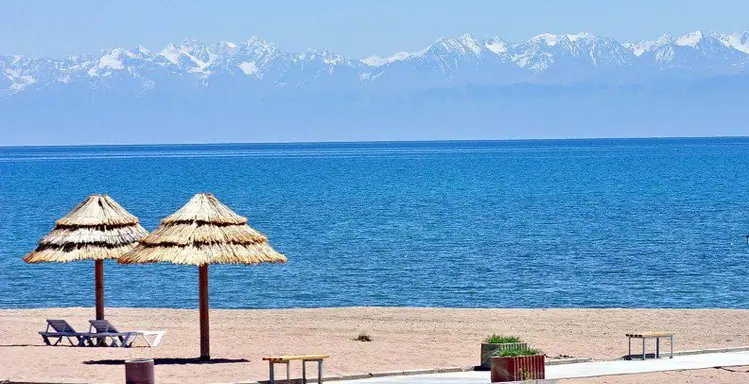
At just over 3,000 metres, Song-Kul is a high, cold, impossibly blue lake surrounded by rolling green jailoo — summer pastures where herding families move with their animals each year. This is the most vivid taste of nomadic life available to a visitor: sleeping in a yurt, drinking kymyz (fermented mare's milk), watching sheep and horses being moved at dusk, and learning how eagles are trained for hunting in the surrounding valleys.
Access is seasonal. Snow closes the passes for much of the year, so the yurt camps operate roughly from mid-June to mid-September, with the warmest and busiest weeks in July and August. You can arrive by 4x4 from Kochkor or Naryn, by a long horseback ride from the valley below, or on a multi-day riding tour that links Song-Kul with smaller lakes and shepherds' camps. Nights are genuinely cold even in midsummer — pack a warm layer and a hat.
Facilities are basic: shared pit toilets, simple meals of bread, jam, noodles and mutton, and no reliable phone signal. That is precisely the appeal. Book through a community tourism association or a local family in Kochkor, and bring small gifts or extra cash for the families, whose hospitality is the highlight of most trips.
Tash Rabat, Naryn and the Road to the Chinese Border
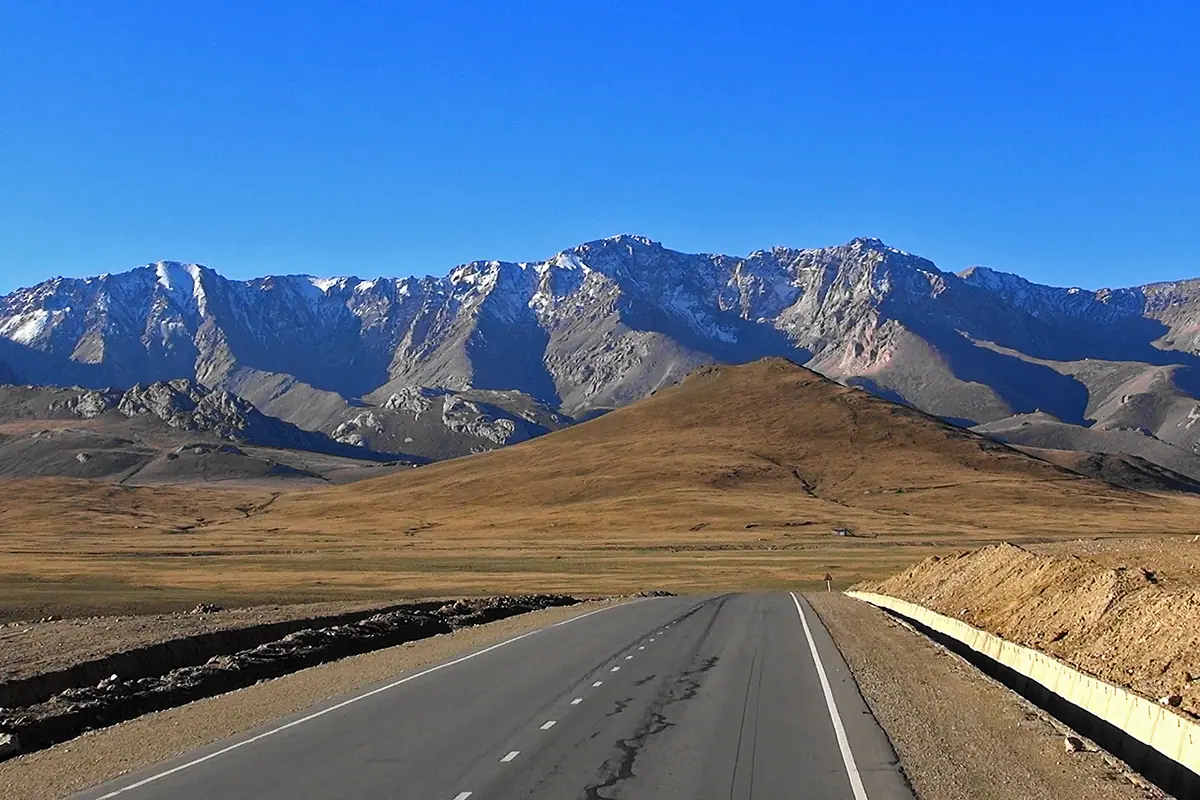
Deep in the At-Bashy range, at around 3,200 metres, sits Tash Rabat — a squat stone caravanserai that sheltered merchants, pilgrims and envoys on the Silk Road for centuries. Its low, domed corridors and thick walls feel wonderfully mysterious, and the setting, with yurts pitched on the meadow outside and snow ridges behind, is one of the most atmospheric in the country. Travel time from Naryn is roughly two hours over rough road, and the last stretch is best done in a sturdy vehicle.
Naryn itself is a long, low town strung along a river, useful as a base for rafting in summer and for onward trips toward the Torugart Pass into China. Further south in the border zone, Lake Kel-Suu hides in a labyrinth of red rock canyons — but reaching it requires a border permit arranged in advance through a licensed agency, plus a local guide and horse or vehicle support. Confirm access before you commit, as permissions open and close.
Two days is the sensible minimum for the Tash Rabat and Naryn loop. The driving route from Bishkek crosses the Too-Ashuu tunnel and then the Dolon Pass, and the scenery alone justifies the trip. Summer afternoons bring sudden hail, so start early and keep a waterproof shell within reach.
Ala-Archa, Arslanbob and the Southern Peaks: Trekking and Walnut Forests
Ala-Archa National Park begins about 40 kilometres south of Bishkek and climbs fast into glacier country. Day hikers can follow the Ak-Sai gorge to a thundering waterfall or walk up to the Ratsek climbers' hut for close views of the corniced ridge above; more ambitious parties continue to glacier viewpoints or multi-day routes toward the high passes. Because the trailhead is under an hour from the capital, it is the easiest proper mountain fix in the country — go on a weekday if you want the path to yourself.
In the south, the town of Arslanbob sits among what is often described as the largest naturally growing walnut forest on earth, a green ocean of trees that turns gold in October. Waterfalls, gentle day walks and homestays make it a mellow counterpoint to the high peaks of the Pamir-Alay, where the 7,000-metre giants of Lenin Peak and Khan Tengri draw serious mountaineers for their short summer windows.
In Osh, the country's southern capital, the rocky hill of Sulayman-Too rises straight out of the city and is a recognised sacred site, dotted with shrines, a small museum and pavilions where Babur is said to have prayed. Climb it at sunset for the best view of the Jayma Bazaar below, an enormous, centuries-deep market of spices, textiles and livestock. From Osh, most travellers continue to Arslanbob or fly back to Bishkek in under an hour.
Frequently asked questions
When is the best time to visit Kyrgyzstan?
June to September is the reliable window for mountains and high lakes. Song-Kul's yurt camps and the road to Tash Rabat generally open from mid-June to mid-September, and the Ala-Kul trek near Karakol is usually clear from late June through early September. May and September are quieter with lower prices, while December to March suits snow sports around the Karakol ski base rather than high-altitude trekking.
Do I need a visa or a guided tour to travel in Kyrgyzstan?
Many nationalities can enter visa-free for up to 60 days, so independent travel is straightforward. You do not need a guide for Bishkek, Issyk-Kul or Ala-Archa. However, border-zone destinations such as Lake Kel-Suu require a permit arranged in advance and a local guide, and multi-day glacier treks are far safer with a licensed mountain guide.
How many days should I allow?
Seven days covers Bishkek, Burana Tower and a loop around Lake Issyk-Kul. Ten to fourteen days lets you add Song-Kul, Naryn and Tash Rabat, or fly south to Osh and Sulayman-Too. Add three or four days if you plan a trek such as Ala-Kul or a horse-riding route between jailoo camps.
Is altitude sickness a concern?
Yes. Song-Kul sits at about 3,000 metres, Tash Rabat at roughly 3,200 metres and many passes are higher. Spend a night or two in Bishkek or around Issyk-Kul first, ascend gradually, drink plenty of water and avoid alcohol on arrival at altitude. Symptoms such as headaches and breathlessness usually ease after a day of rest, but descend if they worsen.
How do travellers get around the country?
Shared taxis and marshrutka minibuses link most towns, with the Bishkek to Karakol and Bishkek to Naryn routes being the main arteries; a 4x4 with a driver is essential for Song-Kul and Tash Rabat. Short domestic flights connect Bishkek and Osh in under an hour. Carry cash in Kyrgyz som, as card payment is rare outside the capital and larger hotels.
Plan it — experiences in Kyrgyzstan
Live search, booked directly with trusted providers.
Sort the rest of your trip
Everything for Kyrgyzstan, in one place
Stay in Kyrgyzstan
Hotels, guesthouses and apartments — compared in one search.
Search hotels
Transfer in Kyrgyzstan
Private driver waiting on arrival — no queues, no surprises.
Book a transfer
Stay online in Kyrgyzstan
Travel eSIM — data the moment you land, no roaming bills.
Get an eSIM