Kyrgyzstan hands you three different holidays in one country: a leafy Soviet-grid capital, a scorching Silk Road city under a sacred mountain, and a high alpine world of yurt camps where the nearest hot shower is a two-hour drive. Choosing the right bed for each leg is what turns a rushed loop into a genuinely good trip.
What Sleeping in Kyrgyzstan Actually Looks Like
Accommodation here falls into three rough worlds. In Bishkek and Osh you find conventional hotels — glassy business blocks, mid-range independents with buffet breakfasts, and converted Soviet apartment buildings with creaking lifts and enormous windows. In towns and villages there are family guesthouses, often a spare floor of a house with a shared bathroom, a garden full of apricot trees and a host who insists you eat a second helping of plov. Up in the mountains, the bed is a yurt.
Worth knowing: the word 'hotel' is elastic. A village 'hotel' may be a handful of rooms behind a family kitchen, and the sign outside says more about ambition than about star ratings. Rooms are usually simple but clean — a bed, a heavy blanket, a kettle, sometimes a fridge. Wi-Fi is fine in the cities, unreliable in the regions and nonexistent at altitude. The compensation is food: lagman, beshbarmak, fresh bread and jam at breakfast, and tea poured the moment you sit down.
International chains are almost absent outside the capital, so your money mostly stays local. The other great Kyrgyz institution is the lakeside sanatorium — Soviet-era health resorts on Lake Issyk-Kul that still offer mineral-water treatments, mud therapies and stern schedules alongside ordinary rooms. They are odd, dated and oddly charming, and they fill up fast in July.
Bishkek: Stay Near Ala-Too Square or Osh Bazaar
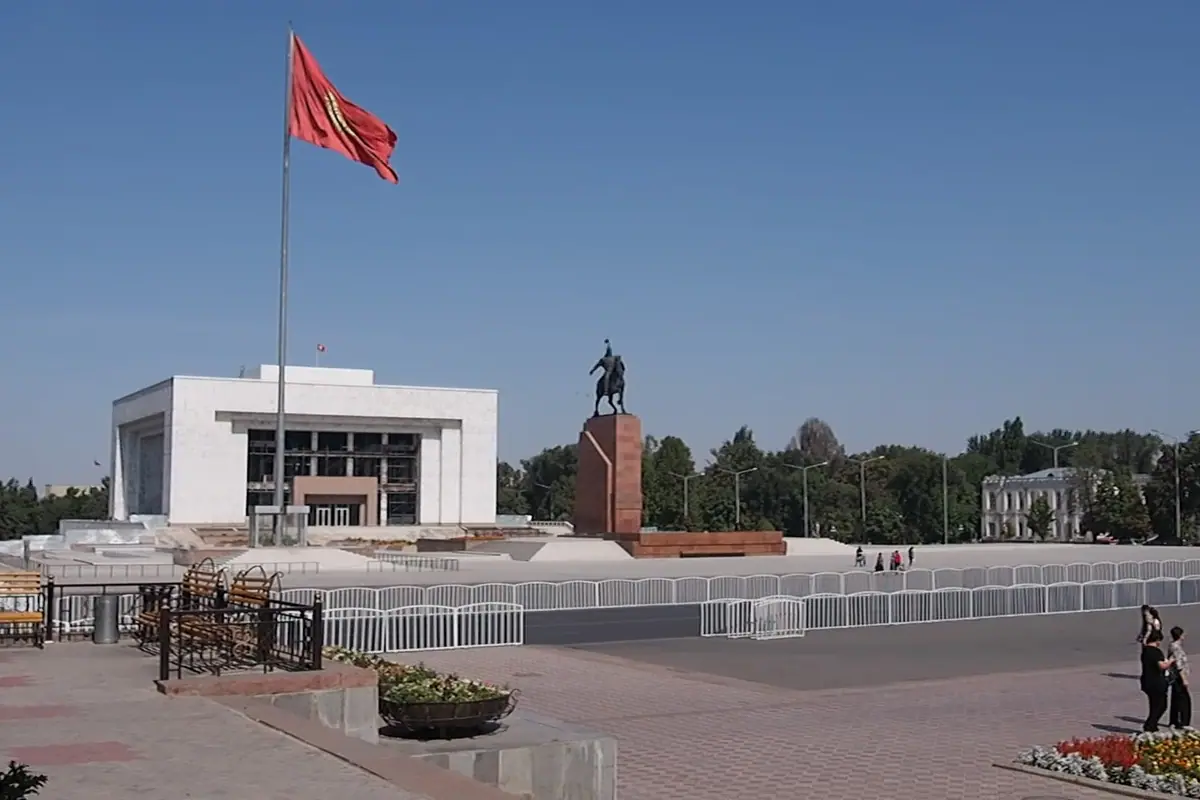
Almost every trip starts in Bishkek, a flat grid of tree-shaded avenues with the snow line of the Ala-Too range hanging at the end of every north-facing street. For a first visit, stay between Chuy Prospekt and Ala-Too Square: you can walk to the square itself, the State History Museum with its giant bronze statue out front, the fountains and rose beds of Oak Park, and the cafe strip along Erkindik Boulevard. This is also where the better restaurants, cash machines and tour offices cluster.
Budget travellers drift west towards Osh Bazaar — a loud, sprawling market of spices, dried fruit and felt slippers — and towards the railway station, where apartments and small guesthouses cost a fraction of the centre. The trade-off is a 30–40 minute walk or a very cheap taxi ride into the middle. Either way, keep one full day free: Ala-Archa National Park is only about 40 minutes south of the city and gives you your first proper taste of Tian Shan gorge scenery, and the Burana Tower, an 11th-century minaret with a field of balbal stone figures, sits about 75 kilometres east on the road towards the lake.
Bishkek is a one- or two-night city for most people — useful for shaking off jet lag, buying a warm layer you forgot, and catching a one-hour flight south to Osh. Summers are genuinely hot and dusty; winters swing well below freezing and the valley air turns thick with smog, so pick your month with care.
Osh: Hotels at the Foot of Sulaiman-Too
Osh is one of the oldest cities in Central Asia, and it feels it: low, dusty, baked by Fergana Valley heat, with Sulaiman-Too — the Sacred Mountain — erupting straight out of the middle of town. The site is inscribed on the World Heritage list, has been a pilgrimage destination for centuries, and hides a small museum inside its flank. Climb to the top in the late afternoon for the best sunset view over the whole valley.
Below the mountain, Jayma Bazaar sprawls along the river, a vast, chaotic market that is at its most spectacular at weekends, selling everything from pomegranates to spare tractor parts. A short walk away, the 16th-century Rabat Abdulkhan Mosque and its ornate portal are worth half an hour. Most hotels and guesthouses sit on or near Kurmanjan Datka street and around the base of the mountain, which puts the bazaar, the mosque and the viewpoint all within walking distance — a big plus given the heat.
Osh is also the launchpad for the south. Arslanbob, the world's largest naturally growing walnut forest, is a two- to three-hour drive away and has excellent homestay networks. Further on, the Alay Valley and the road towards Sary-Tash open into high, empty Pamir-style landscapes. From Bishkek you can fly in about an hour, or take the long road over the Too-Ashuu and Ala-Bel passes — roughly 680 kilometres, and a full day of hard driving.
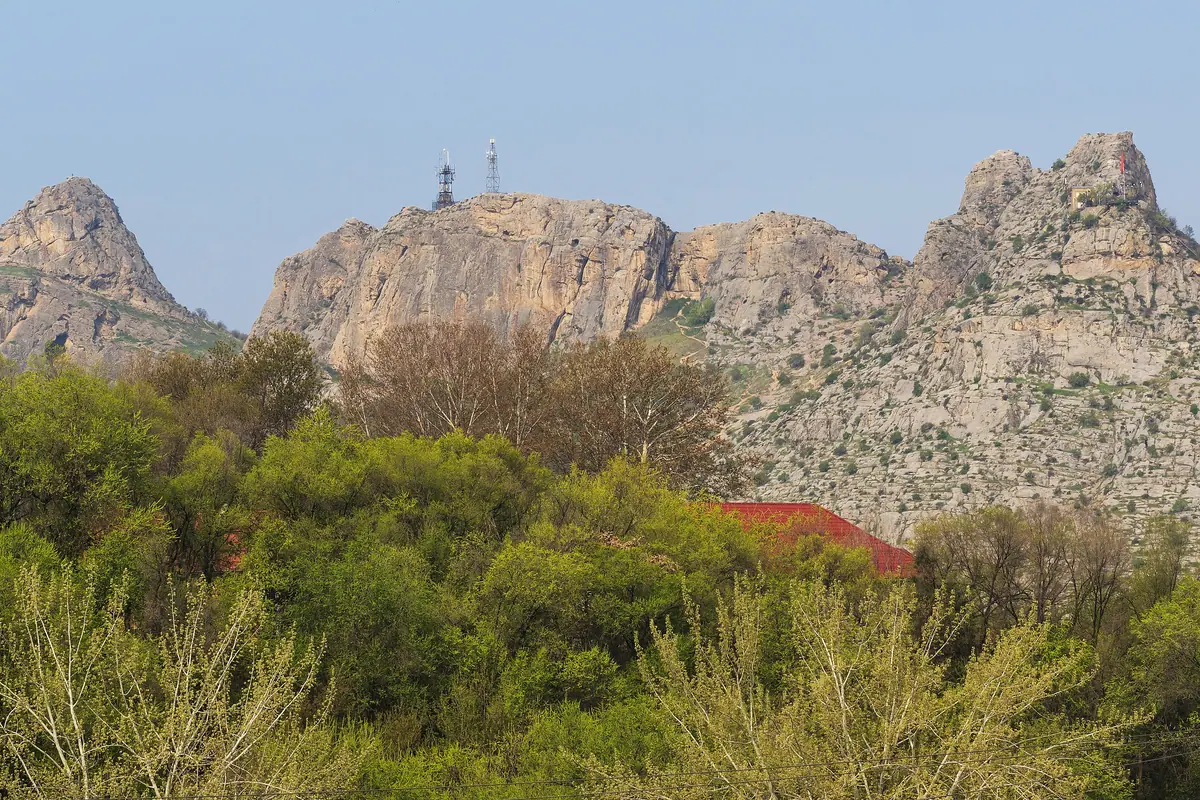
Lake Issyk-Kul and Karakol: Resorts, Sanatoriums and Trekking Bases
Lake Issyk-Kul is the second-largest alpine lake on earth, slightly saline, and — a small miracle — it never freezes. The north shore is the developed one: Cholpon-Ata has the open-air petroglyph field, a cultural centre filled with colourful monuments, and a string of resorts from basic to polished. The south shore is quieter, rougher and prettier, with wild beaches backed by dry mountains. Water temperatures reach around 19–20°C in the second half of July, which is the only month most people swim; outside June to September, the whole shore largely shuts down.
At the eastern end sits Karakol, the country's trekking capital and a far more interesting place to sleep than the beach strip. Two of its landmarks are quietly extraordinary: the wooden Dungan Mosque, built by Chinese craftsmen without a single nail, and the pastel-painted Holy Trinity Cathedral. The Sunday animal market is a spectacle in itself. From town, the red sandstone cliffs of Jeti-Oguz are an hour away, the Altyn-Arashan hot springs make a good overnight, and the three- to four-day trek over Ala-Kul lake is the classic Kyrgyzstan hike. In winter, Karakol Ski Base draws skiers from December to March.
Book early for July and August — lakeside resorts sell out weeks ahead, especially for weekends when Bishkek empties out. If you are heading off on a multi-day trek, the standard trick is to leave a bag at a Karakol guesthouse and pick it up on the way back.
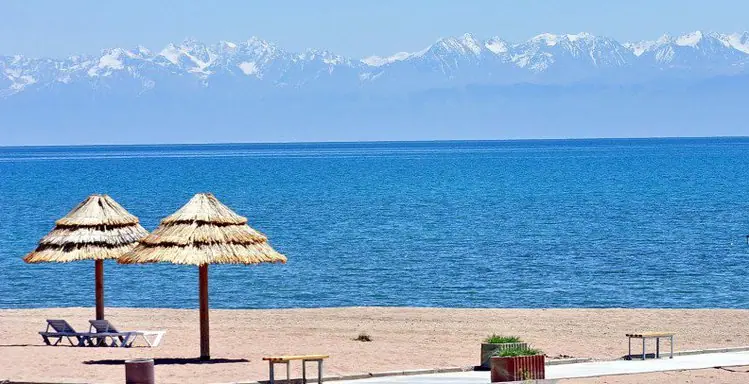
Yurt Camps and Jailoo Stays: Song-Kol, Tash Rabat and Beyond
The high summer pastures — the jailoo — are the reason many people come. Song-Kol, a lake at 3,016 metres, is ringed by yurt camps that open roughly from mid-June to mid-September. You sleep on a felt-covered platform, eat mutton and noodles by a dung-fired stove, ride horses across the grassland in the morning, and drink fermented mare's milk with herders who have been doing this for generations. There are no showers, toilets are basic and nights can drop close to freezing even in July — that is the deal, and it is worth it.
Further south, the stone caravanserai of Tash Rabat sits alone at around 3,200 metres near the Chinese border, a 15th-century Silk Road inn that feels dropped from another world. Yurt camps operate beside it in summer, and the sense of remoteness at dusk, with no light pollution anywhere, is unforgettable. Naryn is the staging town for both, and Kochkor is the place to watch felt carpets being made and to arrange a stay on a working pasture.
Other quieter options include the walnut-forest village of Arslanbob, and the Sary-Chelek biosphere reserve in the west. It is often easiest to book these through a community tourism office — you will find them in Karakol, Kochkor, Naryn and Osh — or simply ask your current guesthouse to phone ahead. Bring cash, because there are no ATMs up high.
When to Go and How to Book Without Stress
Timing decides everything. June to September is prime season for the mountains; yurt camps at Song-Kol and Tash Rabat run from roughly mid-June to mid-September. July and August are busiest, hottest in the cities and most crowded at Issyk-Kul. Late May, early June and September are the sweet spots — warm days, empty trails, easier rooms — while October brings golden poplars, cold nights and closing high camps. Winter is for skiing at Karakol and for the eagle-hunting demonstrations held around Bokonbayevo, when the lake's eastern shore turns into a snowy, wind-scoured spectacle.
Booking habits differ by type. City hotels, larger lakeside resorts and apartments can be reserved well in advance online. Family guesthouses and yurt camps often cannot be — a phone call or message a day or two ahead is normal, and community tourism offices can arrange everything from a bed to a horse. Reserve Issyk-Kul and Karakol weeks ahead for July and August; almost everywhere else, a day's notice is plenty outside peak weeks.
Getting between bases matters as much as the rooms. Shared taxis and minibuses link the main towns on fixed routes, private drivers cost more but stop for the views, and the long Bishkek–Osh road eats a full day either way. Finally, don't rush the altitude: Song-Kol and Tash Rabat sit above 3,000 metres, so plan an easy first day, drink more water than feels necessary, and give yourself a proper night in Naryn or Kochkor before climbing higher. Kyrgyzstan rewards a slow itinerary — two nights in most places turns a checklist trip into a real one.
Frequently asked questions
Do I need to book hotels in Kyrgyzstan in advance?
In Bishkek, Osh and Karakol, city hotels and good guesthouses can usually be arranged a day or two ahead. The exceptions are July and August, when Lake Issyk-Kul resorts and Karakol fill up and should be reserved weeks in advance, and the short yurt-camp season from mid-June to mid-September, when Song-Kol and Tash Rabat beds are limited and often booked by phone or through a local community tourism office.
What is a night in a yurt camp really like?
Expect a felt yurt with mattresses on wooden platforms, thick quilts, a stove, and shared outdoor toilets. There are no showers at high camps, electricity is limited or absent, and nights near Song-Kol or Tash Rabat can approach freezing even in midsummer. Meals are simple and filling, usually included, and horse riding or a walk to a nearby lake fills the day.
Which month is best for a trip that mixes cities and mountains?
Late June through September works for everything, with July and August being warmest, busiest and best for swimming in Issyk-Kul. If you want quieter trails and easier rooms, aim for late May to mid-June or early September. October is beautiful in the lowlands but most high-altitude camps close, and winter is best reserved for skiing around Karakol.
How do I get between Bishkek, Osh, Karakol and the lake without a car?
Shared taxis and minibuses run fixed routes between the main towns and leave when full. Bishkek to Osh is about 680 kilometres and a long day by road, or roughly an hour by plane. Bishkek to Karakol is around 400 kilometres, typically six to seven hours along the lake's northern shore. Many travellers hire a driver for multi-day loops, which allows stops at Burana Tower, Cholpon-Ata and the Jeti-Oguz cliffs.
Is altitude a problem for the mountain stays?
It can be. Song-Kol sits at roughly 3,016 metres and Tash Rabat around 3,200 metres, which is high enough to cause headaches and poor sleep in some visitors. Spend a night or two at a lower base such as Kochkor or Naryn first, drink plenty of water, avoid heavy meals and alcohol on arrival, and take the first day slowly.
Plan it — hotels in Kyrgyzstan
Live search, booked directly with trusted providers.
Sort the rest of your trip
Everything for Kyrgyzstan, in one place
Transfer in Kyrgyzstan
Private driver waiting on arrival — no queues, no surprises.
Book a transfer
Things to do in Kyrgyzstan
Skip-the-line tickets, guided tours and standout experiences.
See experiences
Stay online in Kyrgyzstan
Travel eSIM — data the moment you land, no roaming bills.
Get an eSIM