Kyrgyzstan looks small on a map and feels enormous on the ground — a country of 7,000-metre peaks, high alpine lakes and a road network that turns a 600-kilometre hop into a twelve-hour ordeal. This one-week plan leans on the country's short domestic flights to link the northern capital with the warm, ancient south, leaving you more time on the jailoo and less time in a minibus.
Days 1–2: Landing at Manas and the Sights of Bishkek
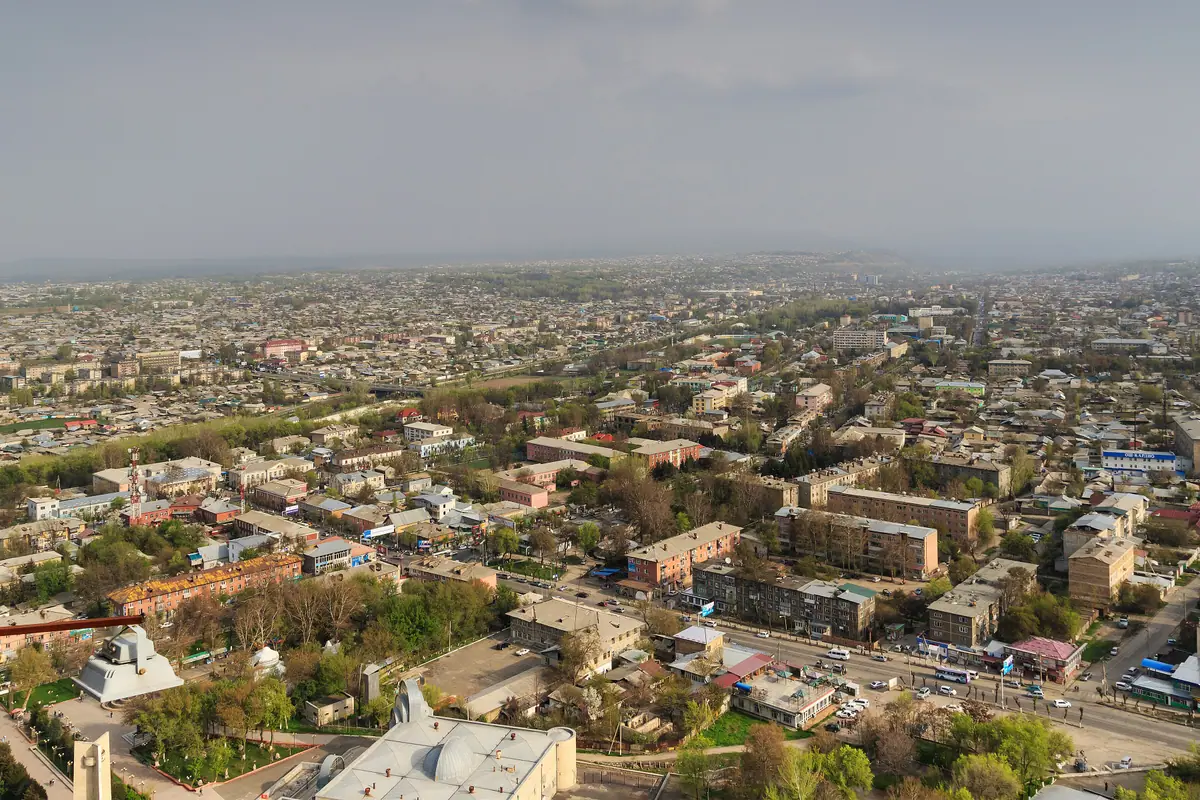
Nearly every international arrival in Kyrgyzstan touches down at Manas International Airport, a low, wide terminal about 25 kilometres north of the capital on the steppe. Flights from Europe and the Gulf tend to land in the small hours, so plan a slow first morning: change money, pick up a local SIM, and let the driver take the straight highway south into Bishkek while the sun comes up over the Tien Shan. The city sits at roughly 800 metres, so there's no altitude to worry about yet — just jet lag and a strong urge to see the mountains already visible at the end of every avenue.
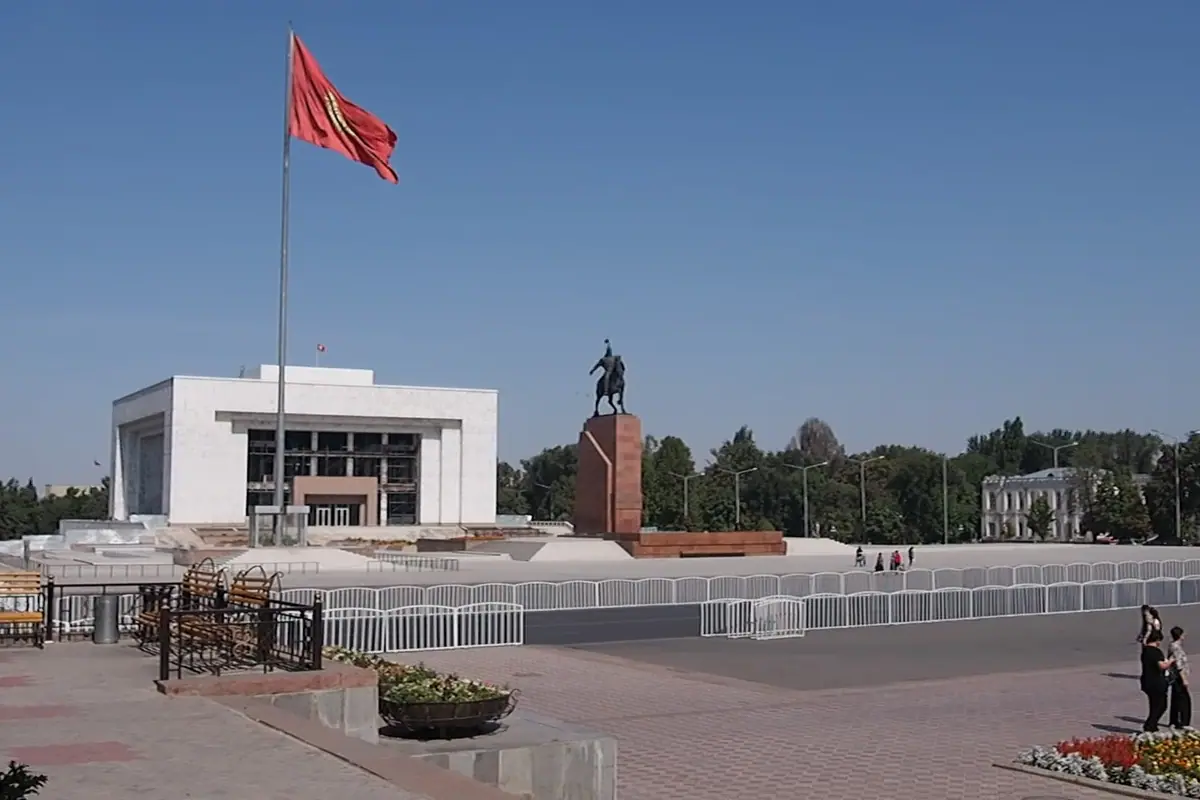
Start with the heart of the city: Ala-Too Square, where the changing of the guard happens under a towering flagpole and the statue of the epic hero Manas presides over the fountains. Behind it, the State History Museum covers everything from Saka gold to Soviet industry, and a short walk away Oak Park and the wide, tree-lined Chuy Avenue give the city its unhurried, café-heavy rhythm. An afternoon at Osh Bazaar is mandatory — pyramids of dried apricots, sacks of cumin and barberry, felt shyrdak rugs and barrels of kymyz, the sour mare's milk that Kyrgyzstan drinks by the litre in summer.
If you have energy left, take a taxi up to Victory Square and then eat plov in a chaikhana until the jet lag wins. Before sleep, settle the two bookings that shape the week: a domestic flight south to Osh and, in summer, a hop east to the lake. Both are cheap, both sell out in peak season, and both will save you a full day of mountain driving each.
Days 2–3: Ala-Archa, Burana Tower and the Seasonal Flight to Issyk-Kul
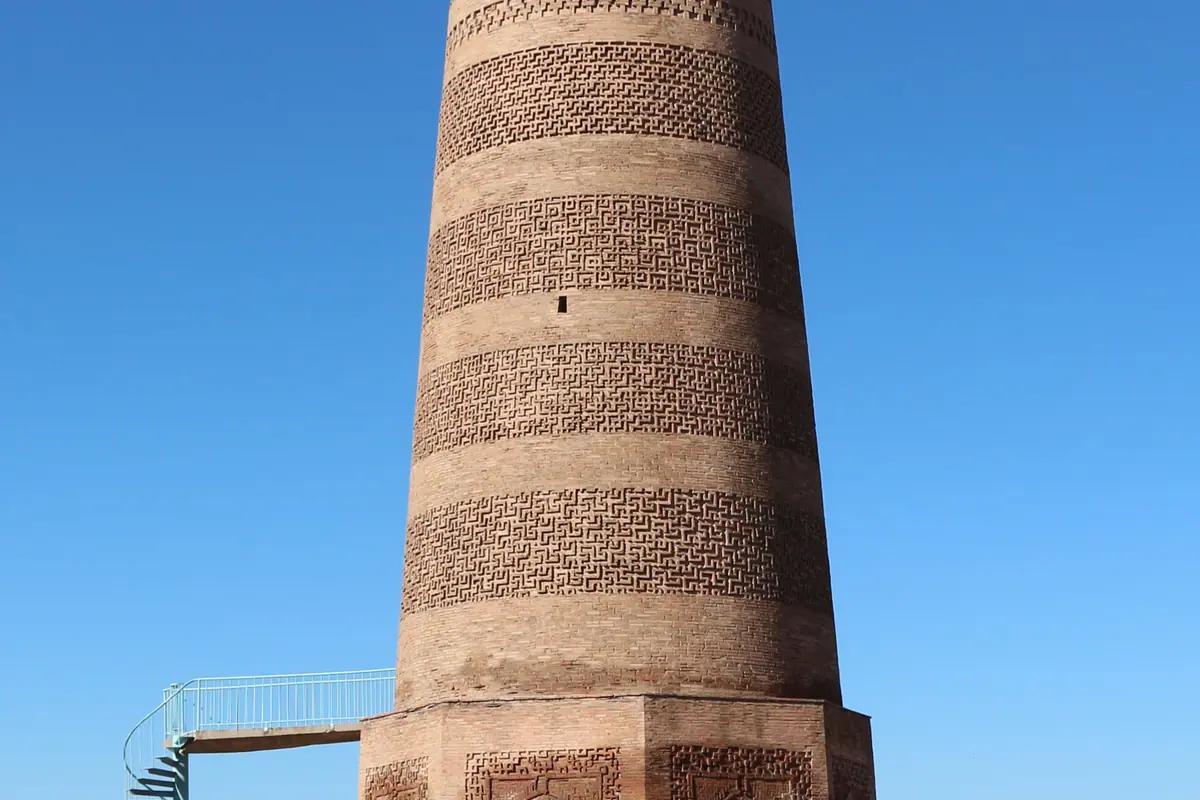
Spend your first full day testing the country's most accessible big scenery. Ala-Archa National Park begins about 40 kilometres south of Bishkek, where the road climbs into a granite gorge of spruce and glacial meltwater. A gentle walk to the Ak-Sai waterfall takes a couple of hours; stronger hikers can push up to the mountaineers' hut at Ratsek, where the walls of the Ala-Archa valley close in and the peaks push past 4,000 metres. On the way home, detour to the town of Tokmok and the Burana Tower, an 11th-century minaret left over from the Karakhanid city of Balasagun — climb the dark spiral staircase inside for a view across the Chuy Valley, then wander the field of balbal stone figures and weathered petroglyphs beside it.
The next morning, fly. From Manas or Bishkek's smaller airfield, seasonal services run east to Tamchy on the northern shore of Issyk-Kul, using the lakeside airport that opens for the warm months. The hop over the Boom Gorge takes well under an hour and drops you at 1,607 metres beside the world's second-largest alpine lake — a vast, slightly saline sheet of water that never freezes, ringed by snowfields even in July. If the seasonal schedule doesn't line up, the drive takes four to five hours; the flight is the difference between arriving fresh and arriving flattened.
Keep your expectations flexible. Lake flights operate mainly through the summer season, and schedules shift with demand and weather. Confirm your seat the day before, carry a printed or downloaded ticket, and pack to a small-aircraft mindset: on the country's domestic aircraft, checked baggage is usually capped around 15 to 20 kilograms, and soft bags beat hard-shell suitcases.
Days 3–4: Cholpon-Ata Petroglyphs, Jeti-Oguz and Karakol
Work your way around the lake's northern shore on day three. Cholpon-Ata is home to an open-air museum of petroglyphs, thousands of Saka-era rock drawings of ibex, snow leopards, hunters and sun-priests scattered across a boulder field with a view straight over the water. Nearby, the town's summer beach scene is cheerful and slightly surreal, with Russian-speaking holidaymakers sunbathing beneath a wall of glaciated peaks.
Continue east to Jeti-Oguz, where red sandstone cliffs rise in the formation known as the Seven Bulls, with the cleft rock nicknamed the Broken Heart just beside it. The valley behind is a favourite for yurt stays: in June the shepherds bring their herds up to the jailoo, and families set up camp with felt tents, fresh kymyz and horse treks for a few som a ride. Carry on to Karakol, the east's main town and the gateway to the Tian Shan's biggest trekking. The wooden Dungan Mosque, built without a single nail, and the pastel Holy Trinity Cathedral are both worth an hour, and the Przhevalsky Museum commemorates the explorer who mapped much of this range.
Karakol is also the trailhead for the classic trek to Ala-Kul, a turquoise high-altitude lake above 3,500 metres that takes most walkers three to four days as part of a loop. If a week is all you have, do a day hike into the Karakol or Ak-Suu gorge instead, or ride up to the hot springs at Altyn-Arashan and soak with a view of the ice. Time your visit for a Sunday if you can — the animal market outside town is one of the most vivid spectacles in the country.

Day 5: The Flight South to Osh and Sacred Sulayman-Too
Day five is where flying earns its keep. The drive from Bishkek to Osh crosses the Too-Ashuu and Ala-Bel passes and swallows twelve hours or more; the flight takes about an hour and lands you in the Fergana Valley, in the country's second city and its oldest. Osh has been a trading crossroads for three millennia, and its heat, dust and Uzbek-influenced cooking feel like another country entirely after cool, leafy Bishkek.
The city's defining landmark is Sulayman-Too, a limestone outcrop rising from the middle of town that is both a UNESCO World Heritage Site and one of Central Asia's holiest mountains. A paved path and stairways wind to the summit past a cave mosque, ancient petroglyphs and the small pavilion where the Mughal emperor Babur is said to have meditated. From the top, the whole valley spreads out below, with cotton fields, orchards and the Ak-Buura river threading through. Go early or near sunset to skip the heat on the exposed rock.
Below the mountain, spend the rest of the day in the bazaars. The Jayma Bazaar stretches along the river for what feels like a kilometre, a dense grid of spices, silks, Chinese electronics, dried fruit and bread ovens. Sip tea, eat a plate of Osh plov, and keep an eye on the clock — you'll want an early night before the real mountains tomorrow.
Day 6: Arslanbob Walnut Forests, the Alay Valley and Lenin Peak
Give your final full day to the south's wild edge. A morning's drive from Osh brings you to Arslanbob, home to the largest naturally growing walnut forest on earth — a sea of green draped over the foothills at around 1,600 metres, where walnuts have been harvested by hand for centuries and legend claims Alexander the Great carried the first seeds westward. A short walk reaches two waterfalls, and the village itself, with its Uzbek and Kyrgyz mix, is one of the friendliest places to spend a night in a family guesthouse.
Serious mountain people will instead point themselves toward the Alay Valley and the road to Sary-Tash, where the Pamir Highway begins its run to Tajikistan. This is where Lenin Peak rises to 7,134 metres on the border, ringed by a base camp at roughly 3,600 metres known as Edelweiss Meadow, reachable in summer by rough road. Day-tripping here requires a border-zone permit arranged in advance, and the altitude is not a game — acclimatise in Osh first, drink far more water than you think you need, and don't sleep high on your first night if you've flown in that morning.
If high passes aren't your thing, use day six for a different flavour of Kyrgyzstan: fly back to Bishkek and push east by road to Naryn for the stone caravanserai of Tash Rabat, sitting alone at 3,200 metres on an old Silk Road route, or to the yurt camps at Song-Kol, a high lake at just over 3,000 metres where herders welcome visitors for horse rides and fermented mare's milk from June to September. Note that Tash Rabat and Song-Kol sit far above the airport network — this is a long day, best done with an overnight in a yurt.
Day 7: Flying Out — Practical Notes for Flying in Kyrgyzstan
Build a buffer into your last day. Land at Manas with time to spare rather than sprinting for an international connection, because domestic schedules in Kyrgyzstan flex with weather, and winter fog in the Chuy Valley regularly delays or diverts arrivals and departures in December and January. Morning flights are generally the more reliable choice in every season. At regional airports such as Osh, check-in is informal and quick, but bring your passport — it's checked on all domestic flights — and carry cash in som for tickets booked on the spot, as card machines are not always working.
Think about the rhythm of the year before you fix dates. The prime window runs from late May through September, when the jailoo are green, the passes into the mountains are open and, crucially, the seasonal lake flights are running. July and August are the warmest and busiest, with swimming at Issyk-Kul and full yurt camps; June offers wildflowers and fewer people; September brings golden light and stable weather. Land borders and high passes can close with snow from October, and many domestic mountain airstrips serve only a handful of flights a year, so don't build an itinerary around them.
Finally, don't over-fly the country. One flight south to Osh and one east to the lake is usually enough to buy back two days of driving, leaving the rest of the week for mountain roads, horse tracks and long lunches in villages. That balance — a couple of quick hops stitched between slow ground days — is what makes a single week in Kyrgyzstan feel far longer than it is.
Frequently asked questions
Do I need to fly domestically to see Kyrgyzstan in a week?
No, but it changes the trip completely. The Bishkek–Osh drive takes twelve hours or more over high passes, so flying the roughly one-hour route frees up a full day for Sulayman-Too, the bazaars and the walnut forests around Arslanbob. In summer, the short hop to Issyk-Kul saves another long transfer.
Which airport do international flights arrive at?
Almost all international arrivals land at Manas International Airport, about 25 kilometres north of Bishkek. Osh also has an international airport serving the Fergana Valley, used mainly by regional carriers. Both are straightforward, small and quick to navigate.
When do flights to Issyk-Kul operate?
Services to the lakeside airport at Tamchy are broadly seasonal, focused on the warm months, roughly June through September. Outside that window, the lake is reached by road from Bishkek in four to five hours. Always reconfirm a lake flight the day before departure.
How much luggage can I take on domestic flights?
On the small aircraft used domestically, checked baggage is typically limited to around 15 to 20 kilograms, with strict hand-luggage allowances. Soft duffel bags are much easier to load than hard suitcases, and anything truly excessive may be charged or left behind.
What is the best time of year for a flying itinerary in Kyrgyzstan?
Late May to September is ideal: mountain passes are open, yurt camps at Song-Kol and Jeti-Oguz are running, and seasonal lake flights operate. June and September are the sweet spots for good weather without the July–August crowds, while winter brings Chuy Valley fog that can disrupt flights around Bishkek.
Plan it — flights in Kyrgyzstan
Live search, booked directly with trusted providers.
Sort the rest of your trip
Everything for Kyrgyzstan, in one place
Stay in Kyrgyzstan
Hotels, guesthouses and apartments — compared in one search.
Search hotels
Transfer in Kyrgyzstan
Private driver waiting on arrival — no queues, no surprises.
Book a transfer
Travel insurance
Medical cover, delays and lost baggage — sorted before you go.
Get covered