Côte d'Ivoire packs an improbable range into one country: a lagoon-side metropolis of glass towers, a colonial town half-swallowed by the Atlantic, the largest church on earth rising out of the savanna, and rainforest so dense that pygmy hippos still pad through it. Most travellers land in Abidjan and never leave the city limits — the reward for pushing further is a country of mask dances, vine bridges and stilt villages that few outsiders ever see.
Abidjan: Glass Towers, a Concrete Cathedral and a Forest at Its Heart
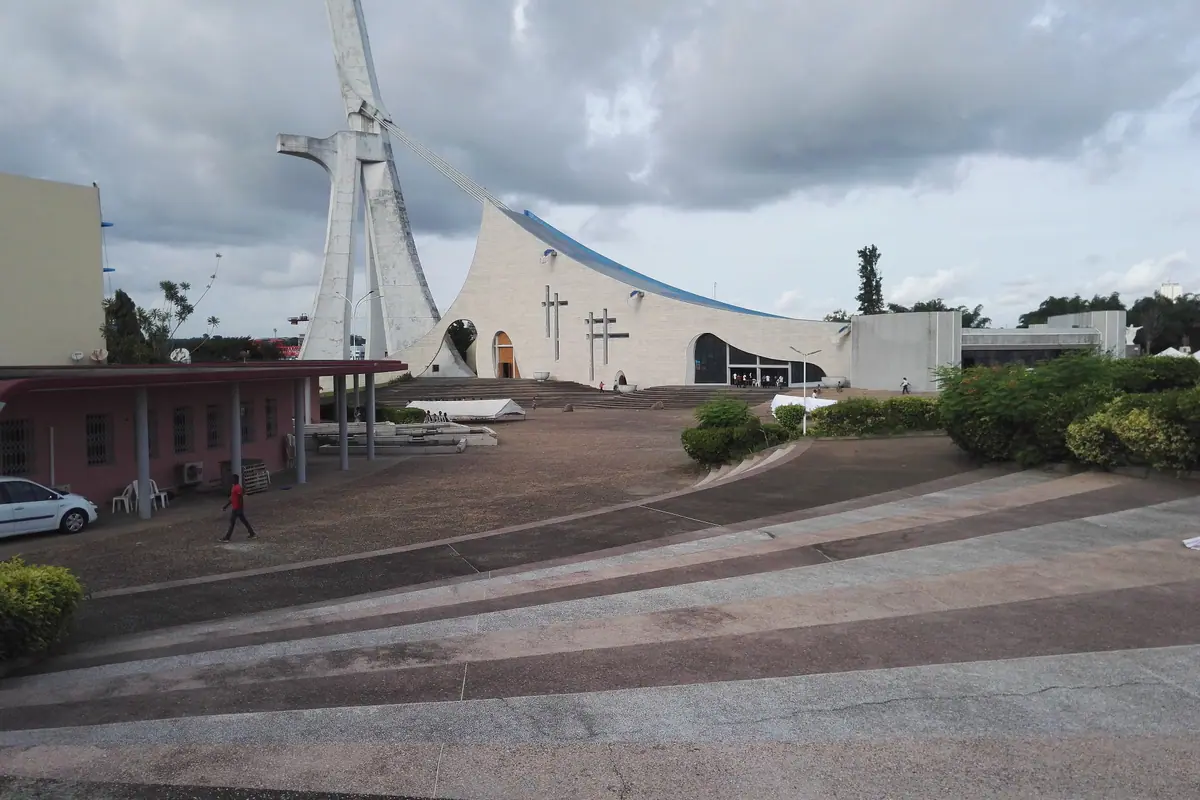
Abidjan is where nearly every journey into Côte d'Ivoire begins, and it deserves more than a night in transit. The city spills across the Plateau and a chain of peninsulas around the Ébrié lagoon, its skyline a run of towers and bank headquarters that made it West Africa's most cosmopolitan address. Landmarks worth a slow loop include the swooping curves of St Paul's Cathedral, which leans over the water like a ship's hull, and the rooftop bars of the Plateau, where you can watch pirogues slip beneath the bridges at dusk.
Culturally, start at the Museum of Civilisations in the Plateau, whose masks, textiles, drums and goldwork explain the country's many peoples in an hour or two, then dive into the Treichville market for wax-print cloth, leather sandals and the smell of grilled fish. When the heat bites, Banco National Park is the antidote: several thousand hectares of protected rainforest inside the city limits, with trails, guided walks of an hour or two, and monkeys crashing through the canopy overhead. Lagoon cruises to Île Boulay and the stilt village of Tiagba round out an easy first day.
Grand-Bassam: Colonial Ruins, Craft Workshops and the Abissa Drums
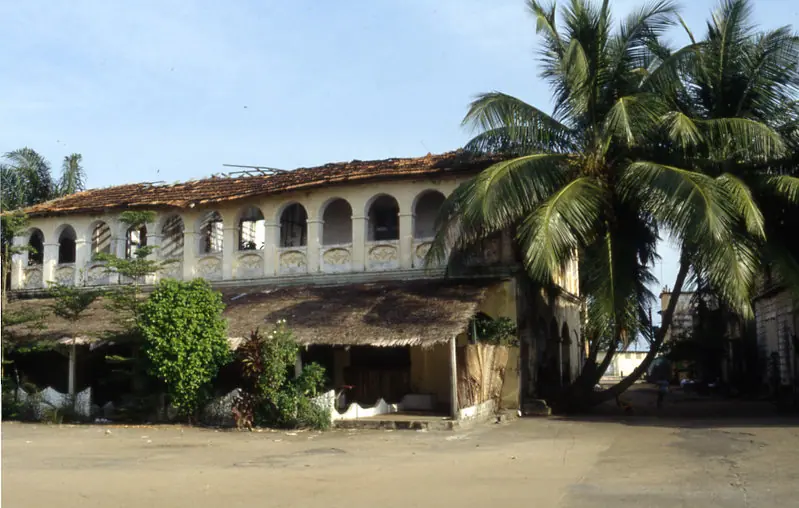
Roughly forty kilometres east of Abidjan, Grand-Bassam served as the colonial capital from 1893 until government moved inland, and its abandoned administrative quarter is now a UNESCO World Heritage Site. Walk the old grid: the Maison du Gouverneur, crumbling customs houses and merchant villas with rusted corrugated verandas, all a few steps from a long Atlantic beach where fishermen haul in nets at dawn. Budget half a day on foot, or stay overnight for the sea breeze and near-empty evening streets.
The living side of Grand-Bassam is just as compelling. The National Costume Museum fills a restored colonial building with hand-woven cloth and ceremonial dress, while craft centres around town sell batik, bogolan and carved masks at workshop prices. If your dates are flexible, aim for the Abissa festival, staged by the N'zima people over roughly a week at the end of October and the start of November — days of drum orchestras, masked parades and ritual cleansing on the sand that turn the town into one long celebration.
Yamoussoukro: The World's Largest Church and a Lake Full of Crocodiles
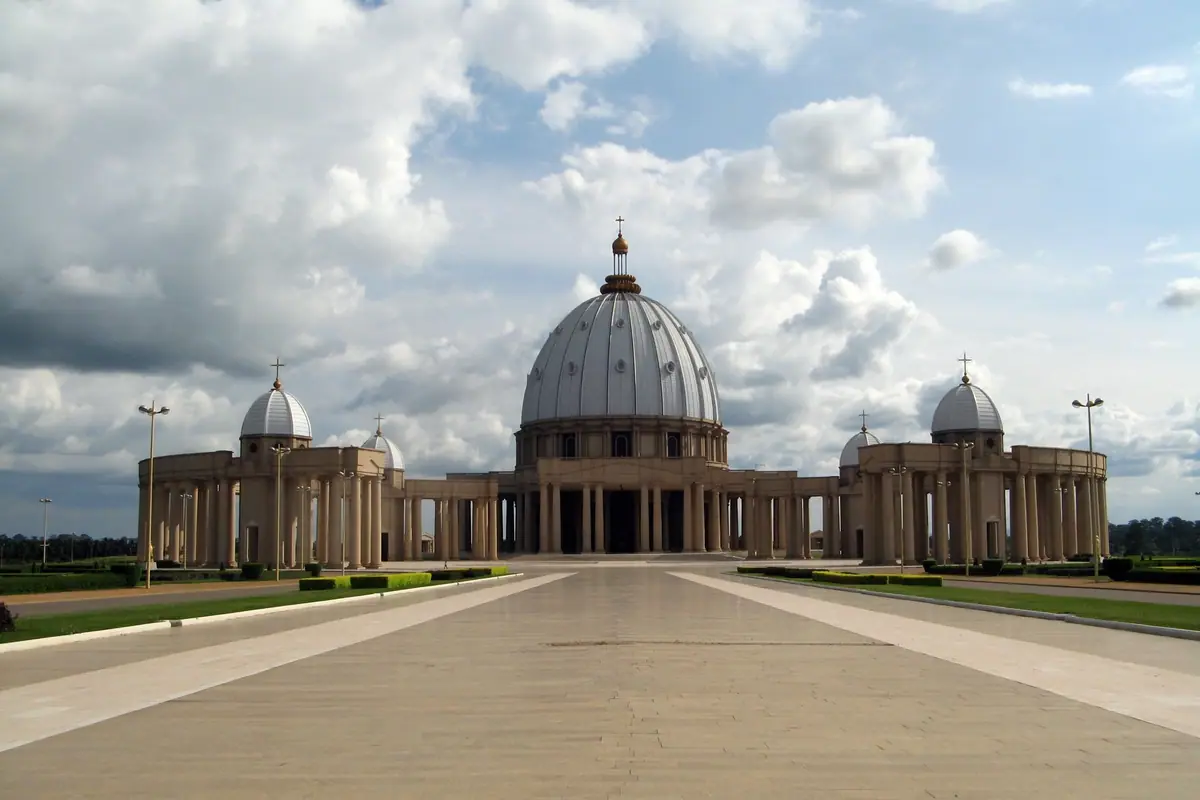
Yamoussoukro rises out of the savanna about three hours north of Abidjan, a purpose-built capital of vast boulevards and few pedestrians. Its defining landmark is the Basilica of Our Lady of Peace, consecrated in 1990 and modelled loosely on St Peter's in Rome — but bigger, and the largest church on earth. The dome, the marble colonnades and the stained glass are astonishing in a small West African city: the nave seats thousands, and the surrounding esplanade holds many times that. Covered shoulders and knees, plus a small donation for the caretaker, are the norm.
A short walk away, the Lac aux Caïmans holds a resident colony of crocodiles that a guide coaxes out of the water with a chicken on a string — a spectacle rooted in local tradition rather than any zoo enclosure. Nearby, the Fondation Félix Houphouët-Boigny displays the first president's gifts and documents, while the presidential palace sits across the crocodile lake. Most travellers treat the city as a half-day stop between Abidjan and the north, though an overnight lets you see the basilica glow at golden hour.
Man and the Western Highlands: Hiking the Dent de Man and Crossing a Liana Bridge
The west is Côte d'Ivoire at its most dramatic. Man, capital of Dan country, sits beneath the Dent de Man, a tooth-shaped rock peak that gives the town its postcard. The climb takes most walkers two to three hours up and down with a local guide, through coffee and cocoa plots and small villages, and the reward is a wide view over forested hills. Closer in, the Cascades de Man are a set of waterfalls with pools cold enough to swim in after a hot afternoon.
Beyond Man the oddities multiply: vine bridges woven from forest lianas that villagers rebuild each year, best seen around Gouessesso and the surrounding hamlets; the cool heights of Mont Tonkoui, one of the country's highest peaks, where the air is noticeably sharper; and far out on the border, the Mount Nimba Strict Nature Reserve, a UNESCO-listed escarpment shared with Guinea and Liberia that requires permits and guided access. The west is best in the dry months from November to March, and the roads take patience — allow a full day from Abidjan or take a short domestic flight.
Korhogo and the Senufo North: Painted Houses, Weavers and Sudanic Mosques
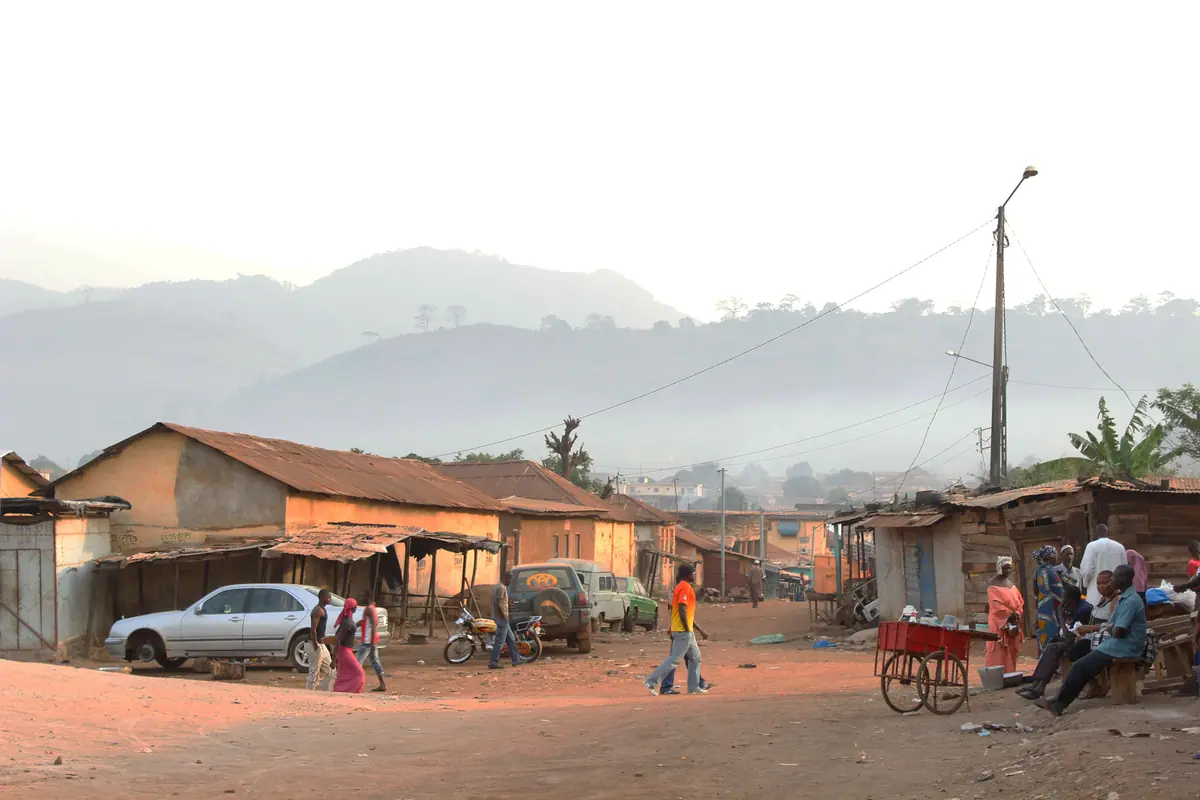
In the north the culture shifts: Sahelian heat, Dioula markets and the Senufo villages around Korhogo, the region's biggest town. The painterly highlight is Fakaha, where houses are decorated with black, white and ochre geometric murals, repainted by women before the rains. Nearby Waraniéné is a village of weavers, looms clacking in open courtyards and strips of indigo and white cloth drying in the sun, while Korhogo's workshops turn out masks, stools and drums for sale and for ceremony.
Architecture fans should push further to Kong, whose Sudanese-style mosque, with its tapering earthen pillars, dates to the 17th century; similar mosques at Tengréla, Kaouara and M'Bengué form a group recognised as World Heritage. Time a visit around a festival or funeral and you may catch the Zaouli, an acrobatic masked dance of the Guro people honoured as intangible cultural heritage. December to March is the comfortable window; by February the heat in Korhogo is fierce and dusty harmattan winds haze the horizon.
Wild Ivory Coast: Taï Rainforest, Comoé Savanna and the Éhotilé Islands
For wildlife, Taï National Park in the humid southwest is the prize: one of the last great stretches of Upper Guinean rainforest and a World Heritage site, where pygmy hippos, forest elephants and several monkey species move through the undergrowth and chimpanzees have been studied for decades. Access is by guided walk only, with 4x4 tracks to research camps, and the mud is serious — visit between December and February for the driest trails and the best odds of sightings.
Comoé National Park, in the northeast, is the country's largest protected area, a classic savanna-and-gallery-forest landscape of elephants, buffalo, kob and hundreds of bird species; it is at its best from November to April, when tracks are passable and the vegetation thins. Short on time? The Îles Éhotilé National Park near Assinie offers mangroves, monkeys and canoe trips within easy reach of Abidjan, and pairs naturally with a couple of nights on the Assinie or Grand-Béréby coast.
Frequently asked questions
What is the best time of year to visit Ivory Coast?
The countrywide dry season runs from November to March, with December and February the coolest nights and a hazy harmattan wind in the north. The southern coast also gets a drier break in July and August. Avoid April to mid-July if you plan to hike in Taï or spend time on the beaches, as that is the heaviest rainy stretch.
How many days do I need?
Seven to ten days covers Abidjan, Grand-Bassam, Yamoussoukro and a night or two at Assinie. Allow two weeks or more to add the western highlands around Man, the Senufo villages near Korhogo and the rainforest of Taï National Park, since long road transfers eat into sightseeing time.
How do I travel between the main sights?
Grand-Bassam is about 45 minutes from Abidjan by road; Yamoussoukro is roughly 240 kilometres and three hours on a good highway; Korhogo is another five hours north. Hiring a car with a driver is the simplest option, while intercity coaches and shared taxis are cheaper but slower. Short domestic flights link Abidjan with Man, Korhogo and San-Pédro.
Do I need a visa and which vaccinations?
Most visitors need a visa arranged before arrival, and an online pre-approval system is available for many nationalities. A yellow fever vaccination certificate is commonly required, along with routine vaccinations and malaria precautions. Confirm the current rules with the nearest Ivorian embassy well before you book flights.
Is it easy to travel without speaking French?
English is not widely spoken outside hotels and business settings. A handful of French phrases goes a long way in markets, at bus stations and at park entrances. The currency is the CFA franc, cash is essential outside upmarket hotels, and cards are accepted mainly in Abidjan's larger establishments.
Plan it — experiences in Ivory Coast
Live search, booked directly with trusted providers.
Sort the rest of your trip
Everything for Ivory Coast, in one place
Stay in Ivory Coast
Hotels, guesthouses and apartments — compared in one search.
Search hotels
Transfer in Ivory Coast
Private driver waiting on arrival — no queues, no surprises.
Book a transfer
Stay online in Ivory Coast
Travel eSIM — data the moment you land, no roaming bills.
Get an eSIM