Ivory Coast rewards travellers who move by air: the lagoon skyscrapers of Abidjan, the marble basilica rising out of the savanna at Yamoussoukro, the colonial verandas of Grand-Bassam and the rainforest of Taï sit hundreds of kilometres apart, and a handful of short domestic hops stitches them into one remarkable week. Pack light, keep one day flexible, and let the country unfold from the cockpit window.
Day 1 — Touching Down in Abidjan, the Lagoon Metropolis
Nearly every Ivorian journey begins at Félix-Houphouët-Boigny International Airport, set on the sand spit at Port-Bouët, a 30-to-45-minute drive from the towers of Plateau when the lagoon bridges are flowing and far longer when they are not. Long-haul flights tend to land in the small hours or early morning, so most arrivals reach their hotel in time for a first, faintly surreal breakfast: strong coffee, a baguette, and the skyline of Abidjan shimmering across the water.
Sort the practicalities on day one and the rest of the week runs smoothly. Visas are usually arranged in advance online or through an embassy, a yellow-fever certificate is checked at arrival, and the local currency is the CFA franc, best drawn from airport or city cash machines since cards are accepted only in larger hotels. Agree taxi fares before getting in, buy a local SIM card for maps and messaging, and remember the country runs on Greenwich Mean Time.
Ease into the evening at a maquis — the open-air roadside kitchens that are the true heart of Ivorian cooking. Order attiéké with grilled fish, kedjenou chicken slow-steamed in a clay pot, and cold beer while the lagoon turns orange. It is a gentle first night, and a necessary one before the city's rhythm takes over.
Days 2–3 — Abidjan on Foot: Cathedral, Museums and a Rainforest Inside the City
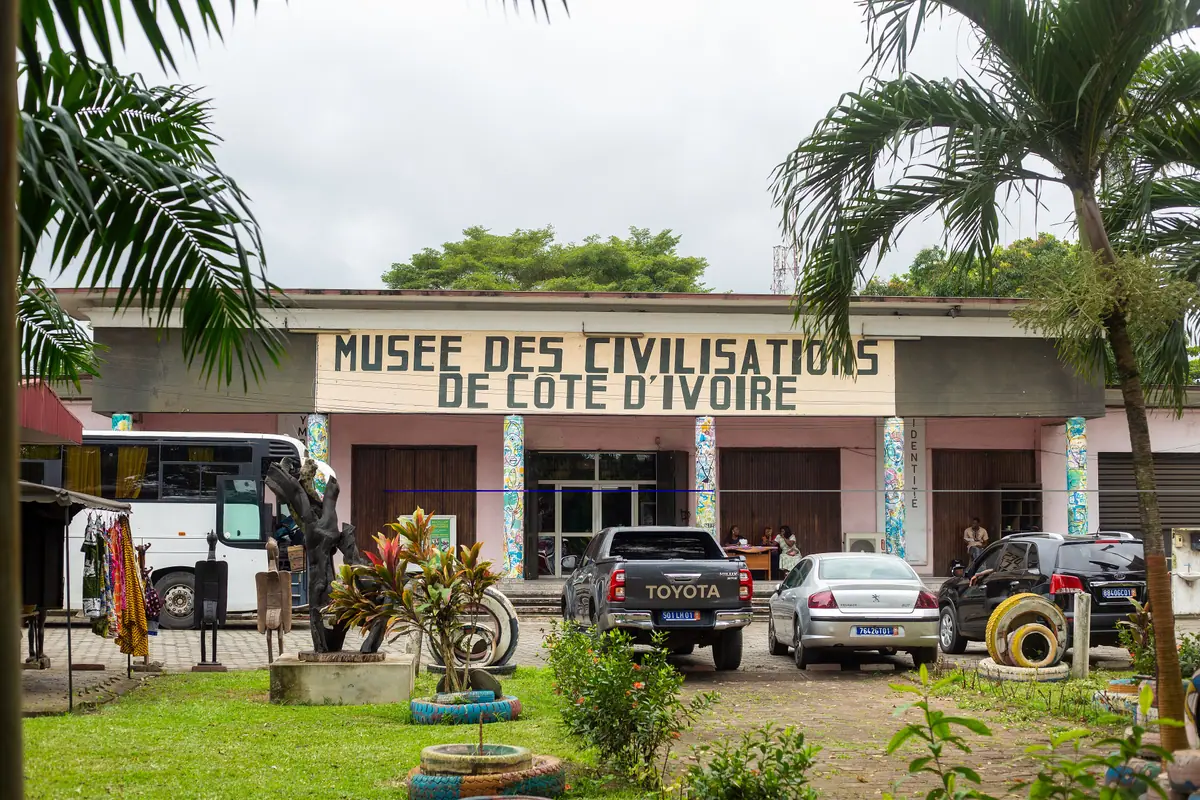
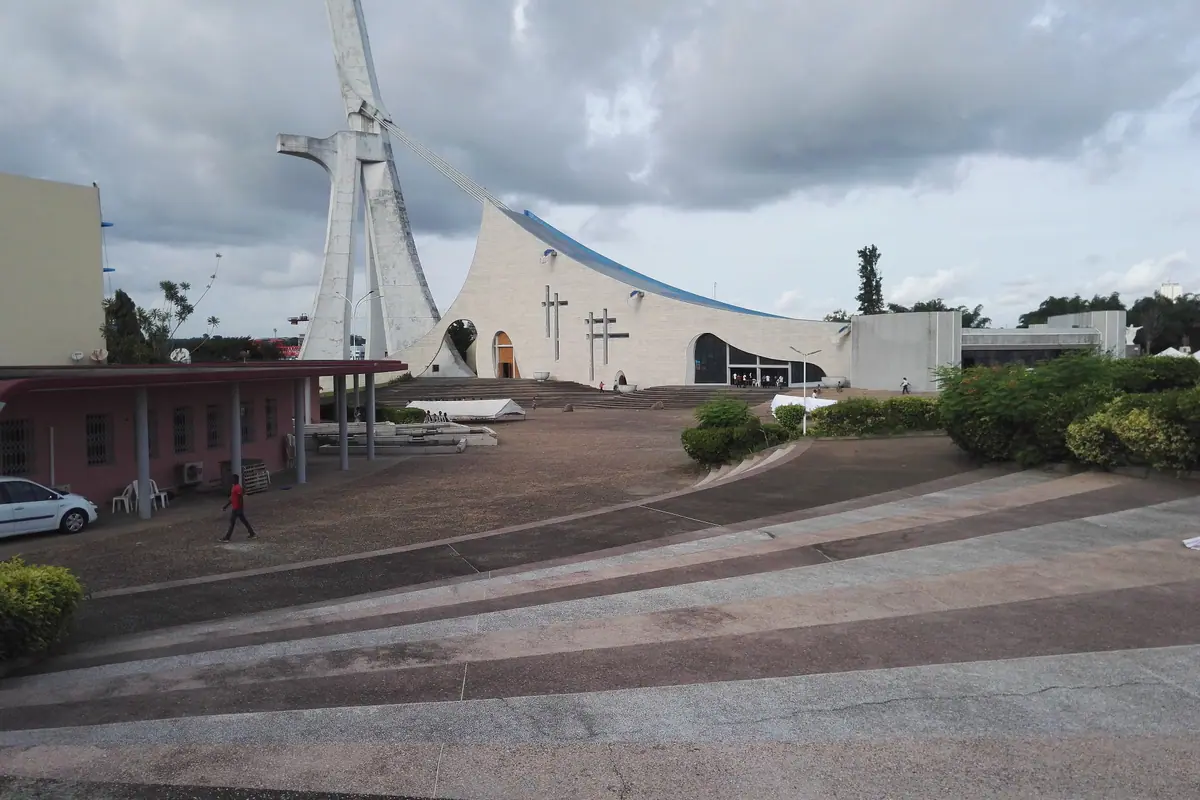
Start in Plateau, the peninsula of banks and ministries, where the Cathédrale Saint-Paul rises in raw concrete, its leaning sail-shaped facade turned toward the lagoon. Visitors are welcome outside mass; dress modestly and climb the steps for the view back over the water. A short walk away, the Musée des Civilisations de Côte d'Ivoire gathers Senoufo masks, Dan sculpture and Baule goldwork in a compact, rewarding collection that makes sense of everything you will see inland. Follow it with the crowded, colourful Marché de Treichville for wax prints, baskets and produce.
Then do something few capital cities allow: walk into primary rainforest without leaving town. Parc National du Banco protects thousands of hectares of towering iroko and mahogany on the city's northern edge, laced with walking trails where monkeys crash through the canopy and the traffic noise fades within minutes. Go early, take a guide from the entrance, and wear closed shoes — the paths stay slick long after the rain.
Spend the late afternoon crossing the Henri Konan Bédié Bridge to Cocody, or take a boat out to Île Boulay for a seafood lunch above the lagoon. After dark, Zone 4 and Cocody hum with live music, from zouglou and coupé-décalé to jazz. Two full days here is the right amount; three if you want a lazy beach afternoon at Bingerville.
Day 4 — Flying Inland to Yamoussoukro and the Basilica of Our Lady of Peace
A short domestic flight — under an hour — lifts you from the coast to Yamoussoukro, the purpose-built capital that feels like a garden city dropped into the savanna. Domestic services on this route are infrequent, so book well ahead; alternatively the divided motorway north takes three to four hours by road and is one of the best drives in West Africa. Whichever you choose, arrive by mid-morning to give the day room to breathe.
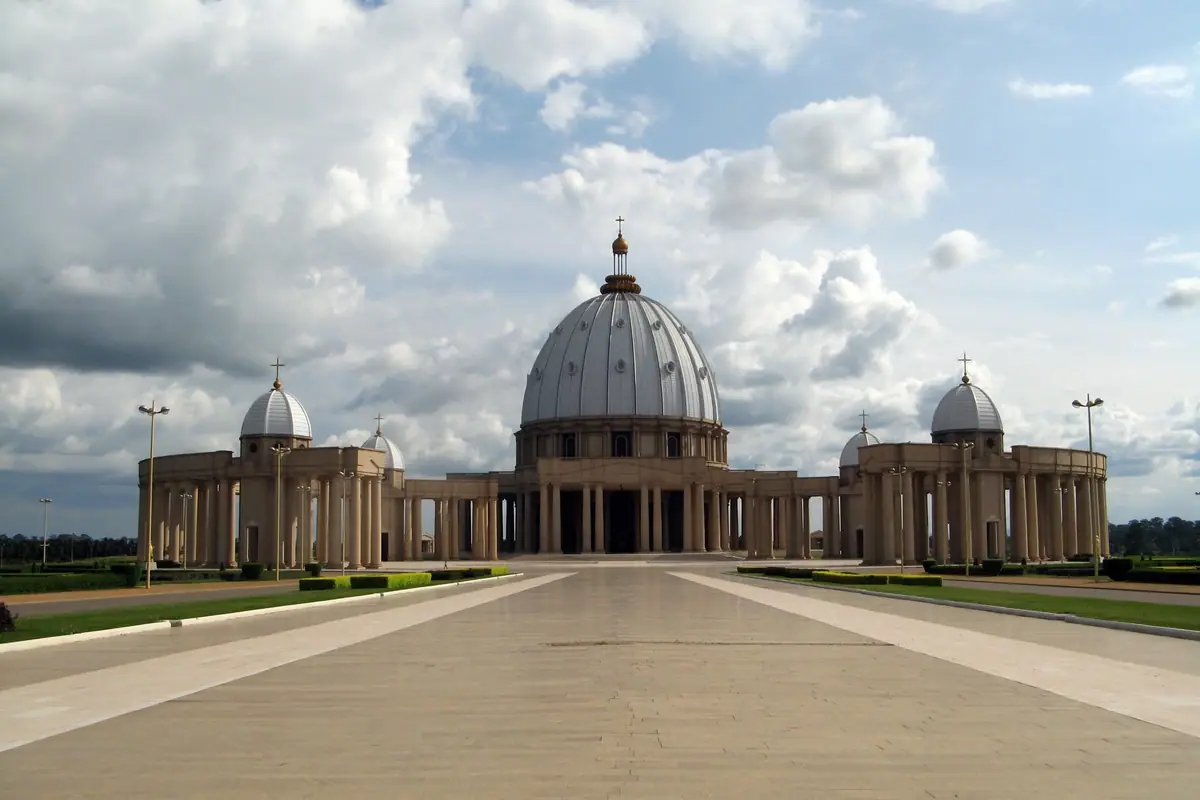
The Basilica of Our Lady of Peace is the reason most travellers come. Consecrated in 1990 and modelled loosely on the great basilicas of Europe, it stands as one of the largest churches on earth, its dome climbing above a forest of columns, its interior clad in marble and lit by acres of stained glass. Guided tours run through the nave, the colonnade and the crypt; shoulders and knees should be covered, and photography is restricted during services.
Afterwards, walk to the Lac aux Caïmans beside the presidential palace, where a resident guide introduces the crocodiles that bask along the bank and, at feeding time, lunge for scraps with unnerving speed. Finish at the Foundation named for the country's first president, whose marble mausoleum and archive rooms fill in the political history of modern Ivory Coast. Yamoussoukro is quiet on weekdays and thronged on Sundays, when the basilica fills with worshippers in bright cloth.
Day 5 — Grand-Bassam and the Assinie Coast: Colonial Verandas and Ocean
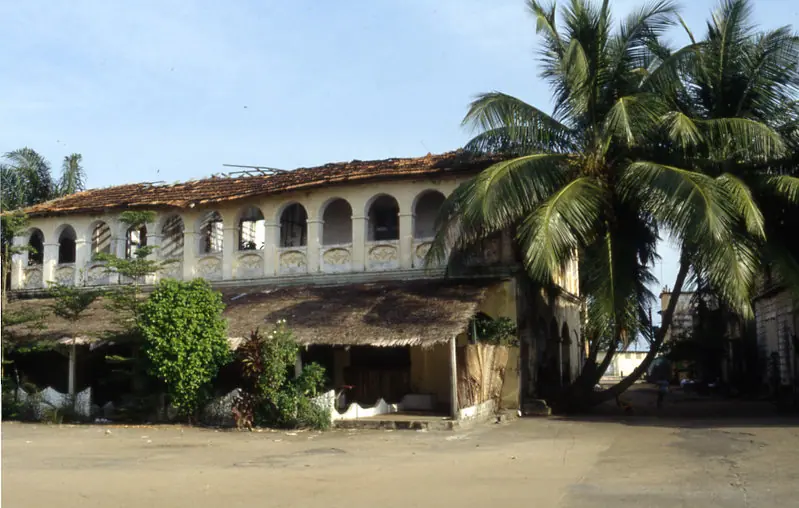
From Abidjan it is a short drive east to Grand-Bassam, the country's first colonial capital and a UNESCO World Heritage site. The Quartier France is a grid of crumbling arcaded houses, shuttered trading posts and the Maison du Gouverneur, all built when this was the busiest port on the Gulf of Guinea. The Cathédrale Sacré-Cœur, the National Costume Museum and the long, empty beach give the town a melancholy beauty best appreciated slowly, on foot, before the afternoon heat peaks.
Continue an hour and a half east to Assinie-Mafia, a village pinched onto a sandbar between the Atlantic and a broad lagoon. Cross by boat, swim between the flags — the surf here is powerful — and spend the afternoon on the lagoon side, which is flat, warm and perfect for kayaks and water skiing. Resorts are informal and spread out; book ahead on weekends, when Abidjan empties onto this coast.
This is the stretch of the itinerary to treat as a rest day. The dry months from November to March bring the clearest skies and the calmest seas, while the long rains from April to mid-July turn the lagoon road muddy and the ocean rough. Return to Abidjan in the evening so you are fresh for the flight north.
Day 6 — North by Air to Korhogo, Senoufo Country and Comoé National Park
A morning flight of roughly an hour and a quarter carries you north to Korhogo, the hot, dusty capital of Senoufo country and the cultural counterweight to the coast. This is where the famous Korhogo cloth is painted with mud and fermented dye, and where weaving villages such as Waraniéné still work looms in open courtyards. Ask locally about visiting a Poro initiation site or a traditional dance — arrangements are made through local guides and must be respectful and pre-agreed.
East of town lies Comoé National Park, a UNESCO-listed expanse of savanna, gallery forest and rocky inselbergs that ranks among the largest protected areas in West Africa. Elephants, buffalo, hippos, baboons and a very long bird list all survive here, and the park is refreshingly free of the safari convoys found elsewhere on the continent. Access requires a four-wheel-drive vehicle and a registered guide, arranged in Korhogo or through your lodge; the dry season, December to March, is the only realistic window, as tracks flood and the grass grows tall in the rains.
Come prepared for heat and dust: long sleeves, a hat, plenty of water and cash, because card machines are scarce this far north. The far west, around Man, offers a different reward for travellers with extra days — the jagged peak known as the Dent de Man, the waterfalls at the Cascades de Man, and the high forests of Mont Tonkoui, all reachable on a separate flight or a long drive south-west.
Day 7 — The Green South: Taï Forest, San-Pédro and the Flight Home
The final day belongs to the southwest. A flight to San-Pédro, the country's second port, puts you within reach of Taï National Park, one of the last great tracts of Upper Guinean rainforest and a UNESCO World Heritage site. Its trails lead past giant trees and across streams where pygmy hippos hide, while chimpanzees, colobus troops and several species of monkey move through the canopy. Visits are guided, limited in number and best booked well in advance; early morning is by far the best time to see wildlife.
If time is short, skip the park and enjoy the coast instead: San-Pédro's long beaches, the fishing town of Sassandra with its crumbling colonial quarter, or the emerging beach village of Grand-Béréby. Then take the short afternoon flight back to Abidjan, allowing a full night before any international departure — domestic schedules shift with weather and demand, and a buffer day is the difference between a relaxed end and a sprint through the terminal.
A week is enough to understand why Ivory Coast surprises so many visitors: an economic giant with rainforest, savanna and lagoons squeezed into a country the size of a long road trip. Fly the long legs, drive the short ones, and leave one afternoon unplanned — that is usually the one you remember.
Frequently asked questions
Do I need a yellow fever certificate to enter Ivory Coast?
Yes. A valid yellow-fever vaccination certificate is routinely requested at arrival, and travellers without one may be vaccinated on the spot or refused entry. Malaria prophylaxis is also strongly recommended, along with repellent, long sleeves at dusk and closed shoes for forest trails.
Are there domestic flights inside Ivory Coast?
There is a small domestic network linking Abidjan with Yamoussoukro, Bouaké, Korhogo, Man, Odienné and San-Pédro, but frequencies are limited — often a few services a week — so book early and stay flexible. Plan to arrive at least 90 minutes before departure, and expect modest luggage allowances on smaller aircraft.
What is the best time of year to visit Ivory Coast?
November to March is the dry season, with clearer skies, easier park access and the harmattan haze that makes for hazy but dramatic light. April to mid-July brings the long rains and September to October the short ones; the coast stays humid year-round, so pack light, breathable clothing either way.
How should I split one week between the coast and the interior?
A sensible shape is three nights in Abidjan, a day trip or overnight at Grand-Bassam and Assinie, a night at Yamoussoukro for the basilica, then a flight north to Korhogo or southwest to San-Pédro for the national parks. Trying to add both the far north and the far southwest in seven days means too much time in transit.
Is it easy to get around without a car?
In Abidjan, app-based ride services and licensed taxis work well, and boats cross the lagoon to Île Boulay. Outside the city, long-distance travel is by domestic flight, intercity bus or a hired car with driver; distances are long, roads vary in quality and a four-wheel-drive with a registered guide is mandatory for visiting Comoé or Taï.
Plan it — flights in Ivory Coast
Live search, booked directly with trusted providers.
Sort the rest of your trip
Everything for Ivory Coast, in one place
Stay in Ivory Coast
Hotels, guesthouses and apartments — compared in one search.
Search hotels
Transfer in Ivory Coast
Private driver waiting on arrival — no queues, no surprises.
Book a transfer
Travel insurance
Medical cover, delays and lost baggage — sorted before you go.
Get covered