Djibouti is a country the size of a weekend, yet it packs in a salt lake 155 metres below sea level, a whale-shark season you can swim through in a swimsuit, and volcanic chimneys that look like another planet. It rewards travellers who come prepared, move slowly in the heat and let a good driver-guide do the navigating.
Swim With Whale Sharks in the Gulf of Tadjoura
Between roughly November and the end of January — with the most reliable sightings often in December — the Gulf of Tadjoura fills with plankton, and with it the gentle giants that feed on it. Whale sharks gather in the channels around Ras Eiro, Ras Ali and the stretch of coast near Arta Plage, easily reached on half-day boat trips from Djibouti City or as a day out from the old coastal town of Tadjoura. The animals are plankton feeders, harmless and slow-moving, and snorkelling alongside them rather than diving is the norm because they tend to cruise near the surface.
Trips usually leave early, run two to three hours on the water, and cost you a serious amount of sunscreen and a long, hot lunch on deck afterwards. Water temperatures stay warm enough for a rash vest even in midwinter, visibility is often excellent, and a decent operator will brief you on keeping your distance, avoiding flash photography and never chasing or touching an animal. If you've never snorkelled before, this is about as forgiving an introduction as the Red Sea region offers.
Responsible operators cap group sizes and rotate sites so the sharks aren't crowded; ask about this before you book. Outside the whale-shark window the same waters are still worth a morning, with dolphins, rays and reef fish filling the gap.
Lake Assal: Standing on the Lowest Point in Africa
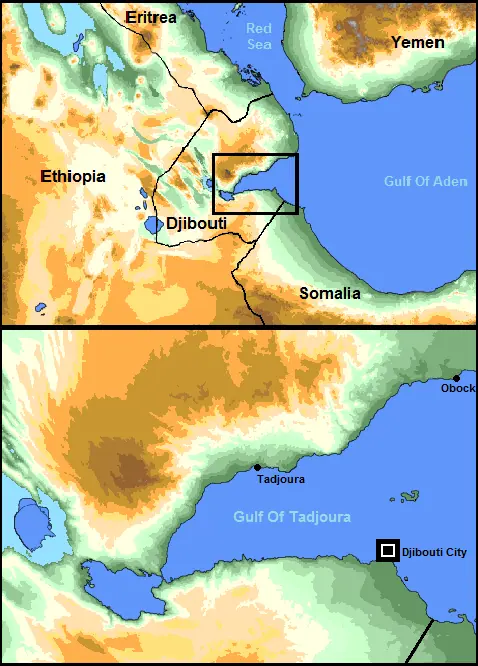
Lake Assal sits about 155 metres below sea level, the lowest point on the African continent and one of the lowest places on Earth. It is roughly 110–120 kilometres west of Djibouti City on a good paved road, so it makes a very long but doable day trip; most visitors leave before dawn to reach the water before the heat does. What you find is a blinding white salt crust ringed by black volcanic rock, a lake so hypersaline that you float without effort, and Afar salt caravans that still load camels with slabs cut straight from the shore.
There is almost no shade, so bring more water than feels reasonable, water shoes to protect your feet from the jagged crust, and sunglasses that actually block glare. Swimming is possible and memorable — the water sits warm, in the low thirties Celsius — but the salt stings any cut you own and leaves a crust on everything you carry. Rinse off afterwards and keep valuables zipped away.
A short drive away, the detours turn an ordinary outing into a geological tour: the Ghoubbet-el-Kharab, a fjord-like inlet where the Red Sea rift meets the shore, and the Ardoukoba volcano, which erupted from a fissure in 1978 and left a raw black cone you can walk across. Pair them with the lake in one long day.
Lake Abbe and the Chimneys of the Afar Depression
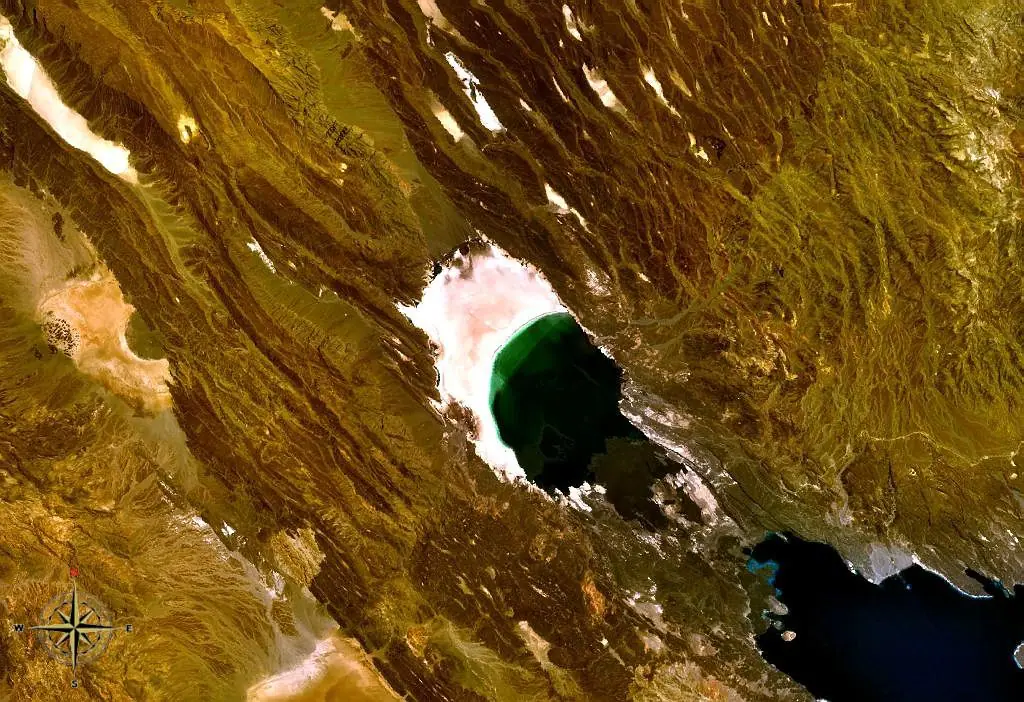
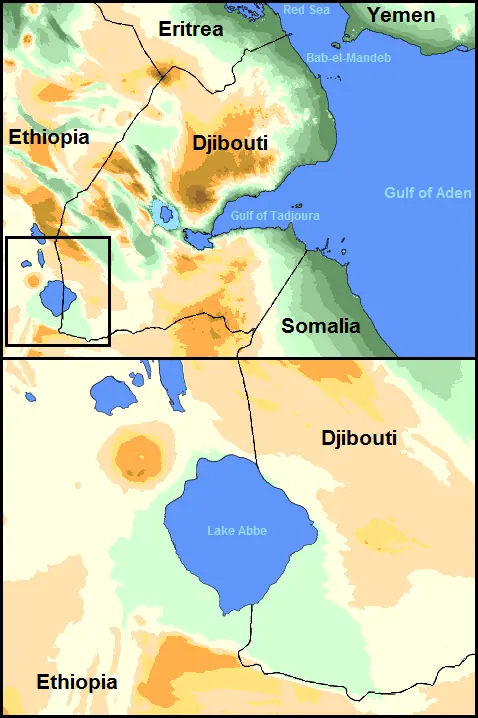
Lake Abbe is Djibouti's great cinematic landscape: a shallow soda lake on the Ethiopian border, fringed with limestone chimneys up to around fifty metres tall, some of them still puffing steam and sulphur. Flamingos wade between them, the ground crunches with salt and gypsum, and Afar herders move their goats across a plain so flat and pale it looks like a different planet. Films have been shot here for exactly that reason.
Getting there is the adventure. It's roughly 200 kilometres southwest of the capital via Dikhil, four to five hours in a robust 4x4, and the road degrades into rough track for the final stretch. Because it sits close to a sensitive border, you should travel with a licensed guide and arrange the necessary permits in advance; most people go as an overnight, sleeping in simple camp accommodation nearby and catching sunset and sunrise over the chimneys, when the light turns them gold.
It is not a comfortable trip — think heat, dust, no phone signal and basic facilities — but it is the single most otherworldly thing you can do in the country. If you have the time and budget for one expedition beyond the coast, make it this one.
Djibouti City's Old Quarter: Place Ménélik, Hamoudi Mosque and the Central Market
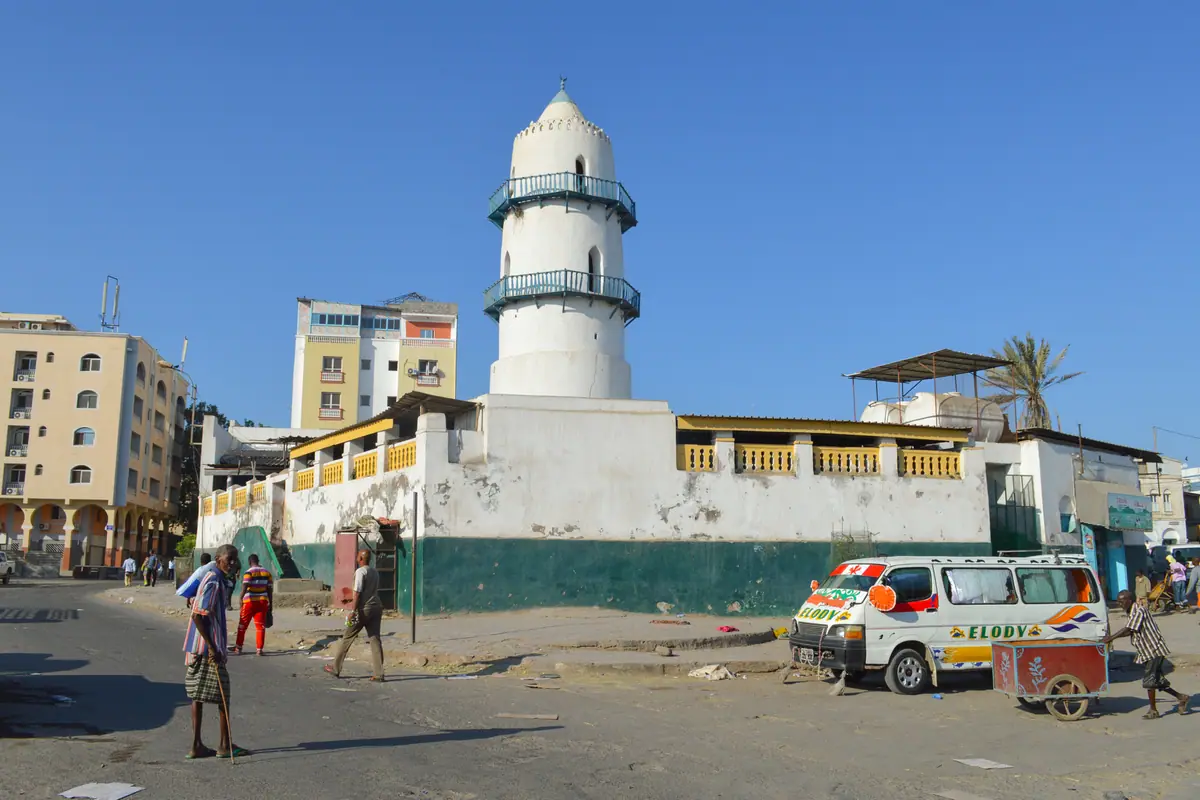
Djibouti City is small, walkable in its historic core and pleasantly faded in a way that rewards slow wandering. Start at Place Ménélik, the civic heart of the old town, where the colonial-era railway station that once linked the coast to Addis Ababa still stands and arcaded buildings shade the square. A few blocks away rises the Hamoudi Mosque, one of the city's largest and oldest places of worship, its slim minaret a landmark over the surrounding streets.
From there, drift into the Central Market, where the air smells of frankincense, myrrh, cardamom and dried fish all at once. Vendors sell amber and silver jewellery, baskets, spice pyramids and bundles of incense, and the mix of Somali, Afar, Yemeni and French influences that defines the city is at its most visible here. Nearby, the old European Quarter's shutters and balconies recall the port's first decades, with the waterfront and Les Jardins de la Mer providing a breezy place to sit as the heat drops in late afternoon.
Practical notes: dress modestly away from the beach, ask before photographing people, and keep cameras away from the port, the presidential palace and anything that looks military — photography restrictions there are enforced. Evenings bring grilled fish, flatbread and sweet mint tea along the waterfront, which is the best possible way to end a day in the city.
Island Days: Moucha, Maskali and the Seven Brothers
The bay off Djibouti City is scattered with islands that make easy, breezy day trips. Moucha Island is the classic: a 20–25 minute boat ride from the port, with shallow coral gardens, white sand, basic bungalows and reef sharks cruising the drop-off. Neighbouring Maskali is smaller and quieter, with sandy shallows where turtles graze seagrass and snorkellers can spend hours without seeing another boat.
For divers, the serious destination is the Seven Brothers, a cluster of volcanic islets near the Bab-el-Mandeb strait. Currents here are strong and the walls drop away into deep water, drawing pelagic sharks and big schools of fish; this is experienced-diver territory, usually done on a multi-day liveaboard rather than a day trip. On land, Khor Ambado, about twenty kilometres south of the city, offers a calm lagoon for swimming plus the collapsed marine cavern known as the Devil's Hole, where reef sharks patrol and confident snorkellers can peer down into the blue.
Take your own water, reef-safe sunscreen and cash — card machines are rare once you're off the mainland — and check sea conditions before committing to a crossing in the windier months.
Into the Mountains: Forêt du Day and the Goda Massif
Most people picture Djibouti as pure desert, which makes the Goda Mountains such a surprise. Reached by 4x4 from Tadjoura, the Forêt du Day is a relict juniper forest clinging to slopes at around 1,500 metres, where mist drifts through the trees, temperatures drop below the coastal furnace and endemic wildlife — including the rare Djibouti francolin — hides in the undergrowth. Guided walks take a few hours, passing Afar villages and terraced fields, and the views over the Gulf of Tadjoura from the ridge are worth the bumpy approach.
En route south, the Grand Barra is another oddity: a vast, flat, dried lakebed on the road towards Ali Sabieh, where heat haze produces shimmering mirages and the emptiness itself is the attraction. Ali Sabieh's granite hills make a scenic stopping point before you turn back towards the coast.
Time your mountain day for the cooler months, carry a light layer for the mist and wind, and remember that the roads here are rough enough that a guided 4x4 is not optional. October to March is the sweet spot for the whole country; by May, daytime heat in the lowlands regularly climbs past 40°C and the khamsin winds blow dust across everything.
Frequently asked questions
When is the best time to visit Djibouti?
October to March is the comfortable window, with warm days, cooler evenings and calm seas. Whale sharks are most reliably seen from about November to late January, making December and early January the peak for combining both. From May to September, lowland temperatures routinely exceed 40°C and desert winds make long drives punishing.
How many days do you need in Djibouti?
Five to seven days covers the highlights comfortably: a couple of nights in Djibouti City with a whale-shark trip and an island day, a long day trip to Lake Assal and the Ghoubbet, and an overnight excursion to Lake Abbe or the Forêt du Day. Anything less and you'll spend most of your time in a vehicle.
Do I need a guide and permits?
In the capital you can explore independently. For Lake Abbe and the border zones you should travel with a licensed operator and arrange permits in advance, and for the Goda Mountains and other rough tracks you'll want a 4x4 with a driver-guide. Many nationalities can obtain an e-visa before arrival, and visas are also issued at the airport.
Can you swim in Lake Assal?
Yes, and the extreme salinity makes floating effortless. Bring water shoes for the sharp salt crust, expect the water to feel bath-warm, and rinse thoroughly afterwards because the salt stings cuts and coats clothing and camera gear. There is virtually no shade, so go early and carry far more water than you think you need.
What should I pack for Djibouti?
Light, loose, modest clothing for the coast, a warm layer for the Goda Mountains, sturdy shoes, a hat, reef-safe sunscreen, snorkelling gear if you're fussy about fit, and plenty of small-denomination cash in Djiboutian francs — ATMs and card readers are scarce outside Djibouti City.
Plan it — experiences in Djibouti
Live search, booked directly with trusted providers.
Sort the rest of your trip
Everything for Djibouti, in one place
Stay in Djibouti
Hotels, guesthouses and apartments — compared in one search.
Search hotels
Transfer in Djibouti
Private driver waiting on arrival — no queues, no surprises.
Book a transfer
Stay online in Djibouti
Travel eSIM — data the moment you land, no roaming bills.
Get an eSIM