Cyprus packs a whole continent's worth of experiences into an island you can cross in a few hours: Roman mosaics bright enough to still make sense of the myths, mountain monasteries glittering with gold, sea caves carved into honey-coloured rock and beaches where the water turns an almost synthetic shade of turquoise. The trick is not finding things to do here — it is choosing between them.
Ancient Wonders: Paphos, Kourion and the Island's Great Ruins
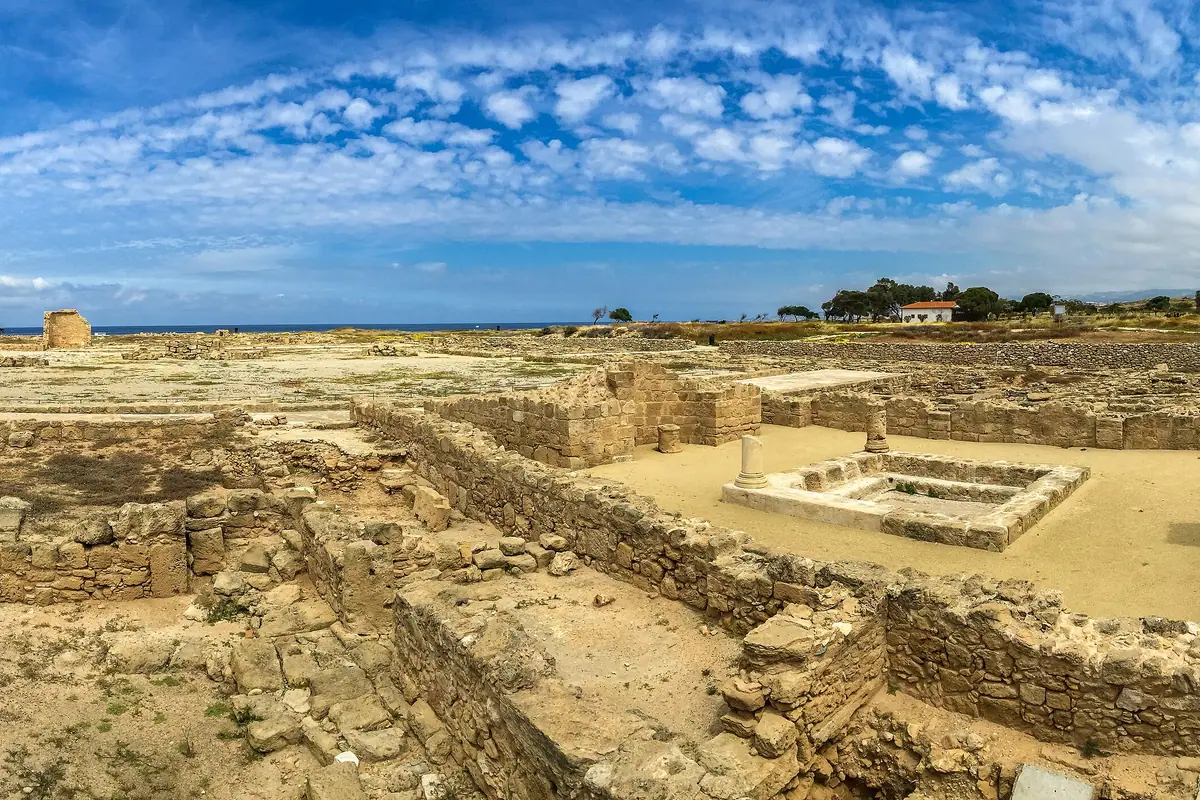
Start on the south-west coast, where the Paphos Archaeological Park spreads across the headland at Kato Paphos. This UNESCO-listed site is famous for the House of Dionysos and its extraordinary floor mosaics, assembled from thousands of tiny stones in scenes of gods, hunts and grape harvests. Nearby you can walk into the Odeon, a small Roman theatre still occasionally used for performances, and climb towards the lighthouse for a view over the whole ancient city. Give it two to three hours, more if you like reading every information panel.
A short drive north, the Tombs of the Kings are cut directly into the coastal rock — vast underground chambers with Doric columns that were never royal tombs at all, but the resting places of wealthy Ptolemaic officials. Combine the two on the same day, then head east to Kourion, perched on a cliff above the sea near Limassol, where the Greco-Roman theatre still hosts summer concerts and the nearby House of Eustolios preserves vivid mosaic floors. The Sanctuary of Apollo Hylates, a few minutes further along the coast, fills in the religious side of the picture.
For something more martial, Kolossi Castle is a compact, square Frankish tower surrounded by almond groves, once the headquarters of the Knights of St John's sugar and wine estates. The sweet Commandaria wine still made in these villages was reputedly served at medieval royal weddings. Visiting early in the morning or in the final two hours before closing is the difference between having these sites to yourself and sharing them with coach parties.
Beaches, Sea Caves and the Aphrodite Coast
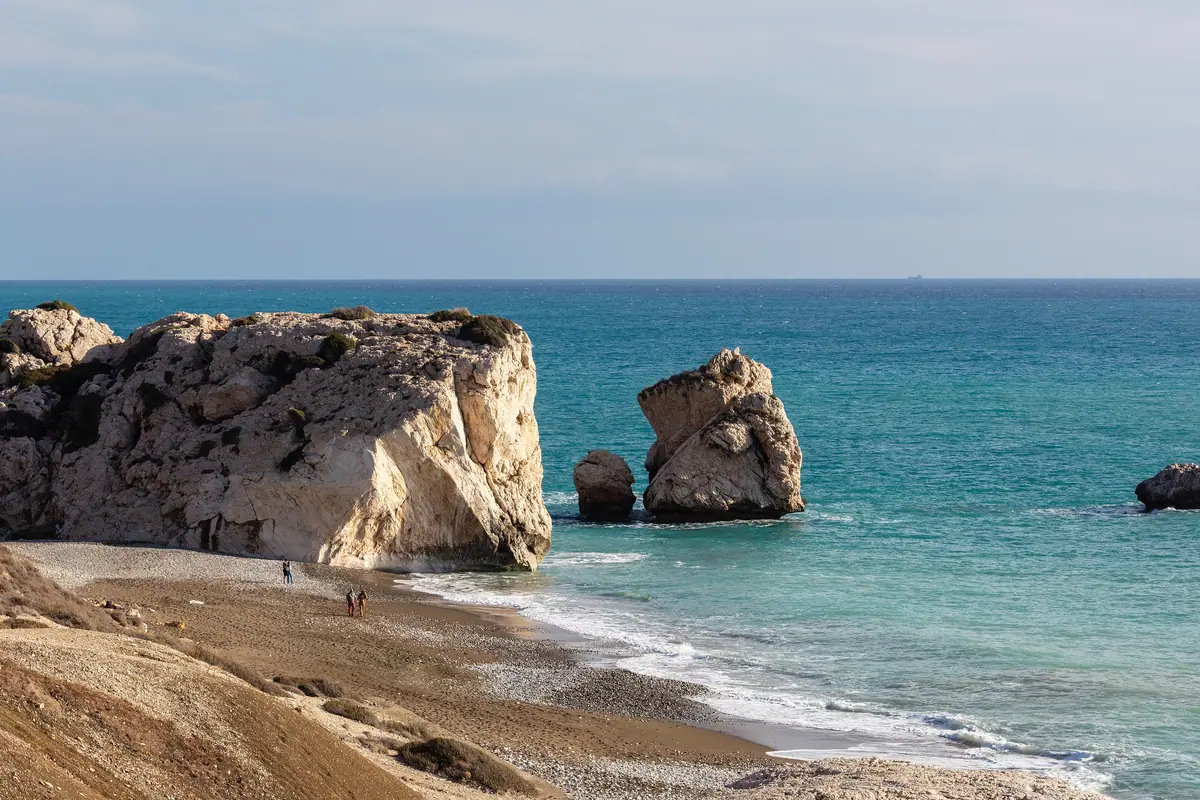
Cyprus has more than enough coastline for everyone, but a few stretches have become genuinely iconic. Petra tou Romiou, the cluster of white boulders near Paphos where legend says Aphrodite rose from the foam, is a pebble beach rather than a sunbathing one — it is best at sunset, when the light turns the rocks pink and the crowds thin out. Swimming around the rock is a rite of passage; the currents can be lively, so use your judgement.
On the east coast, Nissi Beach near Ayia Napa and Fig Tree Bay in Protaras are the postcard versions of Cyprus, with fine sand, shallow shelves and beach bars that keep going into the night. Smaller and quieter are Konnos Bay, tucked into a pine-backed cove, and the sea caves and natural arch around Cape Greco, where you can snorkel through clear, deep water and watch the rocks glow at golden hour. Furthest off the beaten track are Lara Beach on the Akamas peninsula and the Blue Lagoon beyond it, reached by boat from Latchi harbour or by a bumpy 4x4 track — the water there is startlingly, almost unnaturally blue.
Sea temperatures stay swimmable from roughly May to October, peaking warm and bath-like in late summer. Lara Beach is a turtle nesting ground, so keep off the sand after dark during nesting season and never disturb marked nests. Bring reef shoes for the rocky entries at Petra tou Romiou and Cape Greco.
Troodos Mountains: Monasteries, Trails and Wine Villages
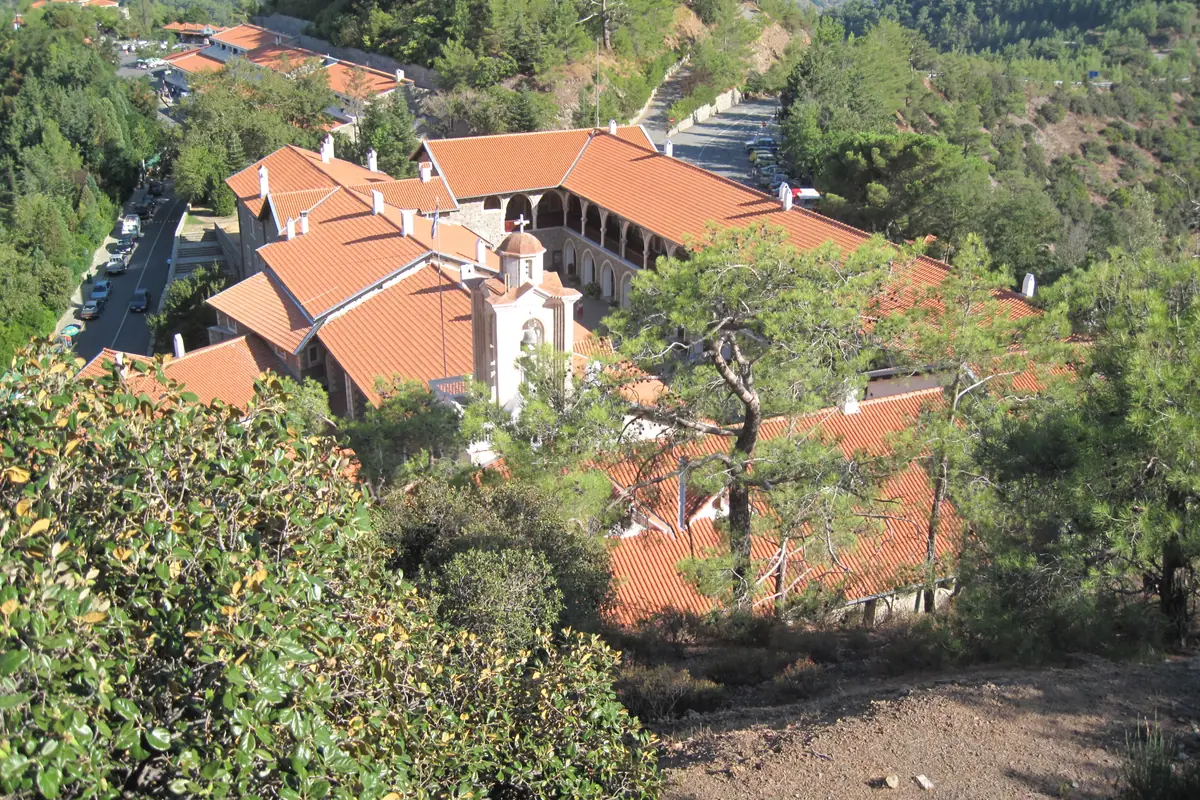
The Troodos massif is the island's other world: pine forests, terraced vineyards and cool air that can be ten degrees lower than the coast on a July afternoon. Kykkos Monastery, high in the mountains, is the wealthiest and most visited religious site in Cyprus, its interior a blaze of gold mosaic and painted frescoes, with an excellent museum of icons and relics. Dress respectfully — covered shoulders and knees — and expect quiet, unhurried reverence rather than a tourist spectacle.
Above it all sits Mount Olympus, known locally as Chionistra, at just under 2,000 metres. In winter its slopes carry enough snow for a small ski season, usually from January into March, while the rest of the year the same mountain is a hiking destination. The Artemis and Atalante trails loop through black pine and juniper on the upper slopes, and the shaded walk down to Caledonia Falls near Platres rewards you with a cascade and a cold plunge pool.
Below the peaks are the wine villages — Omodos with its cobbled square and monastery, Arsos, Vouni — where family wineries pour the dark, sweet Commandaria alongside dry reds made from the local Mavro grape. Lefkara, on the eastern edge of the range, is famous for its hand-made lace and silverwork. Mountain roads are winding and narrow; allow more time than a map suggests, and fill up with fuel before heading up.
Castles, Old Towns and City Mornings
Limassol Castle anchors the old town beside the fishing-boat harbour, and the Molos promenade stretching east from it is where locals jog, cycle and drink coffee at unreasonable hours. Inland from the seafront, the narrow lanes behind the castle hide small galleries, bakeries and tavernas that only fill up after dark. Further east along the same coast, Larnaca's Church of Saint Lazarus is a beautifully restored stone church said to stand over the tomb of Lazarus himself, and a few minutes away the Larnaca Salt Lake turns pink with flamingos between roughly November and March.
Nicosia, the last divided capital in Europe, is a different experience entirely. Ledra Street leads to the pedestrian crossing into the north, and on the northern side the Büyük Han caravanserai has been reborn as a courtyard of craft studios and cafés, with the Selimiye Mosque — a Gothic cathedral converted into a mosque — a short walk away. The Cyprus Museum in the southern half holds the island's finest archaeological collection, and is the best single place to make sense of everything you have seen in the ruins.
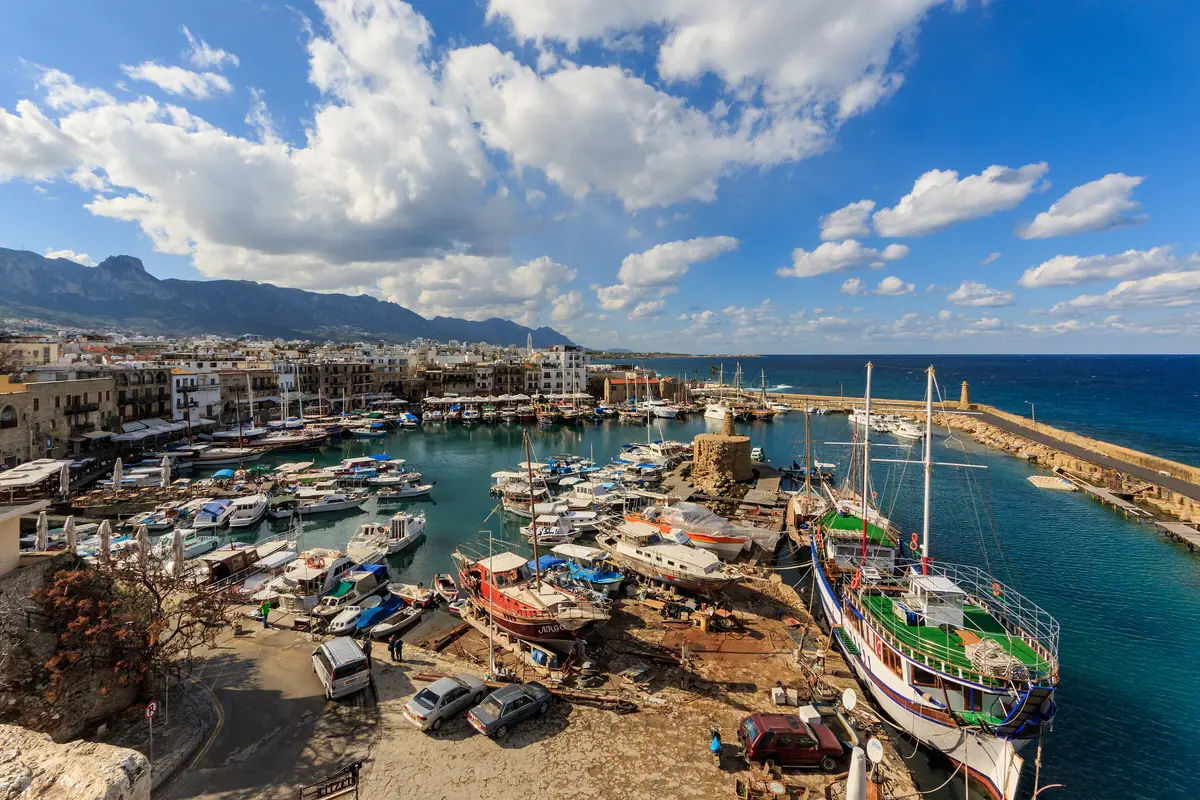
On the northern coast, Kyrenia Castle guards a horseshoe harbour lined with cafés, and houses the remarkably preserved remains of a 4th-century BC merchant ship. Above the town, Bellapais Abbey's cloisters and refectory sit in a village of lemon trees, while the fairy-tale ruins of St Hilarion Castle cling to a ridge further west. Allow a full day for both, and carry photo ID if you plan to cross between the two sides.
On the Water and Off the Trail: Active Days
Cyprus is a serious diving destination thanks to the Zenobia, a ro-ro ferry that sank off Larnaca in 1980 and now rests at around 42 metres, its decks still stacked with lorries. It is a wreck for experienced divers, but the island offers gentler options too: shallow reef dives, caverns and swim-throughs around Cape Greco, and clear, calm conditions along the Akamas coast that suit beginners and snorkellers.
Sea kayaking around Cape Greco and the Akamas peninsula reveals sea caves and hidden coves that no road reaches, while boat trips from Latchi run to the Blue Lagoon for swimming off the stern. Larnaca Bay and the flat water near the Akrotiri peninsula are the island's windsurfing and kiteboarding heartlands, with reliable summer meltemi-style breezes building through the afternoon.
On land, the Avakas Gorge in the Akamas is a memorable half-day walk through narrow limestone walls, and the cliffside trail along Cape Aspro near Pissouri delivers big coastal views for modest effort. Mountain bikers gravitate to the Troodos forest tracks, and in winter the same range offers the surreal combination of skiing in the morning and swimming in the sea by late afternoon.
When to Go and How to Get Around
The sweet spots are April to June and September to October, when the sea is warm, the archaeological sites are comfortable to walk and the villages are lively without being overwhelmed. July and August are fiercely hot inland — temperatures regularly push past 35°C — so plan ruins and hikes for early morning, spend the middle of the day in the water or a museum, and return out in the evening. Winter is mild on the coast, with rain showers and enough snow in Troodos for a short ski season.
Ancient sites typically open daily from around 8.30am, with longer hours in summer and shorter ones in winter; the larger ones charge modest entry fees and a combined ticket can cover several sites in the same district. A car gives you the freedom to chase the light and to reach mountain villages and remote beaches, but remember traffic drives on the left. Distances are small — the whole island is only a few hours end to end — so most travellers base themselves in two places rather than constantly moving.
Reserve your sleep and any wreck dives or boat trips well ahead for the peak summer weeks, and keep an eye on the heat: carry more water than you think you need, especially in the Troodos foothills and on the Akamas tracks where shade is scarce.
Frequently asked questions
How many days do you need in Cyprus?
Five to seven days is enough to see the highlights: two nights around Paphos for the archaeological park, Petra tou Romiou and the Akamas, two around Limassol or Larnaca for Kourion, the old towns and the coast, and a night or two in the Troodos mountains for Kykkos Monastery and the trails. Ten days lets you add the northern coast around Kyrenia without rushing.
What is the best time of year to visit Cyprus?
Late April to June and September to October offer the best balance of warm sea, comfortable walking temperatures and open mountain roads. July and August are very hot inland, while winter is mild and quiet on the coast, with snow and a short ski season on Mount Olympus in the Troodos range.
Which beaches in Cyprus should not be missed?
Nissi Beach near Ayia Napa, Fig Tree Bay in Protaras, Konnos Bay and the Cape Greco sea caves are the east-coast classics. On the west, the Blue Lagoon on the Akamas peninsula and the wilder Lara Beach are worth the rougher access, while Petra tou Romiou is more about the legend and the sunset than the swimming.
Do you need a car to explore Cyprus?
It is strongly recommended if you want to reach Troodos villages, the Akamas and remote beaches on your own schedule. Driving is on the left, roads in the mountains are winding, and a small car is easier to park in old-town centres. Public buses exist between the main towns but are slow and sparse on rural routes.
Can you visit both the south and north of Cyprus on one trip?
Yes. There are pedestrian and vehicle crossing points, most conveniently on Ledra Street in Nicosia, and day trips to Kyrenia Castle, Bellapais Abbey and St Hilarion Castle are straightforward. Carry a passport or national ID card, check current crossing hours, and note that your car insurance may not cover you on the other side.
Plan it — experiences in Cyprus
Live search, booked directly with trusted providers.
Sort the rest of your trip
Everything for Cyprus, in one place
Stay in Cyprus
Hotels, guesthouses and apartments — compared in one search.
Search hotels
Transfer in Cyprus
Private driver waiting on arrival — no queues, no surprises.
Book a transfer
Stay online in Cyprus
Travel eSIM — data the moment you land, no roaming bills.
Get an eSIM