Cyprus packs a whole holiday menu onto one island: Byzantine churches in the mountains, Roman mosaics by the sea, harbour castles, salt lakes full of flamingos and beaches that stay swimmable into November. The only real challenge is deciding where to drop your bags, because a base in Paphos feels nothing like one in Ayia Napa. This guide walks you through each region's hotels, character and the landmarks you should not leave without seeing.
Choosing Your Base: Coast, City or Mountains
Cyprus is roughly 240 kilometres across, which means nothing on the island is more than about two and a half hours away by car — but the differences between its corners are enormous. The west coast around Paphos is relaxed and archaeological, the south coast around Limassol is cosmopolitan and marina-focused, the east around Ayia Napa and Protaras is a purpose-built beach playground, and the capital Nicosia sits inland, encircled by Venetian walls and ringed by almond groves.
Accommodation follows the landscape. Beach resorts dominate the coastline, ranging from vast all-inclusive complexes with waterparks to small family-run hotels a street back from the sand. Inland you'll find city hotels in Nicosia, and in the Troodos Mountains a network of restored stone guesthouses — many converted from village houses in places like Omodos, Kakopetria and Platres — where fireplaces and mountain air replace poolside DJs. Agrotourism farm stays in wine villages offer another angle entirely.
Timing shapes your choice as much as taste. April to June and September to October are the sweet spots: warm sea, mild air and manageable crowds. July and August push past 35°C on the coast, while winter brings mild, sometimes rainy days by the sea and actual snow on the Troodos peaks, where a small ski scene operates on Mount Olympus. Book mountain guesthouses early for spring and autumn weekends, when locals escape the heat.
Paphos and the Western Coast: Mosaics, Tombs and Sea Caves
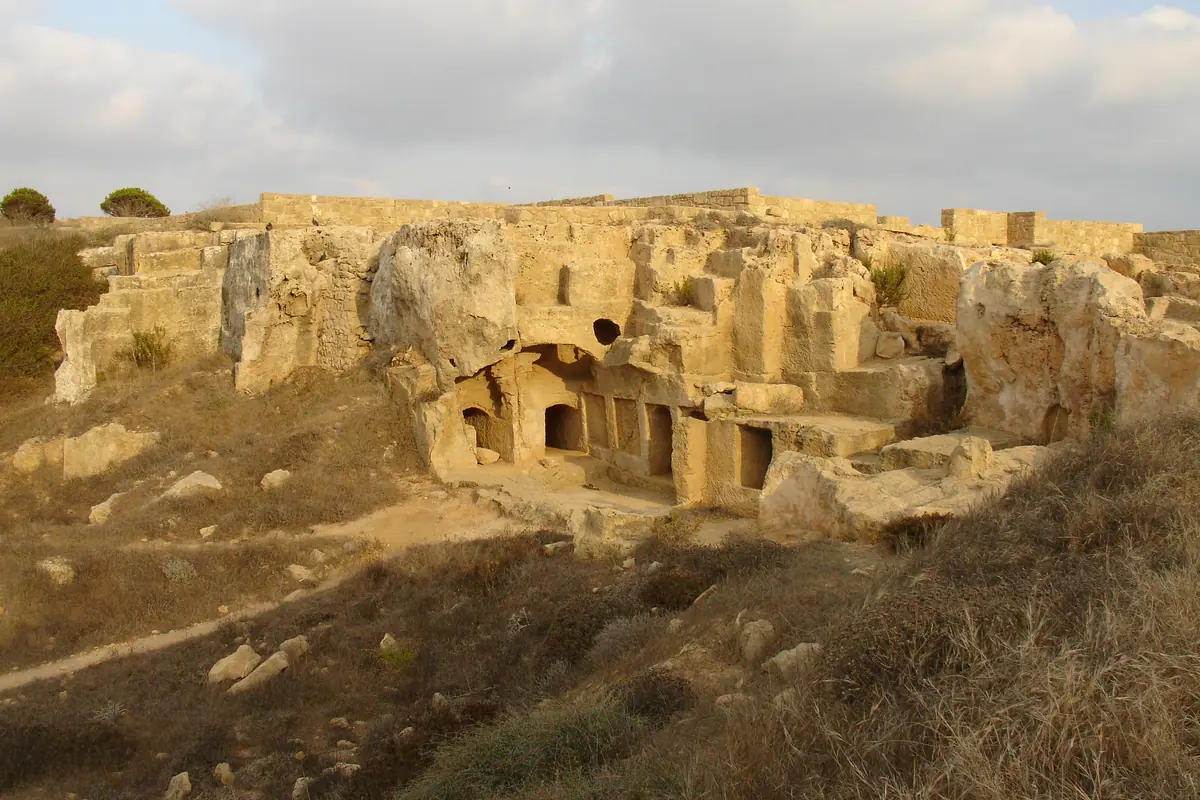
Paphos is where most first-time visitors land, literally and figuratively. Kato Paphos, the lower town by the harbour, is the classic place to stay: seafront hotels within walking distance of the Paphos Archaeological Park, whose Roman villas hold some of the finest floor mosaics in the Mediterranean, and the Tombs of the Kings, a haunting necropolis of rock-cut chambers carved for Ptolemaic aristocrats. Paphos Castle guards the harbour entrance, and the whole ensemble is inscribed on the UNESCO World Heritage list.
North of town, Coral Bay offers a broad sandy beach and a strip of family-friendly hotels and apartments; further north still, Polis and Latchi are far quieter, with tavernas on the water and boat trips to the Blue Lagoon in the Akamas Peninsula. The wild Akamas is also where you'll find the Avakas Gorge, a slot canyon of limestone walls, and the Baths of Aphrodite, a spring-fed grotto tied to the island's most persistent myth.
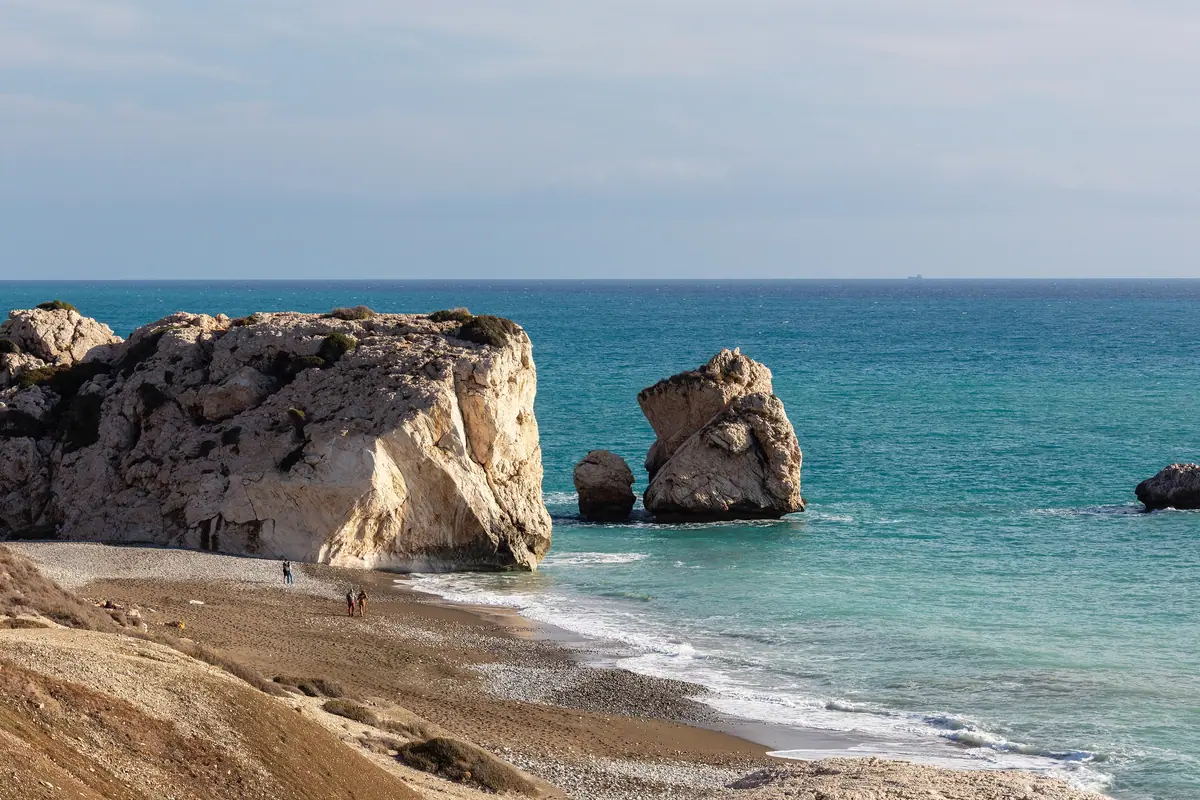
Roughly 25 kilometres east along the coast road sits Petra tou Romiou, the sea stack known as Aphrodite's Rock, where legend says the goddess rose from the foam. It's a quick stop on the way to Limassol, and worth timing for early morning or sunset, when the pebble beach empties and the light turns the water bronze. Paphos International Airport is a 15-minute drive from Kato Paphos, which makes late arrivals painless.
Limassol and the Southern Shore: Ancient Theatres and Wine Country
Limassol is the island's second city and its most urban seaside base, with a compact old town, a medieval castle that once hosted a royal wedding, and a glitzy marina lined with cafes. The long promenade at Molos is where locals jog and fish at dusk. Hotels cluster along the beach strip running east through Germasogeia and Agios Tychonas, where high-rise resorts face the sea, while a growing crop of boutique stays has opened in the old town's restored lanes.
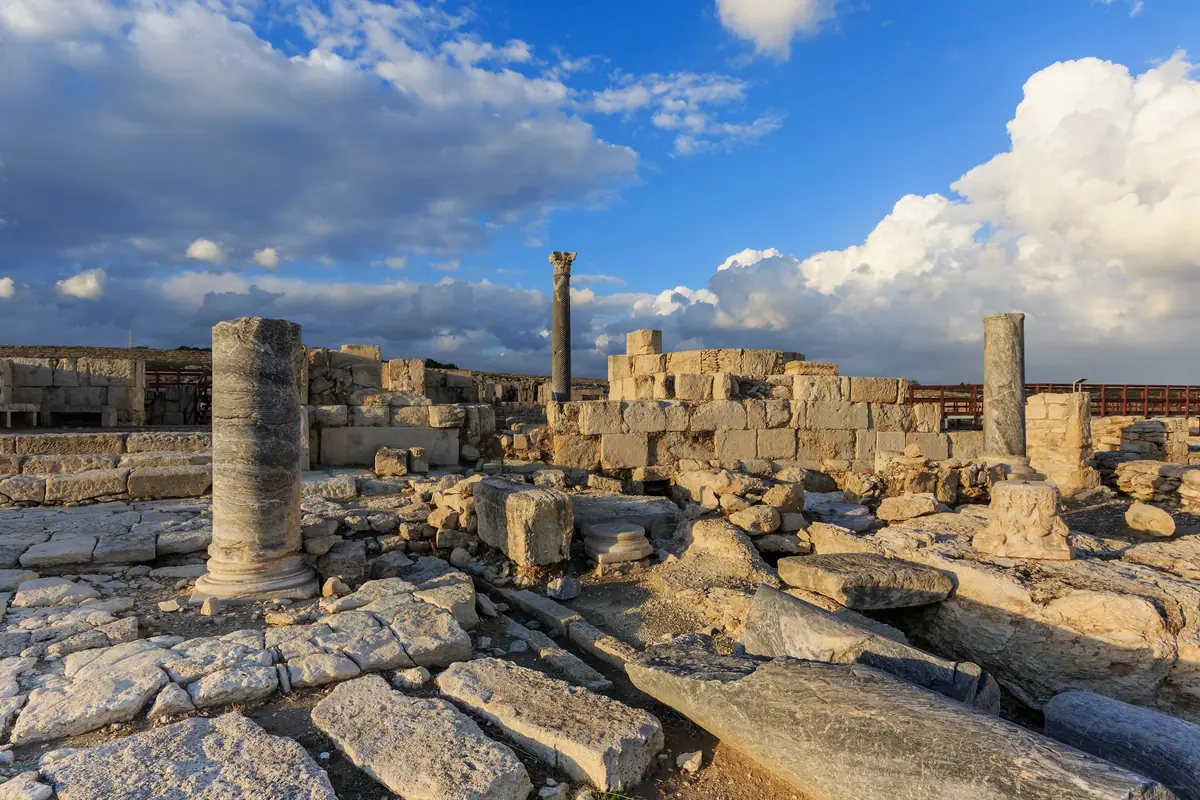
The coast west of the city holds the island's greatest classical site: Kourion, an ancient city-kingdom with a clifftop theatre that still hosts summer performances, plus Roman baths and a basilica with vivid mosaics. Nearby stand the Sanctuary of Apollo Hylates and Kolossi Castle, a square medieval keep surrounded by vineyards. Further east, the ruins of Amathus lie almost on the beach, half-submerged in the story of the city.
This is also wine country. The slopes above Limassol produce Commandaria, one of the world's oldest named wines, and villages such as Omodos, Arsos and Vouni welcome visitors to cellar doors and stone-paved squares. Stay overnight in Omodos and you get cool evenings, monastery bells and a completely different Cyprus from the beach-strip version. In late August the city erupts for its big wine festival — book accommodation well ahead.
Larnaca, Ayia Napa and the East: Salt Lakes and Turquoise Bays
Larnaca suits travellers who want a real town with a beach attached. The Finikoudes promenade curves along a palm-lined bay, the Church of Saint Lazarus — a 9th-century stone church holding the tomb of its namesake — anchors the old quarter, and a short walk inland brings you to the Salt Lake, where flamingos gather in winter and the Hala Sultan Tekke mosque sits reflected in the shallows. Mackenzie Beach, at the other end of town, is famous for its planes-that-skim-the-sand approach path.
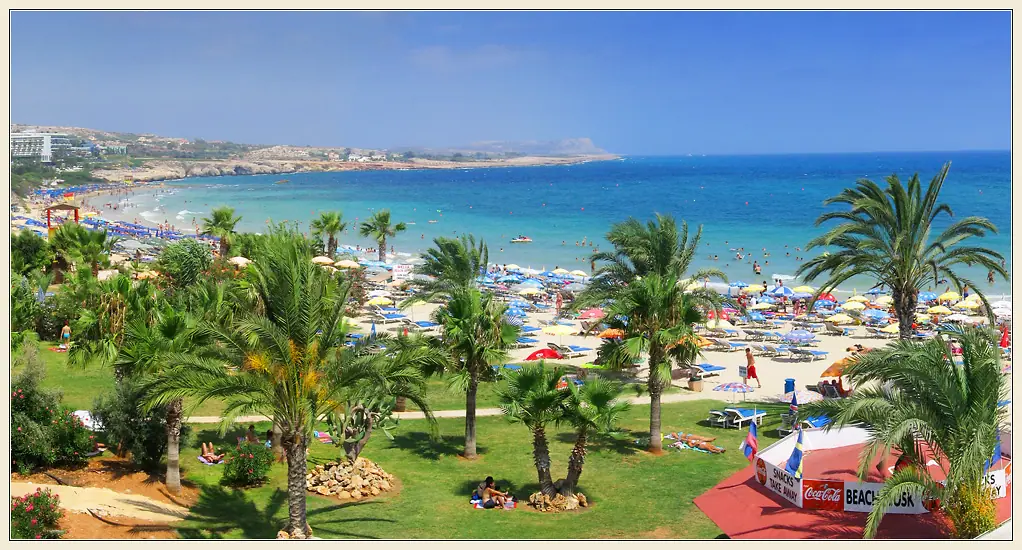
Head east and the scenery flips into full resort mode. Ayia Napa pairs a lively bar scene with genuinely lovely coastline: Nissi Beach's white sand and shallow lagoon, the sculpted rock formations of the Sea Caves, and the Cape Greco national park with its cliff trails, lighthouse and the natural arch at Kamara tou Koraka. Family-focused Protaras is quieter, with Fig Tree Bay's calm, gin-clear water and the pine-backed cove at Konnos Bay.
Hotels here range from enormous resort complexes with multiple pools and kids' clubs to low-rise apartments a few minutes from the sand. The trade-off is seasonality: in July and August the east coast is buzzing and busy, while in May and October you get the same water with far more space. Larnaca International Airport is the arrival point for most eastern resorts, with Ayia Napa about 45 minutes away by road.
Nicosia and the Troodos Mountains: The Island's Inland Heart
Nicosia, the last divided capital in Europe, rewards a night or two rather than a day trip. Ledra Street crosses the old city and the Green Line, the Cyprus Museum holds the island's richest archaeological collection, and the caravanserai of Büyük Han and the Gothic-turned-Ottoman Selimiye Mosque sit within the Venetian walls. Laiki Geitonia, a restored neighbourhood of arcaded lanes and craft shops, is the prettiest corner for an evening meal.
South-west of the capital, the Troodos range rises to Mount Olympus and a world of cedar forest, terraced vineyards and Byzantine churches. Kykkos Monastery, gilded and richly painted, is the island's most visited religious site and a pilgrimage for Cypriots; around it, UNESCO-listed painted churches such as Panagia tou Araka hide frescoes in tiny village chapels that are often locked, so ask locally for the key. Walking trails, waterfalls and trout tavernas fill the summer days.
Mountain hotels tend to be small, timber-beamed and family-run, in villages like Platres, Kakopetria and Pedoulas. They're a bargain outside weekends and a joy in autumn, when the forests turn and the air cools. Be aware that roads wind sharply, driving is on the left, and a car is close to essential inland — buses to remote villages are infrequent and rarely suit a sightseeing schedule.
Kyrenia and Northern Cyprus: Harbours, Abbeys and Crusader Castles
Crossing to the north changes the mood. Kyrenia, known locally as Girne, wraps a horseshoe harbour around bobbing boats, with the bulky Kyrenia Castle at one end housing a remarkably preserved 4th-century-BC shipwreck. Hotels range from harbour-front boutiques to large resorts on the beaches at Alsancak and Esentepe, and evenings revolve around seafood meze overlooking the water.
Inland from Kyrenia, three Crusader castles punctuate the mountains: St Hilarion, with its fairy-tale towers and queen's window, Bellapais Abbey, whose Gothic cloister hosts concerts, and the more rugged Buffavento. Further east, the walled city of Famagusta and the nearby ruins of Salamis add another layer of Roman and Lusignan history, while the Karpaz Peninsula stretches north-east in a sparsely populated ribbon of sand, wild donkeys and empty beaches.
Practicalities matter here. Crossings operate at several points in Nicosia, including Ledra Street, and at other checkpoints along the buffer zone; bring your passport, and check your car hire and insurance cover before driving across. Currency in the north is the Turkish lira rather than the euro, and cards are accepted in most hotels but not everywhere in smaller villages. Many travellers base themselves in the south and visit the north as a long day trip, but staying a night or two in Kyrenia lets you see Bellapais and St Hilarion without rushing.
Frequently asked questions
What is the best time of year to visit Cyprus?
April to June and September to October offer the best balance of warm sea, comfortable temperatures and lighter crowds. July and August are hot and busy with families, with coastal highs often above 35°C. Winter is mild on the coast — good for hiking and sightseeing — and cool enough in the Troodos Mountains for snow and a short ski season on Mount Olympus.
Do I need a car to explore Cyprus?
For a beach resort holiday you can manage without one, using local buses and taxis. To see the Tombs of the Kings, Kourion, the Troodos painted churches and out-of-the-way villages at your own pace, a hire car is far more practical. Driving is on the left, roads inland are winding, and it's worth confirming your insurance covers the north if you plan to cross.
Which area of Cyprus is best for families with children?
Protaras and Ayia Napa on the east coast are hard to beat, thanks to shallow, calm water at Fig Tree Bay, Nissi Beach and Konnos Bay, plus resorts with pools, kids' clubs and plenty of casual restaurants. Coral Bay near Paphos is a strong alternative, with a wide sandy beach and a gentler pace than the east.
Can I stay in northern Cyprus and cross to the south?
Yes, checkpoints operate daily, including the Ledra Street crossing in Nicosia. You'll need your passport, and you should check whether your car hire or travel insurance is valid on both sides. The north uses the Turkish lira, while the south uses the euro, so carry a little cash for smaller guesthouses and village tavernas.
Are there good alternatives to big beach resorts?
Plenty. Boutique hotels in Nicosia's old city and Limassol's restored lanes, harbour-front guesthouses in Kyrenia, and agrotourism farm stays in wine villages such as Omodos all offer a different rhythm. In the Troodos Mountains, family-run stone guesthouses with fireplaces make a lovely off-season base for hiking, monastery visits and slow village lunches.
Sort the rest of your trip
Everything for Cyprus, in one place
Transfer in Cyprus
Private driver waiting on arrival — no queues, no surprises.
Book a transfer
Things to do in Cyprus
Skip-the-line tickets, guided tours and standout experiences.
See experiences
Stay online in Cyprus
Travel eSIM — data the moment you land, no roaming bills.
Get an eSIM