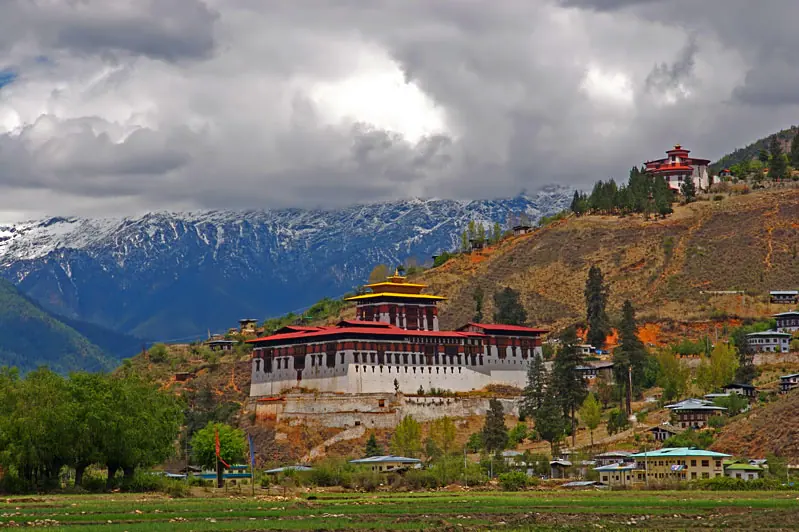
Bhutan rewards travellers who move slowly: a country where the roads climb over 3,000-metre passes, monasteries cling to cliffs, and the day's highlight might be a monk's laughter echoing across a dzong courtyard. This is a guide to the sights that genuinely matter — the ones worth building an itinerary around, and the seasons that make them shine.
Paro Taktsang: The Cliffside Monastery Everyone Comes For
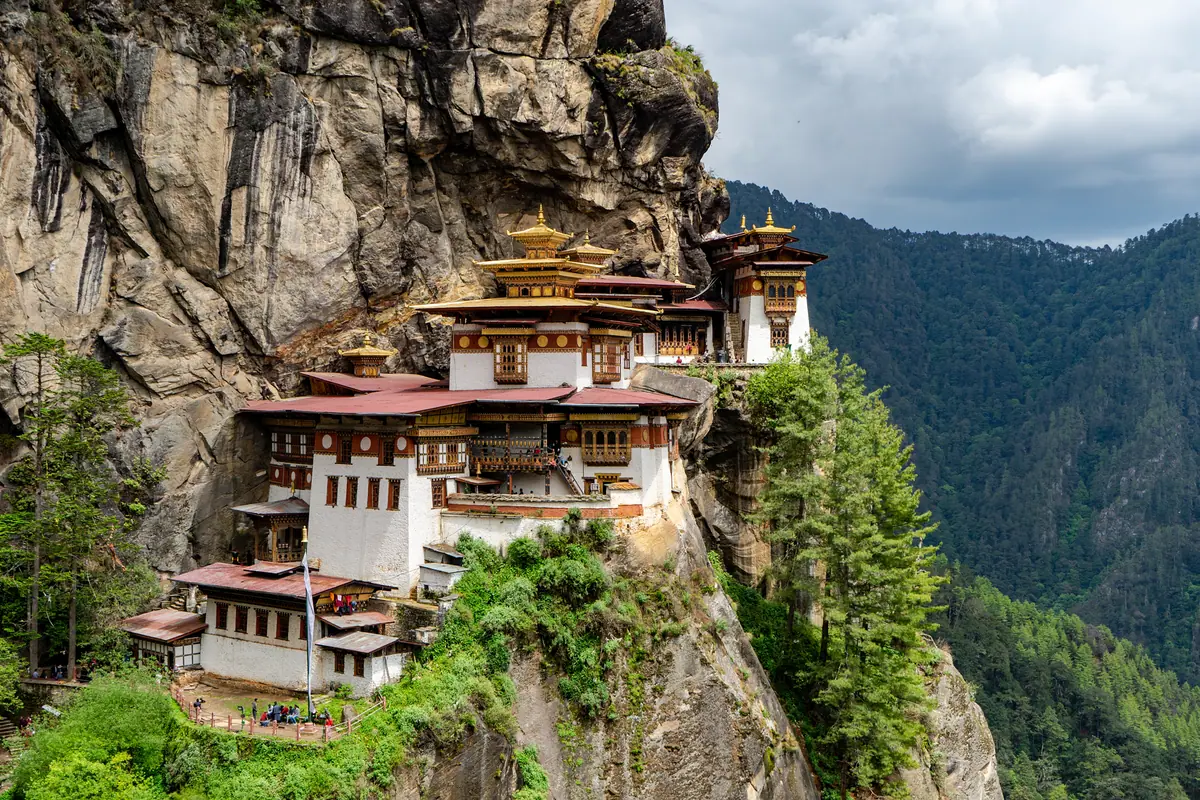
Paro Taktsang, the Tiger's Nest, is the image most people carry of Bhutan before they arrive — a whitewashed complex pinned to a granite cliff roughly 900 metres above the Paro Valley floor, with prayer flags snapping in the wind and clouds drifting below the windows. It is also a working monastery, not a monument, and the walk there is the point as much as the arrival. The trail begins near the base of the valley road and switchbacks uphill through blue pine forest thick with moss, ferns and fluttering flag lines.
Budget two to three hours to climb and about an hour and a half to come down, so half a day in total. Most walkers stop at a hillside teahouse roughly halfway for lemon tea and a first, heart-stopping view of the monastery across the gorge; horses can carry you to that point if the altitude is biting. Beyond the teahouse the path descends steeply to a waterfall, crosses a bridge, and then climbs a final flight of stone steps — the section that feels endless and takes twenty minutes.
Once inside, expect narrow shrines, butter lamps and the cave where Guru Rinpoche is said to have meditated in the eighth century. Photography is not allowed in the inner temples, shoulders and knees must be covered, and hats come off. The monastery burned badly in 1998 and was painstakingly rebuilt in its original form, which is part of why it still feels alive rather than museum-like. Arrive early; by mid-morning the path is busy and the light is flatter.
Paro Valley: Dzongs, a Round Watchtower and Bhutan's Oldest Temple
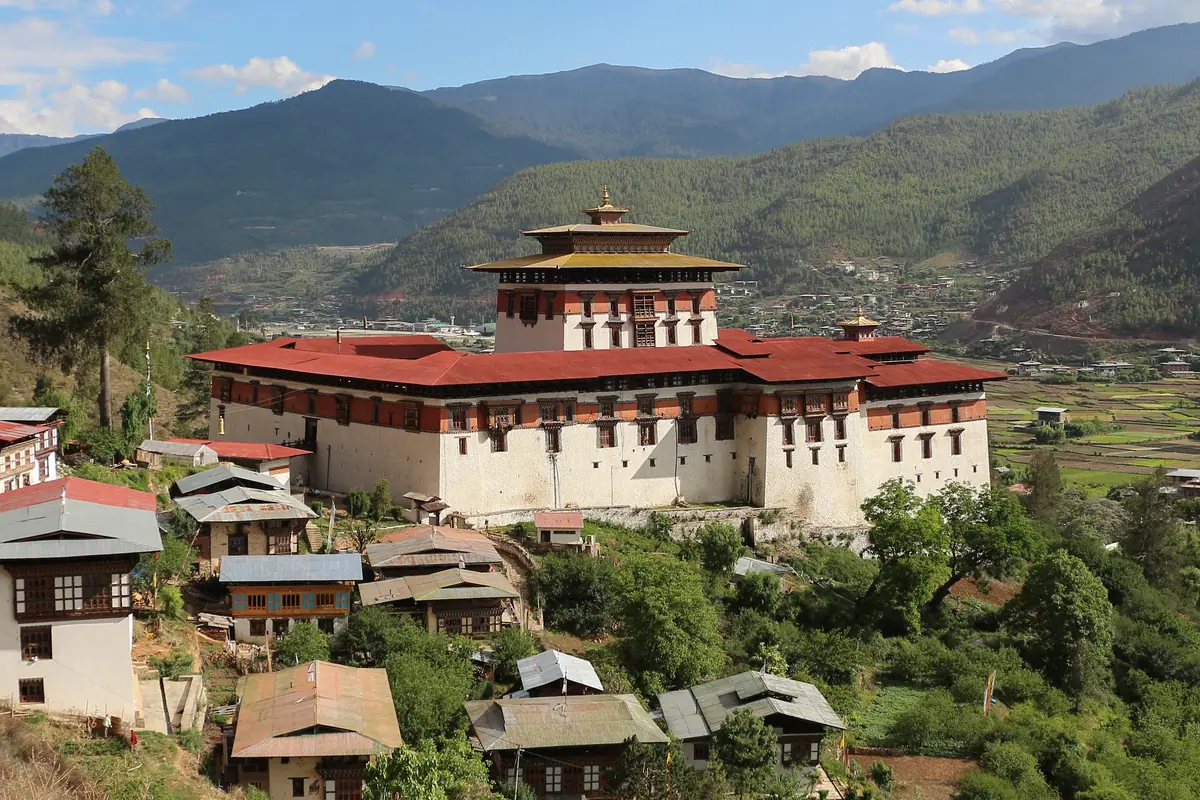
Paro is more than a trailhead. Rinpung Dzong, a fortress-monastery founded in 1646, dominates the valley with white walls, timber galleries and a covered bridge over the Paro Chhu. Its courtyards host the spring Paro Tshechu, when giant thangka scrolls are unfurled before dawn and masked dancers spin in the dust. Above it stands the Ta Dzong, a circular 17th-century watchtower that now serves as the national museum, its exhibits moving from stone tools and royal thrones to philately and Himalayan wildlife.
Further up the valley, Kyichu Lhakhang is one of Bhutan's most sacred sites, dating to the seventh century and linked to the Tibetan king who built temples across the Himalaya to pin down a restless landscape. Its grounds hold an orange tree that fruits year-round and a sense of great age that no photograph carries. Nearby, the roofless shell of Drukgyel Dzong — a 1649 victory fortress gutted by fire in 1951 and since brought back from ruin — sits beneath the sacred peak of Jomolhari, which is visible on clear mornings.
If you have a spare day and a driver, the drive to Chelela Pass at around 3,900 metres is the highest motorable road in the country, and the ridge above it is draped in prayer flags with views into the Haa Valley. Haa itself is a quiet, rarely visited valley of farmhouses and old temples, and the summer festival there is one of the friendliest in Bhutan.
Thimphu: Giant Buddhas, a Memorial Chorten and a Capital Without Skyscrapers
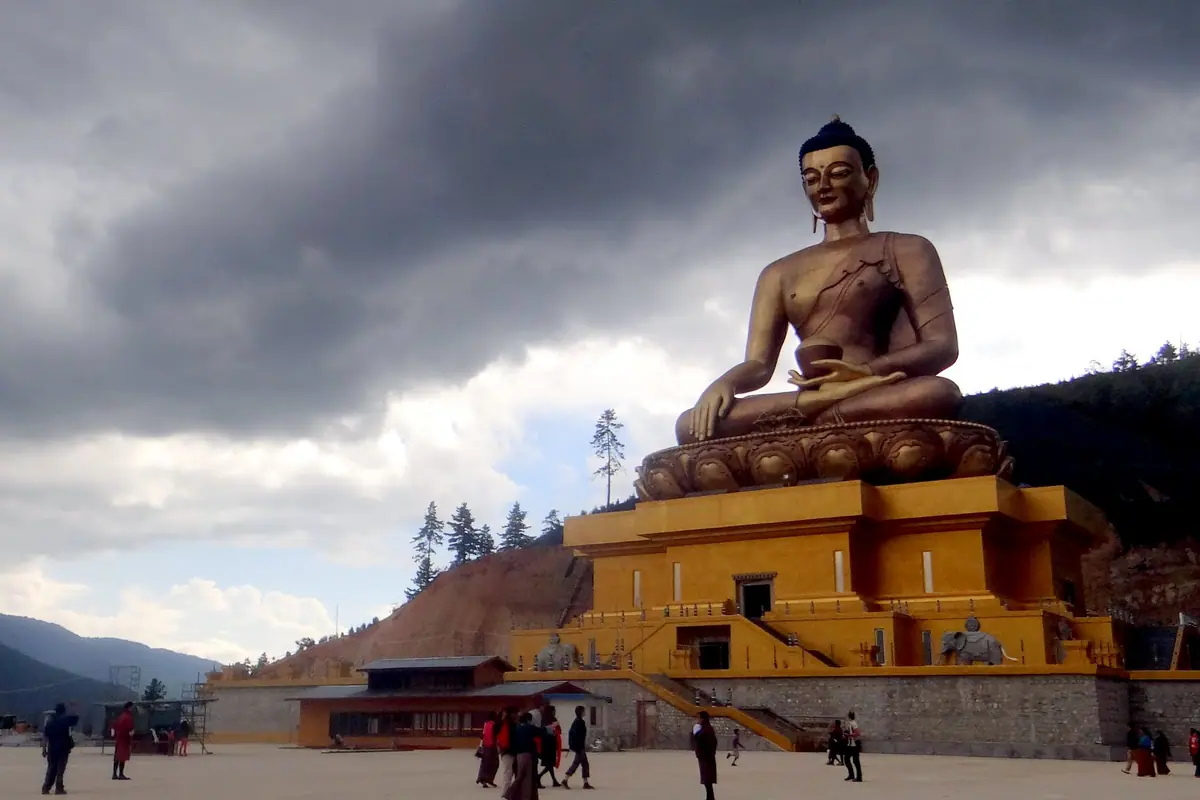
Thimphu is the only capital in the world without a single traffic light, and it moves at a pace that makes a stroll through it feel like a village errand. Start at the Memorial Chorten, a whitewashed stupa built in 1974 in memory of the third king, where elderly Bhutanese walk clockwise murmuring mantras from dawn until dusk. From there, the 51-metre bronze Buddha Dordenma sits on a hill at Kuensel Phodrang, gazing down the valley; the interior holds tens of thousands of smaller gilded figures and the terrace gives you the best panorama of the city.
Tashichho Dzong, the seat of government and summer residence of the head abbot, is the capital's defining silhouette, best seen in late afternoon as the light softens the gold roof. Elsewhere, the Takin Preserve at Motithang keeps Bhutan's odd, moose-like national animal in a forested enclosure, the textile museum explains the country's astonishing weaving traditions, and the Centenary Farmers' Market fills on weekends with dried chillies, fermented cheese, yak meat and herbs.
Thimphu is also where you adjust to altitude — the city sits above 2,300 metres and the first night's sleep is often restless. Use the day to wander: the craft bazaar along the river, the archery ground where national sport is played with astonishing noise and ceremony, and the small paper-making workshops that turn daphne bark into the cream-coloured sheets used in every monastery.
Over Dochula to Punakha: Bhutan's Warm Winter Valley
The road east from Thimphu climbs to Dochula Pass at about 3,100 metres, where 108 chortens stand on a ridge in memory of Bhutanese soldiers and, on a clear winter day, the entire eastern Himalaya unrolls in a line of snow peaks from the prayer-flag platform. It is worth arriving early before cloud builds; a small temple on the ridge hosts a festival of masked dance each December that draws pilgrims from across the country.
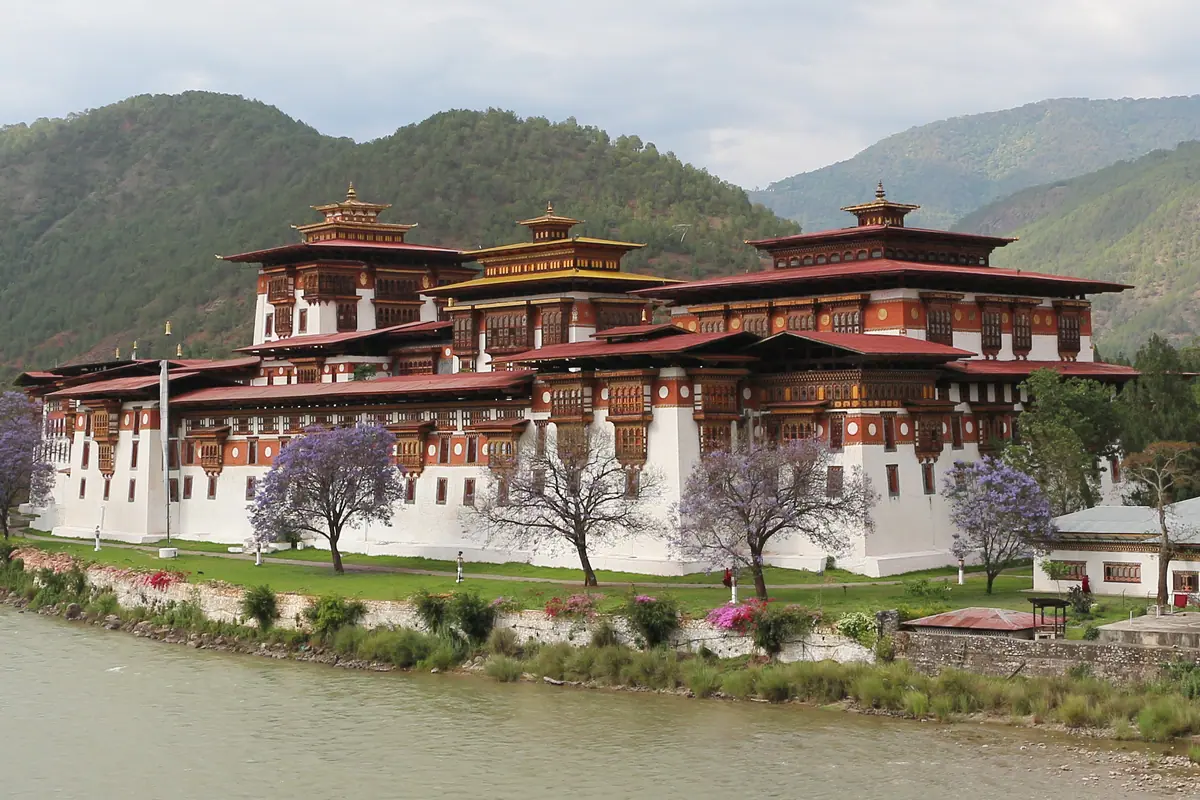
Beyond the pass the road drops steeply into the Punakha Valley, and the change is dramatic — citrus groves, rice terraces and banana palms where Thimphu was frost. Punakha Dzong, built in 1637 at the confluence of the Pho Chhu and Mo Chhu rivers, is widely considered the finest fortress-monastery in Bhutan, and in spring its lilac jacaranda trees drench the courtyards in colour. You reach it by walking across a long wooden cantilever bridge, and the dzong serves as the winter home of the monastic body, so the chanting inside is real and constant.
Nearby, the Punakha Suspension Bridge sways 160-odd metres across the Pho Chhu and is strung with flags; a short drive into the fields brings you to Chimi Lhakhang, a fertility temple reached by a 20-minute walk through paddy, and to Wangdue Phodrang Dzong, rebuilt on its ridge after a devastating fire in 2012. The valley is the place to schedule a rafting afternoon or a riverside picnic — in winter it is the toastiest region in the country.
Central Bhutan: Trongsa, Bumthang and the Crane Valley of Phobjikha
The route to central Bhutan crosses Pelela Pass at roughly 3,400 metres, where yaks graze beside the road, before descending into the wide glacial bowl of Phobjikha. This is the winter home of the black-necked crane, and the birds arrive from the Tibetan plateau in late October and leave in February or early March. Gangtey Goemba, a 17th-century monastery, sits on the ridge above the valley floor, and a festival in mid-November celebrates the cranes with dance, costumes and schoolchildren.
Further east, Trongsa Dzong is the largest fortress in Bhutan and the ancestral seat of the royal family, a staggering structure that cascades down a hillside above the Mangde Chhu. The watchtower above it, Ta Dzong, holds a superb museum of royal history and Bhutanese Buddhism. An hour or two beyond, over the Yotongla Pass, the Bumthang valleys spread out — Jakar Dzong overlooks the town, Jambay Lhakhang is another of the seventh-century temples, Kurjey Lhakhang marks the cave where Guru Rinpoche left body impressions in rock, and Tamshing Lhakhang dates to 1501.
Bumthang is also the country's spiritual heartland, so expect gentle walks between temples, farmhouse stays with buckwheat pancakes and butter tea, and the odd chance to join a local archery match. Do not rush it; most travellers allow two nights here to cover Jambay, Kurjey, Tamshing and the Tang Valley.
Tshechus, Treks and the Practical Rhythm of a Bhutan Trip
Bhutan's festival calendar is the best reason to fix your dates carefully. Tshechus are religious gatherings held in dzong courtyards on dates set by the lunar calendar — Paro's falls in spring, usually March or April, and Thimphu's in autumn, usually September or October. Arrive early for the unfurling of the giant thangka and stay for the masked dances, which are both blessing and performance. Dress respectfully, sit low rather than on walls, and ask before photographing anyone.
For walkers, the country offers everything from short valley rambles to serious expeditions. The four-day Druk Path links Paro and Thimphu over high ridges and alpine lakes; the Jomolhari trek runs eight or nine days below the sacred peak; the Snowman Trek is one of the hardest high-altitude routes in the Himalaya and takes the best part of a month. Closer to the road, the Gasa hot springs and the villages of the Haa and Bumthang valleys make good short outings.
Seasons shape everything. March to May brings rhododendrons, wildflowers and comfortable temperatures; September to November offers crisp air, clear mountain views and the main festival season; winter is ideal for the low valleys and for crane-watching at Phobjikha, while the June-to-August monsoon brings leeches and cloud to the trekking trails but lush green terraces. Most visitors need a licensed guide and a pre-arranged itinerary, plus the daily sustainable development fee, and everyone flies into Paro — one of the world's most dramatic approaches. Give yourself a week at minimum; ten days lets you add Punakha, Phobjikha and Bumthang without feeling rushed.
Frequently asked questions
When is the best time to visit Bhutan?
March to May and September to November are the sweet spots — clear skies, mild temperatures and the main festival season, with rhododendrons in spring and snow peaks visible in autumn. Winter (December to February) is excellent for the warm low valleys and for black-necked cranes at Phobjikha, but high passes can close with snow. The monsoon months of June to August bring heavy rain, cloud and leeches on trails.
How hard is the Tiger's Nest hike?
It is a steady two to three hours uphill with about 900 metres of elevation gain, then roughly 90 minutes down, so half a day. The path is well maintained and horses can take you as far as the halfway teahouse. Altitude, not distance, is what catches people out — acclimatise in Paro or Thimphu for a day first.
Can I travel around Bhutan independently?
Most international visitors must travel on a pre-arranged itinerary with a licensed guide and pay a daily sustainable development fee, so you cannot simply rent a car and roam. Indian, Bangladeshi and Maldivian nationals have different arrangements. In practice this means your route, driver and guide are organised in advance, which is why itineraries are usually shaped around a week or ten days.
How many days do you need in Bhutan?
Seven days covers Paro, Thimphu, Dochula and Punakha comfortably. Ten to twelve days allows Phobjikha, Trongsa and the Bumthang valleys, plus one short trek. Anything under five days feels rushed once you account for the mountain roads and the 2,000-plus-metre altitudes.
What should I know about etiquette at dzongs and temples?
Cover shoulders and knees, remove hats and shoes before entering shrines, and never point your feet at statues or monks. Photography is usually forbidden inside temple halls — look for signs or ask. Walk clockwise around chortens and prayer wheels, and avoid touching anyone's head. Small offerings of cash or butter lamps are welcome and appreciated.
Plan it — experiences in Bhutan
Live search, booked directly with trusted providers.
Sort the rest of your trip
Everything for Bhutan, in one place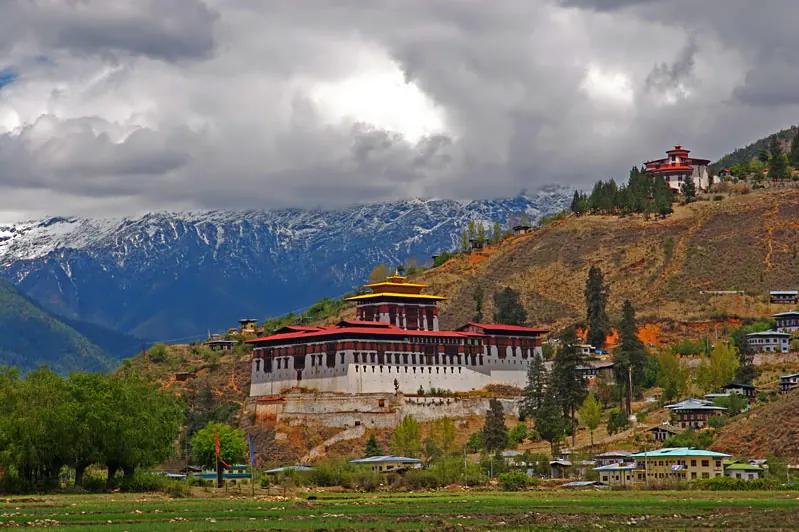
Stay in Bhutan
Hotels, guesthouses and apartments — compared in one search.
Search hotels
Transfer in Bhutan
Private driver waiting on arrival — no queues, no surprises.
Book a transfer
Stay online in Bhutan
Travel eSIM — data the moment you land, no roaming bills.
Get an eSIM