Bhutan is a kingdom where the mountains still outnumber the roads, where a cliffside monastery hangs above the clouds and a capital city manages without a single traffic light. It is a country you travel through slowly, valley by valley, and the rewards are monasteries, fortresses, festival drums and Himalayan views that stay with you long after you leave.
Paro Valley and Tiger's Nest: Where Almost Every Bhutan Journey Begins
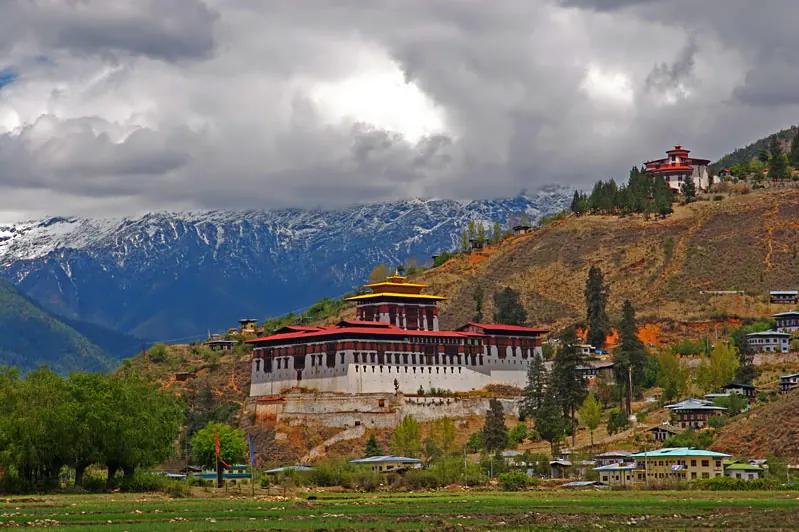
Almost every trip to Bhutan starts in the Paro Valley, a green bowl of rice terraces, apple orchards and whitewashed farmhouses at around 2,200 metres. The approach flight is a spectacle in itself, banking between Himalayan ridges before dropping onto one of the world's trickiest runways — so plan a gentle first day. Walk the covered Nyamai Zam footbridge over the Paro Chhu, then climb to Rinpung Dzong, the fortress-monastery that dominates the valley floor, and continue up to the Ta Dzong, a round watchtower that now holds the national museum's collection of thangkas, armour and royal regalia. Further along the valley road, Kyichu Lhakhang is one of the oldest Buddhist temples in the country, said to date from the 7th century, and the broken ramparts of Drukgyel Dzong frame a view of sacred Mount Jomolhari on clear days.
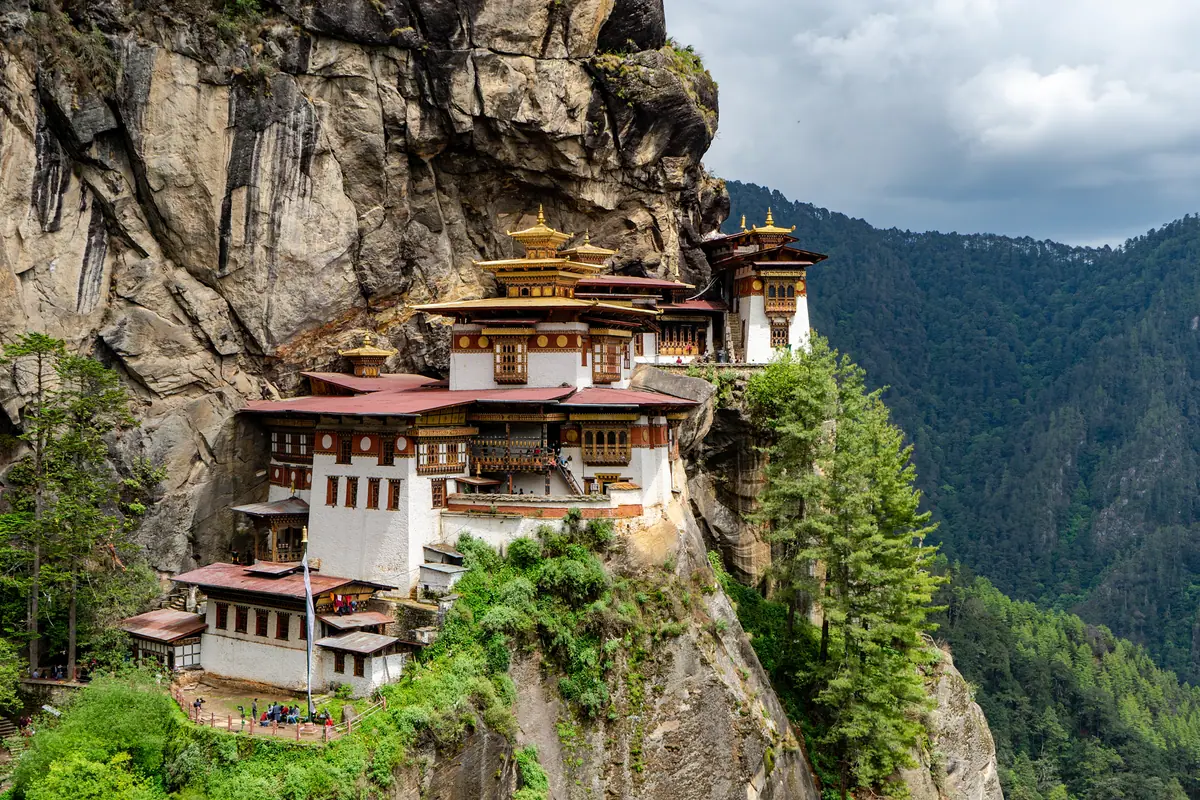
The valley's headline act, though, is Paro Taktsang — the Tiger's Nest Monastery, pinned to a sheer granite cliff about 900 metres above the valley floor at roughly 3,120 metres. The hike up takes most people two to three hours, winding through blue pine forest past a waterfall and a halfway cafeteria where you can stop for butter tea before the final staircase. Allow four to five hours for the round trip, start early to beat the crowds and the afternoon haze, and consider horses for the first steep stretch if you are not fully acclimatised. Legend holds that Guru Rinpoche flew here on the back of a tigress to meditate, and the shrines inside still carry that raw, wind-scoured atmosphere.
If you have another day, drive up to Chele La, at 3,988 metres the highest road pass in the country. In spring the slopes are thick with rhododendrons; on a clear autumn or winter morning you can see the Jomolhari range laid out like a wall of snow, and there are hiking trails from the pass down towards the Haa Valley.
Thimphu: A Capital of Monasteries, Markets and Zero Traffic Lights
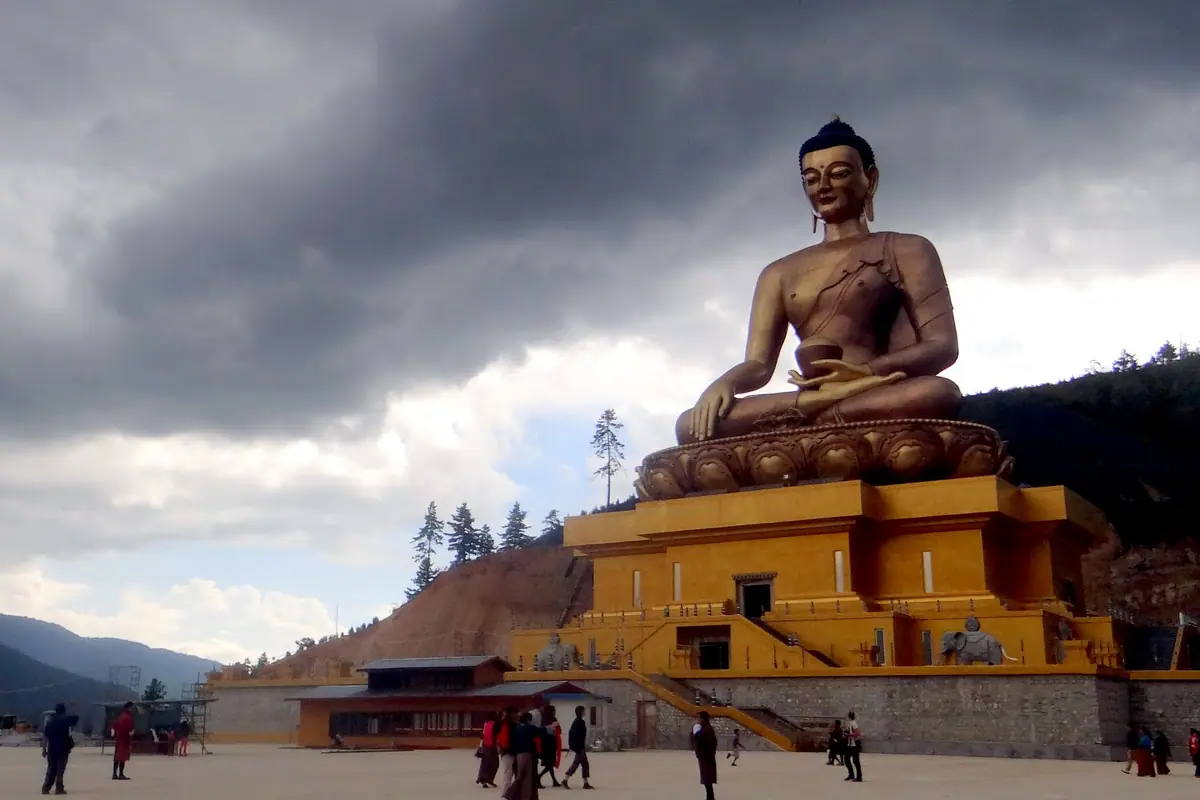
Thimphu sits at 2,300 metres and is one of the few capital cities on earth with no traffic lights — a white-gloved traffic officer still directs the busiest junction. The city's most striking landmark is the Buddha Dordenma, a 51-metre bronze statue seated on a hill above the Kuensel Phodrang forest, gazing down the valley with 125,000 smaller Buddhas hidden inside it. Come near sunset, when the gilding glows and the valley below fills with blue haze.
Below the hills, Tashichho Dzong is the seat of government and the monastic body, and visitors can watch the evening flag-lowering ceremony at the gate. A short walk away, the Memorial Chorten hums with the murmur of prayer beads as elderly residents circle it clockwise all day long. Families will enjoy the Motithang Takin Preserve, home to Bhutan's odd, goat-antelope national animal, while the Folk Heritage Museum gives a vivid picture of rural Bhutanese life inside a traditional three-storey farmhouse. Time your visit to the Centenary Farmers' Market from Thursday to Sunday, when farmers from nearby valleys stack chillies, dried cheese, fiddlehead ferns and red rice in neat pyramids, and browse the craft bazaar for woven textiles and bamboo work.
Thimphu is also the best base for a half-day hike. Tango Monastery is about an hour uphill from the road end, and Cheri Monastery, reached across a suspension bridge and up a steep pine path, was where Bhutan's monastic tradition took root in the 17th century. Both are steep but short, and both are excellent training before you tackle longer trails.
Dochula Pass, Punakha Dzong and the Warm Winter Valleys
The drive east from Thimphu climbs for an hour to Dochula Pass at 3,100 metres, where 108 white chortens stand on a ridge in memory of Bhutanese soldiers. On a clear morning — most likely between October and December — the whole eastern Himalaya unfolds from here, including the unclimbed peak of Gangkar Puensum. From the pass the road drops dramatically into warmer air, and within two hours you have shed your fleece.
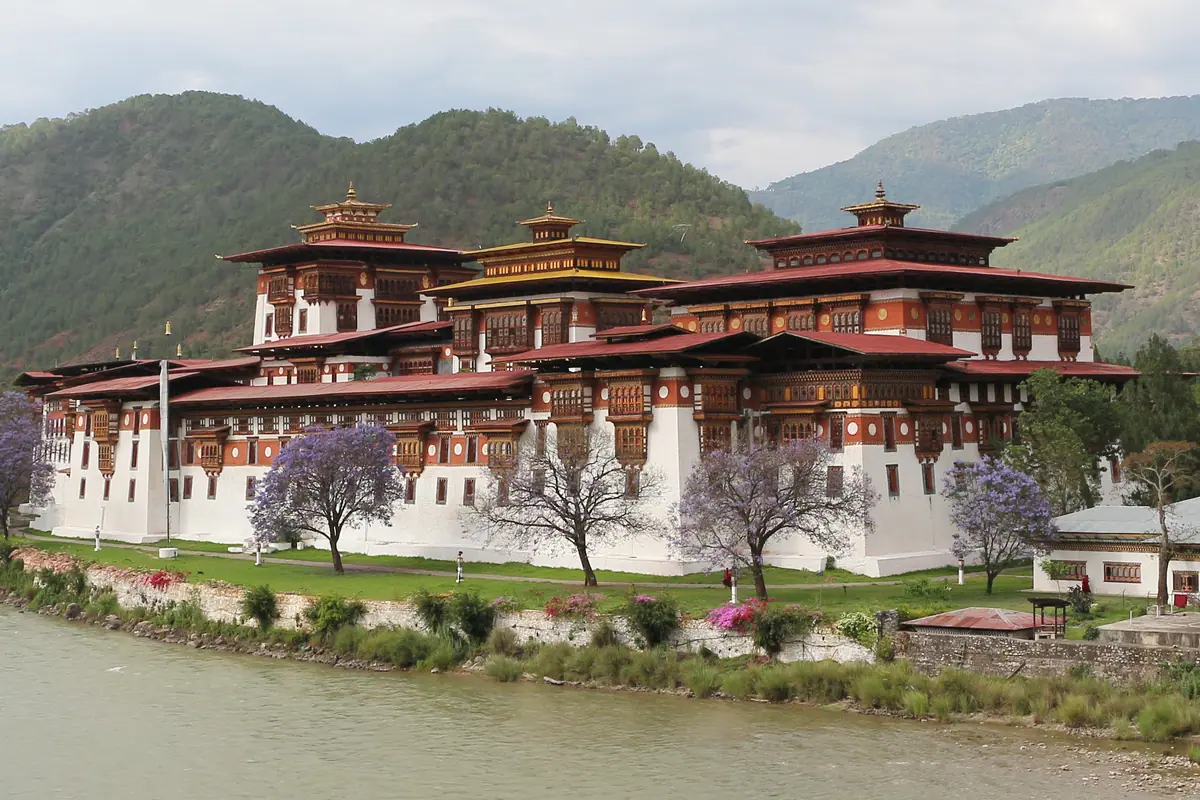
Punakha Dzong is the reason most travellers make the trip. Standing at the meeting point of the Pho Chhu and Mo Chhu rivers, it is arguably the most beautiful fortress in the country, its white walls and red roofs framed by jacaranda trees that erupt in purple blossom in April. It served as the capital for centuries and remains the winter residence of the monastic body; the Punakha Drubchen and Tsechu festivals, held in February or March, fill the courtyard with masked dances and drums. A 20-minute walk through paddy fields from the village of Sopsokha leads to Chimi Lhakhang, a small fertility temple where pilgrims are blessed with a wooden phallus — irreverent, joyful and utterly Bhutanese.
Punakha sits low at around 1,250 metres, which makes it a superb winter destination when Paro and Thimphu are freezing. Cross the long suspension bridge over the Po Chhu, wander the riverside trail, or raft a gentle stretch of the Mo Chhu. Nearby, the Sangchhen Dorji Lhuendrup nunnery offers meditation and a sweeping valley view, and the road onwards to Wangdue Phodrang shows off yet another hilltop dzong.
Trongsa and Bumthang: The Spiritual Heartland
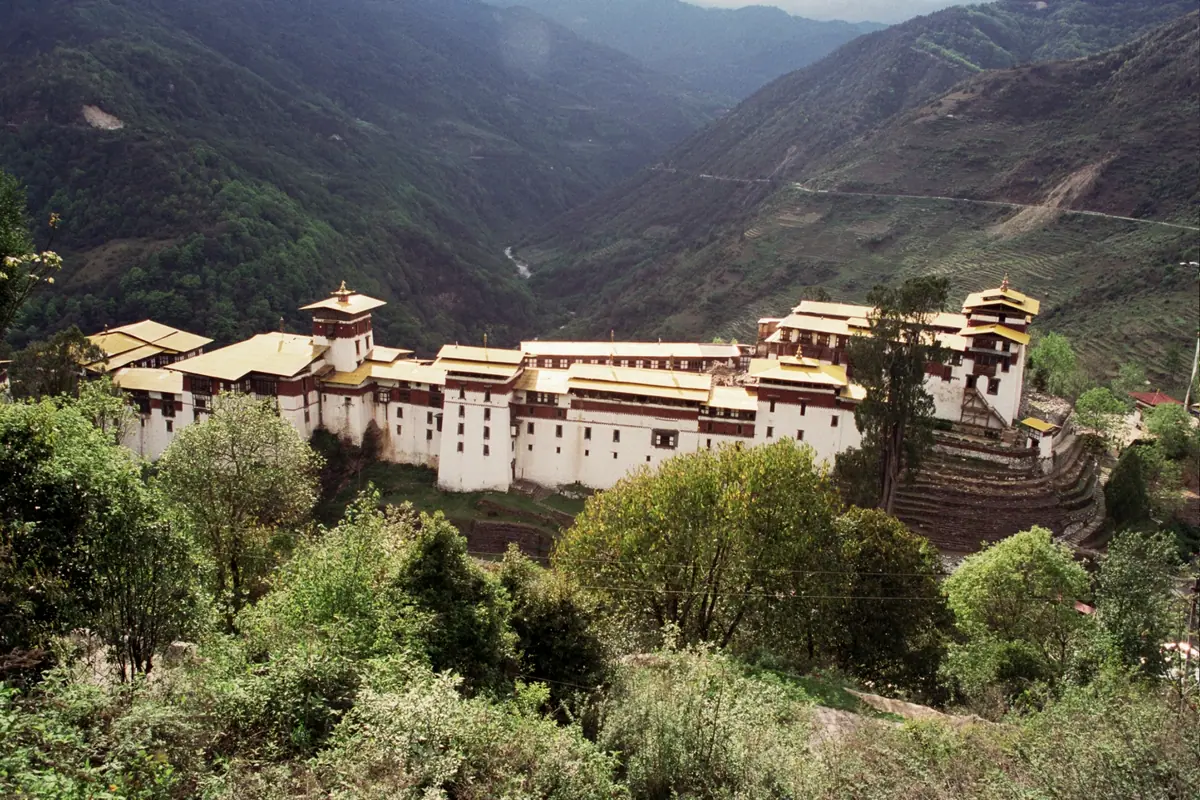
Central Bhutan takes time to reach, but the reward is a landscape of forests, monasteries and quiet towns that feel far from the tourist circuit. Trongsa Dzong is the largest fortress in the country, a long white rampart gripping a ridge above the Mangde Chhu gorge, with the Tower of Trongsa museum above it tracing the monarchy's history. The Trongsa Tsechu in December is one of the most intimate festivals in Bhutan, held in a courtyard so narrow that dancers and onlookers almost touch.
Beyond Trongsa lies Bumthang, a region of four valleys that many Bhutanese consider the country's spiritual core. Jakar Dzong watches over the main town, while the Chokhor Valley holds a remarkable cluster of temples: Jambay Lhakhang, one of the oldest shrines in the Himalaya, Kurjey Lhakhang, where Guru Rinpoche is said to have left an imprint of his body in rock, and Tamshing Lhakhang, whose weathered murals are among the finest in the kingdom. A short walk from the road brings you to Membartsho, the Burning Lake, where butter lamps are floated on a dark pool beneath a canopy of prayer flags.
Bumthang is also the best place to slow down. The walking is gentle, the valleys are dotted with farmhouses selling buckwheat noodles, honey and local apple juice, and the Bumthang Owl Trek — three easy days through forest and villages — is a fine introduction to trekking in Bhutan without the altitude of the big routes. Farther east, the Ura Valley's cobbled village lanes are worth the detour.
Phobjikha Valley and the Wild East
Phobjikha is a broad glacial valley of open grassland ringed by blue pine, and between late October and mid-February it becomes the winter home of black-necked cranes, which migrate down from the Tibetan plateau. The valley is protected, there are no power lines across the crane roosting grounds, and an easy nature trail loops past the birds' favoured fields. Above it all sits Gangtey Monastery, founded in the 17th century and still home to a large monastic community; the crane festival in November, with its masked dances and conservation stalls, is one of the country's most charming events.
For travellers with time, eastern Bhutan rewards the long drive. Trashigang is the largest town in the region, and beyond it Trashiyangtse holds Chorten Kora, a white stupa modelled on a famous shrine in Tibet. The highland villages of Merak and Sakteng are home to the Brokpa people, herders who wear distinctive felt hats and live above the treeline — visiting requires a special permit arranged in advance. In the far south, Royal Manas National Park protects some of the richest wildlife habitat in the Himalaya, with tigers, elephants, gaur and golden langurs in subtropical forest, while Jigme Dorji National Park in the north shelters snow leopards, blue sheep and glacial lakes.
Be realistic about distances: roads in the east are narrow, winding and prone to landslides in the monsoon, so allow extra days and accept that a 200-kilometre drive can take a full day. The payoff is a Bhutan that few visitors see, where children still wave at passing cars and the only traffic jam is a herd of cattle.
Festivals, Treks and the Best Time to Visit Bhutan
Bhutan's tsechu festivals are the beating heart of its calendar, and planning a trip around one transforms the experience. Paro Tsechu in spring draws the biggest crowds, culminating in the dawn unfurling of a giant thangka on the dzong wall. Thimphu Tsechu in September fills the capital's courtyard with colour, Punakha Drubchen and Tsechu bring the fortress city to life in late winter, and the Jambay Lhakhang Drup in Bumthang in November ends with a fire ritual that is unlike anything else in the country. Arrive early, dress modestly with shoulders and knees covered, and bring something soft to sit on.
For walkers, Bhutan offers everything from half-day monastery climbs to the legendary Snowman Trek, a 25-day-plus odyssey along the northern border that is among the hardest treks in the world. In between are the four-day Druk Path from Paro to Thimphu, the seven-to-eight-day Jomolhari trek with its close-up views of the sacred peak, and the five-day Dagala Thousand Lakes route past a string of high alpine tarns. Trekking seasons mirror the weather: March to May for rhododendrons and warmer days, September to November for crisp skies and the clearest mountain views.
Monsoon rains arrive from June to August, bringing leeches on forest trails, cloud-shrouded peaks and occasional road closures, though lower valleys stay green and quiet. Winter from December to February is cold in Paro, Thimphu and Bumthang but perfect for Punakha, the southern valleys and crane-watching in Phobjikha. Most foreign visitors travel on a visa arranged through a licensed local operator, pay a daily sustainable development fee and are accompanied by a guide, which makes a seven-to-ten-day western and central circuit the classic first trip. Flights into Paro are limited and weather-dependent, so keep a buffer day at the end.
Frequently asked questions
How many days do I need in Bhutan?
Seven to ten days covers the classic western and central circuit — Paro, Thimphu, Punakha, Trongsa and Bumthang — without rushing. Add three to five days for the Phobjikha Valley and eastern Bhutan, or a week or more if you plan a multi-day trek.
What is the best time of year to visit Bhutan?
October and November offer the clearest mountain views, the biggest festivals and crisp, dry weather. March to May is second best, with rhododendrons in bloom and warmer temperatures. Winter suits Punakha and the lower valleys plus black-necked crane watching, while the June-to-August monsoon brings rain, cloud and slippery trails.
How hard is the hike to Tiger's Nest Monastery?
It is a steep two-to-three-hour climb of roughly 900 metres, at an altitude above 3,000 metres, and most people take four to five hours for the round trip. Horses can carry you partway, and starting early keeps you ahead of both the crowds and the afternoon heat.
Do I need a guide and a visa to travel in Bhutan?
Most foreign visitors need a visa arranged in advance and must travel with a licensed Bhutanese guide, plus pay a daily sustainable development fee. Independent travel is possible for visitors from certain neighbouring countries, and permits are also required for restricted areas such as Merak and Sakteng.
What should I eat and drink in Bhutan?
Try ema datshi, the national dish of chillies cooked in cheese, along with kewa datshi with potatoes, phaksha paa (pork with dried red chillies), steamed momos and nutty Bhutanese red rice. Butter tea and locally brewed ara are the traditional drinks, and the tap water is not safe to drink, so stick to bottled or boiled water.
Plan it — experiences in Bhutan
Live search, booked directly with trusted providers.
Sort the rest of your trip
Everything for Bhutan, in one place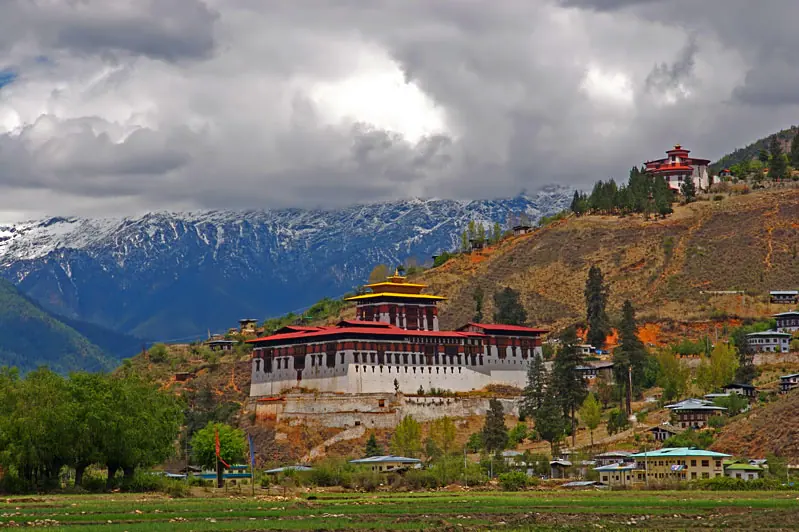
Stay in Bhutan
Hotels, guesthouses and apartments — compared in one search.
Search hotels
Transfer in Bhutan
Private driver waiting on arrival — no queues, no surprises.
Book a transfer
Stay online in Bhutan
Travel eSIM — data the moment you land, no roaming bills.
Get an eSIM