Antigua claims a beach for every day of the year, but the real pleasure lies in everything layered behind the sand: a Georgian dockyard tucked into a hurricane hole, plantation ruins half-swallowed by rainforest, and a limestone arch where the Atlantic detonates against the rocks. Forty miles north, Barbuda offers something rarer still — pink-tinged sand, a mangrove lagoon full of nesting frigatebirds, and a quiet that feels almost un-Caribbean.
Nelson's Dockyard and the English Harbour Quarter
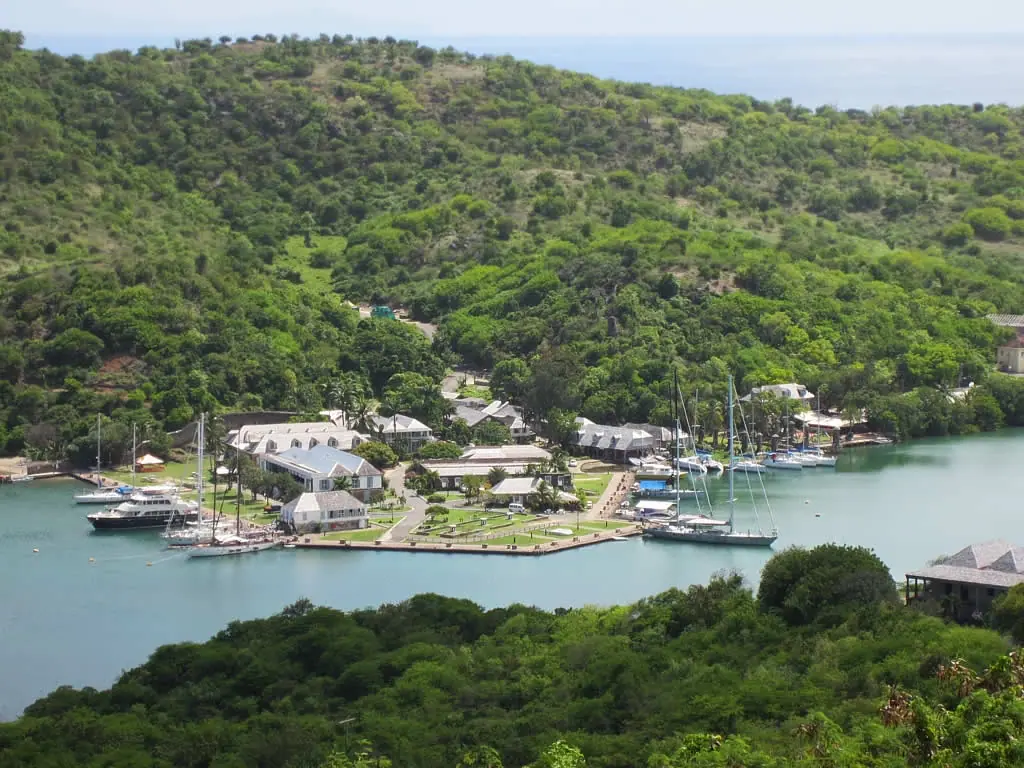
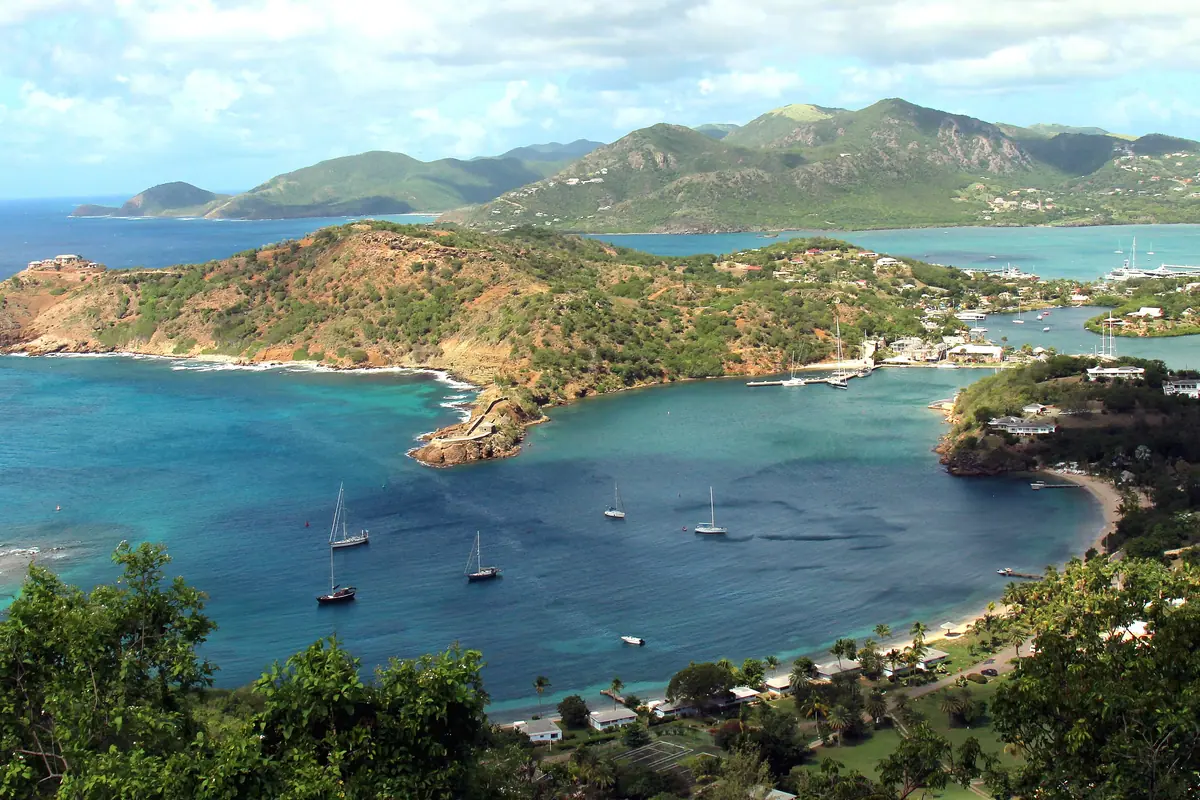
English Harbour, on the sheltered south coast, is where Antigua's history is most beautifully preserved. Nelson's Dockyard is a UNESCO World Heritage Site and the only Georgian-era naval dockyard in the world still in continuous use — a compact grid of stone storehouses, sail lofts, officers' quarters and a copper-and-lumber store built to service the British fleet in the 18th century. The Dockyard Museum, housed in the former naval officer's house, tells the story of the harbour, the enslaved shipwrights who built and repaired the ships, and the young officer who gave the site its name. Give yourself two to three hours here, and come before mid-morning if you want the cobbles to yourself.
A short walk beyond the dockyard leads to Fort Berkeley, a windswept battery of cannons guarding the narrow entrance to the harbour — roughly twenty minutes each way over uneven ground, so wear proper shoes. Above the dockyard, Clarence House is a restored Georgian residence with a garden terrace, while Dow's Hill Interpretation Centre sits on the ridge with the finest overview of the whole harbour and a compact exhibition tracing the island's story from the first inhabitants through sugar and slavery to independence.
English Harbour and neighbouring Falmouth Harbour together form the island's sailing capital, so expect a pleasant jumble of chandlers, small cafés and yachts. It is also the easiest place on the island to arrange a boat trip, whether that means a snorkelling run along the coast or the crossing to Barbuda.
Shirley Heights Lookout: The View Everyone Comes For
A ten- to fifteen-minute drive up from the dockyard brings you to Shirley Heights Lookout, a restored 18th-century signal station and blockhouse perched above English Harbour. From the old stone ramparts you look down on the dockyard's toy-sized masts, across to Falmouth Harbour, and out over the water toward Montserrat and the volcanic spine of Guadeloupe on a clear day. The signal station once relayed messages from the ridge across the island, and today it relays something far more modern: a sunset view worth building an afternoon around.
Sunday evenings are the island's great institution — a steel band, reggae, barbecue smoke, rum punch and a crowd that runs from yachties to honeymooners, all lined up along the wall as the sun drops. Arrive by four o'clock to claim a spot and beat the queue for parking; the party carries on well past dark. On other days the same spot is serenely quiet, and a weekday morning visit gives you the panorama almost to yourself.
If you are feeling energetic, a marked trail descends from the lookout to Nelson's Dockyard in around forty-five minutes, passing the Blockhouse ruins. It is a downhill walk, which means the sensible plan is to take a taxi up and stroll back down for lunch by the water.
The Beaches: Half Moon Bay and the Calmer West Coast
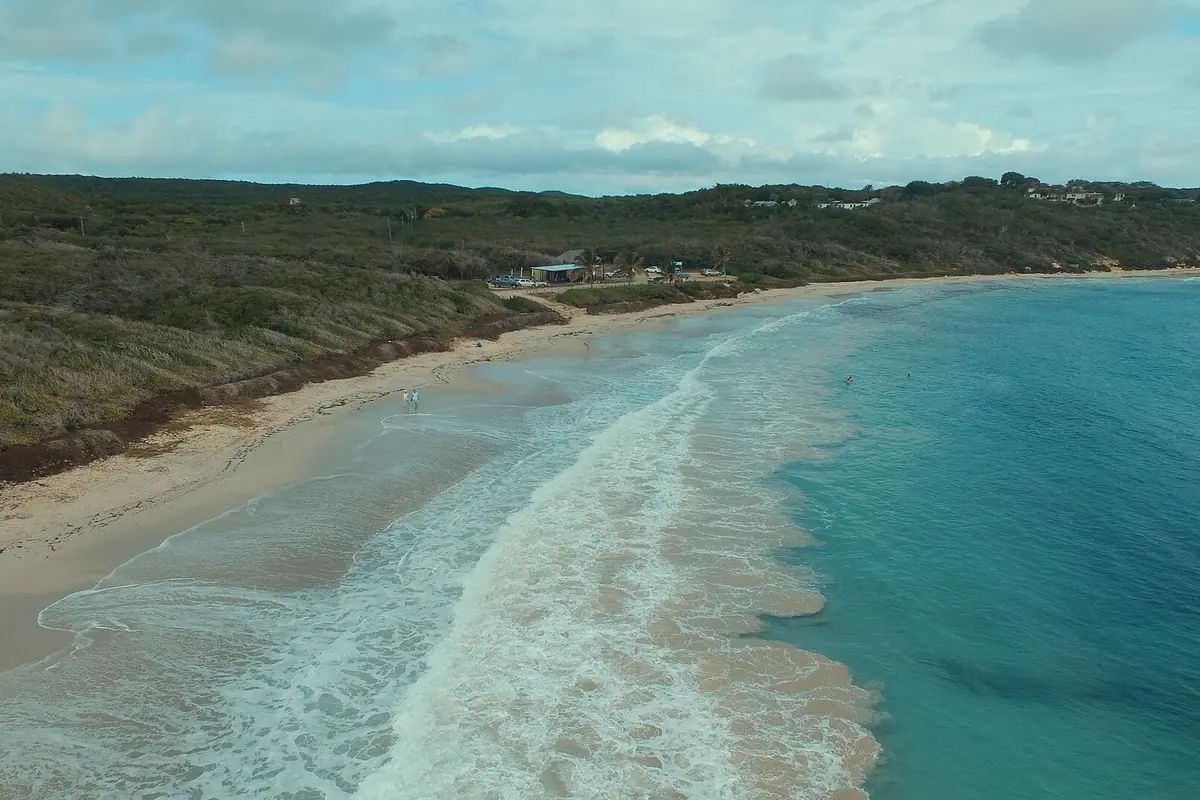
The oft-repeated line that Antigua has 365 beaches is a slight exaggeration, but the variety is genuinely remarkable. Half Moon Bay, on the Atlantic east coast and protected as part of a national park, is the showpiece: a perfect crescent of pale sand cupped between two headlands, usually with enough surf for bodyboarding and almost no development beyond a car park and an occasional seasonal stall. On the west coast the water turns glassy and turquoise — Darkwood Beach, Ffryes Beach and Valley Church Beach are the ones locals recommend for swimming and snorkelling, with the odd beach bar and plenty of shade.
If you want activity with your sun lounger, Dickenson Bay and Runaway Beach near St John's are the busiest and best-equipped, with water sports, jet skis and parasailing. Jabberwock Beach on the north coast catches the trade winds and is the place to watch kite surfers; Long Bay, further east, stays quiet and mangrove-backed; and Pigeon Point, a short hop from English Harbour, is a favourite for calm-water snorkelling and an easy picnic.
Practicalities matter here. Many beaches have no lifeguards, no shade and no facilities, so carry water, cash and sun protection. Sargassum seaweed can wash up on Atlantic-facing shores in the warmer months, while the west coast usually stays clear and calm. Every beach in Antigua is public, so even the stretches in front of the big resorts are yours to walk.
St John's, Fig Tree Drive and the Wild East Coast
The capital, St John's, is worth a half-day beyond the cruise pier. The Museum of Antigua and Barbuda occupies the old courthouse on Market Street and covers geology, the island's first inhabitants, slavery and the sugar economy in one digestible sweep. Above the town, St John's Cathedral raises twin brick towers — the present building dates from the 1840s, after earthquakes and hurricanes destroyed its predecessors — and the Saturday morning Public Market is the place to buy black pineapple, mangoes, saltfish, spices and fierce homemade pepper sauce. For sunset, head to Fort James on the north side of the harbour, where a line of 18th-century cannons points out to sea.
Inland, Fig Tree Drive winds through the island's rainforest, past banana and mango trees and the steep green valleys that most visitors never see. It leads toward Betty's Hope, one of the oldest sugar estates on the island, where twin stone windmill towers and a small visitor centre explain how cane built and broke Antigua's economy.
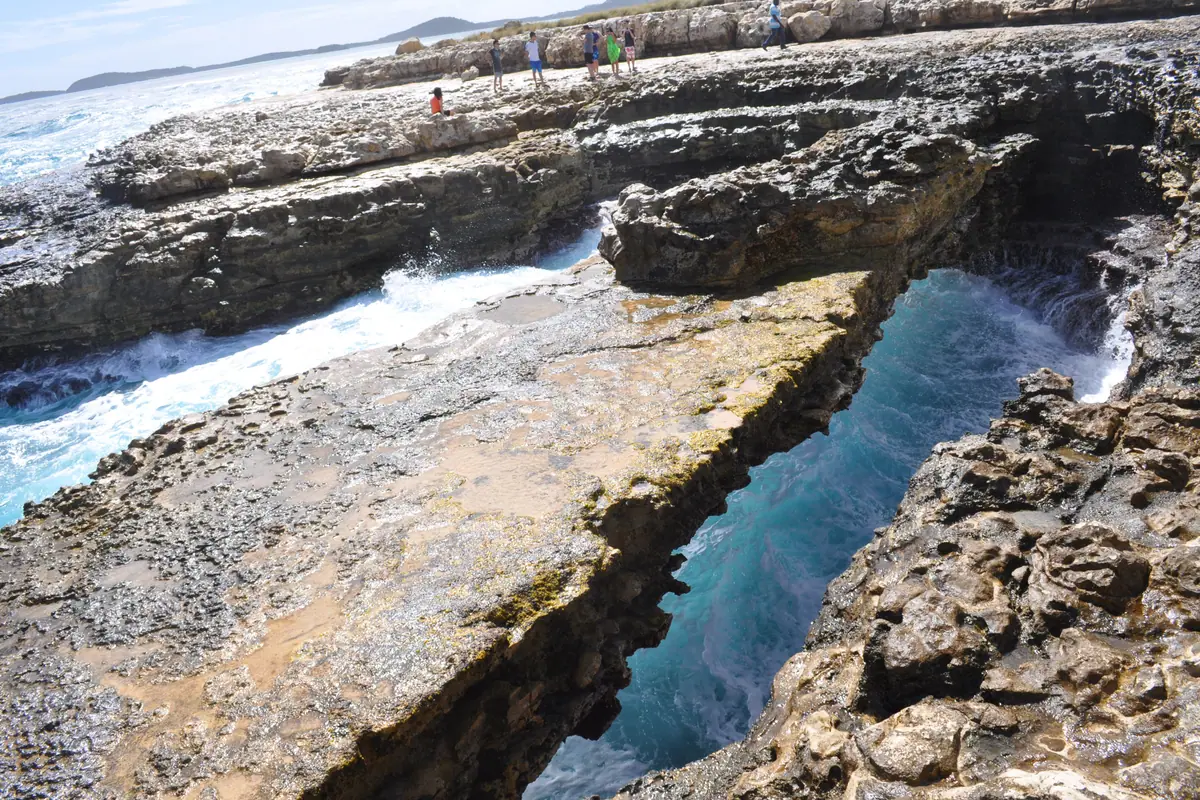
On the northeast coast, Devil's Bridge is a natural limestone arch carved by the full weight of the Atlantic, complete with blowholes and spray — and a haunting legend attached to it. Go early or late, keep back from the wet rocks and hold onto hats. Offshore, Great Bird Island in the North Sound is a nature reserve reached by boat, with red-billed tropicbirds, frigatebirds and clear snorkelling reefs. Inland, Boggy Peak — also known as Mount Obama — is the island's highest point at just over 400 metres, reached by a rough road and a short climb.
Barbuda: Pink Sand and the Frigatebird Lagoon
Barbuda sits about forty miles north of Antigua and feels like a different country: flat, arid, sparsely populated and almost entirely undeveloped. A public ferry crosses in roughly ninety minutes, and a short light-aircraft hop does the trip in about fifteen; many visitors go for the day, but an overnight reveals how profoundly quiet the island is once the day-trippers leave.
The headline sight is the Codrington Lagoon Frigate Bird Sanctuary, one of the largest frigatebird colonies in the Western Hemisphere. A small boat threads through the mangroves, and between roughly September and April the males sit with their scarlet throat pouches inflated like balloons. On the western shore, the long strand often called 17 Mile Beach — including the stretch known as Princess Diana Beach — gets its blush of colour from crushed shells, and it is possible to walk for an hour without meeting another person.
Further out, Two Foot Bay on the northeast coast has a wild, cave-pitted shoreline, and Darby's Cave holds Arawak petroglyphs. The ruins of Highland House, the old estate on the hill above Codrington, are worth the climb for the view alone. Facilities on Barbuda are minimal, so bring water, cash, food and plenty of sun protection, and travel with a local guide for the lagoon and the caves.
When to Go, and How the Island Moves
The dry season runs from December to April, with temperatures in the mid-twenties to low thirties Celsius, steady trade winds and reliably sunny days — this is peak season, so book accommodation well ahead and expect the highest rates. May and June are hot and humid but far quieter and better value. July to November is hurricane season, with the statistical peak in September and October; the upside is lush green countryside, short sharp showers rather than all-day rain, and the lowest prices of the year.
Two events shape the calendar. Antigua Sailing Week, held in late April into early May and based around English Harbour and Falmouth Harbour, is one of the Caribbean's biggest regattas and fills every room on the south coast. Antigua Carnival, running from late July to the first Tuesday in August, takes over St John's with J'Ouvert before dawn, costumed parades and calypso. Christmas and New Year are the other weeks when the island is at capacity.
Getting around is straightforward but worth planning. English is the language, the East Caribbean dollar is the currency (US dollars are widely accepted), and traffic drives on the left — visitors need a temporary local driving permit, easily arranged through a rental agency. Taxis are plentiful but fares add up quickly; a rental car opens up the beaches and the interior at your own pace. Whatever you do, eat like a local at least once: fungee and pepperpot, ducana, saltfish and, in the warmer months, the famously sweet Antigua black pineapple.
Frequently asked questions
How many beaches does Antigua actually have?
The island likes to claim 365, one for every day of the year. Not all are accessible or have facilities, but the standouts are Half Moon Bay on the east coast, Darkwood, Ffryes and Valley Church on the calm west coast, and Dickenson Bay, Runaway Beach and Pigeon Point for swimming with amenities nearby.
What is the best time of year to visit Antigua and Barbuda?
December to April offers the driest, breeziest weather and the liveliest atmosphere, though it is also the busiest and priciest. May and June are quieter and cheaper, while July to November is hurricane season with the highest risk in September and October, balanced by lower rates and greener landscapes.
Is Barbuda worth the trip from Antigua?
Absolutely. The ferry takes about ninety minutes and a light aircraft around fifteen. The main draws are the Codrington Lagoon Frigate Bird Sanctuary, best between September and April, and the long pink-tinted western beach. Facilities are minimal, so bring water, food, cash and sun protection.
Do I need to rent a car in Antigua?
It is the easiest way to reach the quieter beaches and the interior. Driving is on the left and visitors must buy a temporary local driving permit, usually arranged through the rental company. Taxis are readily available but individual fares mount up quickly if you are covering the whole island.
What should I eat in Antigua and Barbuda?
Start with fungee and pepperpot, the national dish, then try ducana, saltfish, conch and freshly grilled fish. The Antigua black pineapple is famously sweet and sold at the Saturday market in St John's, and rum punch at a Shirley Heights sunset is practically compulsory.
Plan it — experiences in Antigua and Barbuda
Live search, booked directly with trusted providers.
Sort the rest of your trip
Everything for Antigua and Barbuda, in one place
Stay in Antigua and Barbuda
Hotels, guesthouses and apartments — compared in one search.
Search hotels
Transfer in Antigua and Barbuda
Private driver waiting on arrival — no queues, no surprises.
Book a transfer
Stay online in Antigua and Barbuda
Travel eSIM — data the moment you land, no roaming bills.
Get an eSIM