The Solomon Islands does not hand you a resort strip; it hands you a scatter of reef-fringed islands where the right bed depends on the nearest airstrip and the boat that meets it. Choose carefully and you can fall asleep over the Marovo Lagoon, wake to the smell of the Honiara market, or share a village meal on an artificial island built from coral. This guide maps where to stay, what to see, and when to go.
The Lay of the Land: How the Islands Decide Where You Sleep
The Solomon Islands unfurls as a chain of close to a thousand islands, stretching south-east from Bougainville's shadow towards Vanuatu. Six of them — Choiseul, Santa Isabel, Malaita, Guadalcanal, New Georgia and Makira — do most of the heavy lifting, with coral atolls, double barrier lagoons and volcanic cones scattered between. Because paved roads barely exist outside Honiara and boats are the real highways, your choice of hotel is dictated less by distances on a map than by airstrips, ferry schedules and which reef you want to wake up beside.
Accommodation falls into four broad camps. Honiara holds almost all of the country's full-service hotels, with pools, restaurants and dependable power. Provincial centres such as Gizo, Munda, Auki and Tulagi offer small hotels and family-run guesthouses. The lagoons and outer islands hide dive lodges, eco-lodges and a few bungalows built out on stilts over the reef. Everywhere else, village guesthouses provide simple rooms, shared bathrooms and meals cooked by your hosts — often the most memorable stays of a trip.
Inventory is tiny. One event in the capital can absorb every bed in Honiara, and many island lodges still take bookings by phone or email rather than through any automated system. Confirm your transfer at the same time as your room: on most islands that means a boat ride from an airstrip, arranged by the property itself.
Honiara: The Capital's Hotels and the Sights on Their Doorstep
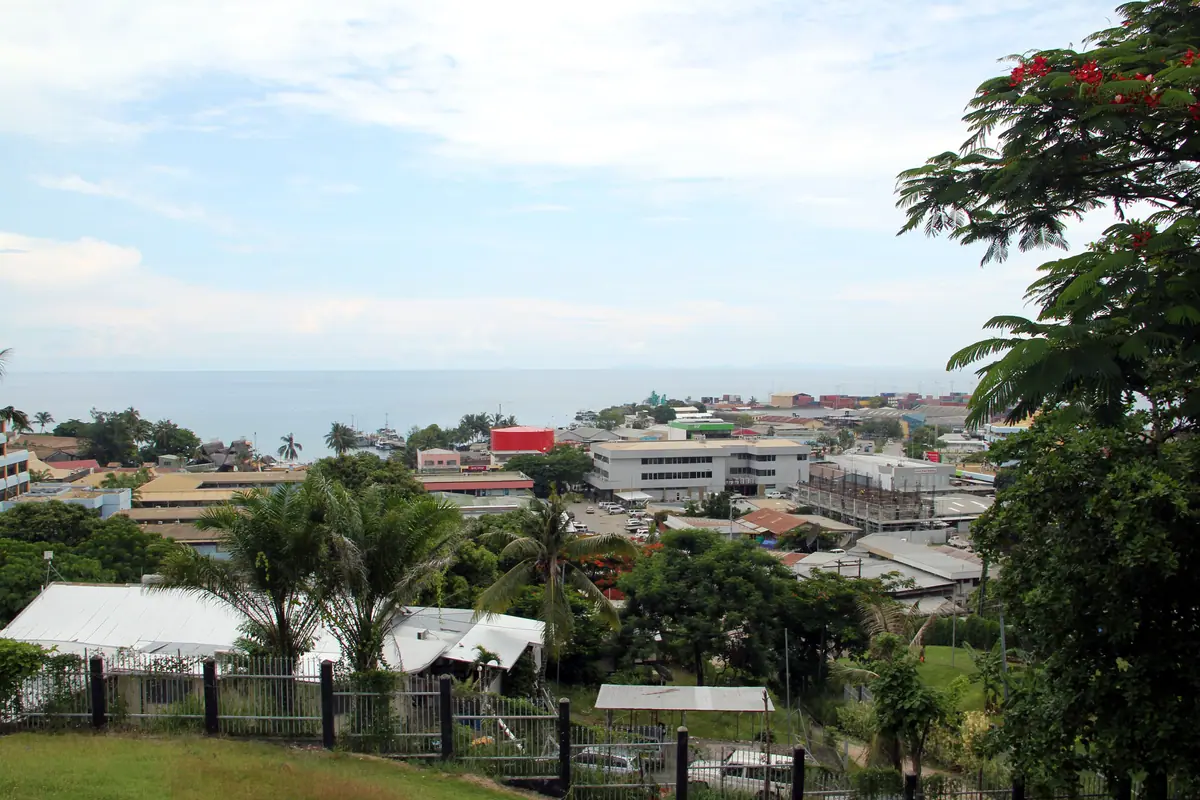
Honiara sprawls along the north coast of Guadalcanal around Point Cruz, its waterfront and the hills behind split by Mendana Avenue, the main commercial street. Most hotels sit either in the compact downtown blocks or on the ridges above, which buys cooler nights and long views across Iron Bottom Sound. From the downtown cluster you can walk to Honiara Central Market, where fishing canoes land at dawn and stalls heave with reef fish, pineapples, slippery cabbage, strings of red shell money and carvings from the western provinces.
A short stroll away, the National Museum and Cultural Centre tells the country's story through carved artefacts, war relics and contemporary art, with a reconstructed traditional dwelling in its grounds. Inland, the Honiara Botanical Gardens offers orchids, palms and shade. Above the city, the Guadalcanal American Memorial on Skyline Ridge looks down on the water where dozens of ships were lost in 1942 and 1943, and Holy Cross Cathedral's shell-inspired concrete arches are worth a quiet half hour.
Plan two or three nights if you only want the town, four to five if you are adding day trips to the Mataniko Falls, the ridges around Mount Austen or the beaches west of the city. Book well ahead for the weeks around Independence Day on 7 July and the Christmas holidays, when domestic visitors fill the capital's rooms and rates firm up.
Guadalcanal Beyond the Capital: War Wrecks, Waterfalls and Beach Bungalows
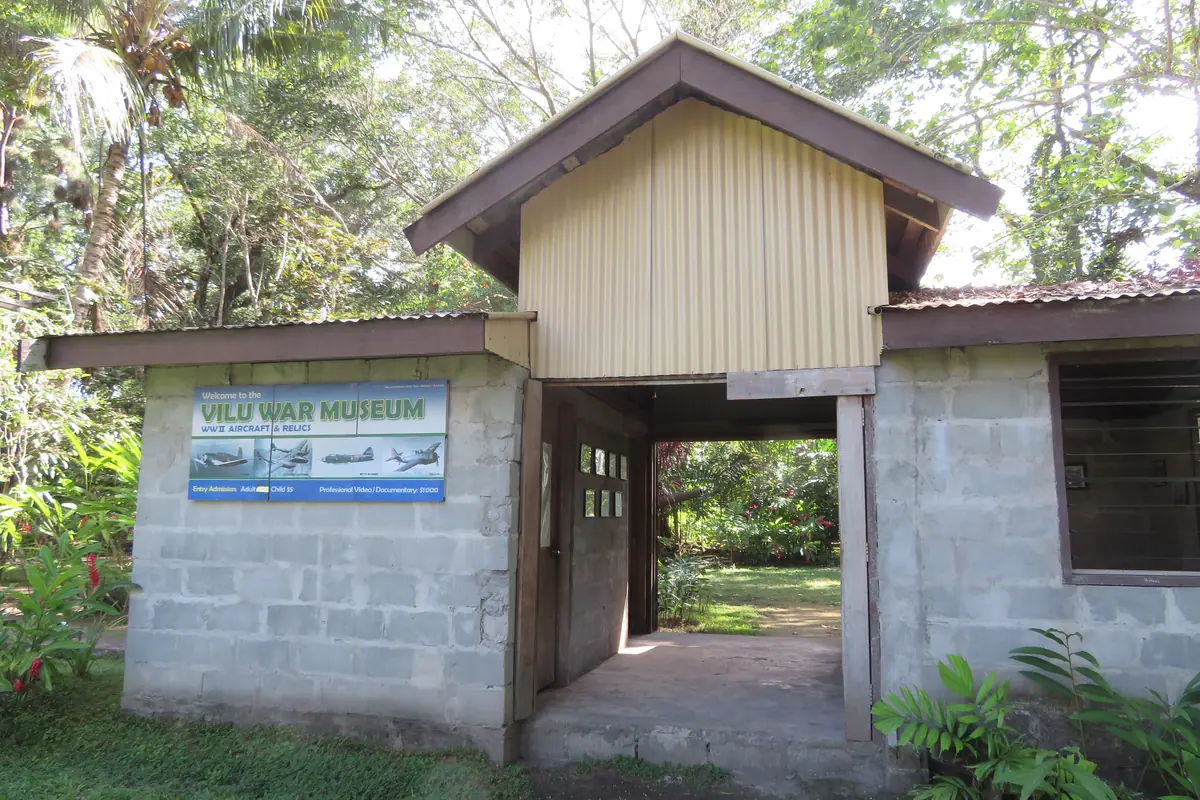
The coast road west of Honiara leads to Bonegi Beach, where the Hirokawa Maru lies in water shallow enough to snorkel over straight from the sand, with a second wreck further along the same stretch. Just inland, the Vilu War Museum is an open-air assembly of aircraft frames, artillery pieces and memorials set among flowering gardens — an eerie, quietly moving stop that takes about an hour to walk.
East of town, the Tenaru river mouth and Red Beach mark the landings and battles of the Guadalcanal campaign, while the wartime airfield that became Henderson Field still anchors the island's aviation. Inland, the Mataniko Falls tumble into a limestone bowl with swimmable pools, and local guides lead sweaty, rewarding walks across the ridges around Mount Austen, where foxholes and rusted relics lie half-swallowed by jungle.
Small beach lodges dot the coast on both sides of Honiara, offering bungalows with fans, meals cooked to order and a reef at the end of the path. Offshore, Savo Island rises as a near-perfect volcanic cone, home to nesting megapodes and steaming hot springs; day trips and simple village stays can be arranged from the capital.
Gizo, Munda and the Marovo Lagoon: The Western Province
Fly west and the country changes character. Gizo, the provincial capital on Ghizo Island, is small enough to walk end to end in half an hour, with a market, a handful of dive-oriented hotels and boatmen who will run you out to Kennedy Island, where a young naval officer named John F. Kennedy and his crew swam ashore after their patrol boat was rammed in 1943. Nearby in the Vonavona Lagoon, Lola Island shelters a skull shrine that visitors can see with a local guide.
Munda, on New Georgia, has an airstrip, a couple of comfortable lodges and some of the easiest diving in the country: coral gardens, drop-offs and Second World War aircraft wrecks in calm, clear water. It is also the gateway to the Marovo Lagoon, a vast double barrier lagoon off the island's south-east coast, where villages are famous for their carvers and a handful of lodges perch on stilts above the reef. Uepi Island and the airstrip at Seghe are the usual access points.
Beyond lie Kolombangara's perfect cone, Rendova and the remote Shortland Islands, each offering progressively simpler, wilder stays. Dive lodges here usually bundle meals, tanks and boat transfers into one arrangement, and it is wise to accept that hot water and internet may come and go. The Western Province is easiest to reach and busiest between June and October, when the trade winds keep the sea calm and visibility at its best.
Malaita's Artificial Islands, Rennell and the Deep Outliers
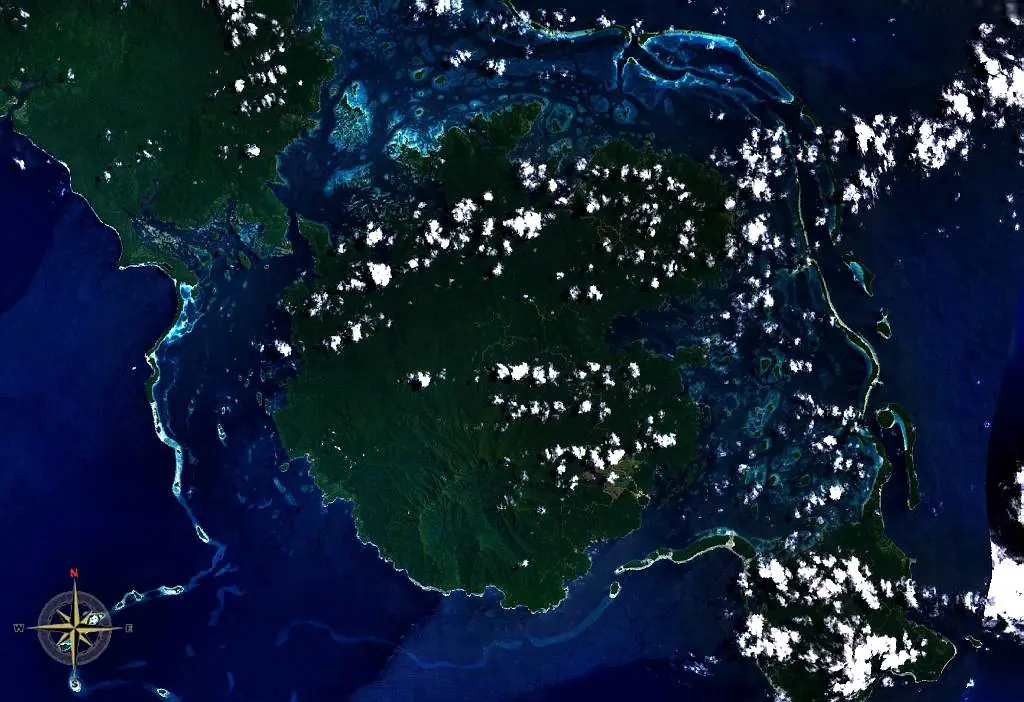
Malaita, a short flight or an overnight ferry from Honiara, is the country's most culturally distinct province. From the provincial capital, Auki, boats cross to the Langa Langa Lagoon, where families have built entire villages on artificial islands of coral rubble — Busu, Funaafou and Laulasi among them. Here you can watch shell money being ground and threaded, hear panpipe ensembles, and stay in basic guesthouses where life moves to the rhythm of the tide.
Far to the south-east, Rennell is a raised coral atoll whose eastern half is a World Heritage-listed wilderness of dense forest around Lake Tegano, one of the largest lakes in the island Pacific. Access is by small aircraft to Tingoa and then by truck; village guesthouses are simple, and you should bring your own supplies, including drinking water and mosquito protection. The Santa Cruz Islands, with Lata and Graciosa Bay as their hub, and Vanikoro's reefs — where an 18th-century French expedition came to grief — are for travellers with patience and plenty of time.
When to Go, How to Move, and What to Expect
The drier months from roughly May to October bring south-east trade winds, lower humidity, calmer seas for ferry crossings and the clearest water for diving. From November to April the wet season rolls in with heavy afternoon downpours, higher temperatures and the risk of cyclones; some outer-island lodges close for part of that stretch. Air temperatures sit in the mid-twenties to low thirties year-round and the sea stays warm enough for board shorts and a rash vest.
Domestic flights link Honiara with Gizo, Munda, Seghe, Auki, Kirakira and other provincial strips, but seats are limited and baggage allowances small — pack soft-sided bags and keep them light. Ferries, including overnight services to Malaita and the Western Province, are cheaper and slower, and are the only practical option for some islands such as Tulagi in the Nggela group. Always build a buffer day into any itinerary that joins a flight to a boat.
Bring Solomon Islands dollars: ATMs are largely confined to Honiara, and island lodges often run a tab and settle in cash. Sunday is widely observed as a day of rest, with markets and shops shut. Reefs and land are customarily owned, so expect a small village fee for visiting shrines, waterfalls or dive sites, and always ask before photographing people or entering a village. Malaria is present in most provinces, so take medical advice on prophylaxis before you travel, and pack reef shoes plus a long-sleeved layer for dusk.
Frequently asked questions
When is the best time to book a Solomon Islands hotel?
Aim for the drier season, roughly May to October, when seas are calmer and dive visibility is best. Book two to three months ahead for Western Province lodges, and earlier still for the weeks around Independence Day on 7 July and the Christmas holidays, when Honiara fills with domestic visitors.
Which islands should a first-time visitor base themselves on?
Most first trips combine three or four nights in Honiara, with day trips to Bonegi Beach, the Vilu War Museum and the Mataniko Falls, followed by a week in the Western Province around Gizo, Munda and the Marovo Lagoon. Malaita, Rennell and the Santa Cruz Islands reward a longer second visit.
How do I reach the island lodges from Honiara?
Small domestic aircraft serve Gizo, Munda, Seghe, Auki and other provincial airstrips, and lodges normally arrange a boat transfer from the strip to their jetty. Ferries cover some routes more cheaply but are weather-dependent, so allow a spare day on either side of any flight-and-boat connection.
Do hotels and lodges accept credit cards?
Larger Honiara hotels generally do, but provincial guesthouses and island lodges often expect cash in Solomon Islands dollars. ATMs are mostly limited to the capital, so withdraw what you need before flying out and carry a mix of smaller notes.
Is it safe to travel around the Solomon Islands?
Crime against visitors is uncommon, though it is sensible to avoid walking alone after dark in Honiara and to use transport arranged by your hotel. In villages, remember that land and reefs are customarily owned — ask permission, hire a local guide for shrines and waterfalls, and take malaria precautions.
Plan it — hotels in Solomon Islands
Live search, booked directly with trusted providers.
Sort the rest of your trip
Everything for Solomon Islands, in one place
Transfer in Solomon Islands
Private driver waiting on arrival — no queues, no surprises.
Book a transfer
Things to do in Solomon Islands
Skip-the-line tickets, guided tours and standout experiences.
See experiences
Stay online in Solomon Islands
Travel eSIM — data the moment you land, no roaming bills.
Get an eSIM