Nowhere else in the Pacific does a week of flying feel so much like an expedition: coral airstrips, twenty-minute hops between lagoons, and lagoons so wide the pilot points them out from the cockpit. This is a route built around small planes, wreck-strewn reefs and villages where the boat, not the road, is the way home.
Planning the Loop: Seasons, Small Planes and Soft Bags
The Solomon Islands runs roughly 1,500 kilometres from northwest to southeast, with domestic services fanning out from Henderson International Airport, about eleven kilometres east of central Honiara. Typical hops are short but sparse: Honiara to Munda takes around an hour and a quarter, Munda to Seghe about thirty minutes, Seghe to Gizo twenty-five, and Honiara to Auki barely half an hour. Some airstrips see only two or three services a week, and almost everything moves in the morning because most strips have no night operations.
April to October is the drier, breezier half of the year, with southeast trades cooling the evenings from June to August and the clearest water for diving. November to April brings the cyclone season, heavy humidity and afternoon downpours that can quietly cancel a flight. If your week hinges on a specific island, build one spare day into the plan and treat every timetable as a hopeful suggestion rather than a promise.
Pack soft-sided luggage: allowances on the small twin-engine turboprops are usually 15 to 20 kilograms, and a stiff suitcase is a nuisance to load into a cabin locker the size of a bread bin. Bring cash in Solomon Islands dollars, since card machines are scarce outside Honiara and occasionally unreliable in Gizo and Munda. Reef-safe sunscreen, sandals you can wade in, and a sarong or long skirt for village visits round out the list — and remember kastom etiquette: ask before photographing people or shrines.
Days 1–2: Honiara and the Guadalcanal Battlefields
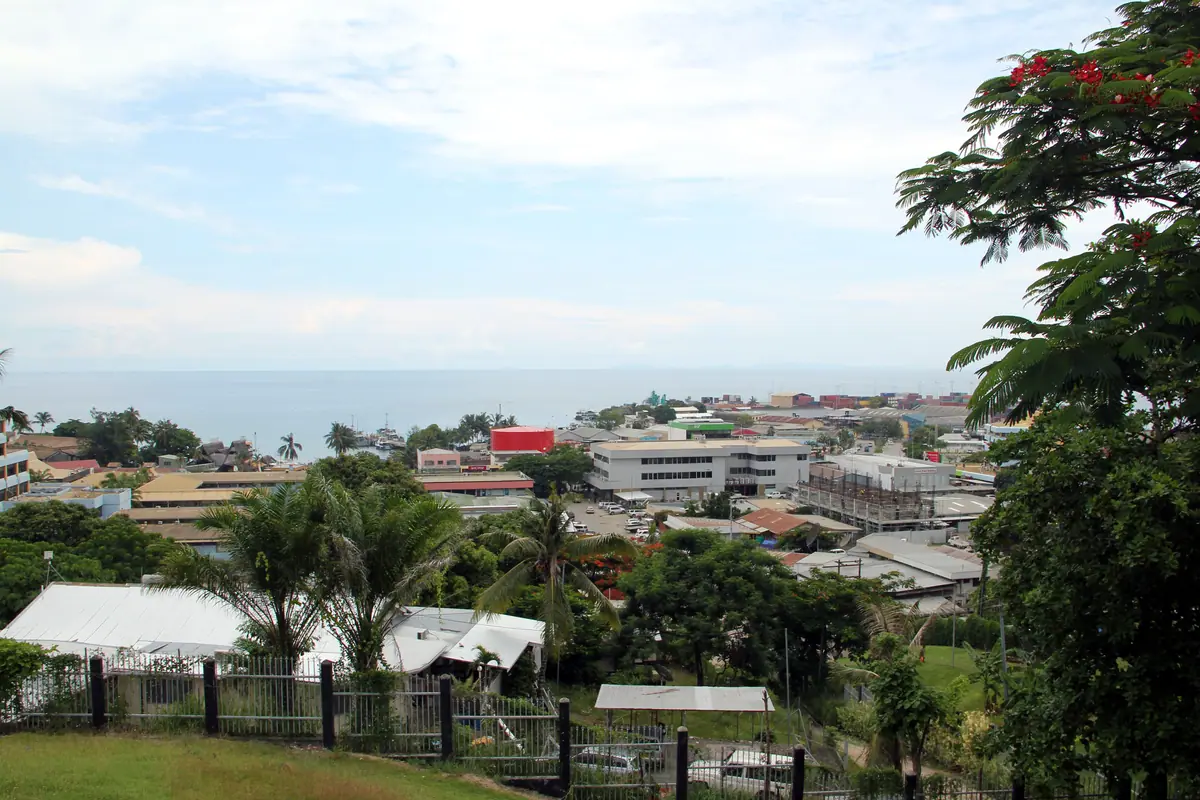
Land at Henderson and drive west along the coast road into Honiara, with Iron Bottom Sound glittering on your left. Start gently at Honiara Central Market, where heaps of betel nut, reef fish and pineapple share space with woven mats and wood carvings. Then walk to the National Museum and Cultural Centre for shell money, canoe prow carvings and relics pulled from the surrounding hills, before climbing to the small Botanical Gardens above town for a view over the harbour.
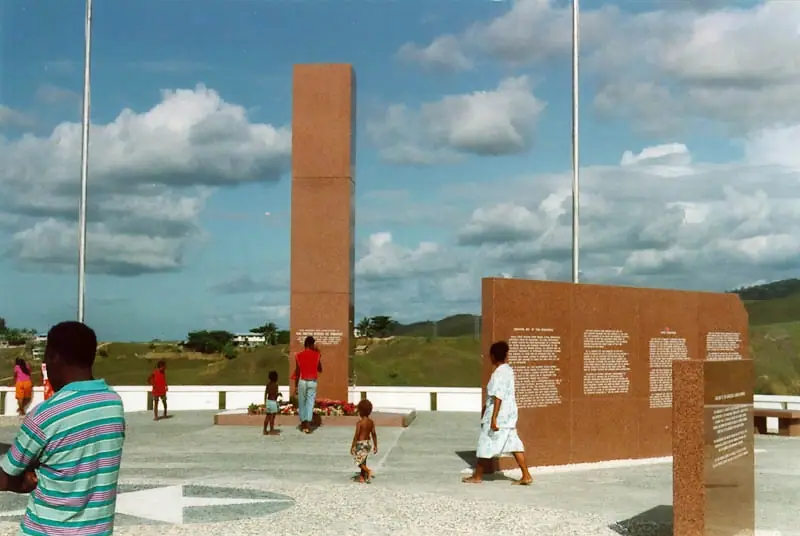
Save the late afternoon for Skyline Ridge, where the Guadalcanal American Memorial stands white against the ridges and looks down on the water that swallowed so many ships in 1942 and 1943. A short drive away, the Japanese memorial on Mount Austen gives the other side of the same story. Sunset from up here, with the lights of Honiara coming on below, is the best introduction to these islands you could ask for.
Devote day two to the coastal battlefield trail east of town. The Vilu War Museum sets wrecked aircraft, artillery and memorials among frangipani and lawn, while Betikama adds more relics nearby. The real prize, though, is Bonegi I and II, where a Japanese transport lies in five to twenty metres of water just off the sand — you can snorkel it straight from the beach. Finish at Red Beach on Alligator Creek, the Tenaru memorial, and a swim at Tetere. A hired car with a driver covers the whole loop comfortably in a day.
Day 3: North to Munda and the Roviana Lagoon
Catch the morning flight from Honiara to Munda and step off onto a World War II-era airstrip that sits almost in the middle of town. New Georgia rises around you in green ridges, with the perfect cone of Kolombangara floating to the northwest. Munda is small — a market, a few guesthouses, dive operators who know every reef within an hour's boat ride — and the lagoon behind it is the reason you came.
The Roviana Lagoon is a necklace of hundreds of tiny islets strung behind the barrier reef, and boats are the only sensible way to explore it. Skull Island shelters the shrines of former headhunting chiefs, its carved figures and skulls maintained by local families who still treat the site as sacred. Nearby Nusa Roviana hides the overgrown remains of hilltop fortifications, and the snorkelling at Shark Point and Sasavele drops you onto coral gardens and patrolling reef sharks.
If you have a spare afternoon, paddle a kayak to one of the uninhabited islets and swim off the sand. Wrecked Japanese aircraft rest in surprisingly shallow water near Munda, easy enough for confident snorkelers, and the sunsets over the lagoon turn the whole strait copper. Dinner is whatever the boats brought in: reef fish, cassava, and lime.
Day 4: Marovo Lagoon and the Seghe Hop
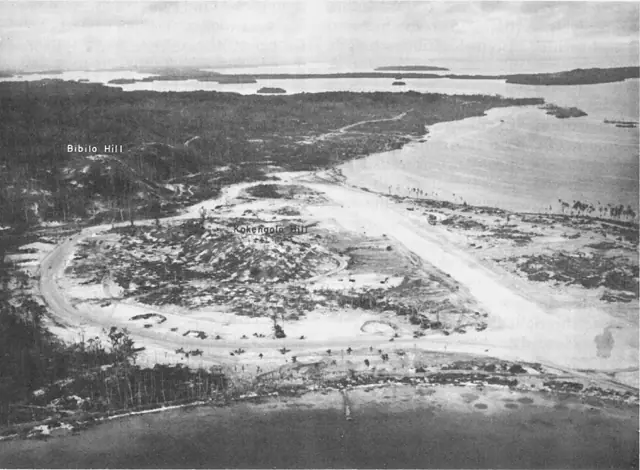
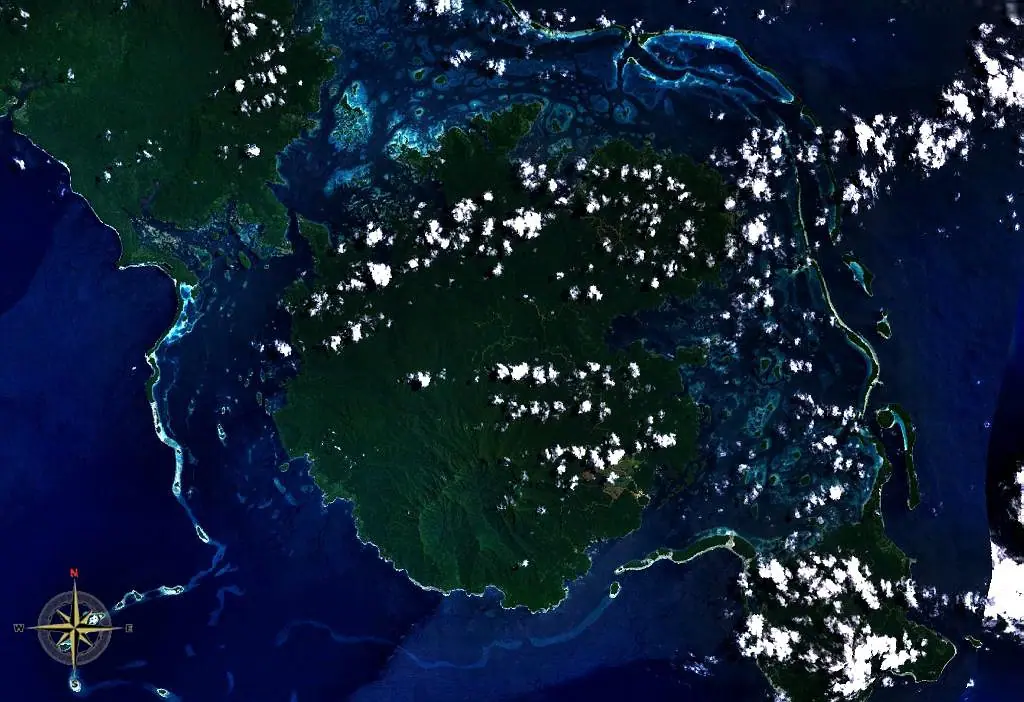
Hop southeast to Seghe, where the airstrip is a narrow ribbon of coral laid almost at the waterline. You have just arrived at Marovo Lagoon, often described as one of the largest double-barrier lagoons on earth — a maze of something like seven hundred islands with no roads to speak of. Everything moves by outboard: guests, groceries, schoolchildren, carvings.
Base yourself at one of the small ecolodges or village guesthouses around Uepi, Matikuri or Chubikopi, and let the days fill with snorkelling the drop-off at Uepi, paddling over coral gardens, and peering into the dark blue holes that puncture the lagoon. There are wrecks here too — a wartime fighter and a Japanese aircraft among them — and the diving is largely yours alone, because so few boats work these waters.
Marovo is also the carving heart of the country. Canoe prows, bowls and figures in dark hardwood inlaid with shell are sold at the villages where they are made, and buying directly puts money into the hands of the carver's family. Keep the mornings free for reef trips; that is when the lagoon is calmest and the light is best.
Day 5: Gizo, Kennedy Island and the Toa Maru
The next hop takes you to Gizo, where the airstrip sits on Nusatupe islet and a boat shuttles passengers across a short channel to Gizo town. This is the capital of Western Province: a cheerful, low-rise waterfront of markets, dive shops and floating produce stalls, with Kolombangara looming across the strait and the odd volcanic murmur from Simbo further out.
A ten-minute boat ride from town lies Kennedy Island, known locally as Kasolo — the speck of sand and coconut palms where a young naval officer and his crew swam ashore in 1943 after their patrol boat was rammed in Blackett Strait. A small marker, a fringe of coral, and picnic-friendly shade make it an easy half-day, and the water around it is good for a lazy snorkel.
Divers come to Gizo for the Toa Maru, a large Japanese transport sitting in thirty metres or more and widely counted among the region's landmark wreck dives; snorkelers can still see sections at shallower depths on nearby sites. Add the coral at Grand Central Station and the protected reef at Njari Island, a lazy afternoon at Saeraghi beach, and day trips to Simbo's hot springs or Kolombangara's forest tracks, and one night here feels criminally short.
Days 6–7: Langa Langa Lagoon, Lake Tegano or a Last Reef
Fly back to Honiara and choose your finale. Malaita is a thirty-minute hop to Auki, then a short boat ride to Langa Langa Lagoon, where families have built artificial islands from coral rubble and still string shell money by hand. The lagoon's saltwater people live almost entirely on the water, and a village stay here is one of the most memorable nights the country offers.
If you have the appetite for a longer detour, the far south holds Rennell Island and Lake Tegano, the largest freshwater lake in the insular Pacific, sitting inside the forest of East Rennell. Endemic birds such as the Rennell starling, orchids and towering rainforest make it exceptional — but flights are infrequent and seats are few, so book well ahead and allow extra days for weather.
Short on time? Stay on Guadalcanal instead: hike to the Tenaru Falls through the bush, swim at Marau Sound, or spend a final morning in Honiara's market choosing carvings and shell money to take home. Whatever you choose, keep a buffer day before your international departure — delays are routine, and onward flights leave only a few times a week.
Frequently asked questions
How reliable are domestic flights between the islands?
Flights are short and usually punctual, but thin schedules, tropical weather and aircraft rotation can delay or cancel a service with little notice. Almost everything flies in the morning. Never book a tight same-day connection to an international departure — give yourself at least a full spare day in Honiara.
What is the baggage allowance on inter-island flights?
Small twin-engine turboprops typically allow 15 to 20 kilograms per passenger, often with a low carry-on limit because the lockers are tiny. Use a soft bag. Heavier bags may be left behind for a later flight, so keep essentials, medication and dive computers with you.
When is the best time of year to visit the Solomon Islands?
April to October is the drier, breezier stretch, with the clearest water and most comfortable evenings, especially from June to August. November to April is cyclone season, bringing humidity and heavy afternoon rain that can disrupt flights and boat transfers.
Do I need cash, and can I use cards?
Carry Solomon Islands dollars in small notes. ATMs exist in Honiara and occasionally in Gizo and Munda but are not dependable, and village guesthouses, boat owners and market sellers almost always expect cash. Cards work at a limited number of larger hotels and dive shops.
Can a week realistically include Lake Tegano on Rennell Island?
Only with careful planning. Rennell's flights are infrequent and have very few seats, and the lake sits a long way from the airstrip. If Lake Tegano is a priority, give it three nights and check schedules well in advance rather than trying to squeeze it into the last two days.
Plan it — flights in Solomon Islands
Live search, booked directly with trusted providers.
Sort the rest of your trip
Everything for Solomon Islands, in one place
Stay in Solomon Islands
Hotels, guesthouses and apartments — compared in one search.
Search hotels
Transfer in Solomon Islands
Private driver waiting on arrival — no queues, no surprises.
Book a transfer
Travel insurance
Medical cover, delays and lost baggage — sorted before you go.
Get covered