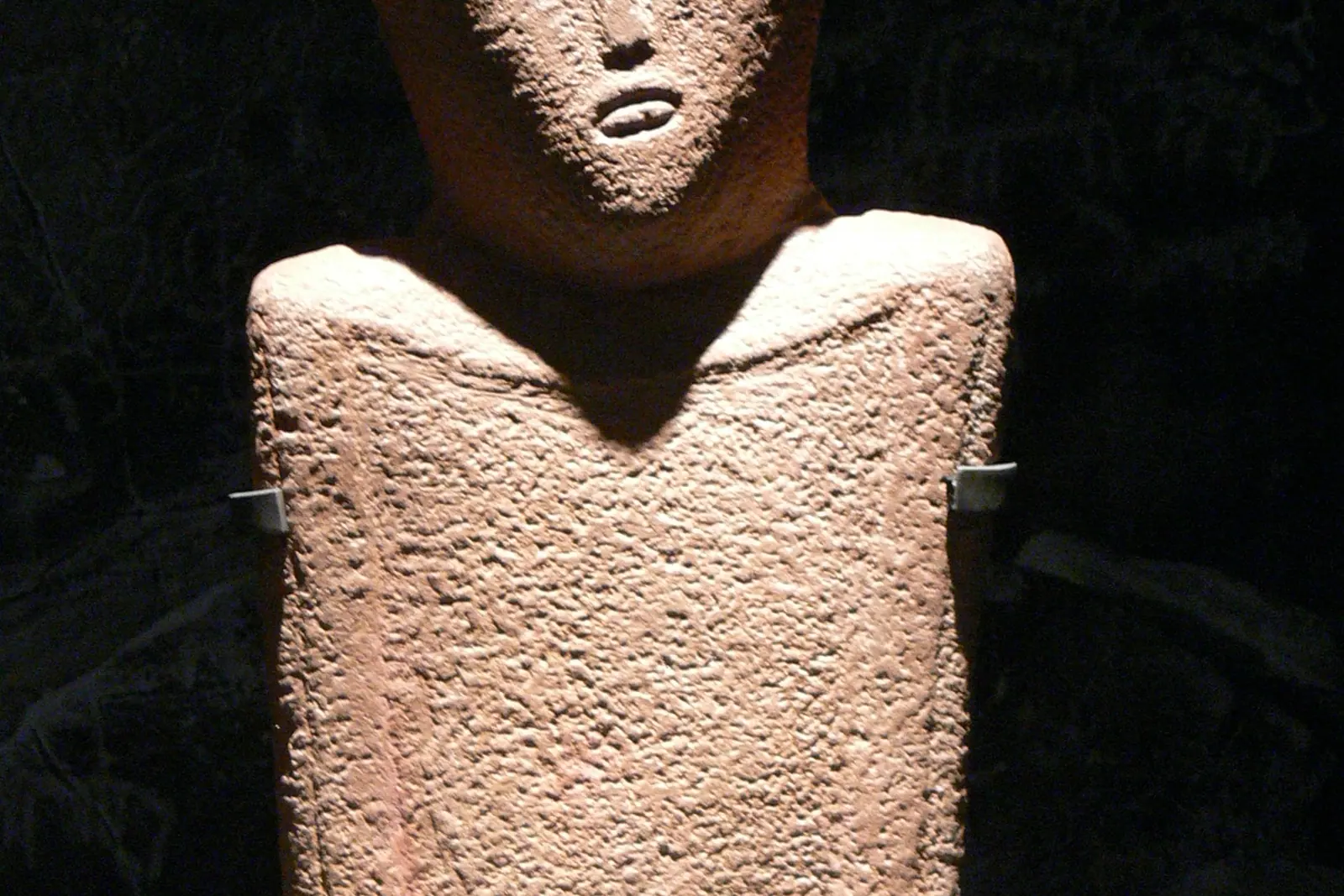
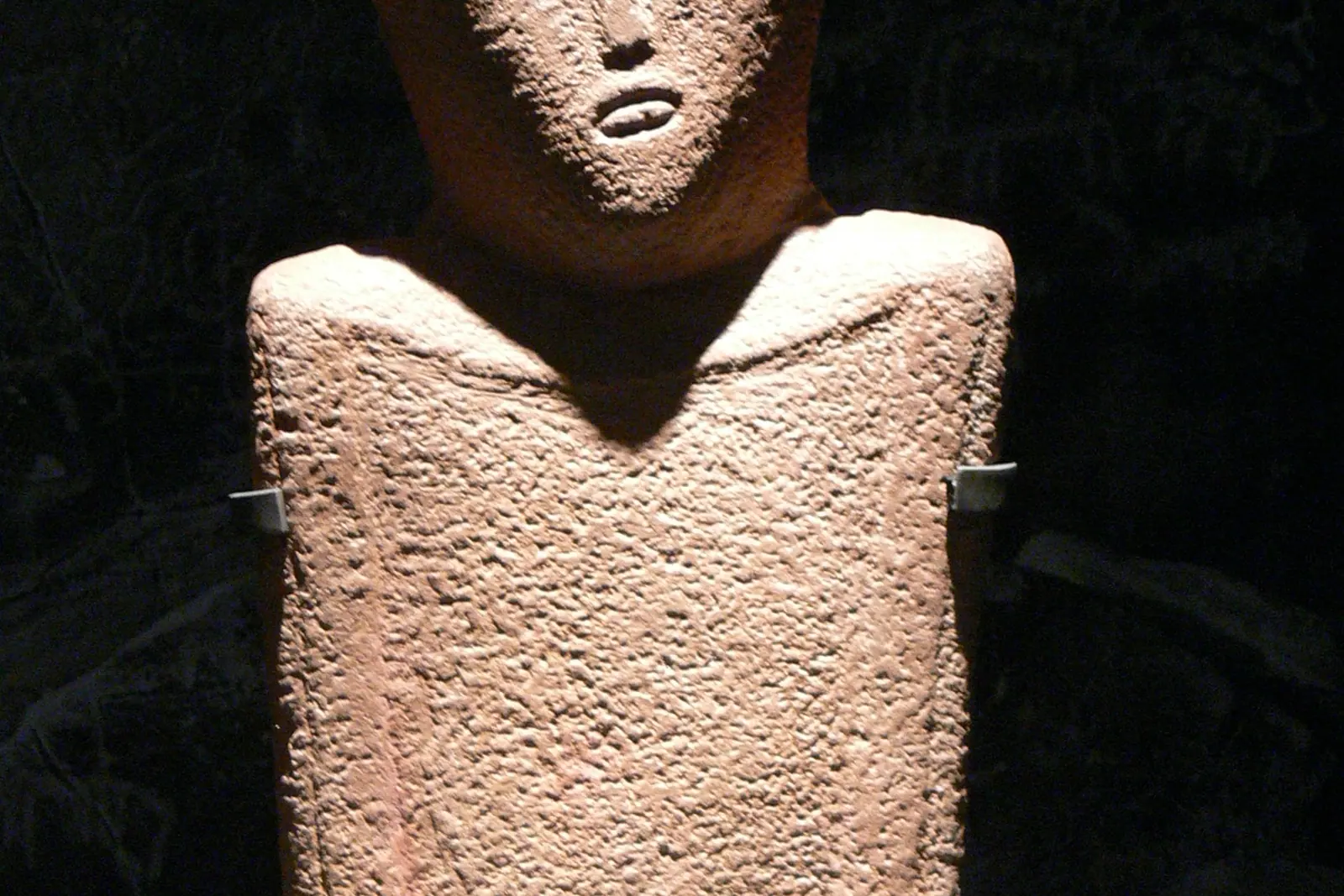
Saudi Arabia is roughly the size of Western Europe, so a week spent behind a steering wheel buys you fatigue rather than wonder. Flying between the Kingdom's corners turns impossible distances into short hops, letting you watch the sun set over Riyadh's mud-brick ruins and, the next morning, walk between Nabataean tombs carved into golden sandstone. This is a seven-day route built around domestic flights, with just enough driving at each end to reach the places that matter.
Why a Flight-First Week Works in Saudi Arabia
Distances here punish road trippers. Riyadh to Jeddah is close to 850 kilometres of desert highway, and Jeddah to AlUla adds another long, monotonous haul. Domestic aviation collapses those journeys into 90-minute hops between well-connected airports, which means a single week can comfortably hold four very different landscapes: the Najd plateau, the Hejaz coast, the volcanic north-west and the green south-western highlands. Base yourself in one hotel per city, travel light, and let the plane do the boring parts.
Timing matters more than almost anything else. From October through March the country is genuinely pleasant — Riyadh evenings cool enough for a jacket, AlUla mild by day and cold after dark, Jeddah humid but bearable on the Corniche. April and May bring rising heat and the Taif rose harvest; June to September is punishing almost everywhere except Abha and the Asir escarpment, which sit high enough to stay fresh when the rest of the peninsula bakes. If your dates are flexible, aim for November or February.
Logistics are simpler than most first-timers expect. Leisure travellers from a long list of countries can apply for a tourist visa online in advance, domestic flights are frequent between Riyadh, Jeddah, Dammam, AlUla and Abha, and airports are compact and quick to navigate. Build your route so each flight lands before sunset — you want daylight for the drive into town, and the light in the desert is worth arriving early for.
Days 1–2: Riyadh, Diriyah and the Edge of the World
Start in the capital, where the old and the new sit almost comically close. Day one belongs to the historic core: the Masmak Fortress, a crenellated mud-brick citadel with a spearhead still lodged in its gate, and the adjoining Dira Souq, where you can browse oud, bisht cloaks and antique coffee pots. From there, drive north-west to Diriyah, the UNESCO-listed At-Turaif district, a painstakingly restored palace complex of narrow lanes and palm-trunk ceilings on the banks of Wadi Hanifah. Go in the late afternoon and stay for dinner in the surrounding dining quarter.
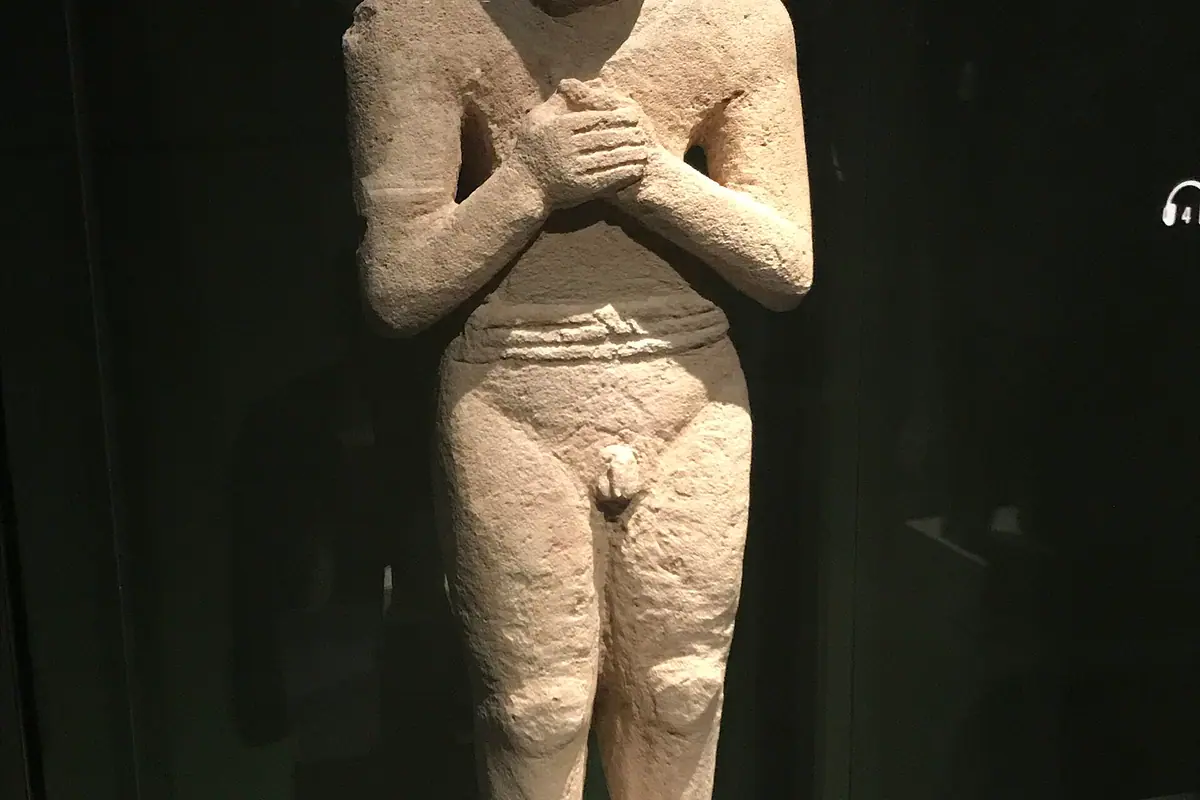
Day two is for scale. Spend the morning in the National Museum of Saudi Arabia on King Abdulaziz Road, whose eight halls walk you from prehistoric Arabia through the incense trade to the founding of the modern state — a couple of hours minimum. Then head up to the Sky Bridge at the Kingdom Centre for a skyline view, and spend the evening in one of the city's sprawling entertainment districts, where coffee shops, cinemas and street-food stalls stay busy long past midnight.
If you have the appetite for one big excursion, dedicate an afternoon to the Edge of the World, known locally as Jebel Fihrayn. It is roughly a 90-minute drive north-west of the city on increasingly rough tracks, best done with a local guide and a vehicle that can handle gravel. You stand on a 300-metre cliff where an ancient seabed simply stops, looking over a vanished ocean of dry wadis. Go for sunset, take water, and be off the track before full dark.
Day 3: Fly North to AlUla and the Tombs of Hegra
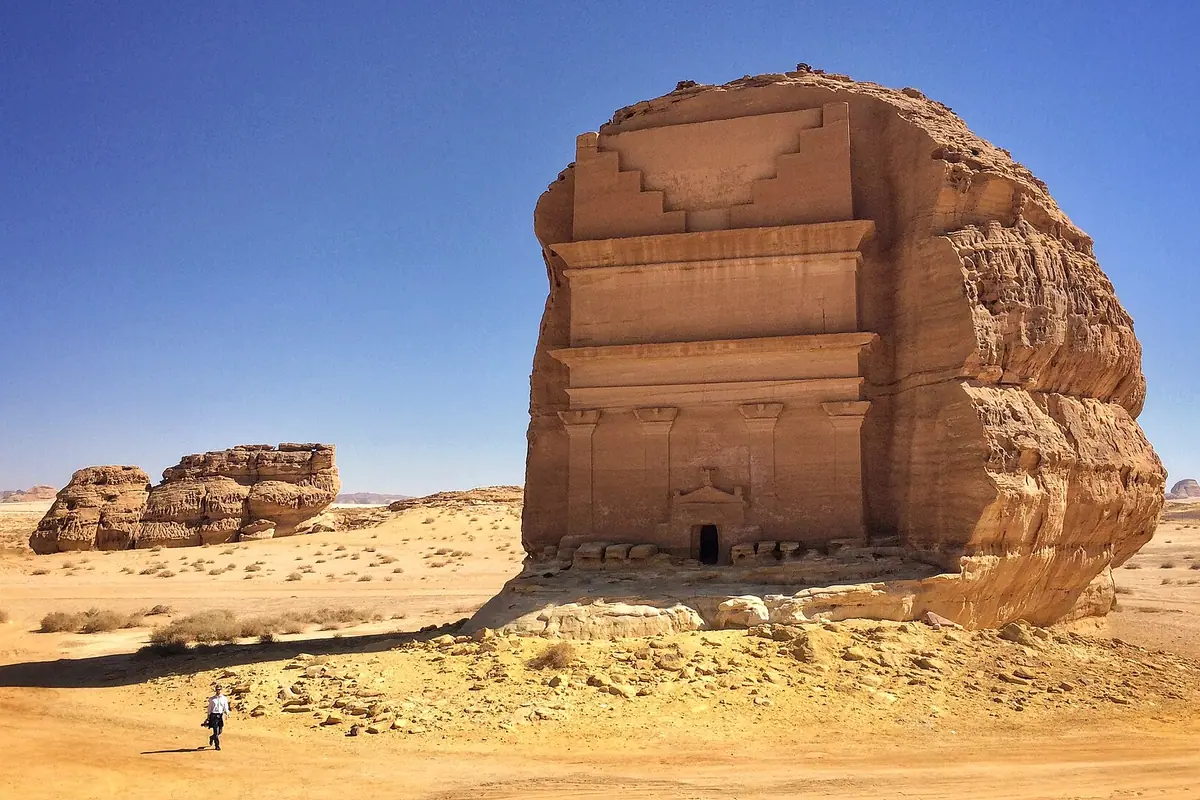
A short morning flight delivers you to AlUla, and it is worth treating this as the centrepiece of the whole week. Hegra, the country's first UNESCO World Heritage Site, is a Nabataean necropolis of more than a hundred monumental tombs cut into free-standing sandstone outcrops across a dusty plain. Access is by guided tour with a local rawi storyteller, and the experience is all the better for it: you learn which façades imitate the great monuments of Petra, why one tomb carries a rare inscription detailing a legal dispute, and how the Nabataeans engineered wells and cisterns in a landscape with almost no rain.
Book Hegra in advance — it sells out in the cooler months — and pair it with the other sites scattered around the oasis. Jabal Ikmah, a shaded canyon wall dense with ancient Dadanitic inscriptions, is often called an open library. Dadan, the older kingdom that preceded the Nabataeans, has its own excavated tombs. AlUla Old Town, a labyrinth of stone houses abandoned in the last century, is beautifully lit at night, and Elephant Rock — a three-storey sandstone monolith that really does look like its namesake — is the classic sunset stop.
AlUla rewards a slower pace than a single day allows, so if you can steal one, do. Winter brings a cultural season of concerts, art installations and hot-air balloon flights over the tombs, and the mirrored walls of the Maraya performance hall are a landmark in their own right. Nights in the desert here are genuinely cold from December to February; bring a proper jacket even though the days feel warm.
Days 4–5: Jeddah, Al-Balad and the Red Sea
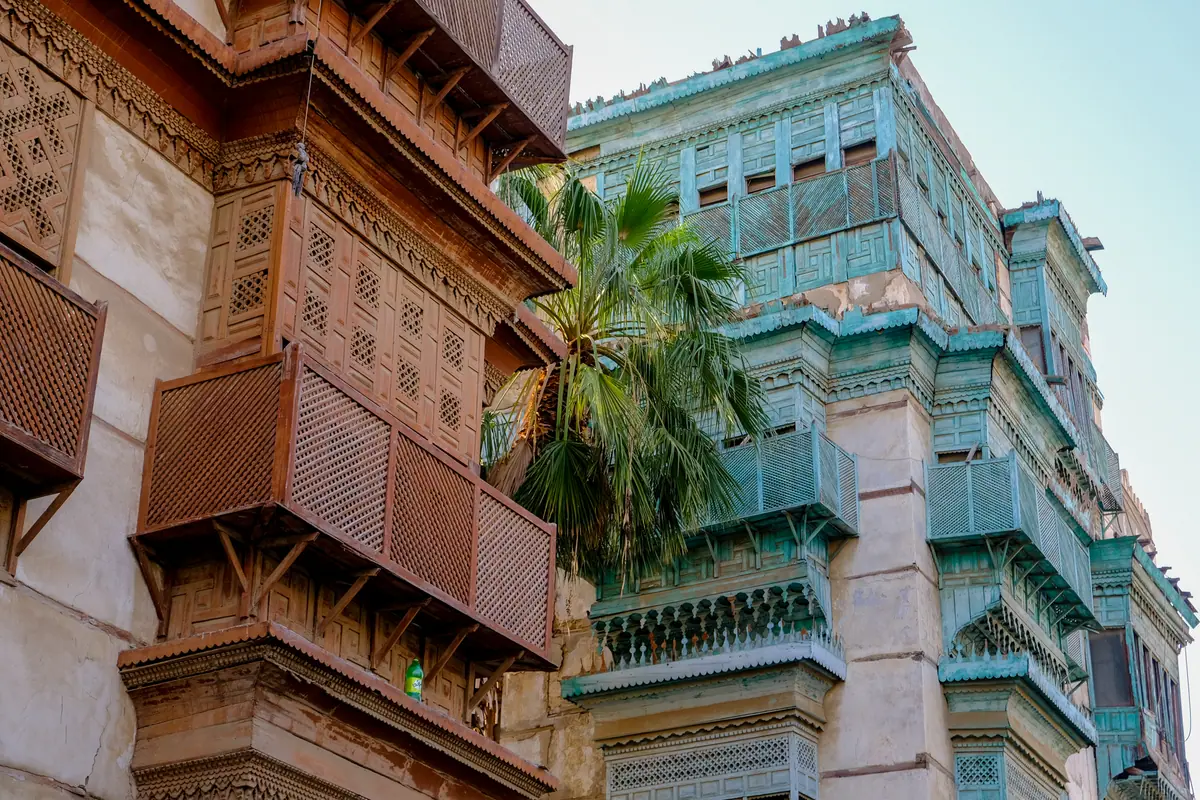
Fly west to Jeddah and head straight for Al-Balad, the historic quarter that earned UNESCO status for its coral-stone houses, carved wooden roshan balconies and labyrinth of alleys that still smell of cardamom and incense. Start at the restored Nassif House, once home to a prominent merchant family and still the district's most photographed building, then wander the souq for textiles, frankincense and Yemeni honey. Late afternoon is the best light for the rooftops.
The next day follows the water. The Jeddah Corniche runs for kilometres along the Red Sea, punctuated by public art, seafood grills and families picnicking long after dark. The King Fahd Fountain throws a plume of seawater improbably high into the air and is best photographed from the northern corniche at dusk. Further south, the Al-Rahma Mosque — the so-called floating mosque, built on stilts above the sea — is a serene stop at high tide, though non-Muslim visitors should admire it from the causeway rather than entering.
If you want a change of altitude, Taif is a two-hour drive up the escarpment and makes a satisfying half-day: cool mountain air, terraced rose farms that distil perfume in spring, and the winding Al-Hada road with its baboons and viewpoints over the coastal plain. Otherwise use the second Jeddah day for the Red Sea itself — boat trips, diving and snorkelling out of the city's waterfront are easy to arrange.
Day 6: Abha and the Asir Highlands
The final flying day takes you south to Abha, high in the Asir mountains at around 2,200 metres, where the air is cool, the fog rolls through juniper trees and the architecture changes completely — stone towers with quartz-white banding and slate roofs. The road out to Al-Soudah climbs towards Jabal Sawda, the country's highest peak, passing terraced farms and roadside stalls selling honey and coffee. A cable car drops steeply into the valley and the views across the escarpment are the closest thing in Saudi Arabia to an alpine panorama.
Do not miss Rijal Almaa, a village of tall stone-and-quartz houses stacked against the mountainside about 45 minutes from Abha, now partly restored as a heritage village with museums, craft stalls and a small amphitheatre. In Abha itself, Al Muftaha village gathers local artists and mural painters, and the highland parks fill with families on Friday afternoons. Bring layers: summer days here are mild while Riyadh swelters, and winter nights can approach freezing.
Alternative southern swap: if mountain scenery appeals less than desert history, fly instead to Al-Ahsa in the Eastern Province, where the Al-Qarah Mountain's eroded caves stay naturally cool, Jawatha Mosque ranks among the oldest in the region, and the Al-Qaisariya market in Hofuf sells dates, spices and woven goods. Either way, keep this day unhurried — it is your last full day before the journey home.
Day 7: The Return Leg and Practical Wisdom
Most final days route back through Riyadh or Jeddah, so book a mid-morning domestic hop to leave a comfortable buffer before any international departure. Domestic terminals are quick, but allow two hours for check-in and security at the big hubs, and note that checked baggage allowances on internal flights are usually generous — useful if you have bought dates, honey or a rug. Confirm whether your ticket includes a bag, since the cheapest fares sometimes do not.
A few local rhythms will shape your week. The weekend runs Friday and Saturday, so Friday mornings are quiet and many shops and sites open later; plan museum visits for other days. Prayer times briefly close shops and restaurants five times daily. Alcohol is illegal, and modest dress is expected everywhere, though women are not required to wear an abaya. Photography of government buildings, military sites and airports is off-limits, and drones need permission. Non-Muslim travellers cannot enter Mecca, and access to central Medina is restricted, so keep those cities off a sightseeing itinerary.
Finally, resist the temptation to add a fifth city. One week in Saudi Arabia works best when each stop gets a full day and a relaxed evening rather than a rushed checklist. Riyadh, AlUla, Jeddah and the Asir highlands give you ruins, rock-cut tombs, a coral-stone port and a misty mountain ridge — four entirely different countries in one, reachable in four short flights.
Frequently asked questions
How many domestic flights do I need for a one-week Saudi itinerary?
Four is the sweet spot: Riyadh to AlUla, AlUla to Jeddah, Jeddah to Abha, and a final hop back to Riyadh or Jeddah for your international departure. Each leg is roughly one to two hours in the air, which keeps travel days short enough to still see something on arrival.
What is the best time of year to do this route by plane?
October to March is ideal, with mild days in AlUla and Riyadh and bearable humidity in Jeddah; November and February are the standout months. If you visit between June and September, consider swapping the desert stops for Abha and the Asir highlands, which stay cool at altitude.
Can non-Muslim travellers visit Mecca and Medina?
No. Mecca is closed to non-Muslims, and access to the central holy areas of Medina is also restricted. Everything else on this itinerary — Riyadh, Diriyah, AlUla, Hegra, Jeddah, Taif and Abha — is fully open to tourist-visa holders.
Do I need to book the Hegra tour in AlUla in advance?
Yes, and well ahead if you are travelling between November and March. Hegra is only accessible with a guided group, departures are limited each day, and winter slots frequently sell out weeks in advance. Pair it with a separate booking for Jabal Ikmah and Dadan if you want the full archaeological picture.
What should I pack for a week of flying around Saudi Arabia?
Layers are essential: light clothing for Jeddah's coast, a warm jacket for AlUla's cold desert nights and Abha's highland chill, and comfortable walking shoes for Diriyah, Al-Balad's alleys and the rocky ground at Hegra. Add a modest outfit that covers shoulders and knees, sun protection, and a refillable water bottle for the long, dry days.
Plan it — flights in Saudi Arabia
Live search, booked directly with trusted providers.
Sort the rest of your trip
Everything for Saudi Arabia, in one place
Stay in Saudi Arabia
Hotels, guesthouses and apartments — compared in one search.
Search hotels
Transfer in Saudi Arabia
Private driver waiting on arrival — no queues, no surprises.
Book a transfer
Travel insurance
Medical cover, delays and lost baggage — sorted before you go.
Get covered