Lebanon squeezes a continent into a country you can cross before lunch: Roman temples on a high plateau, Crusader castles above the surf, cedar groves in the clouds and a capital that refuses to go to bed early. This seven-day loop starts and ends in Beirut, and it assumes you're happy to move every day or two.
Days 1–2: Beirut — Corniche Sunsets and a Capital That Never Rushes
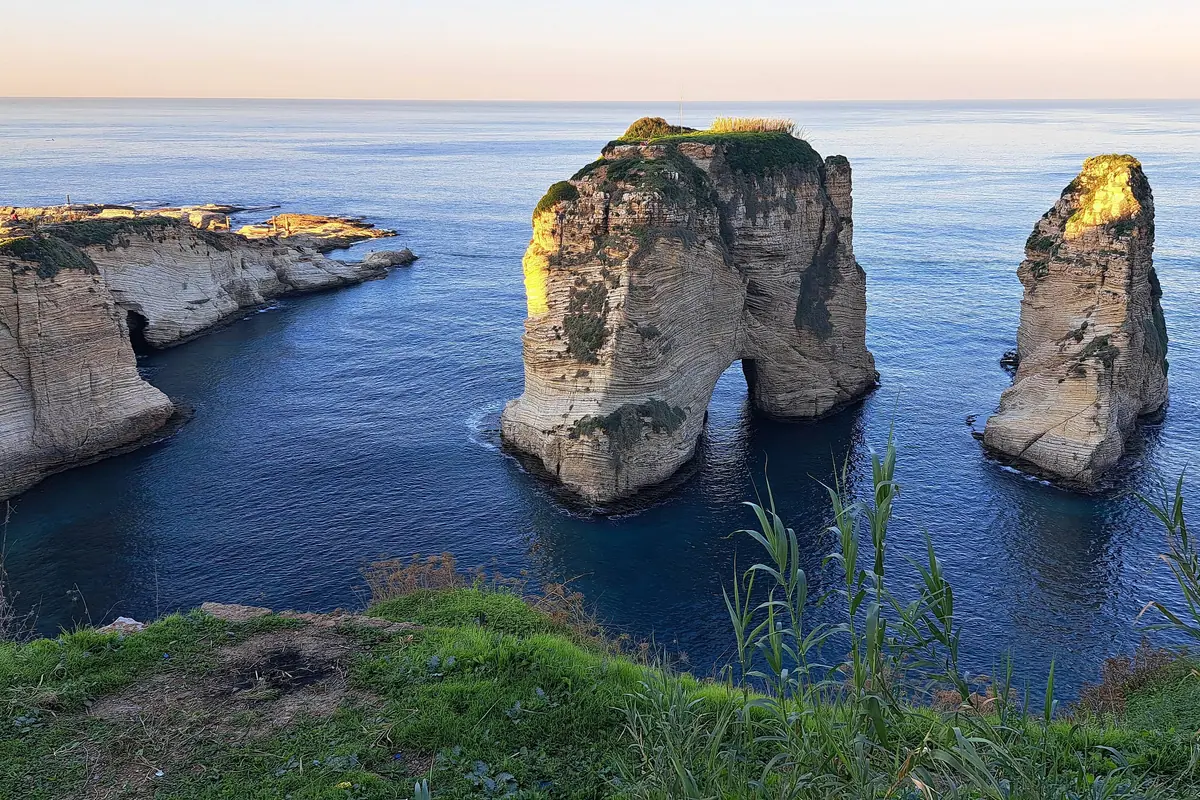
Land at Beirut's airport, which sits barely twenty minutes from the centre, and resist the urge to unpack in a hurry. Spend your first afternoon walking the Corniche, the seaside promenade where fishermen, joggers and shisha smokers share the same railings. At its western end the sea has carved the Pigeon Rocks (Raouché), two chalky limestone arches rising straight out of the water — the city's most photographed silhouette and best free sunset.
Downtown, Martyrs' Square opens onto the blue-domed Mohammad Al-Amin Mosque, standing almost shoulder to shoulder with the older Saint George Maronite Cathedral, a pairing that tells you a lot about this city in one glance. The rebuilt Beirut Souks and the Zaitunay Bay marina make an easy stroll. Give a couple of hours to the National Museum of Beirut, whose Phoenician sarcophagi and mosaics are excellent, and to the Sursock Museum in Achrafieh, a restored villa filled with modern Lebanese art.
Keep your second evening for Gemmayzeh and Mar Mikhael, where Ottoman-era staircases lead to galleries, wine bars and tiny kitchens, or wander Hamra Street for bookshops and late coffee. Day two is deliberately loose: a slow morning, a long lunch, and an early night before you start moving north.
Day 3: Byblos, Jeita Grotto and Harissa — Phoenicians, Caves and a Cable Car
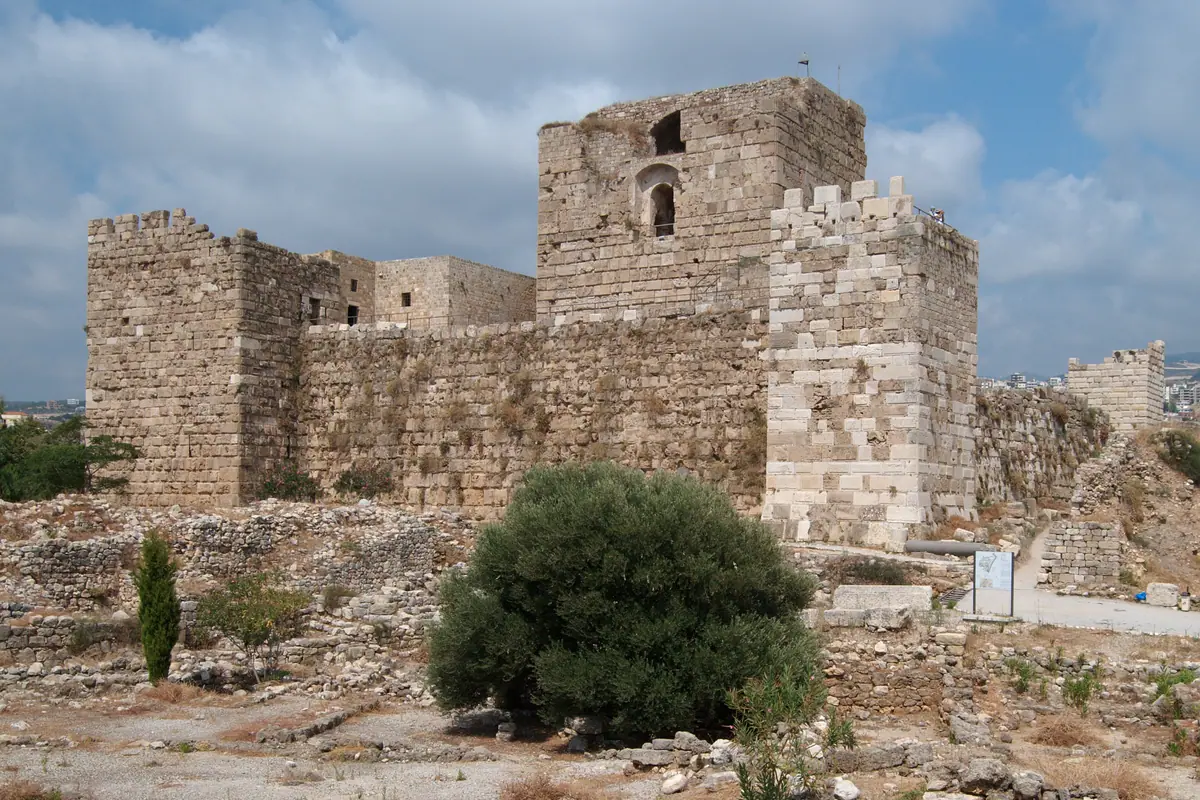
Byblos, forty minutes up the coast, claims to be one of the oldest continuously inhabited towns on earth, and the ruins are laid out like a timeline. The Crusader Castle sits on a mound of earlier civilisations, built partly from Roman column drums, with a Phoenician royal necropolis, a small Roman theatre and a Crusader moat scattered around its base. Below, fishing boats bob in a pocket-sized harbour flanked by cafés — stay for dinner here if you can.
Inland, the Jeita Grotto splits into two limestone caverns: the lower one explored by boat through still, glassy water, the upper one on foot along a walkway past curtains and columns of stalactites. Photography is not allowed inside, and the two galleries sometimes close on alternating days depending on the season, so check locally before you commit the afternoon.
Round the day off with the cable car from Jounieh up to Harissa, where the white statue of Our Lady of Lebanon looks out over the bay. The ride itself is the attraction — a slow ascent over rooftops and pine trees — and the view from the top stretches back to Beirut on a clear day. Return to Byblos or Jounieh for the night.
Day 4: Baalbek and the Beqaa Valley — The Roman Empire's Grandest Temples
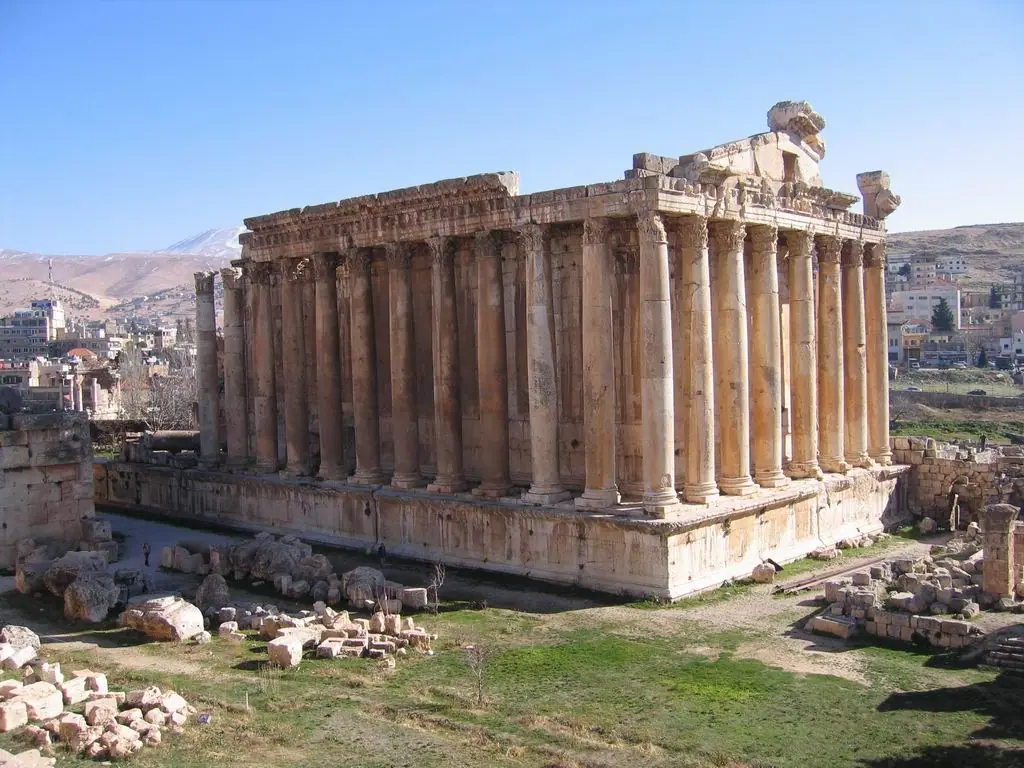
Baalbek is the reason many travellers come to Lebanon. Its Temple of Jupiter once ranked among the largest in the Roman world, and six of its colossal columns still stand against the sky. Beside it, the Temple of Bacchus is the best-preserved Roman temple anywhere, its carved doorframes and ceiling panels so intact that you can read the stonework without imagining much. Add the round Temple of Venus, the Hexagonal Forecourt and the vast Great Court, and you have two to three hours of walking.
The site has almost no shade, so arrive early, carry water and wear a hat; spring and autumn are far kinder than midsummer. From Beirut the drive takes roughly two hours over the mountains, which makes a long but perfectly doable day trip, and combining it with the early Islamic ruins at Anjar, half an hour away, fills the afternoon nicely.
The surrounding Beqaa Valley is Lebanon's agricultural heartland and its wine country. Several long-established estates around Ksara, Kefraya and Chtaura open their cellars for tastings, usually by appointment, and a late lunch among the vines is a fine way to end a day of temples. Baalbek town is conservative, so dress modestly, and check current conditions in the region before heading east.
Day 5: The Cedars of God and the Qadisha Valley — Mountain Monasteries and Ancient Trees
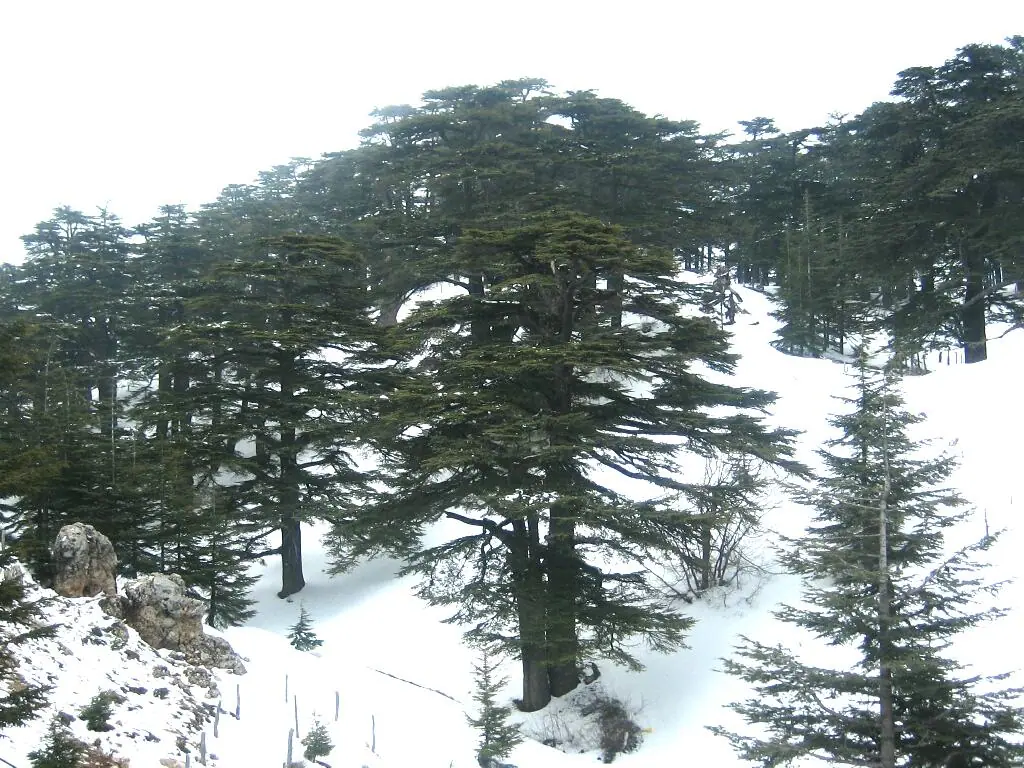
Head for the high mountains above Bsharri, where the Cedars of God grove holds trees that have watched empires come and go — some specimens are estimated at over a thousand years old, their trunks flattened into wide, layered canopies by centuries of snow and wind. The grove is small and quiet, and at around 2,000 metres the air is sharp and clean even in August.
Below it, the Qadisha Valley drops away in a green gorge dotted with cave hermitages and monasteries, including Deir Qannoubine, once the seat of the Maronite patriarchate. Trails descend from the rim to the valley floor in two to four hours depending on your route, passing rock-cut chapels and walnut trees. In Bsharri itself, the Gibran Khalil Gibran Museum occupies a former monastery and holds the writer's paintings and tomb.
Winter transforms this landscape: from January to March, snow covers the upper slopes and the ski areas at Mzaar Kfardebian and the Cedars run lifts over the same ridges you hiked in summer. Whatever the season, pack layers — temperatures at altitude can be ten degrees cooler than on the coast, and roads can close in heavy weather.
Day 6: Tripoli and Batroun — Mamluk Souks and a Phoenician Sea Wall
Lebanon's second city, an hour and twenty minutes north of Beirut, rewards a morning's wandering. The Citadel of Raymond de Saint-Gilles dominates the skyline, a Crusader fortress enlarged by the Mamluks and Ottomans, and the surrounding old quarters hold carved khans, the Taynal Mosque and the Mansouri Great Mosque with its striped stonework. Tripoli is more traditional than Beirut, so dress accordingly, and the palm-lined corniche at Al-Mina makes a breezy stop before lunch.
Heading back south, stop at Batroun, where a Phoenician sea wall runs straight into the Mediterranean and the old town hides a pocket-sized harbour, a church dedicated to Our Lady of the Sea and lanes of stone houses. The town is famous for its lemonade, served frosty at seafront kiosks, and for pebble beaches that are far less crowded than Beirut's.
Tripoli to Batroun is only about twenty minutes, so you can see both comfortably in a day and still be back in Beirut by evening, or stay overnight in a Batroun guesthouse and take the coastal road home after breakfast.
Day 7: Sidon, Tyre and the Chouf — Castles on the Water and a Mountain Palace
For your last full day, choose between the south coast and the mountains. The southern route runs to Sidon in about forty-five minutes, where the Crusader Sea Castle sits on its own island, linked by a causeway, and the old town offers a superb little soap museum in a seventeenth-century khan, plus vaulted souks and a busy fishing port. Continue to Tyre, an hour further, for the Al-Bass site: a Roman hippodrome big enough for chariot racing, a triumphal arch and a sprawling necropolis, all UNESCO-listed and often nearly empty.
The inland alternative climbs into the Chouf. Beiteddine Palace, built in the early nineteenth century for Emir Bashir Shihab II, is all arcaded courtyards, marble fountains and gilded ceilings, and the hill village of Deir el Qamar nearby mixes a mosque, a synagogue and churches along one steep square. Above both, the Chouf Cedar Reserve protects stands of ancient trees with signed walking trails.
Either way, keep the evening free for a final Beirut dinner and leave the packing for the morning. Distances here are short — nothing on this itinerary is more than three hours from the capital — which is exactly why a week in Lebanon feels so much longer than seven days.
Frequently asked questions
Is one week enough to see Lebanon?
Yes — a week covers the essentials comfortably: Beirut, Byblos, Baalbek, the Cedars and either the north coast or the south. The country is small, with no internal flights needed, so travel days are short and you spend your time sightseeing rather than in transit.
When is the best time to visit Lebanon?
April to June and September to November offer warm days, clear views and comfortable hiking weather. July and August are hot and humid on the coast but pleasant in the mountains, while January to March brings snow above roughly 1,500 metres and a proper ski season.
Do you need a car to get around Lebanon?
A car or a driver makes this itinerary much easier, especially for the Beqaa Valley, the Cedars and the Chouf, where public transport is limited. Ride-hailing apps work well in Beirut and along the coast, and shared minibuses link major towns cheaply, but mountain and cross-country routes are far simpler with a private vehicle.
What should I pack and wear?
Bring layers, since mountain temperatures drop sharply above 1,500 metres, plus sturdy shoes and sun protection for exposed archaeological sites such as Baalbek. Modest clothing that covers shoulders and knees is respectful in Baalbek, Tripoli and Tyre, and essential if you plan to enter mosques or monasteries.
Can you ski and swim in the same week?
Often, yes. Between January and March the slopes at Mzaar Kfardebian and the Cedars can be skiable while coastal towns like Batroun and Tyre still offer mild seaside walks, though the sea itself is cold. The drive between snow and shoreline is usually under two hours.
Sort the rest of your trip
Everything for Lebanon, in one place
Stay in Lebanon
Hotels, guesthouses and apartments — compared in one search.
Search hotels
Transfer in Lebanon
Private driver waiting on arrival — no queues, no surprises.
Book a transfer
Travel insurance
Medical cover, delays and lost baggage — sorted before you go.
Get covered