Guinea-Bissau is one of West Africa's quietest arrivals — a small, mangrove-fringed country where a single runway opens onto an archipelago of some 88 islands that most regional travellers have never seen. A week is enough for the capital's crumbling colonial squares, a slow crossing into the Bijagós, and hippos that swim in salt water. It also takes planning: flights are few, and the islands run on tides rather than timetables.
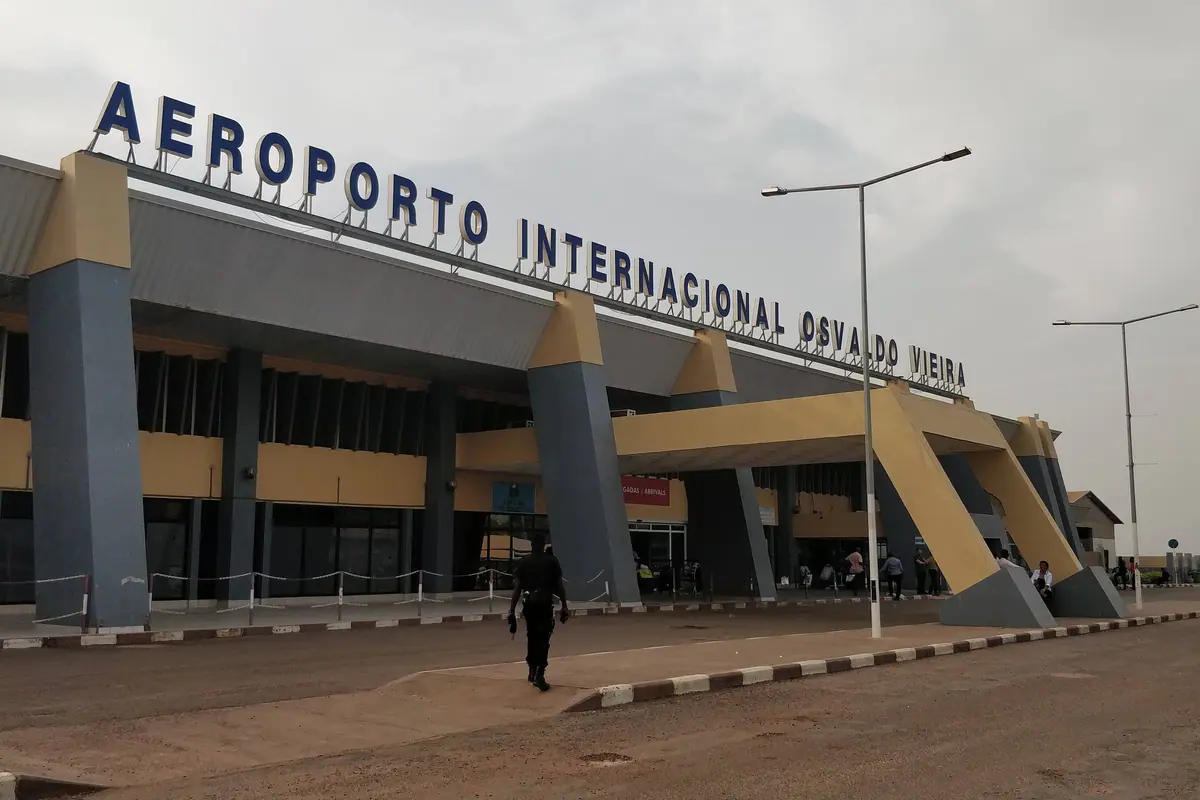
Arrival Day: Flights Into Osvaldo Vieira International Airport
Bissau's only international gateway is Osvaldo Vieira International Airport, roughly nine kilometres from the city centre on the eastern edge of town. Long-haul service is rare, so most journeys begin with a connection — usually through Dakar, barely an hour in the air from Bissau, or via Lisbon, Praia or Casablanca. Frequencies shift with the season, so if you plan to continue to the islands, give yourself a buffer day on the ground.
Arrivals are relaxed but slow: visa formalities, a yellow-fever certificate check for many nationalities, and a luggage hall where every bag is handled by hand. Change a little money into West African CFA francs at the airport or at banks downtown — ATMs are scarce and cards work in only a handful of Bissau hotels. Taxis wait outside; agree the fare before you get in. The country sits on Greenwich time, so there is no jet lag from Europe.
The best months to fly in are November to April, when the rains stop and roads and boats behave. June to October brings heavy downpours, choppy sea crossings and a handful of island lodges closing entirely. December through February is also the coolest stretch, with dusty harmattan haze softening the light over the mangroves.
Days 1–2: Bissau Velho, the Fortress of São José da Amura and Bandim Market
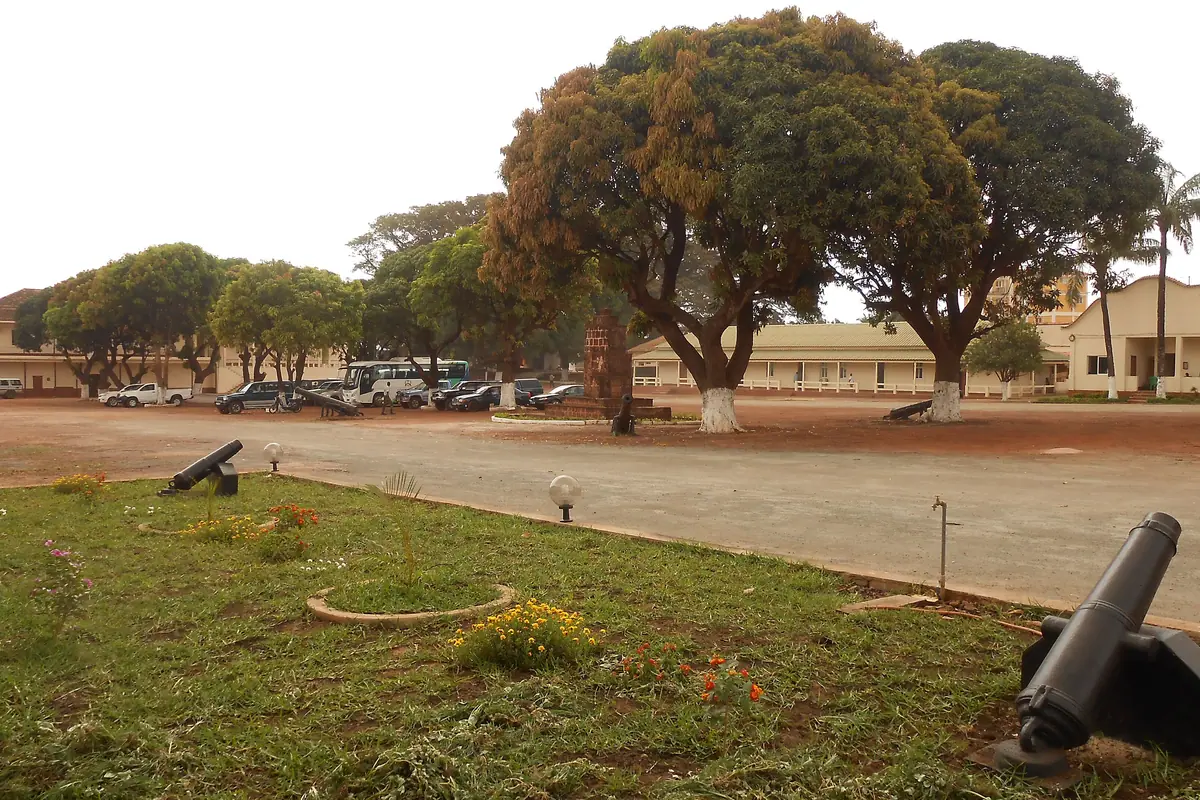
Give the capital two unhurried days. Begin in Bissau Velho, the old colonial quarter, where pastel facades peel in the humidity around the presidential palace and Praça Amílcar Cabral, the city's main square. The National Museum, housed in a former Portuguese fort, holds a small but affecting collection of Bijagó masks, baskets and weaving, and rarely takes more than an hour.
Walk or take a short taxi west to the Fortress of São José da Amura, a squat 18th-century coastal fort guarding the harbour entrance, where the tomb of independence leader Amílcar Cabral sits behind the walls. Close by, the Pidjiguiti docks mark the site of the 1959 dockworkers' strike that became a turning point in the liberation struggle; a monument stands at the quayside. Mornings are best, before the heat builds.
Spend the afternoon at Bandim Market, the sprawling trading heart of the city, where cashew nuts, wax-print cloth, smoked fish and palm wine fill a maze of stalls. Eat grilled fish or caldo de mancarra, a slow-cooked peanut stew, at one of the simple kitchens near the port. If you are here in February or early March, build the trip around Bissau's Carnival — a loud, feathered, drum-heavy parade that takes over the streets for days.
Day 3: Boat or Light Aircraft to Bubaque in the Bijagós
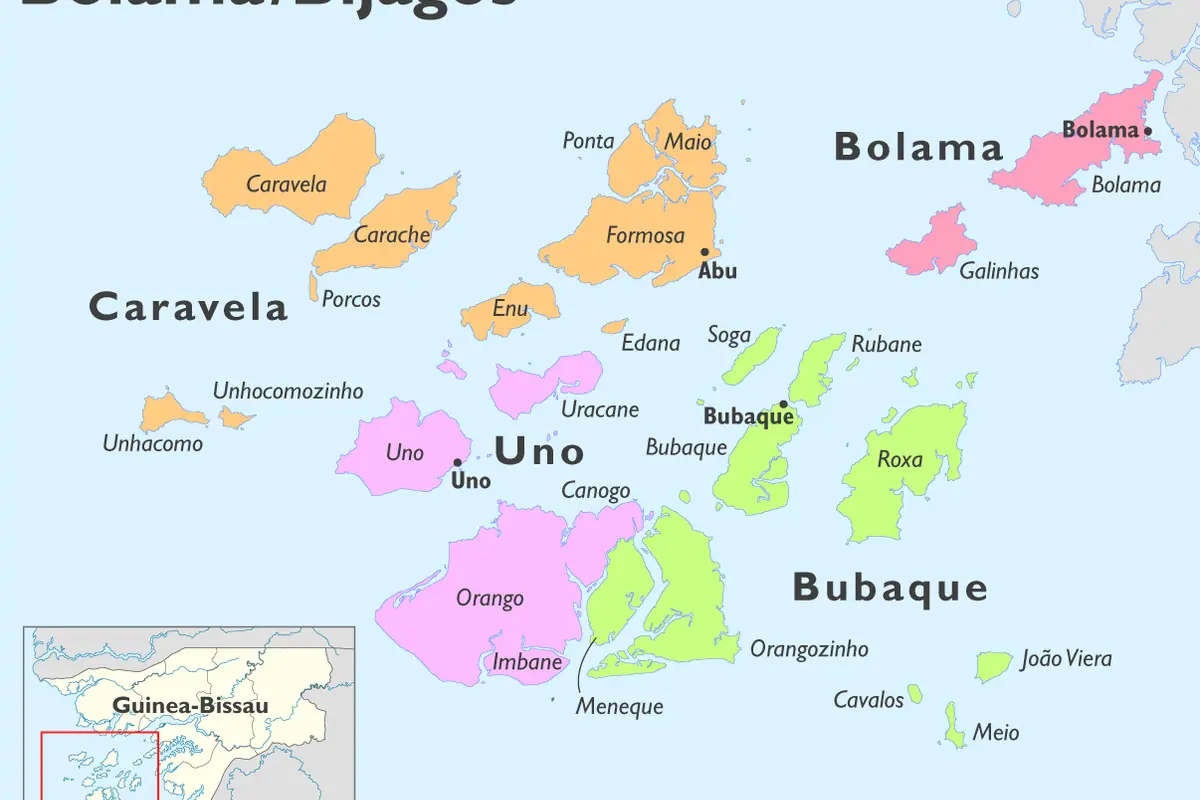
Getting to the Bijagós is part of the trip. The ferry from Bissau's port to Bubaque crosses open water and mangrove channels in roughly five hours and typically runs a couple of times a week, while light aircraft charters make the same hop in under half an hour when tides and weather allow. Whichever you choose, keep the morning free — departures rarely run to the minute.
Bubaque is the administrative hub of the islands, with the largest settlement, a busy market and a scattering of guesthouses on the water. Motorised canoes reach long, empty beaches such as Bruce, a favourite for swimming and sunsets. The island's rhythm is set by the tides, so plan every outing around high and low water, and carry cash — there are no working ATMs out here.
Rooms range from simple family-run guesthouses to small eco-lodges where meals are fish, rice and fruit eaten with the household. Electricity comes and goes, evenings are lantern-lit and very still. Two nights here is the minimum to make the crossing feel worthwhile.
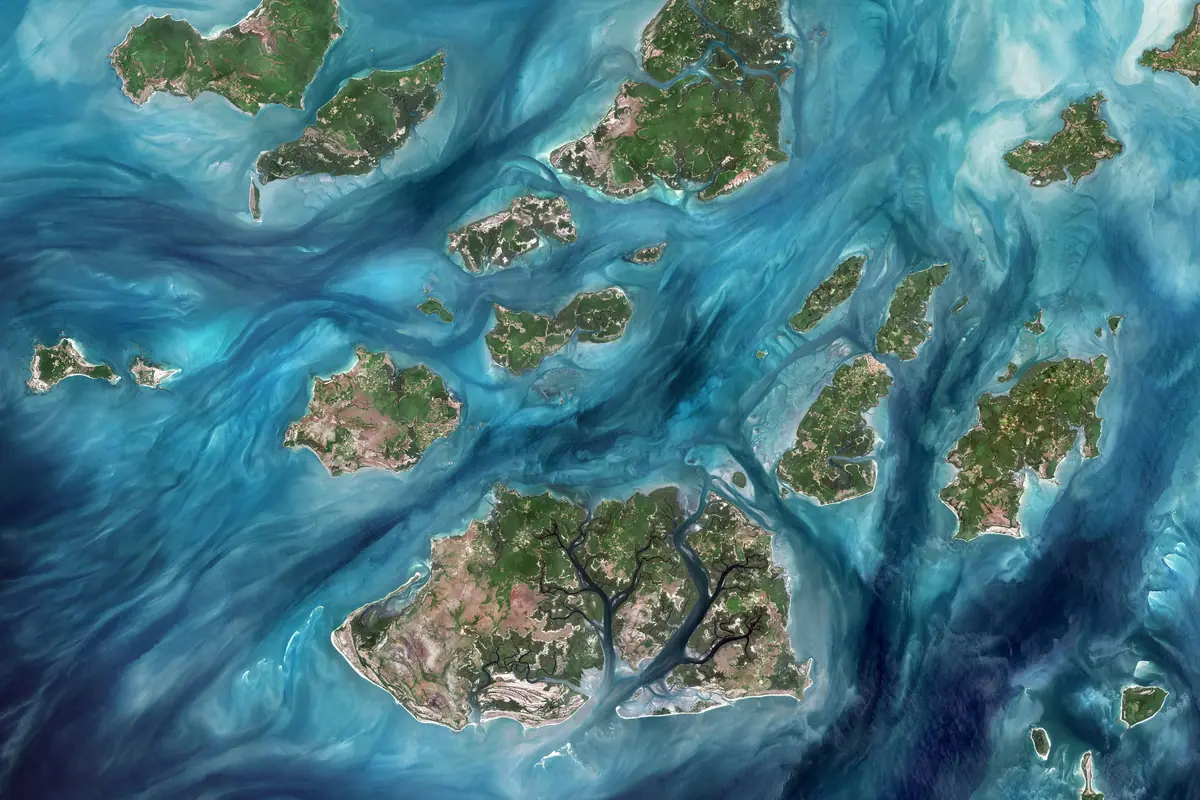
Days 4–5: Orango Islands National Park and the Turtles of Poilão
From Bubaque, arrange a guided boat into the Orango Islands National Park, a scatter of islands and saltwater channels where a rare population of hippos swims in the sea rather than living in rivers. Seeing them takes patience, a knowledgeable guide and long, slow scanning from a canoe; early morning is by far the best window, before the heat pushes the animals into the shallows.
Farther south lies the João Vieira–Poilão Marine National Park, a protected seascape around tiny, uninhabited Poilão, one of the most important green turtle nesting beaches on this side of the Atlantic. Females come ashore to lay from the middle of the year through its final months, and night patrols with local rangers let visitors watch the ritual at a respectful distance. Fishing lines, spears and fins are banned inside the park.
Practicalities matter here more than anywhere else in the country: no grid power, no shops and no medical facilities on the outer islands. Bring drinking water, a mosquito net, sun protection and any medication you rely on. Travel is by traditional wooden canoe with an outboard, and crossings can be rough, so anyone prone to seasickness should ask for the calmer morning departure.
Day 6: Bolama, the Abandoned Capital
Backtrack to Bubaque and cross to Bolama, the island that served as capital of Portuguese Guinea until the seat of government moved to Bissau in 1941. What remains is extraordinary: an entire colonial town of arcaded buildings, a grand former palace and churches sinking quietly into the forest, half-swallowed by roots and palms.
Bolama is not a manicured heritage site. There are no ticket booths, no plaques and no railings — you pick your way among the ruins with a local guide who knows which floors still hold. The water-facing square and the old customs house are the most photographed corners, and the mangrove creeks behind the settlement hum with kingfishers, herons and monkeys.
Boats cross from Bubaque to Bolama in about two hours, and a small guesthouse or two takes travellers. Bring everything you need for the night. After the ruins, the reward is one of the emptiest and most atmospheric coastlines in West Africa.
Day 7: Cacheu, the Saltinho Falls and the Flight Out
With one day left, choose between the far south and the north coast. The Saltinho falls on the Corubal River, a modest cascade reached by a bumpy four- to five-hour drive from Bissau, pairs well with a look at the forest and chimpanzee country of Cantanhez National Park near the southern border, where guides from local villages lead day walks.
Alternatively, head north to the small town of Cacheu, whose 16th-century fort and crumbling trade warehouses sit above the river. The surrounding natural park protects one of the largest stretches of mangrove in West Africa, and boat trips through its channels leave from town, best arranged the day before so the tide works in your favour.
Either way, sleep in Bissau the night before your flight — southern roads can take far longer than expected once the rains arrive. Reconfirm your departure the day before and reach Osvaldo Vieira about three hours ahead. Many flights leave in the evening, which leaves a final morning for the market and one last plate of grilled fish by the port.
Frequently asked questions
How do you fly to Guinea-Bissau?
There are no direct long-haul flights. Most travellers connect through Dakar, about an hour from Bissau, or route via Lisbon, Praia or Casablanca. Everything lands at Osvaldo Vieira International Airport, roughly nine kilometres from central Bissau. Frequencies change with the season, so book early and allow a spare day before heading to the islands.
What is the best time of year to visit Guinea-Bissau?
November to April is the dry season, with the coolest, clearest weather from December to February. June to October brings heavy rain, rough boat crossings and some island lodges closing. February and early March are lively because of Bissau's Carnival, but accommodation fills quickly.
How do you get from Bissau to the Bijagós Islands?
The ferry from Bissau's port to Bubaque takes around five hours and usually runs a couple of times a week; light aircraft charters cover the same distance in well under half an hour. Within the archipelago you move by motorised wooden canoe, planned around the tides. Bring cash, as there are no working ATMs on the islands.
Do I need a visa or vaccinations for Guinea-Bissau?
Most nationalities require a visa, which is normally arranged before travel, though some arrivals can be processed on the spot — always confirm current rules with an embassy first. A yellow-fever certificate is required on entry, and antimalarial prophylaxis is strongly advised, particularly for the Bijagós and the southern forests.
Is Guinea-Bissau easy to travel around on a budget?
Costs are modest but the infrastructure is thin. Expect long, dusty drives, infrequent ferries and limited accommodation outside Bissau and Bubaque. Cash in West African CFA francs is essential, cards are rarely accepted, Portuguese and Guinea-Bissau Creole are the languages you will hear, and a local guide makes island and forest trips far smoother.
Plan it — flights in Guinea-Bissau
Live search, booked directly with trusted providers.
Sort the rest of your trip
Everything for Guinea-Bissau, in one place
Stay in Guinea-Bissau
Hotels, guesthouses and apartments — compared in one search.
Search hotels
Transfer in Guinea-Bissau
Private driver waiting on arrival — no queues, no surprises.
Book a transfer
Travel insurance
Medical cover, delays and lost baggage — sorted before you go.
Get covered