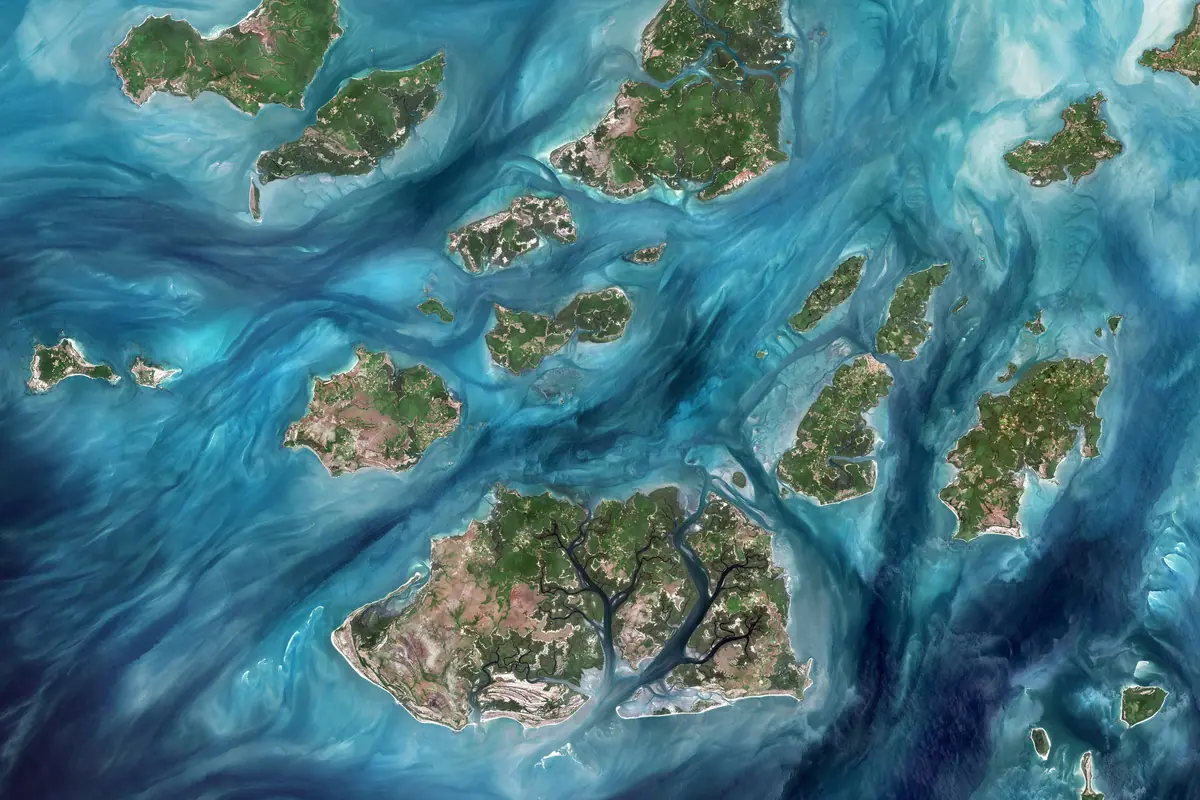
Guinea-Bissau gets under your skin slowly: a humid, mango-shaded capital, rivers so wide they feel like inland seas, and an archipelago of some 88 islands where Bijagó villages still order life by tradition. There is almost no tourism here, very few paved roads and not a single queue — just saltwater hippos, nesting turtles, mangrove channels and grilled fish eaten under a star-heavy sky. These are the places worth shaping a whole trip around.
Bissau: Bandim Market, Bissau Velho and the Amura Fortress
The capital unfurls along the Geba estuary in low, pastel-coloured layers, arriving first as heat and honking horns after the short drive from Osvaldo Vieira International Airport. Give Bissau two unhurried days. Start at Mercado de Bandim, the country's biggest market and a genuine spectacle: pyramids of cashews and dried fish, bolts of wax-print cloth, phone credit, smoked catfish and enormous prawns, all under tarpaulins and corrugated iron. Come early, keep valuables close and always ask before raising a camera. From there, walk into Bissau Velho, the old Portuguese town, where colonial facades peel in the salt air, wrought-iron balconies sag over crumbling doorways and the shell of the old cathedral frames a slice of sky.
Follow the waterfront to the Fortaleza de São José da Amura, a squat colonial fortress that now shelters the mausoleum of Amílcar Cabral, the agronomist and independence leader whose name is everywhere in this country. The ramparts give you the best wide view of the estuary, the fishing boats and the rusting port beyond. A short walk away, a simple monument marks the Pidjiguiti docks, where a 1959 strike by dockworkers ended in a massacre and became one of the sparks of the independence struggle — a quiet, heavy place that explains a great deal about modern Guinea-Bissau.
Between sights, Bissau is best experienced slowly: a beer and grilled fish at dusk on the waterfront, a bowl of caldo de mancarra (peanut stew) in a small eatery, a taxi ride through the dust to the presidential palace square. If your timing catches Carnaval de Bissau, held in the days before Lent in February or March, the city erupts into drumming, masks and dance troupes from every region — the single best introduction to the country's cultures, and worth rearranging a trip for.
Bubaque, Rubane and the Rhythm of the Bijagós Islands
The Bijagós begin at the port in Bissau, where pirogues and passenger ferries load goats, rice sacks and people for the crossing west. Bubaque is the main island and the practical hub: dusty streets, a small market, a modest museum and a handful of guesthouses and low-key lodges. About twenty minutes by motorbike from town lies Praia de Bruce, a long, curve-backed beach of pale sand and warm water that stays almost empty even in the dry season. Further out, quieter islands such as Rubane and Soga are reached by pirogue and reward anyone content with hammocks, seafood and silence.
Ferries to Bubaque take roughly three to five hours depending on the boat and the tide; faster charter boats cut that considerably, and small light aircraft link the capital with the archipelago in under half an hour. Schedules bend around tides, fuel and demand, so build slack days into any plan. The calm, dry months from November to May are the sweet spot: flat seas and clear water. From July to September the rains arrive, roads turn to soup and crossings get rough.
Culturally, the archipelago is not a resort. The Bijagó people maintain their own initiations, sacred groves and masked dances, and many ceremonies are closed to outsiders. If you are invited to watch, dress modestly, put the camera away unless told otherwise, and expect to contribute to the community rather than pay an entrance fee. That respect is what keeps these islands so remarkable.
Orango's Saltwater Hippos and Poilão's Turtle Beaches
Orango Grande is the spiritual heartland of the Bijagós and the place most travellers hope to reach. Its forests and shores are protected as part of a vast biosphere reserve, and the island is known for hippos that live in saline water — a rare adaptation, and a sight you will not forget if you are lucky enough to see one surfacing in a mangrove channel at dusk. Orango is also remembered for Okinka Pampa, a Bijagó queen who resisted colonial rule in the early twentieth century and remains a figure of immense local pride.
Visits here are usually arranged through community-run camps on the island, with a local guide mandatory and numbers deliberately tiny. Accommodation is basic, meals are whatever the village cooks, and the reward is one of the least-visited corners of West Africa. Treat the island as a guest, not a destination: ask before photographing people or shrines, do not wander into sacred groves, and accept that some questions will simply not be answered.
South of Orango, the uninhabited islet of Poilão sits inside the João Vieira–Poilão Marine National Park and ranks among the most important green turtle nesting sites on the Atlantic coast of Africa. Between roughly November and February, females haul themselves up the sand at night to lay. Watching this, with a park ranger and no white light or flash, is one of the great wildlife experiences of the region. Take the rules seriously: keep your distance, stay low, and leave the beach exactly as you found it.
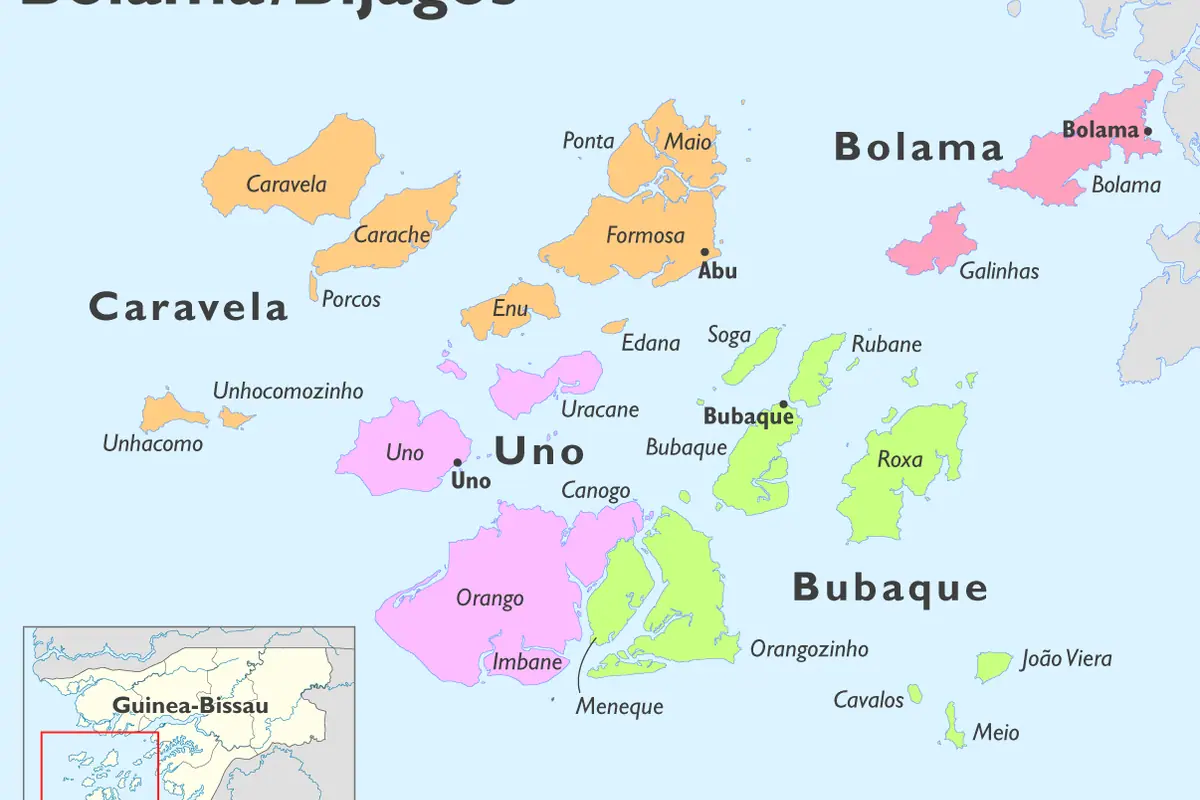
Bolama: The Ghost Capital Across the Water
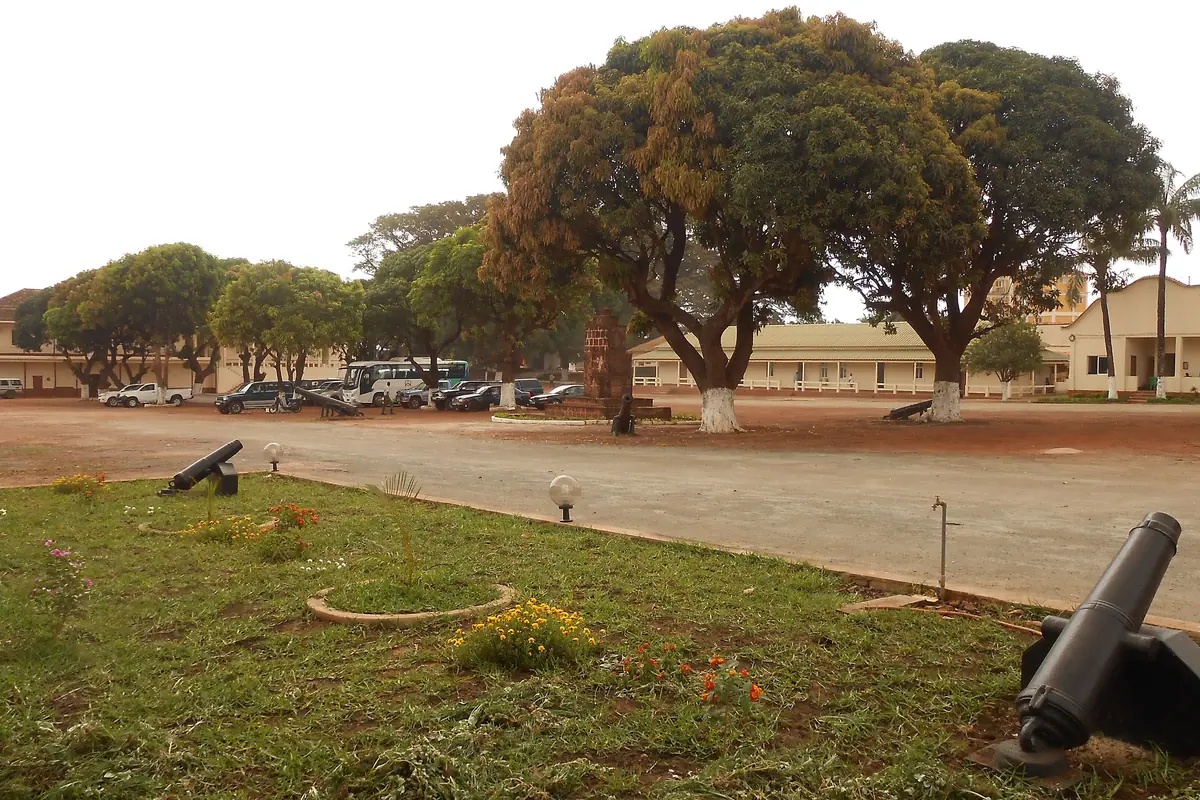
Bolama was the capital of Portuguese Guinea until 1941, and when the administration moved to Bissau the town was left to the mango trees. Today it is a haunting, beautiful place: a grid of colonial buildings dissolving into the bush, the old governor's palace, the customs house, a crumbling hospital and a wide square where goats graze beneath flame trees. You can walk the whole historic core in two hours, and you will probably have it entirely to yourself.
The island lies about an hour from Bissau by fast boat, or considerably longer on the ageing ferry — both subject to tides and weather. Beyond the ruins there are salt flats, mangroves, empty beaches and a handful of simple guesthouses with cold water and mosquito nets. Bring cash, drinking water and patience; there is very little infrastructure and no real tourism economy. Bolama also forms part of the same sprawling biosphere reserve as the Bijagós, so the birdlife along the shore is excellent, especially early in the morning.
A long day trip is possible, but staying a night is far better: the town's melancholy settles in after the last boat leaves, and the light on those ruined facades at sunset is the memory most visitors carry home.
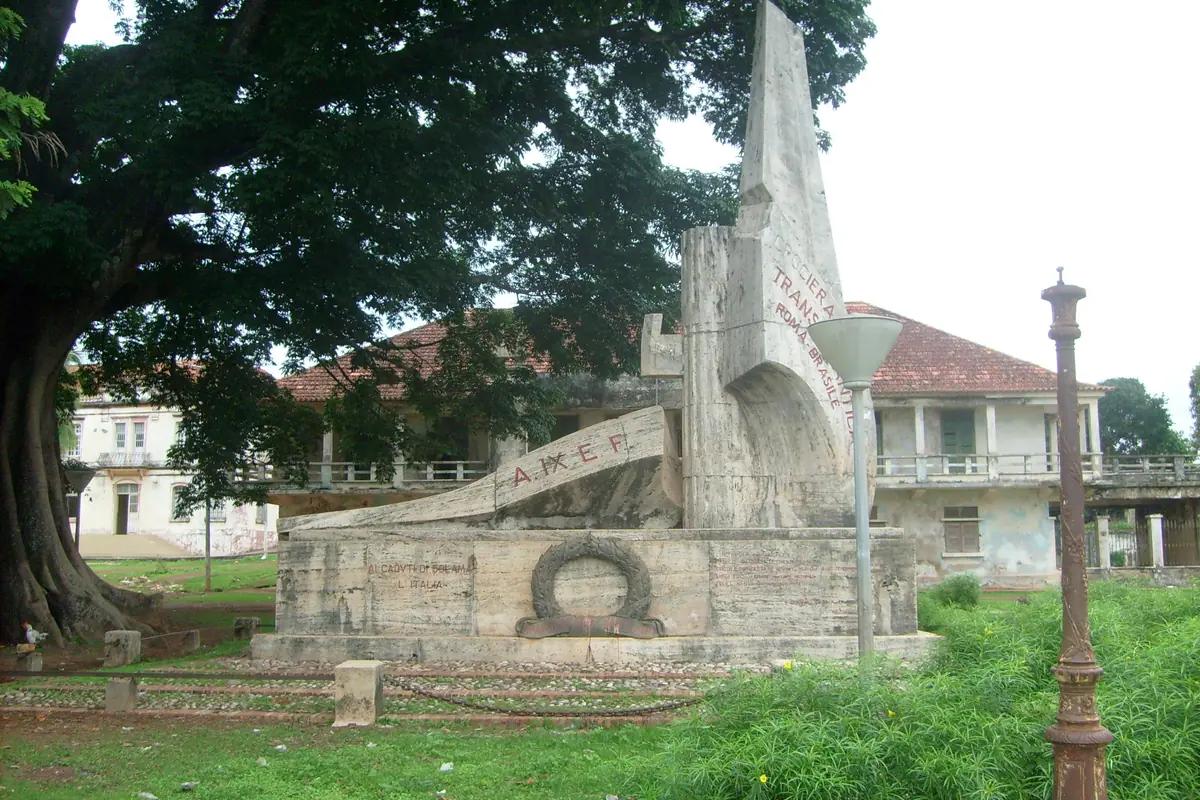
Southern Forests and Rivers: Cantanhez, Cufada and the Saltinho Rapids
The road south from Bissau, past quilted rice paddies and oil-palm groves, leads into the country's richest wildlife country. Cantanhez Forests National Park, in the Tombali region around the village of Jemberem, protects a mosaic of forest, farmland, mangrove and bolanha rice fields where chimpanzees live alongside people — one of the few places in West Africa where that is still true. Community guides lead early-morning walks; sightings are never guaranteed, but tracks, calls and the sheer density of life in the forest make the effort worthwhile. Wear long sleeves, expect mud, and take the leeches in your stride during the wet months.
Further east, Lagoas de Cufada Natural Park centres on the largest freshwater lake in the country, a magnet for waterbirds, monkeys and the occasional crocodile, with a fringe of forest that is wonderful at dawn. The nearby river town of Buba makes a comfortable base, with simple hotels and a lively market where you can stock up on fruit and cold drinks before pushing on.
The prize at the end of the southern road is Saltinho, where the Corubal River narrows into a run of rapids and a modest cascade beside the remains of an old colonial weir. The setting is green, shady and perfect for a picnic, and the water is at its most impressive from September to November as the rains taper off. Swimming is possible, but ask locally about currents first — and never swim alone.
Cacheu's Mangroves, Varela's Beaches and the Road East
In the north, the town of Cacheu sits on a river that was once one of the busiest slaving ports on the West African coast. The surrounding Cacheu River Mangroves Natural Park protects the largest continuous stretch of mangrove in the region — a green labyrinth of tarrafes best explored by small boat with a local guide, gliding past oyster beds, herons and the occasional manatee. In the old town, a slavery memorial and the ruins of a Portuguese fort give the place its weight.
Northwest, near the Senegalese border, Varela is the country's most accessible beach escape: a long, empty sweep of sand backed by cashew groves and a scattering of simple guesthouses serving excellent grilled fish. The dry season from December to May is the time to go. The road east is a different country altogether: Bafatá, birthplace of Amílcar Cabral, sits on the Geba River with decaying colonial buildings and a busy market, while Gabú further on is a Fulani and Mandinka trading town with a big cattle market and an easy-going frontier feel. About 25 kilometres away lie the earthworks of Kansala, capital of the Kaabu empire, which fell in battle in 1867 — an unmarked, uninterpreted site where you will need a local guide and a good imagination.
Frequently asked questions
When is the best time to visit Guinea-Bissau?
The dry season from November to May is the most comfortable and the safest for travel: calm seas for island crossings, passable roads and clear skies, though December to February can bring a dusty harmattan haze. March to May is the hottest stretch and coincides with the cashew harvest, when the country feels at its most alive. The rains arrive around June and last into October, turning laterite roads to mud and making Bijagós boat crossings rough and unpredictable.
How do you reach the Bijagós Islands?
Boats and pirogues leave from the port in Bissau. The passenger ferry to Bubaque takes roughly three to five hours, faster charter boats cut that to an hour or two, and small light aircraft make the hop in under half an hour. Departures depend on tides, fuel and demand rather than timetables, so always build a spare day into your plans and never schedule an onward flight for the same day you plan to cross.
Do I need a visa or vaccinations for Guinea-Bissau?
Most visitors need a visa, which can often be arranged in advance through an embassy or, for some nationalities, on arrival at Bissau's Osvaldo Vieira International Airport. A yellow fever vaccination certificate is required for entry. Malaria is present year-round, so prophylaxis and mosquito precautions are strongly advised, along with routine travel vaccinations. Rules change, so confirm the current requirements before you book.
Is Guinea-Bissau safe for independent travellers?
It is a calm, welcoming country that sees very few tourists, and violent crime against visitors is uncommon. The real risks are practical: potholed roads, occasional petty theft in busy markets, limited medical facilities outside the capital and no lifeguards on remote beaches. Travel with a local guide in the national parks and islands, avoid travelling between towns after dark, and carry comprehensive insurance that includes medical evacuation.
How many days do you need, and how should you handle money?
Ten days to two weeks allows two nights in Bissau, four or five in the Bijagós, three in the southern forests around Cantanhez and Buba, and two in the north or east. The currency is the West African CFA franc, and cash is genuinely essential: there are only a few ATMs in Bissau, cards are rarely accepted anywhere, and you should bring more than you think you need in clean, undamaged notes.
Plan it — experiences in Guinea-Bissau
Live search, booked directly with trusted providers.
Sort the rest of your trip
Everything for Guinea-Bissau, in one place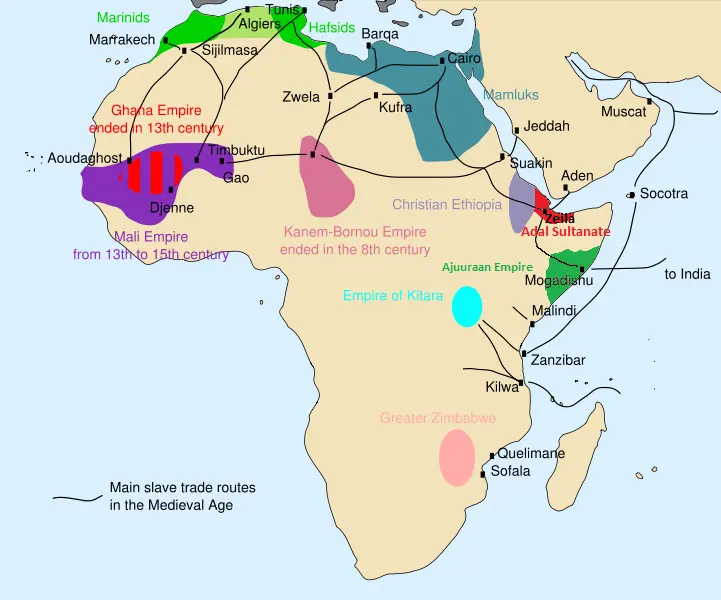
Stay in Guinea-Bissau
Hotels, guesthouses and apartments — compared in one search.
Search hotels
Transfer in Guinea-Bissau
Private driver waiting on arrival — no queues, no surprises.
Book a transfer
Stay online in Guinea-Bissau
Travel eSIM — data the moment you land, no roaming bills.
Get an eSIM