Gabon is equatorial Africa at its most theatrical: a country stitched onto the Atlantic shoulder where the interior is almost entirely forest and the roads vanish into red mud for half the year. A week here is best built on short domestic flights, hopping between savanna parks, waterfall country and a coastline where elephants walk along the sand at dawn.
A Week in Gabon, Stitched Together by Short Flights
Gabon sits squarely on the equator, its coastline brief and its interior one of the most densely forested places on the planet. That forest is exactly why you come — and exactly why a seven-day trip works best as a chain of short flights rather than long drives. A journey that looks like four hours on a map can swallow an entire day once the rains arrive, so the practical move is to fly the long legs and save your energy for dawn game drives and river crossings.
Domestic carriers link the capital with Port-Gentil, Franceville, Oyem, Makokou and Gamba in hops of 45 minutes to just over an hour, while light charter aircraft drop onto bush airstrips beside the parks. The reward for all that flying is three distinct Gabons in one week: the Atlantic fringe around Libreville, the savanna-and-forest mosaic of the centre, and the wild southern coast where hippos surf and elephants stroll the beach.
The long dry season, roughly June to September, is the sweet spot — firmer trails, easier flying and the best window for watching humpbacks offshore. December and January bring a shorter dry spell; February to May and October to November are wet, green and quiet. Book internal flights as early as you can: light aircraft fill fast in the dry season, and schedules bend around afternoon storms.
Days 1–2: Libreville's Markets, Museums and a Hop to Lopé
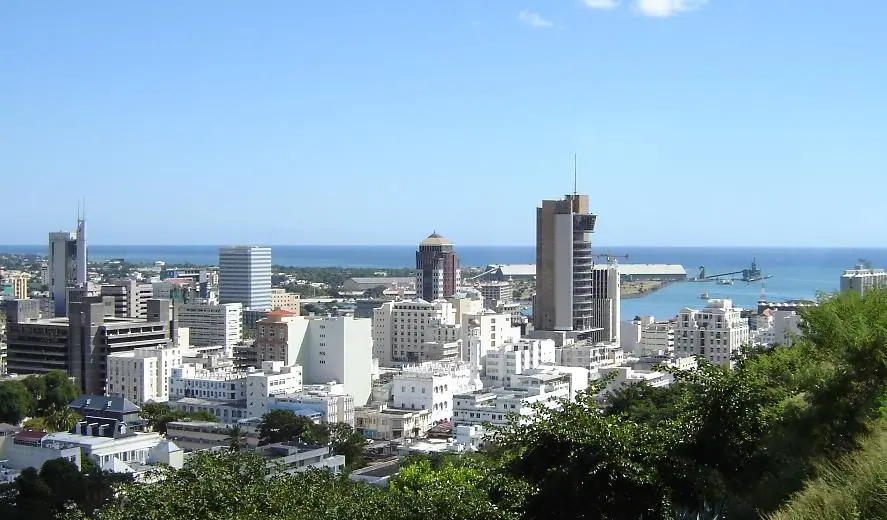
Start in Libreville, where the Marché Mont-Bouët is the city's thundering heart — pyramids of smoked fish, mangoes and cassava flour, walls of wax-print cloth, tailors working treadle machines in the aisles. Go early, carry small notes in Central African CFA francs, and leave jewellery and phones tucked away. From there, the Musée des Arts et Traditions du Gabon holds carved masks, reliquary figures and harp-like instruments that make the country's cultures legible in an hour, while the Cathédrale Saint-Marie and the broad sweep of the Boulevard Triomphal give a sense of the old colonial grid.
By mid-afternoon, head northwest along the coast to Cap Estérias or Pointe-Denis, where the Atlantic comes in warm and grey-green and beach kitchens grill fish and plantain over charcoal. If you have a spare hour, the Arboretum de Sibang, a pocket of protected forest south of the centre, introduces okoumé, mahogany and giant ferns with birds flicking through the canopy above you.
On day two, take the short flight inland to Lopé National Park, a World Heritage-listed landscape of golden savanna woven through dense forest. An afternoon drive can turn up forest elephants crossing the grasslands, buffalo, red river hogs and, if you are lucky, a mandrill troop moving like a wave of colour. The park's long-running research station, one of Africa's oldest primate study sites, tracks gorillas and chimpanzees, and some camps arrange for guests to follow the trackers. Sleep overlooking the Ogooué River, with generators off by ten.
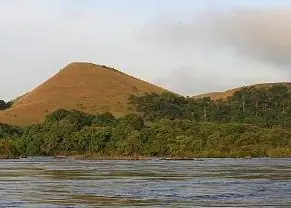
Days 3–4: Ivindo National Park and the Kongou Falls
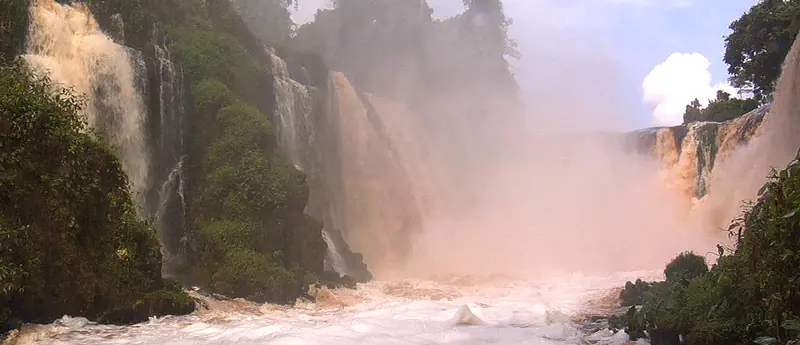
The next hop takes you northeast toward Ivindo National Park, reached via Makokou and then by road, forest track and pirogue. This is Gabon at its most operatic: blackwater rivers, cathedral forest and the Kongou Falls — a thundering chain of cascades spread across a wide gorge. Reaching them means a boat ride upstream and a walk through humid forest, and you will very likely have the whole spectacle to yourself.
Nearby, Langoué Bai is a natural forest clearing where elephants, gorillas, sitatunga and buffalo gather to drink and take mineral-rich mud. A raised viewing platform lets you watch for hours without disturbing them, and the surrounding forest is famously rich in birdlife, from hornbills to grey parrots. Night walks along the tracks turn up frogs, chameleons and pottos.
Expect simple camps here: solar lighting, bucket showers, early starts and long, slow afternoons. Pack a headlamp, quick-dry clothing, sturdy boots and long socks, and treat your guide's advice on river crossings as final. Two days is enough to see the falls and one bai properly; three would let you slow down.
Days 5–6: Loango National Park, Where Elephants Walk the Beach
Fly southwest to Port-Gentil, then transfer by light aircraft or boat into Loango National Park, entering through the Iguela lagoon and the Akaka sector. Loango is the rare place where rainforest, lagoon, savanna and open ocean sit side by side: hippos ride the breakers, forest elephants and buffalo amble along the sand at first light, and the beaches serve as nesting grounds for leatherback turtles from roughly November to January.
The classic rhythm here is a dawn boat safari on the lagoon to watch elephants cross the channel, a slow afternoon walking the beach with a guide reading tracks, and — between July and September — an offshore run to watch humpback whales breach, with dolphins and occasionally a whale shark for company. Swim only where your guide says the current allows; the surf is genuine and the tides move fast.
Day 7: Pongara and Akanda Before You Fly Home
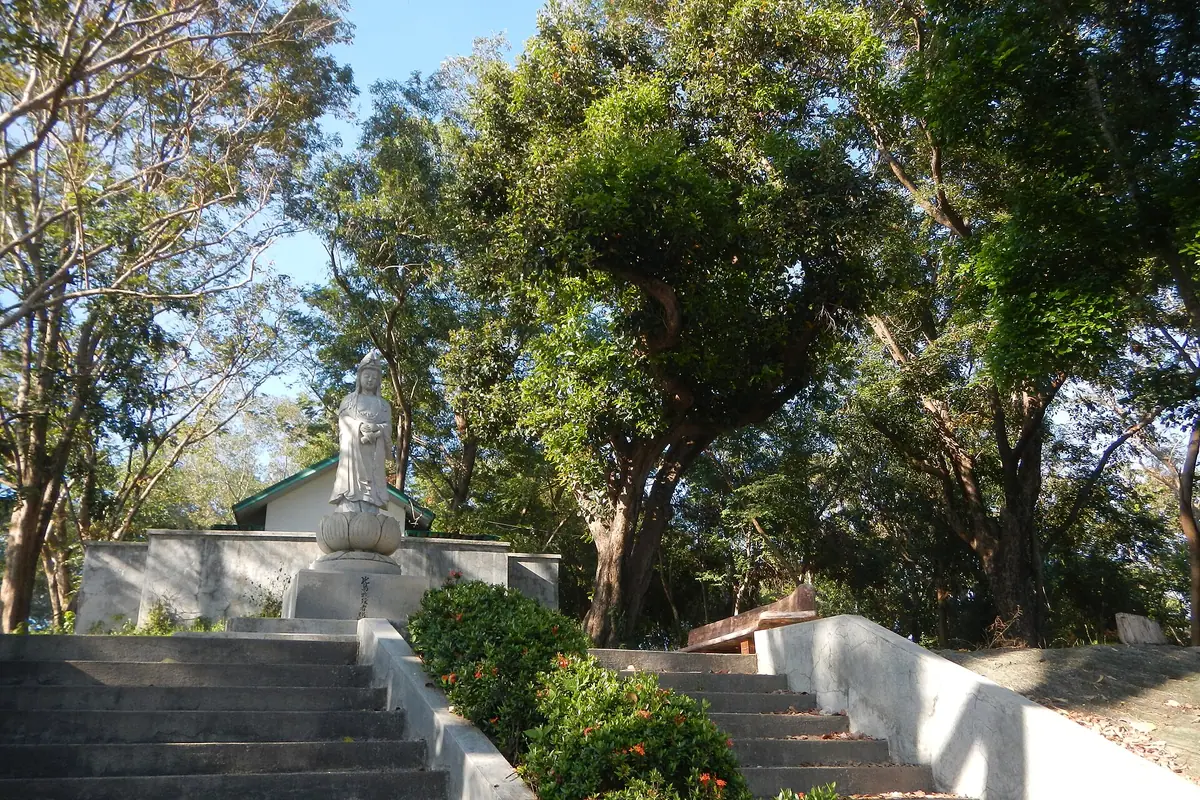
Keep your final day loose and close to the capital. Across the estuary from Libreville, Pongara National Park is reached by boat and offers mangroves, forest, a long empty beach and, inland, forest elephants and monkeys; turtles nest on its sand in season. Even closer to the city, Akanda National Park protects the mangroves and tidal sandbanks of Mondah Bay, where waders, terns and, at the right time of year, flamingos work the flats.
Finish with grilled fish at Pointe-Denis and one last swim, then allow a generous three hours at Léon-Mba International Airport for an international departure. If your flight leaves early, spend the last night in Libreville rather than gambling on a boat transfer in the dark.
Practicalities: Seasons, Flights and What to Pack
June to September is the long dry season and the best all-round window; December and January give a shorter dry spell, while February to May and October to November are wet, cheaper and greener, with heavy afternoon downpours that can delay light aircraft. Internal flights should be booked well ahead in the dry season, and you should expect luggage limits of around 10 to 15 kilograms in soft bags on small planes. Carry CFA francs in cash — ATMs exist in Libreville and Port-Gentil but not in the parks, and cards are rarely accepted outside larger city hotels.
A yellow fever vaccination certificate is required for entry, malaria prophylaxis is strongly advised, and travel insurance with medical evacuation cover is close to essential given how remote the parks are. Most visitors need a visa arranged before arrival. French is the working language; English is limited outside the capital, so a few phrases go a long way.
Pack light, neutral clothing for the forest, long sleeves for evenings, sandals for the beach and binoculars you actually like using. Mobile data is patchy but works in towns, wi-fi is slow, and electricity in the camps may be limited to a few hours a day. Tipping is modest and appreciated, and it is polite to ask before photographing people in villages and markets.
Frequently asked questions
How do you get around Gabon in one week?
Fly. Domestic carriers connect Libreville with Port-Gentil, Franceville, Oyem, Makokou and Gamba in under an hour and a half, and light charter aircraft reach park airstrips. Road transfers are short and local — the capital to the coast, or an airstrip to a lodge — because long drives in the interior are slow, especially in the rains.
When is the best time to visit Gabon?
The long dry season from June to September offers the firmest trails, the most reliable flying weather and the best whale watching off the southern coast. December and January are a shorter dry window. February to May and October to November are wetter, greener and quieter, with afternoon storms that can delay small aircraft.
Can you see wildlife in Gabon without a guided tour?
Realistically, no. The national parks are vast, the forest is dense and the access roads are limited, so almost all wildlife viewing happens with a park guide or lodge guide, on foot, by boat or from a viewing platform. Independent travel works for Libreville and the coast; for Lopé, Ivindo and Loango, arrange guides and permits in advance.
What should I pack for a week in Gabon?
Quick-dry long sleeves and trousers, sturdy waterproof boots, long socks for forest walks, a headlamp, a rain shell, insect repellent, rehydration salts and binoculars. Keep it under roughly 10 to 15 kilograms in a soft bag for light aircraft, and bring cash in CFA francs plus a yellow fever certificate, which is required for entry.
How much time do you need at Loango and Ivindo?
Two nights in each is the minimum that feels worthwhile, given the transfers involved. Ivindo needs a full day for the Kongou Falls and a morning on a bai platform; Loango is best with two dawns and two afternoons, so that weather and tides give you at least one clean shot at beach elephants or a lagoon crossing.