Poland is a country you eat your way across rather than tick off: a pierogi lunch in a communist-era milk bar, a salted obwarzanek eaten on the tram, a bowl of żurek sour enough to reset your whole morning. Between the Baltic dunes in the north and the granite peaks of the Tatras in the south, the touring is as varied as the table — medieval castles, painstakingly rebuilt old towns, primeval forest and a festival calendar that still runs on the church year.
Why Poland Rewards Slow Travelers
The country stretches roughly 700 kilometres from the Baltic coast to the Carpathian mountains, and its six or seven great cities sit on a reasonably straight line that intercity trains link several times a day. Warsaw to Kraków takes a little over two hours; Gdańsk to Warsaw around three. Old towns are compact enough to cover on foot in an afternoon, which means the real cost of touring Poland is not distance but decision-making. Pick three or four bases — typically Warsaw, Kraków, Gdańsk or Wrocław, plus one mountain or lake stay — and let day trips do the rest.
Timing changes everything here. Mid-May to late June and September to early October are the sweet spots: warm, luminous, and mercifully free of the school-holiday crush. July and August are hot and busy, with Baltic beaches and Zakopane at their fullest. December is its own season — Christmas markets, mulled grzaniec, short blue twilights — while January and February bring hard frost, snow-covered Tatra slopes and a very different, quieter country. November, frankly, is grey; if you have flexibility, skip it.
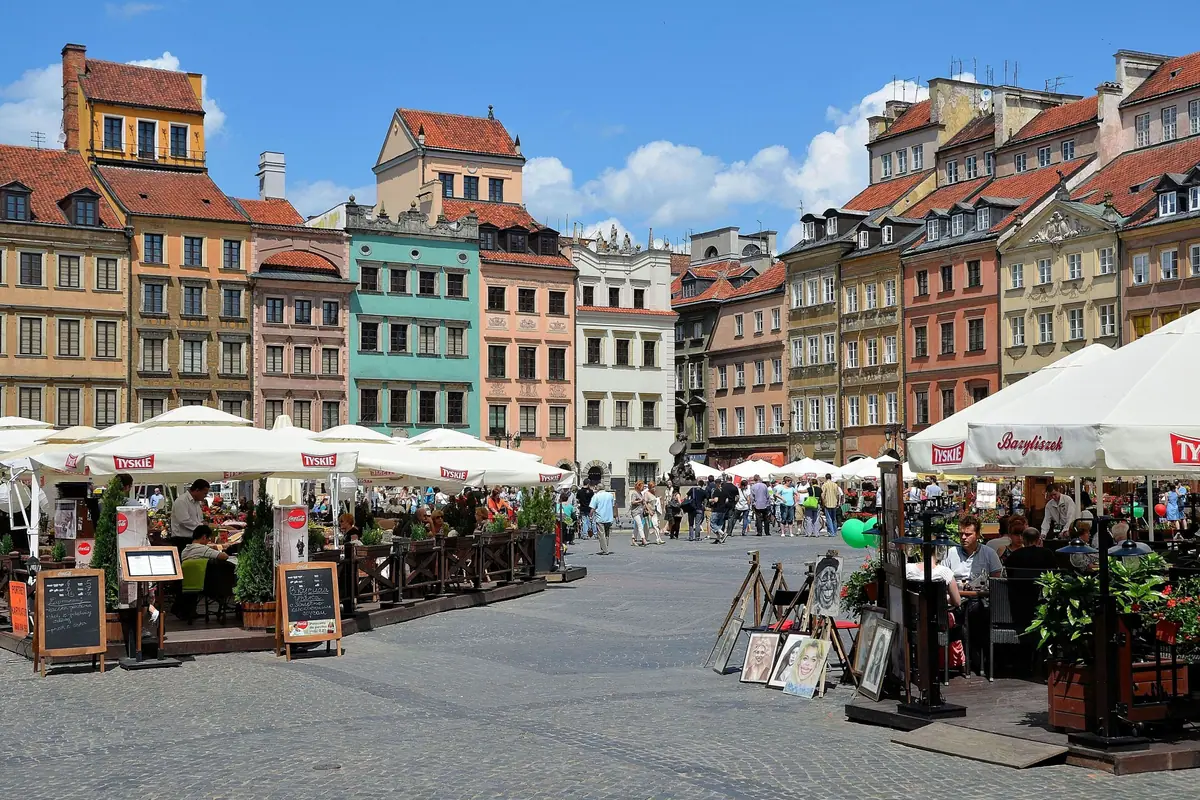
Poland's history is visible in layers, and much of what you see is a deliberate act of reconstruction. Warsaw's Old Town, leveled in the Second World War, was rebuilt from paintings, photographs and memory, and is now World Heritage-listed. You will find Gothic brick churches, Renaissance cloth halls, Baroque palaces, socialist-era housing blocks and sharp contemporary museums within a few tram stops of each other. That layering is the reason a short trip feels thin and a two-week one feels just about right.
Eating Poland: Milk Bars, Street Food and Modern Kitchens
Start with the bar mleczny, the 'milk bar' — a subsidised canteen format that survived the communist era and still serves enormous, cheap, unfussy plates at lunchtime to students, pensioners and office workers in the same queue. Order pierogi ruskie with fried onion, żurek served in a hollowed-out bread loaf, bigos simmered for days, kotlet schabowy pounded thin and breaded, golden rosół on a Sunday, barszcz czerwony with tiny uszka dumplings, placki ziemniaczane and gołąbki in tomato sauce. Point at what the person ahead of you is having; it is that kind of place.
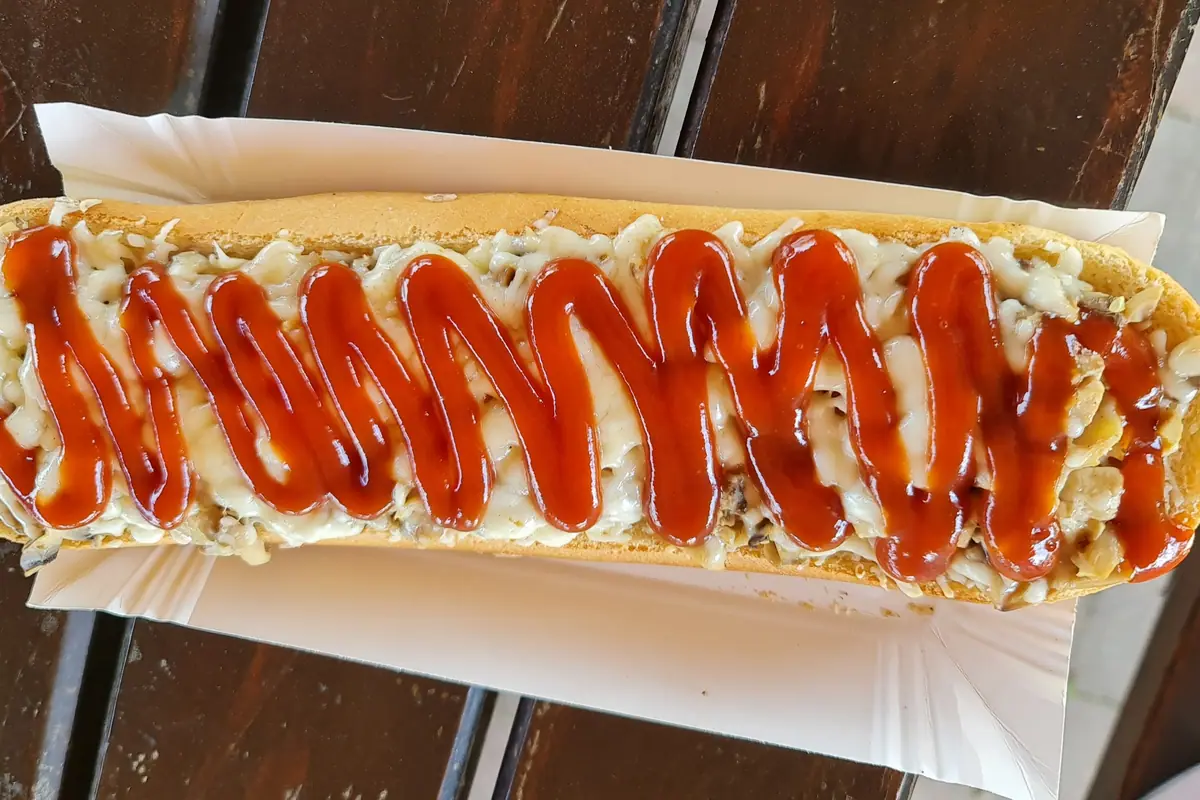
Street food is where Poland gets playful. In Kraków, Plac Nowy in Kazimierz turns out zapiekanka — a halved baguette piled with mushrooms, cheese and garlic sauce — late into the night, while obwarzanki rings are sold from carts circling the Main Market Square and eaten warm and salty. On Tłusty Czwartek, the last Thursday before Lent, the entire country eats pączki and nobody counts. In the mountains, look for oscypek, a smoked sheep's cheese grilled and served with cranberry; in Toruń, gingerbread has been a civic speciality since the Middle Ages, and you can shape your own in the old town.
Seasonality still drives home cooking: asparagus in spring, forest berries and mushroom foraging in autumn, sauerkraut and smoked meats in winter. Regional tables differ too — Silesian beef rolls and potato dumplings in the south-west, Kashubian fish on the northern coast, kwaśnica sour cabbage soup in the Podhale highlands. Drinks are just as local: kompot fruit cordials, homemade nalewki liqueurs, bison-grass vodka, and a booming craft beer scene. In Warsaw and Kraków, a new generation of chefs is reworking all of it with foraged ingredients and small producers, so book weekend dinners ahead.
Kraków and the South: Castles, Salt and Mountain Cheese
Kraków is the country's emotional capital and the best single introduction to it. Begin on the Rynek Główny, one of Europe's largest medieval squares, where the trumpet call still sounds hourly from the tower of St Mary's Basilica and the Cloth Hall trades beneath a Renaissance roof. Below the paving stones, the Rynek Underground exhibition traces the city's older street levels. Walk south to Wawel Hill for the castle and cathedral, where Polish kings were crowned and buried, then east to Kazimierz, the historic Jewish quarter, for synagogues, courtyard cafés and Plac Nowy's evening food stalls.
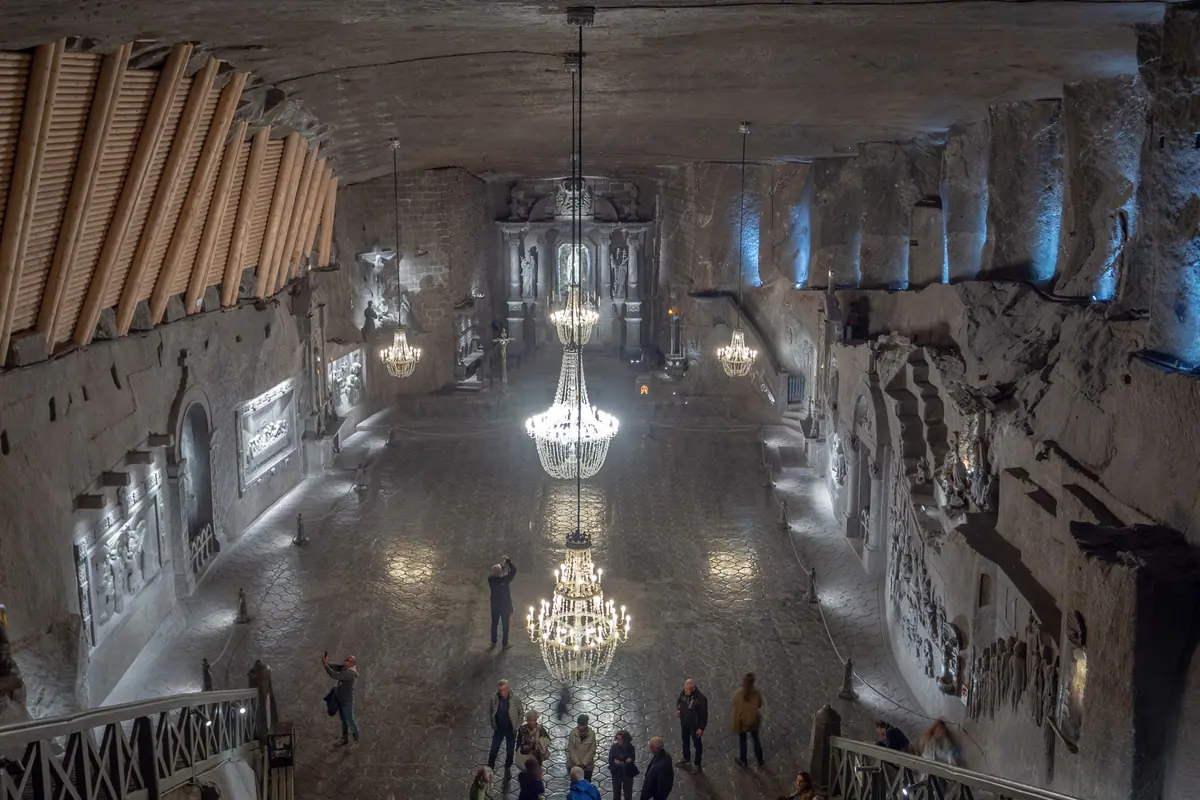
Two day trips are essential. The Wieliczka Salt Mine, about twenty minutes by train from the city, is a half-day underground: chapels carved from rock salt, saline lakes, chandeliers of crystallised salt and a long descent of wooden staircases. Book a timed entry, wear shoes with grip, and expect around three hours below ground. Farther west, in Oświęcim, the Auschwitz-Birkenau memorial demands a different kind of attention — reserve well in advance, go with a guide, allow at least half a day, and treat the site as a cemetery rather than a photo opportunity. Częstochowa's Jasna Góra monastery, Poland's great pilgrimage destination, makes a sober, crowded, deeply felt counterpoint.
The south turns wild quickly. Zakopane, under the Tatras, is the gateway: ride the funicular up Gubałówka for the panorama, walk the long forest road to Morskie Oko lake (roughly two hours each way from the trailhead), or take the cable car toward Kasprowy Wierch. Summer hiking, autumn colour in the Bieszczady and winter skiing all use the same valleys, and smoked cheese grills line the trails. Rafting the Dunajec gorge in the Pieniny, or scrambling the rock labyrinth of Błędne Skały in the Stołowe Mountains, rounds out the region nicely.
Warsaw, Gdańsk and the Northern Loop
Warsaw wears its scars elegantly. The reconstructed Old Town, the Royal Castle and the Barbican give way to Łazienki Park, where free open-air Chopin recitals run by the composer's monument in summer, and to museums that rank among Europe's best — the POLIN museum on the thousand-year history of Polish Jews, and the Warsaw Uprising Museum, which is worth a full half-day and a box of tissues. Cross the river to Praga for gritty courtyards and artist workshops, and end on the Vistula boulevards at sunset.
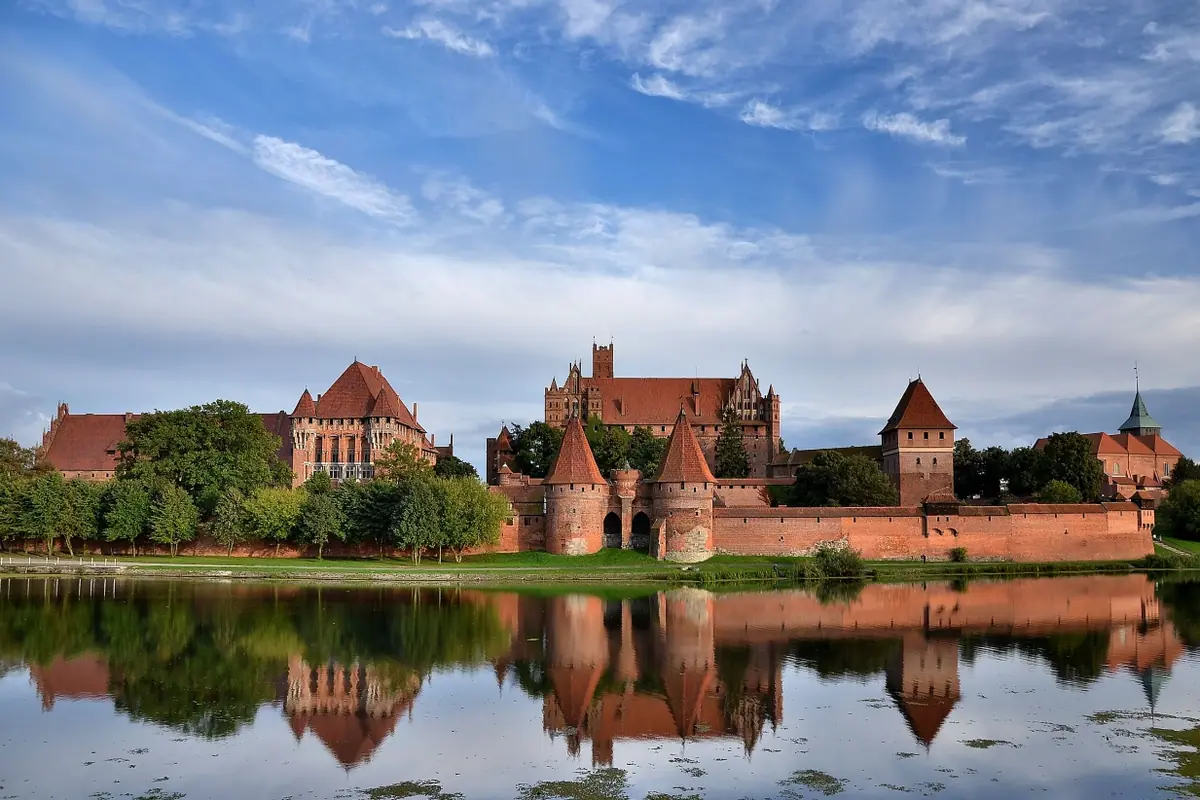
Head north and the story turns to brick and sea. Malbork Castle, a UNESCO-listed fortress of the Teutonic Order and the largest brick castle in the world, sits about thirty minutes by train from Gdańsk and takes three to four hours to do properly. In Gdańsk itself, the Long Market and Neptune Fountain form the showpiece of a Hanseatic old town, with St Mary's Church, the Westerplatte peninsula and the European Solidarity Centre nearby. The pier at Sopot, the longest wooden pier in Europe, is a short train ride away, and the Hel peninsula offers seal rehabilitation and wide Baltic beaches.
Add Toruń for its gingerbread and its astronomer, Poznań for the mechanical goats that butt heads on the Old Market Square at noon, and Wrocław for its vast Rynek and the hundreds of mischievous bronze dwarfs hidden across the city. These smaller stops are where a tour slows down: market squares, second-hand bookshops, cellar pubs and the kind of Sunday afternoon that involves cake and no plan at all.
Local Rituals: The Festival and Market Calendar
Polish culture still keeps time with the church year, and travelers can fall in step with it. Christmas markets open in Wrocław, Kraków and Gdańsk from late November, with wooden stalls, hand-painted ornaments and steaming cups of spiced wine. Christmas Eve, Wigilia, is the big meal: twelve meatless dishes, an empty place at the table, and thin wafers shared with good wishes. Easter brings palm processions, painted pisanki eggs and Śmigus-dyngus on Easter Monday, when water — sometimes quite a lot of it — gets thrown in good humour. Corpus Christi fills the streets with flower-petal carpets, and All Saints' Day lights the cemeteries with thousands of candles.
Summer belongs to the outdoors. Wianki, on St John's Eve, sends wreaths and fireworks down the Vistula in Kraków; Juwenalia puts students in charge of city squares; harvest festivals called Dożynki bring bread loaves and folk bands to village fields. If you're travelling in the warm months, check local listings wherever you land — a small-town festival usually beats anything staged for visitors.
Everyday courtesies matter, and they're easy to learn. Say 'smacznego' before eating, bring flowers (odd numbers, never chrysanthemums) when invited to someone's home, and accept the second helping even if you can't finish it. Meals linger; the table is the point. A late cup of tea, a glass of nalewka and an unhurried conversation is a more authentic Polish experience than any itinerary item.
Wild Poland: Białowieża, Masuria and the Bieszczady
Białowieża Forest, straddling the eastern border, is the last substantial fragment of the primeval lowland forest that once covered Europe — a UNESCO-listed wilderness of oak, hornbeam and dead wood left standing. It is the best place on earth to see the European bison, or żubr, which was brought back from extinction by breeding here. The strict reserve can only be entered with a guide, and the reward is dawn birdsong, wolf and lynx tracks in winter snow, and a genuine sense of old forest. May to September gives the easiest walking and the richest wildlife; the village of Białowieża itself makes a relaxed base.
In the north-east, the Masurian Lake District is a maze of some two thousand lakes joined by rivers and canals. Hire a kayak or join a small sailboat in Mikołajki or Giżycko, and let the days be defined by water, pine forest and grilled fish — August is warmest and busiest, while early September is quieter and just as pleasant. Nearby Biebrza's marshes flood every spring and draw enormous numbers of migrating wading birds, making it one of Europe's great birdwatching destinations.
Finally, the Bieszczady in the far south-east: long grass ridges called połoniny, beech forest, and one of the continent's healthiest populations of bears, wolves and lynx. Late September to October is ideal, with honeyed light, no crowds and wet, cool nights. On the Baltic, the shifting dunes of Słowiński National Park and the bison reserve on Wolin Island give a coastal dose of the same wildness. Whichever direction you go, pack layers, sturdy shoes and a tolerance for weather that changes its mind mid-afternoon.
Frequently asked questions
How many days do you need to tour Poland?
Seven days comfortably covers Warsaw, Kraków and a Wieliczka day trip. Ten to fourteen days lets you add Gdańsk or Wrocław, spend a night or two in the Tatras or Białowieża Forest, and travel by train without rushing. Three weeks suits anyone wanting the Baltic coast, Masuria and the Bieszczady in one loop.
What is the best time of year to visit Poland?
Mid-May to late June and September to early October offer the best balance of warm weather, long daylight and smaller crowds. December is ideal for Christmas markets and festive food. July and August are hot and busy around lakes and mountains, while January and February are very cold — perfect for skiing in Zakopane and for seeing Białowieża under snow.
Which Polish dishes should I try first?
Begin with pierogi, żurek served in a bread bowl, bigos, kotlet schabowy, barszcz czerwony with uszka and placki ziemniaczane. Then go regional: zapiekanka on Plac Nowy in Kraków, grilled oscypek in Zakopane, gingerbread in Toruń, and kwaśnica in the Podhale highlands. Milk bars remain the cheapest and most enjoyable way to eat well at lunchtime.
Is Poland easy to travel without a car?
Yes. Intercity trains connect all the major cities frequently and are comfortable, with regional services reaching castles, salt mines and mountain trailheads. Buses fill the gaps for smaller towns. A car is only really useful for Masuria, the Bieszczady and remote parts of Białowieża, where public transport is thin.
How should I plan a visit to Auschwitz-Birkenau?
Reserve a timed entry well ahead, particularly between April and October, and travel from Kraków by train or bus in around an hour and a half. Allow at least half a day for both camps, go with an authorised guide, and treat the site as a memorial — quiet voices, no posed photographs, and time afterwards to absorb what you have seen.
Sort the rest of your trip
Everything for Poland, in one place
Stay in Poland
Hotels, guesthouses and apartments — compared in one search.
Search hotels
Transfer in Poland
Private driver waiting on arrival — no queues, no surprises.
Book a transfer
Stay online in Poland
Travel eSIM — data the moment you land, no roaming bills.
Get an eSIM