Poland rewards travellers who look past the postcard: a country of dragon legends and salt cathedrals, of rebuilt baroque squares and primeval forest where bison still roam. Whether you have five days or a fortnight, these are the places and experiences that define a first, unforgettable trip.
Kraków: The Royal Heart of Poland
Start in Kraków, the old capital, where nearly every corner holds something worth stopping for. The Main Market Square is one of the largest medieval squares in Europe, and it still works as the city's living room: the Cloth Hall sits at its centre like a trading ship run aground, while St. Mary's Basilica looms behind it. Climb the basilica's taller tower or simply stand in the square at the top of the hour, when a trumpeter plays the same short, unfinished melody in each of the four directions — a tradition said to commemorate a medieval watchman. Beneath the pavement, the Rynek Underground exhibition traces the square's 700-year history through original streets and stalls.
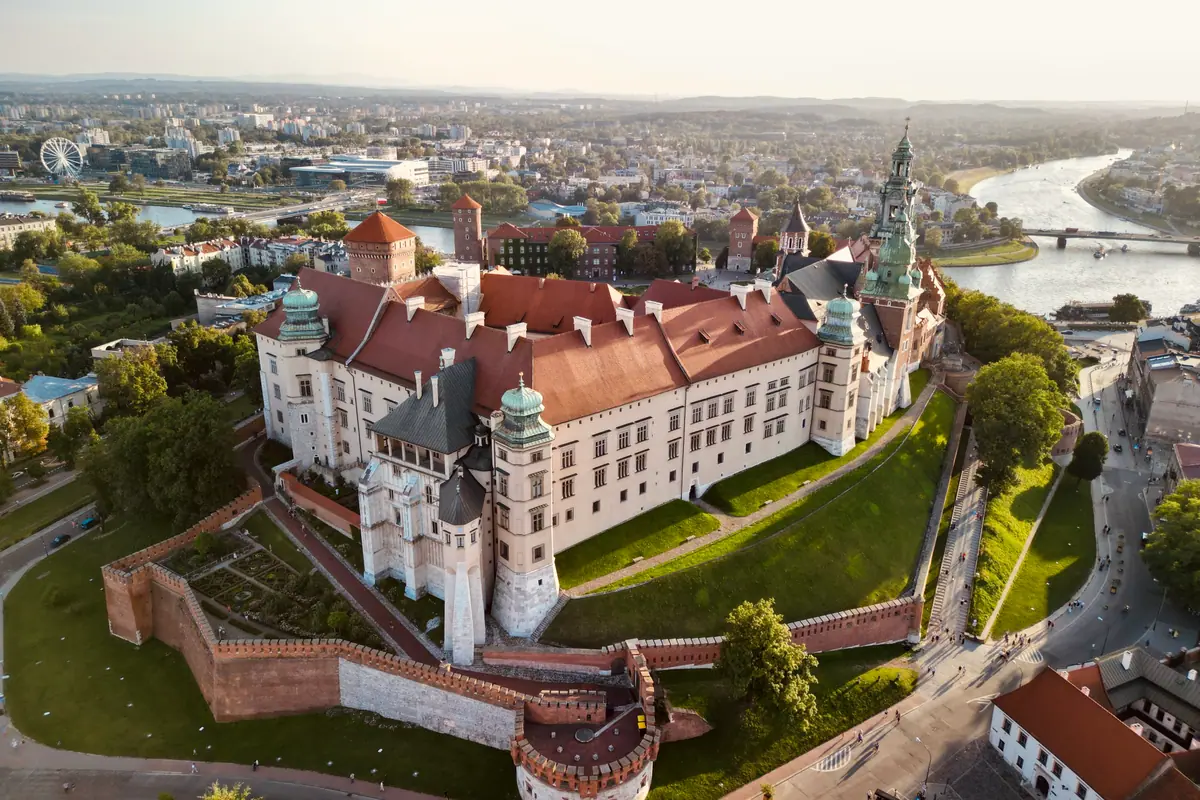
From there, walk uphill to Wawel Hill, the castle and cathedral complex that crowned Polish kings for centuries. Allow at least three hours for the state rooms hung with tapestries, the royal tombs in the cathedral, and the enormous Sigismund Bell that demands a climb up worn wooden stairs. If you take only one excursion from the city, make it the Wieliczka Salt Mine, twenty minutes away: a labyrinth of carved chambers, underground lakes and the extraordinary Chapel of St. Kinga, with chandeliers of rock salt and reliefs cut by generations of miners. It is a two- to three-hour guided visit with a lot of stairs, and tickets sell out in high season, so reserve a slot days ahead.
Save an evening for Kazimierz, the historic Jewish quarter, where synagogue-lined streets give way to the lively food stalls of Plac Nowy. Nearby, a former enamel factory tells the wartime story of Oskar Schindler and the workers he saved. Best months for Kraków are May, June and September, when the light is long and the crowds are manageable; July and August are hot and thronged, but the outdoor café culture is at its peak.
Warsaw: A Capital Rebuilt Twice Over
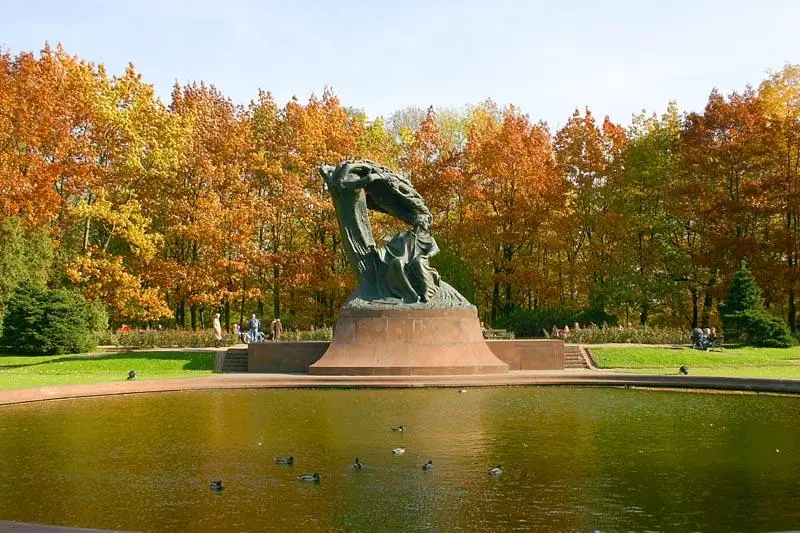
Warsaw is a city that was flattened and then, remarkably, painted back into existence from old photographs and paintings. The Old Town is a reconstruction, and walking its Market Square, the Royal Castle and the Barbican walls with that knowledge in mind changes how you see it. Follow the Royal Route south along Krakowskie Przedmieście, past baroque churches and university courtyards, and you eventually reach Łazienki Park, the city's greenest and most graceful space. Its Palace on the Isle floats above a lake, and in summer free Chopin recitals are held beside the composer's monument — bring a blanket and join the crowd on the grass.
Warsaw is also the country's museum capital. The Warsaw Uprising Museum is immersive and emotionally heavy, best given a half day rather than squeezed between other stops. The POLIN Museum of the History of Polish Jews, in the former ghetto area, is one of the finest storytelling museums in Europe and deserves equal time. For lighter curiosity, the Copernicus Science Centre on the Vistula riverfront turns physics into a playground, and the grassy boulevards along the river fill with cyclists, food trucks and sunset drinkers from May onwards.
Cross to the Praga district on the east bank for the gritdier, more artistic side of the city — mural-covered courtyards, old factories turned into markets and clubs, and a nightlife that outlasts the Old Town's. Wilanów Palace, a baroque summer residence with gardens and a poster gallery, makes an easy half-day trip south of the centre. Two full days is the minimum for Warsaw; three lets you breathe.
Gdańsk and the Baltic Coast
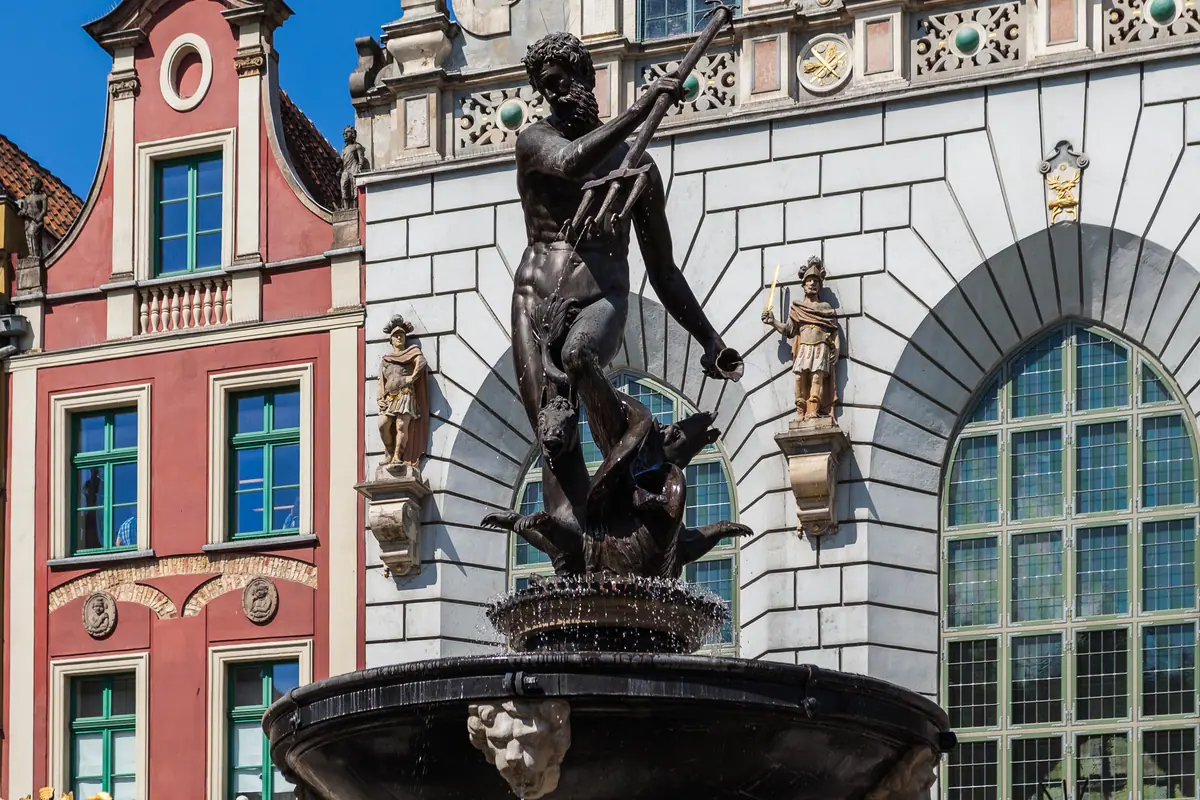
Poland's northern coast has its own accent, its own architecture and its own weather — wind off the Baltic, amber shops and gabled merchant houses in colours that look freshly painted. Gdańsk's Long Market is the showpiece: the Neptune Fountain, the ornate Artus Court and the medieval crane known as the Żuraw on the waterfront, all within a short walk. Duck down Mariacka Street, where jewellers sell amber by the window, and climb the tower of St. Mary's Church for a rooftop view over the whole old town.
The city's modern history is just as compelling. The European Solidarity Centre, built on the shipyard where the movement was born, explains how a workers' strike helped topple a system. A short trip north brings you to Westerplatte, where the Second World War began, and to Sopot, a seaside resort whose wooden pier is the longest of its kind in Europe. Even further out, Malbork Castle — the largest brick castle in the world — is an easy hour by train and worth a full half day among its towers, moats and amber collections.
For something wilder, head to Słowiński National Park near Łeba, where wind has pushed dunes inland for centuries, burying forests and creating a shifting Sahara beside the sea. June to August is beach season, though the water rarely climbs much above 18–20°C; late August and early September give warm sea with thinner crowds.
The Tatras and Zakopane: Poland's High Country
The Tatra Mountains, on the southern border, are alpine in all but name: jagged granite peaks, glacial lakes and marked trails that range from gentle valley walks to serious multi-hour ascents. Zakopane is the gateway town, and its pedestrian main street, Krupówki, is a mix of highlander folk culture and cheerful tourist bustle. Ride the cable car from Kuźnice up to Kasprowy Wierch for a ridge-top view without the climb, or take the funicular to Gubałówka for an easier panorama back over the town.
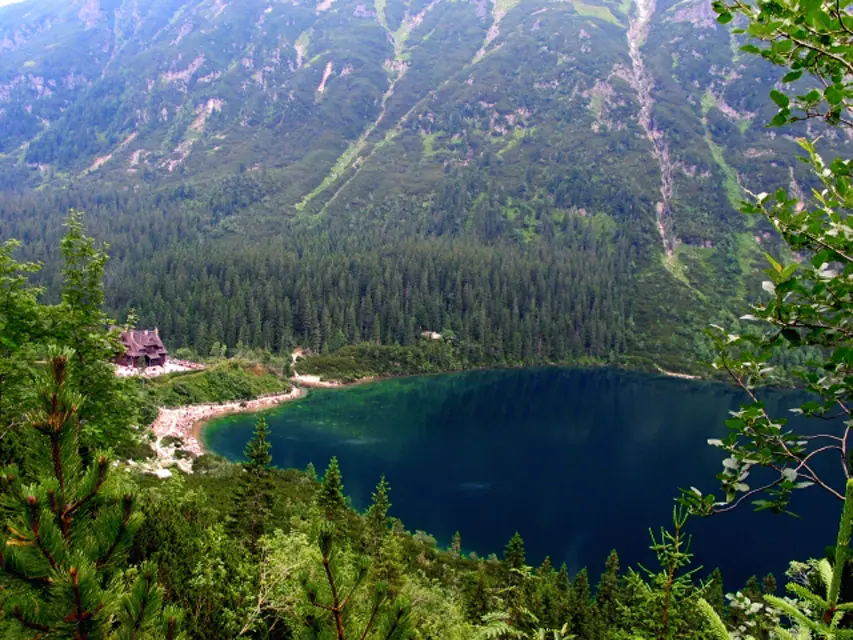
The classic walk is to Morskie Oko, the 'Eye of the Sea', an emerald lake set beneath the highest peaks. The trail is around nine kilometres each way on a wide, steadily climbing path and takes roughly two to three hours in each direction — many people take a horse-drawn cart for part of it. Stronger hikers continue to the Valley of Five Lakes, a tougher but far quieter circuit with a mountain hut serving soup and tea. In spring, the Chochołowska Valley fills with crocuses; in winter, the same valleys become ski country.
Just east of the Tatras, the Dunajec Gorge in the Pieniny mountains offers one of the country's loveliest hours: a wooden raft trip through limestone cliffs, run by local highlanders in traditional costume. The season runs roughly April to October. Zakopane's wooden villas and churches, built in a distinctive highland style, are attractions in themselves — the timber church at Jaszczurówka and the cemetery on Pęksowy Brzyzek are worth the detour.
Masuria, Primeval Forest and the Wild Northeast
The northeast is Poland at its most elemental. The Great Masurian Lakes form a chain of more than two thousand connected waterways, and the best way to experience them is from the water — kayak, sail or take a small boat between the towns of Mikołajki and Giżycko, where you can sleep in lakeside guesthouses and eat fresh pike. The season is short, from late May to early September, and sailing schools in the region welcome beginners for week-long courses.
Further east lies Białowieża Forest, one of the last fragments of the primeval woodland that once covered Europe. Its ancient oaks and lindens are home to the continent's largest wild population of European bison, along with wolves, lynx and more than 250 bird species. The strict reserve can only be entered with a licensed guide, and dawn walks in spring, when the forest is loud with birdsong, are the highlight. The Biebrza marshes, north of Białystok, are a paradise for birdwatchers in April and May, when migrating waders and raptors pass through.
A curiosity not to miss is the Elbląg Canal, where boats are hauled up grassy ramps on rails to cross a height difference of nearly 100 metres — a nineteenth-century engineering solution still working daily in summer. Nearby Wigry and the Augustów Forest add quiet lake country for cycling and paddling away from crowds.
Wrocław, Toruń and Poland's Underrated Gems
Wrocław deserves more than a stopover. Its Market Square is a riot of gabled facades and a Gothic town hall, while nearby Ostrów Tumski — Cathedral Island — is a lamplit cluster of churches and cobbles that feels centuries away from the modern city. Hunt for the hundreds of small bronze gnomes hidden around town, see the vast Racławice Panorama painting, and cross to the zoo for its Afrykarium ocean hall, one of the country's best rainy-day options.
In the north, Toruń's old town survived the war almost intact, and its red-brick skyline includes the house where Nicolaus Copernicus is said to have been born. The city has built an entire identity around gingerbread, with museums where you bake your own. Further east, Lublin's old town and the perfectly preserved Renaissance square of Zamość show a side of Poland that tour buses rarely reach.
Timing matters. A tight five days covers Kraków, Wieliczka and Warsaw comfortably; ten to fourteen days lets you add Gdańsk, Malbork, the Tatras and a lake or forest stay, travelling between cities by train. May, June and September are the sweet spots — long days, mild weather, thinner crowds. Winter transforms the country into Christmas markets and ski slopes, but daylight is short and mountain trails require proper gear.
Frequently asked questions
What is the best time of year to visit Poland?
Late May, June and September offer the best balance of warm weather, long daylight and manageable crowds. July and August are hottest and busiest, especially in Kraków, Gdańsk and Zakopane, but everything is open and lake and seaside season is in full swing. December is magical for Christmas markets in Kraków, Wrocław and Gdańsk, while January and February suit skiers in the Tatra Mountains.
How many days do I need in Poland?
Five days is enough for Kraków, the Wieliczka Salt Mine and Warsaw at a comfortable pace. Ten to fourteen days lets you add Gdańsk and Malbork Castle, Zakopane and the Tatras, plus a lake or forest stay in Masuria or Białowieża. Trying to cover everything in a week means spending too much of it on trains.
Is Poland easy to get around without a car?
Yes. Fast intercity trains link Kraków, Warsaw, Wrocław, Poznań, Gdańsk and Toruń, and regional services reach Wieliczka, Malbork and Zakopane. Book seats a few days ahead for popular summer departures. A car is genuinely useful only for Białowieża Forest, the Masurian Lakes and Słowiński National Park, where buses are slow and infrequent.
What should a first-time visitor not miss?
Wawel Castle and the Main Market Square in Kraków, the Wieliczka Salt Mine, Warsaw's rebuilt Old Town and its uprising and Jewish history museums, Gdańsk's Long Market and Malbork Castle, and a day in the Tatra Mountains around Zakopane. If you have extra time, Białowieża Forest and the Masurian Lakes show an entirely different Poland.
Do I need cash in Poland?
Cards are accepted almost everywhere in cities, including small cafés and market stalls, so a card plus a modest amount of local currency covers most trips. Carry some cash for rural guesthouses, mountain huts, small-town markets and rural taxi services, where card machines can be unreliable or absent.
Plan it — experiences in Poland
Live search, booked directly with trusted providers.
Sort the rest of your trip
Everything for Poland, in one place
Stay in Poland
Hotels, guesthouses and apartments — compared in one search.
Search hotels
Transfer in Poland
Private driver waiting on arrival — no queues, no surprises.
Book a transfer
Stay online in Poland
Travel eSIM — data the moment you land, no roaming bills.
Get an eSIM