Colombia is a country you taste before you understand: a bowl of ajiaco steaming on a cold Bogotá morning, a paper cone of mango biche dusted with salt on a Caribbean corner, a tiny tinto poured at a roadside coffee farm. Beyond the food, it is rope-hung hammocks in Tayrona, murals and hip-hop in Comuna 13, and a stone city reached only on foot through the Sierra Nevada.
Bogotá: Gold, Ajiaco and the Climb to Monserrate
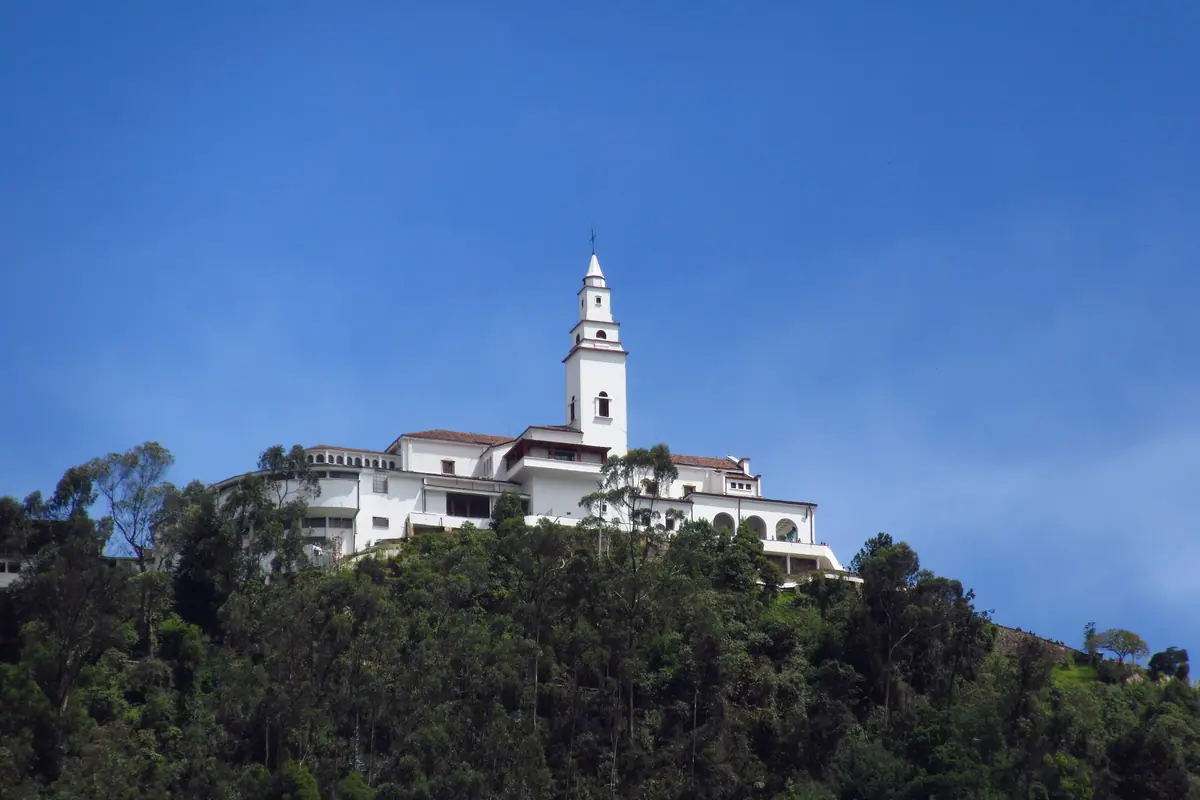
Start high. Bogotá sits at roughly 2,600 metres on an Andean plateau, and the altitude makes your first hours feel slow and slightly swimmy — drink water, walk gently, and let the city unfold around you. La Candelaria, the old quarter, is all sloping cobbled lanes, heavy wooden doors and whitewashed houses with red tile roofs. The Plaza de Bolívar anchors civic life, while the Museo del Oro holds an extraordinary collection of pre-Columbian goldwork: tiny votive figures, nose ornaments, and the famous raft that recalls the El Dorado ceremony. From there, ride the funicular or cable car up Monserrate, the sanctuary that crowns the city at 3,152 metres — the view of a city poured across a green plain is the single best introduction to Colombia's geography.
Then eat. Ajiaco santafereño is the city's signature: chicken and three kinds of potato thickened with the herb guasca, served with avocado, capers, cream and a side of rice. Changua, a milky scallion soup with a cracked egg, is a dawn ritual; tamales steamed inside bijao leaves and arepas de queso appear at every corner. For fruit, spend a morning at the Paloquemao market, where vendors stack lulo, curuba, granadilla, feijoa and pitahaya in pyramid piles and will blend you a jugo in water or milk while you wait.
Bogotá also makes a superb base for short trips. The Salt Cathedral at Zipaquirá drops some 180 metres underground into a nave carved from salt, with a halite cross lit in coloured light. The Guatavita lagoon nearby is the Muisca lake behind the El Dorado legend, and the colonial town of Villa de Leyva, with one of South America's largest cobbled plazas, is a comfortable overnight. The driest months for all of this are December to March and July to August; the city stays cool year-round, so pack layers, and expect grey afternoon showers in April, May, October and November.
Medellín and Antioquia: Bandeja Paisa, Comuna 13 and Guatapé
Medellín earns its nickname of eternal spring — days hover in the low twenties to high twenties Celsius, and flowers bloom year-round. The city's cable cars, the Metrocable, are commuter transport rather than tourist novelty, lifting residents up steep hillsides to neighbourhoods like Santo Domingo and on to Arví Park, where walking trails thread through pine and eucalyptus. Downtown, Plaza Botero is guarded by 23 enormous bronze figures by the artist Fernando Botero, and the nearby Museo de Antioquia explains the man behind them. Then there is Comuna 13, where outdoor escalators replaced a punishing staircase, and murals, hip-hop and memory projects tell a story of transformation that locals are proud, and careful, to narrate themselves.
Antioquian cooking is generous to the point of comedy. Bandeja paisa arrives as a platter: red beans, white rice, chicharrón, chorizo, black pudding, ground beef, a fried egg, sweet fried plantain and a fat arepa. Look too for hogao, the slow-cooked tomato and scallion sauce spooned over everything, arepas with quesito, empanadas dunked in ají, and buñuelos with a cup of hot chocolate. Aguardiente, the aniseed spirit, is the social lubricant of choice — sip it, never shoot it alone. In August the Feria de las Flores fills the city with orchids and the Desfile de Silleteros, when farmers carry enormous flower arrangements on their backs; in December the alumbrados light displays draw families out at night.
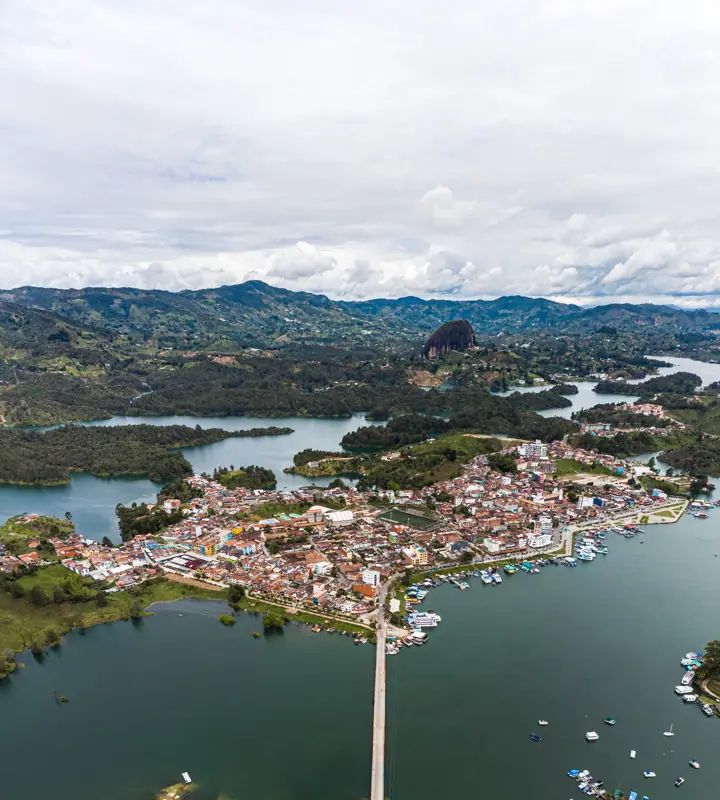
The classic day out is Guatapé: a reservoir town of painted bas-reliefs along every facade, and the Piedra del Peñol, a giant rock you climb via around 740 steps for a view of flooded valleys and green islands. Combine it with a stop in Santa Fe de Antioquia, a colonial town with a long wooden bridge and a hot, dry climate. On the road, watch for roadside stands selling mango biche — unripe mango with salt and lime — and greet the tinto, the small sweet black coffee that is the region's handshake.
Cartagena and the Caribbean: Arepa de Huevo, Champeta and the Walled City
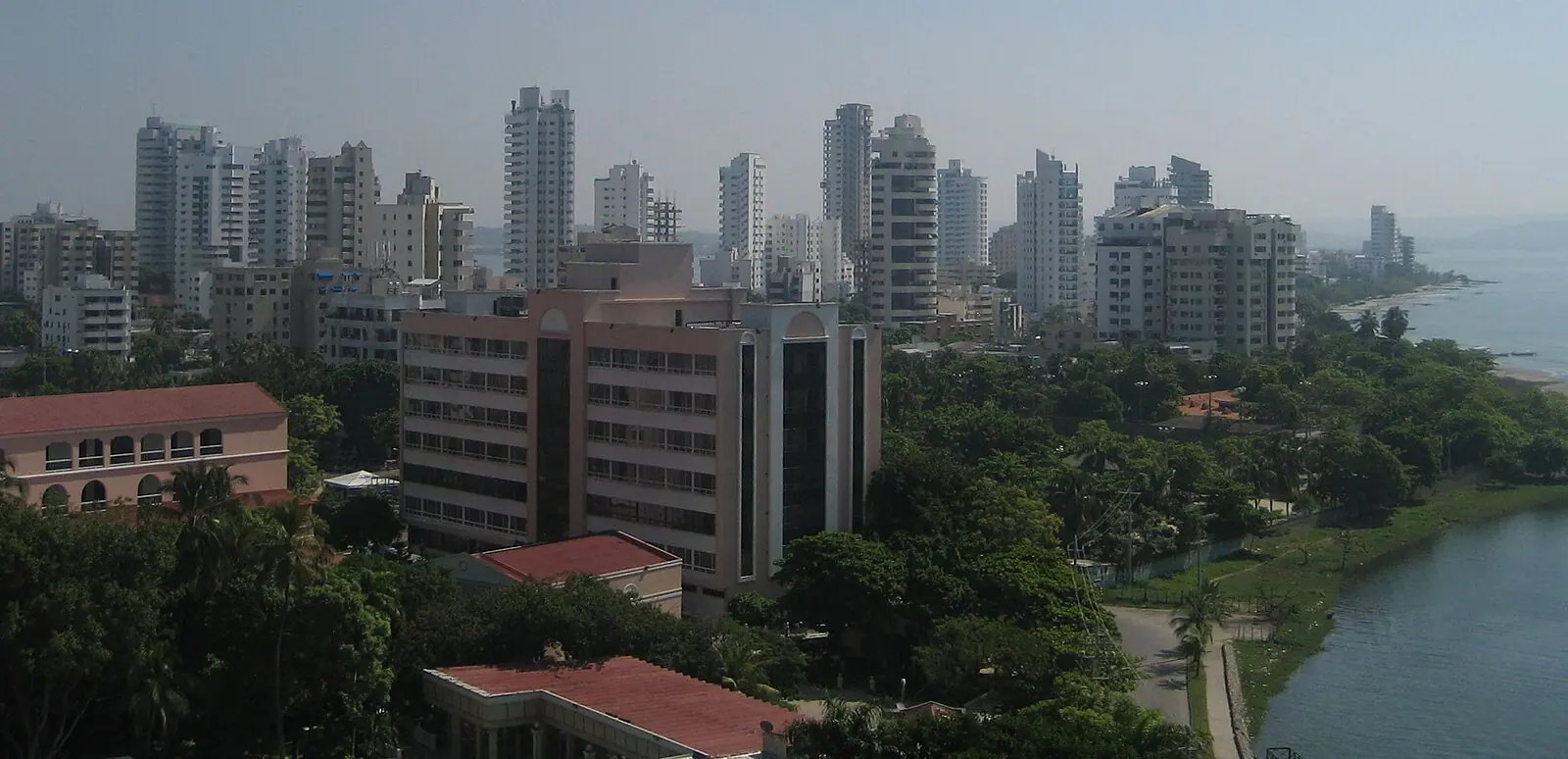
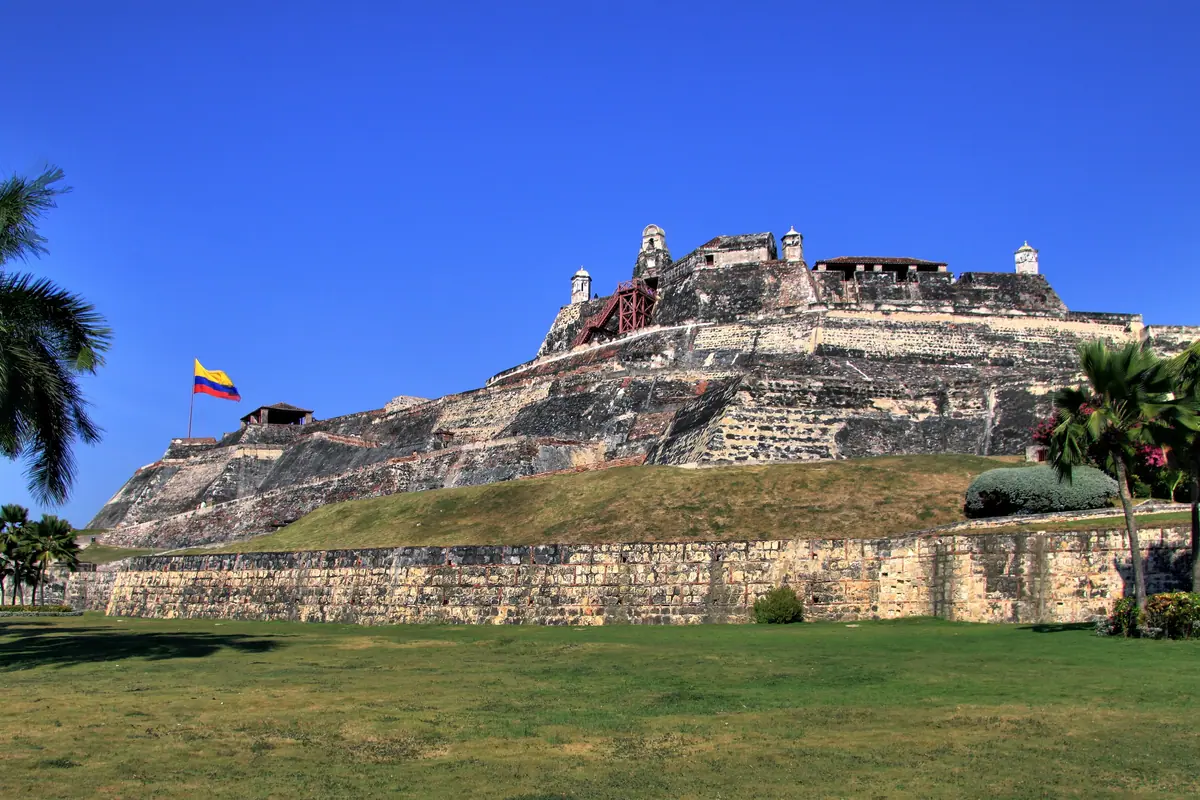
Cartagena is a city you walk at dusk. The old town is ringed by the thick coral-stone walls and bastions that once protected Spanish treasure fleets, and the Castillo San Felipe de Barajas on the hill above is the largest Spanish fortress in the Americas, its tunnels and ramps built for cannon and for fear. Inside the walls, Plaza Santo Domingo holds a church and one of Botero's reclining bronze women; the neighbouring quarter of Getsemaní is the younger, louder opposite — narrow alleys painted with murals, corner bars, and music spilling from doorways until dawn.
Caribbean cooking is fried, tropical and fearless. Arepa de huevo — a corn cake split and fried around a whole egg — is a breakfast obsession on the coast. Order cazuela de mariscos, a coconut-rich seafood stew, or posta negra, beef braised until it turns dark and sweet; eat it with coconut rice, patacones and a whole fried fish drenched in lime. The Bazurto market is the city's real kitchen — chaotic, hot, indispensable — and best visited with someone local. Fruit sellers in bright gathered dresses walk the plazas with bowls of mango, papaya and maracuyá balanced on their heads, and the nearby village of San Basilio de Palenque, the first free African town in the Americas and recognised for its heritage, is a half-day trip that puts the region's music and language into context.
Rhythm is a form of local knowledge here: champeta, cumbia and mapalé. If your trip overlaps with Carnival in Barranquilla, usually in February or early March, go — it is one of the largest street celebrations in the world. Otherwise, December to April is the dry season, hot and breezy; the Rosario Islands and Barú offer snorkelling and white sand within a boat ride. Cartagena is at its most crowded over Christmas, New Year and Easter, so reserve beds and restaurant tables well ahead, and do your sightseeing in the early morning before the heat turns heavy.
The Coffee Triangle: Salento, Cocora and the Wax Palms
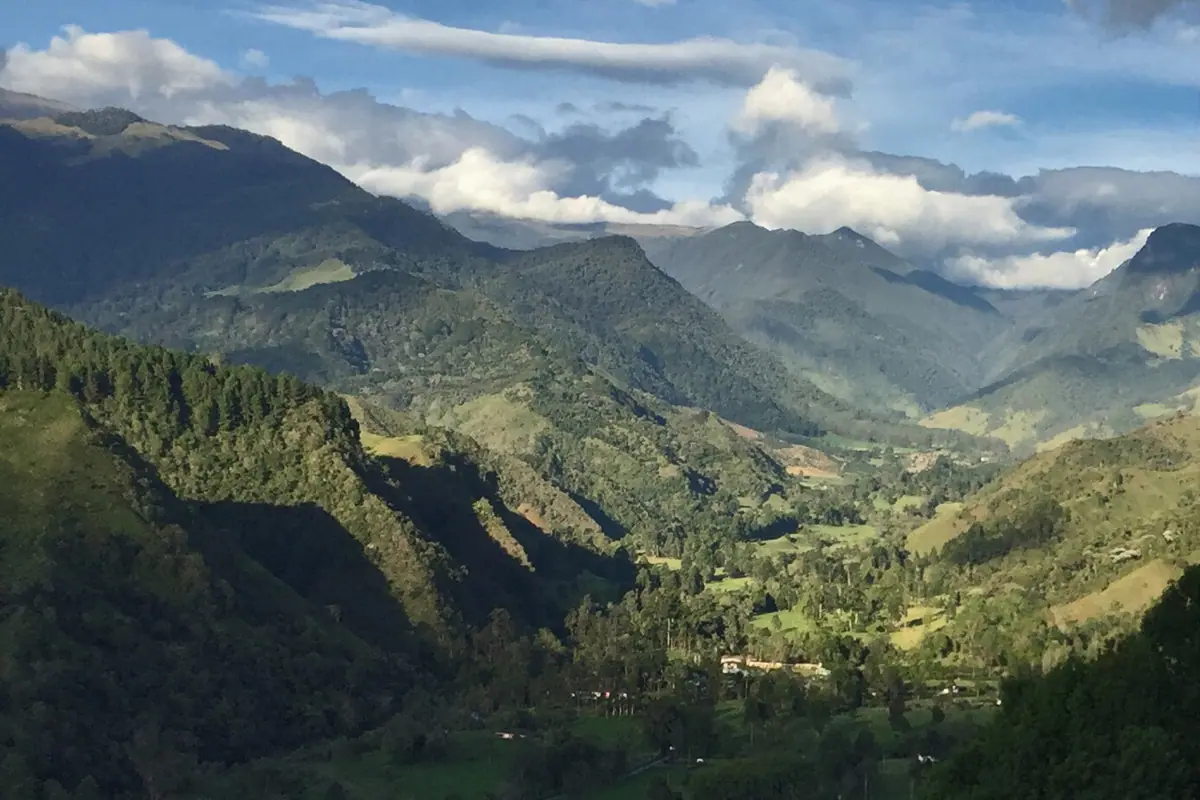
The eje cafetero — the coffee axis of Quindío, Caldas and Risaralda — is a landscape of steep green hills, bamboo, and farmhouses with painted balconies. Salento is the most charming base: a grid of low houses with coloured woodwork along Calle Real, carts selling cheese and arequipe, and cowboy hats for sale because this is horse country. From town, jeeps rattle out to the Valle de Cocora, where the Quindío wax palm — Colombia's national tree — rises as tall as 60 metres out of misty pasture. Walk the loop early in the morning before cloud closes in, or ride a horse up to the ridge for a view of palms like grey columns in the fog. Filandia, with its lookout tower and woven crafts, and the thermal springs at Santa Rosa de Cabal round out a few days.
Coffee here is not a drink but a process. On a finca tour you will pick the ripe red cherries by hand, watch them pulped and fermented, see them raked across drying patios, and finish with a cupping session that teaches you to taste the difference between a soft washed bean and a fruity natural one. The main harvests run roughly October to December and April to June, and visiting during one of them means you can actually work a row alongside the pickers. In cafés, learn the shorthand: a tinto is a small black coffee, a perico is small with milk, a pintado is mostly milk with a splash of coffee.
Expect mild weather — around 18 to 24 degrees Celsius in the day — and rain that peaks in April, May, October and November. Fly or take a long bus to Pereira, Armenia or Manizales, then travel by local bus and Willys jeep. Staying two or three nights on a working farm is the best way to eat properly: trout with patacón, thick bean stews, aguapanela with a slab of white cheese, and panela-sweetened desserts that taste of sugarcane rather than sugar.
Cali and the Pacific: Salsa, Cholado and Afro-Colombian Kitchens
Cali moves. This is Colombia's salsa capital, where dance schools teach visitors in an hour what locals have practised for years, and where the evening's plan is simply to dance until the small hours. The bohemian barrio of San Antonio climbs a hill of cafés and viewpoints below the Cristo Rey statue, and the city's Feria de Cali at the end of December turns the streets into a week of concerts and the famous salsódromo parade. Nearby Buga draws pilgrims by the busload to its basilica, and the surrounding sugar-cane plains feed a sweet tooth that shows up everywhere in the food.
Street eating in Cali is its own itinerary: cholado, a mountain of shaved ice, fruit, syrup and condensed milk; lulada, made from the tart lulo fruit; marranitas, fried plantain balls stuffed with chicharrón; aborrajado, plantain filled with cheese and fried; pandebono, warm cheese bread. Chontaduro — the peach palm fruit — is boiled and sold with salt and honey, an acquired taste that rewards the curious. Wash it down with a fresh fruit juice in water, not milk, if you are eating in the heat.
The Pacific coast is a different Colombia again: hot, soaked in rain, overwhelmingly Afro-Colombian, and reached by small planes to places like Nuquí and Bahía Solano. Between roughly July and October, humpback whales migrate here and boats take visitors out to watch them breach. In the kitchens, look for encocado de jaiba, crab simmered in coconut, plantain and coastal herbs, and the local herbal liqueurs known collectively as viche. Further south, Popayán stages solemn Semana Santa processions through its whitewashed centre, the archaeological park at San Agustín guards mysterious carved stone figures, Tierradentro hides painted underground tombs, and the Sanctuary of Las Lajas near Ipiales sits improbably on a bridge above a gorge. Pasto's Carnaval de Negros y Blancos in early January is one of the country's great celebrations of miscegenation and mischief.
Wild Colombia: Tayrona, Ciudad Perdida, Caño Cristales and Mompox
Tayrona National Park, an hour or so from Santa Marta, is where the Sierra Nevada falls straight into the Caribbean: sand bays shaded by jungle, coral for snorkelling, and the crescent of Cabo San Juan with its hammock hut on a rock. You can walk between beaches, sleep in a hammock or an ecohut, and visit the small pre-Hispanic ruins of Pueblito. Be aware that the park closes for several weeks each year — usually in February and again in autumn — to allow Indigenous communities to rest and perform ceremonies, so check dates before planning around it. For something harder, the Ciudad Perdida trek is a demanding four to five day walk into the Sierra Nevada to a stone city older than Machu Picchu, built on terraces above the Buritaca river and reached by climbing more than a thousand mossy steps.
Inland, Caño Cristales in La Macarena is called the river of five colours, and between roughly July and November an aquatic plant on its bed blushes red, swirling with yellow sand and green water. Access is by guided tour only, with limits on daily visitors, and the small town fills up in peak weeks. Farther south, the Amazon around Leticia offers river trips, pink dolphins and jungle lodges, plus a tri-border corner of Colombia, Peru and Brazil that feels pleasantly lawless in the best sense.
Then there are the towns worth rearranging a route for. Mompox, on the Magdalena river, is a UNESCO-listed grid of whitewashed arcades and filigree workshops where silversmiths still work by hand in the heat. Barichara is stone-paved and quiet, with the Camino Real footpath leading to the tiny village of Guane. Providencia, in the Caribbean, is a Raizal island of English-Creole heritage, bicycle lanes and a sea that shifts through seven shades of blue. Distances in Colombia are big, so internal flights between Bogotá, Medellín, Cali, Cartagena and Santa Marta are perfectly normal; carry small notes and cash for rural areas, and plan your sightseeing for mornings before the afternoon rain arrives.
Frequently asked questions
When is the best time to visit Colombia?
The driest windows are roughly December to March and July to August, which suit Cartagena, Medellín, the coffee region and Tayrona. Caño Cristales shows its reds from around July to November, humpback whales pass the Pacific coast between July and October, Barranquilla's Carnival falls in February or early March, the Feria de las Flores fills Medellín in August, and Cali dances through the end of December. Rain is heaviest in April, May, October and November in the Andes.
Is Colombia safe for travelers?
The main tourist routes — Bogotá's Candelaria, Medellín, the coffee triangle, Cartagena and Santa Marta — are well travelled and generally comfortable, but a few habits help. Use registered taxis or ride-hailing apps at night, keep phones and jewellery out of sight, take local advice before walking long distances after dark, and choose daytime buses or domestic flights rather than overnight road travel in unfamiliar regions. Ask at your guesthouse about specific neighbourhoods, since local knowledge is always more accurate than general warnings.
What food should I try in Colombia?
Ajiaco santafereño in Bogotá, bandeja paisa in Antioquia, arepa de huevo and cazuela de mariscos on the Caribbean coast, cholado and marranitas in Cali, and trout with patacón in the coffee region. Snack on empanadas with ají, arepas with cheese, obleas with arequipe, and mango biche with salt and lime. Vegetarians are well served in cities and coffee towns — rice, beans, plantain, arepas, corn cakes and huge fruit markets — but rural menus lean heavily on pork and beef, so it helps to say "sin carne" clearly.
Do I need to speak Spanish in Colombia?
It is not essential, but even a little goes a long way. English is common in hostels and upmarket restaurants in Bogotá, Medellín and Cartagena, and much rarer in markets, bus terminals, villages and the Amazon. Learning greetings, numbers, food words and the phrase "¿cuánto cuesta?" will change how people respond to you, and taxi drivers will appreciate a destination written on paper.
How many days do I need to see Colombia?
Ten to fourteen days covers a solid first trip: two or three nights each in Bogotá, Medellín, the coffee region and Cartagena, with a couple of days for Tayrona or Guatapé. Three weeks lets you add the Pacific coast, Caño Cristales, Mompox or the Amazon, and a month is better still if you want to travel overland. Because the country is large and the roads mountainous, most travelers fly two or three internal legs and use buses for shorter scenic hops.
Sort the rest of your trip
Everything for Colombia, in one place
Stay in Colombia
Hotels, guesthouses and apartments — compared in one search.
Search hotels
Transfer in Colombia
Private driver waiting on arrival — no queues, no surprises.
Book a transfer
Stay online in Colombia
Travel eSIM — data the moment you land, no roaming bills.
Get an eSIM