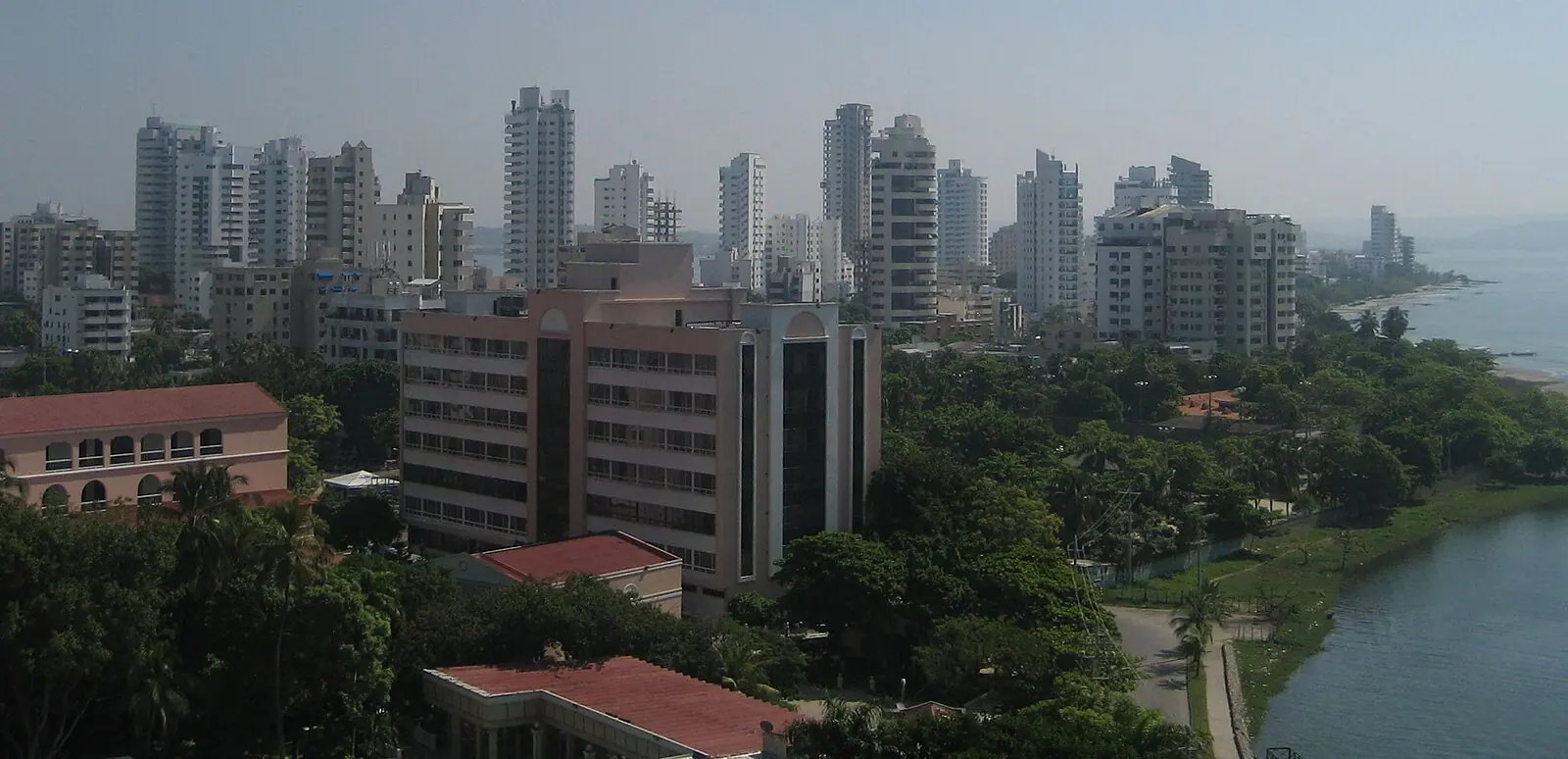
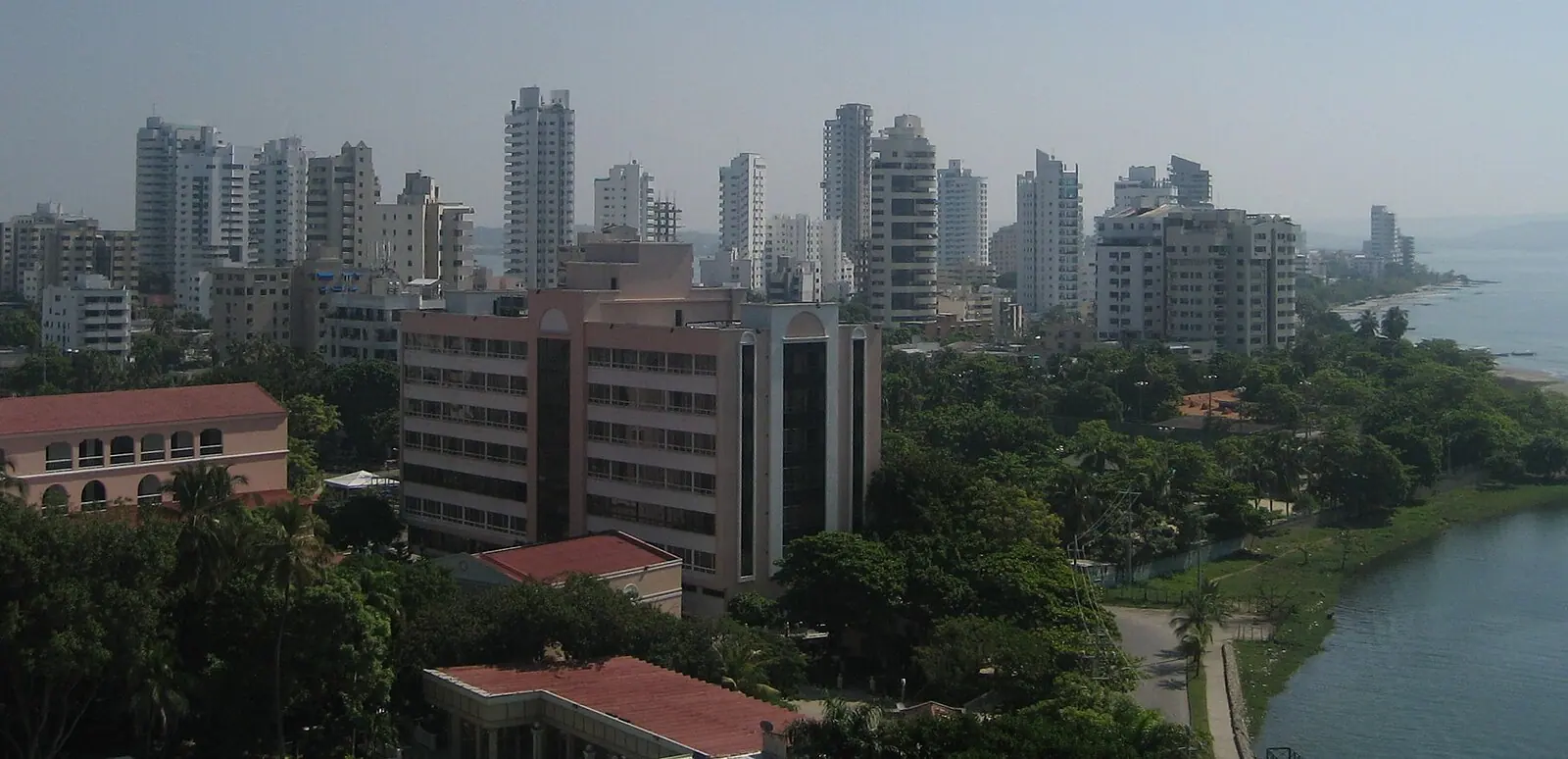
Colombia packs a continent's worth of landscapes into one country: fortified Caribbean cities, Andean coffee towns wrapped in cloud, rainforest coasts where humpback whales calve, and rivers that run red, yellow and green. Knowing where to go first is the hard part — this guide covers the places genuinely worth your days.
Cartagena and the Caribbean Coast: Colonial Streets and Jungle Beaches
Cartagena de Indias is the classic first stop, and it earns the fuss. Inside the Ciudad Amurallada, a UNESCO-listed grid of coral-stone walls, you walk past mansions with wooden balconies spilling bougainvillea, hear vallenato drifting from Plaza Santo Domingo, and drink fresh lime juice while the temperature sits stubbornly in the low 30s. Get lost in Getsemaní next door, where murals cover the walls and locals play chess in Plaza de la Trinidad. Sunsets are best from the ramparts near Baluarte de Santo Domingo, when the heat finally breaks and the sea turns copper.
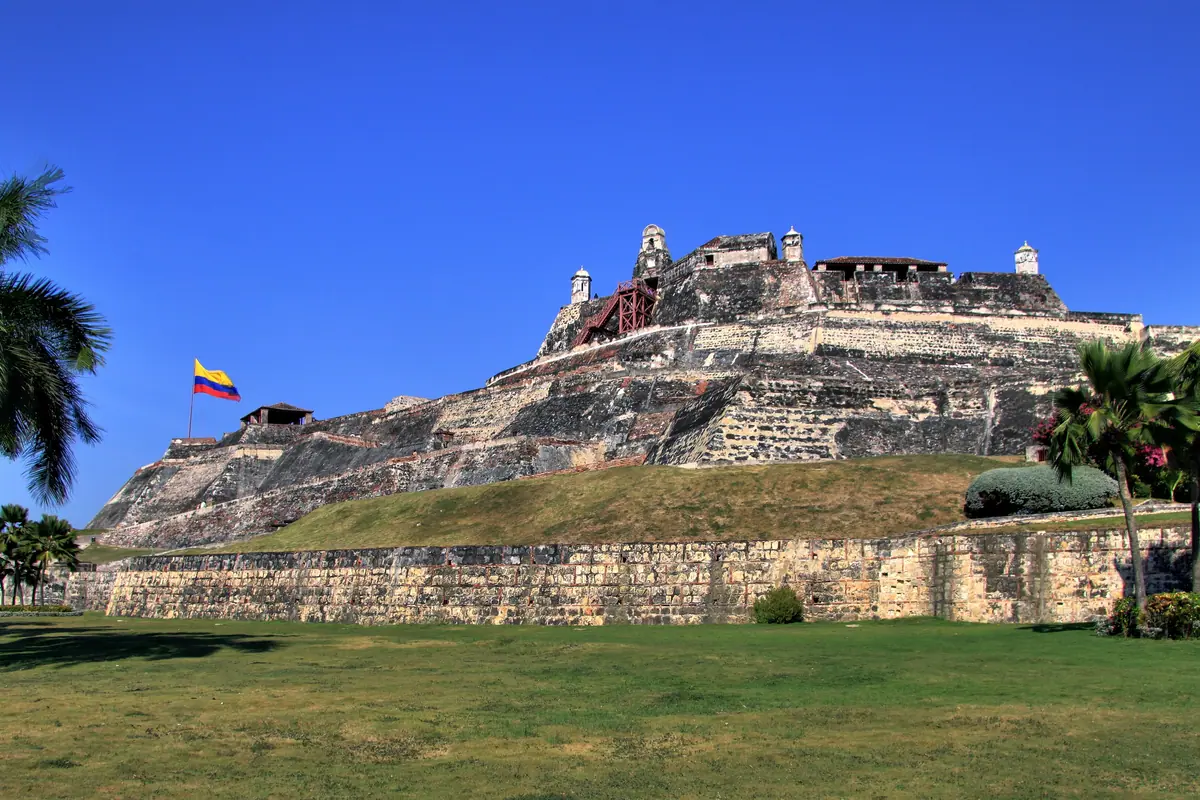
The city's military history is just as impressive. Castillo San Felipe de Barajas, begun in the 1530s and expanded for two centuries, is the largest fortress the Spanish ever built in the Americas, a sprawl of ramps, gun emplacements and echoing tunnels that you can explore in about two hours. Pair it with the Convento de la Popa on the hill above town for the widest view over the bay. For a slower day, take a boat out to the Rosario Islands or Barú for snorkelling over coral and lunch of fried fish and coconut rice; arrive early, as day-trip boats cluster by late morning.
Beyond Cartagena, the coast keeps giving. Santa Marta is the gateway to Parque Nacional Tayrona, where trails thread between boulders and palm-fringed coves such as Cabo San Juan, and to the misty coffee-and-waterfall village of Minca. Further east, Palomino offers a long grey-sand beach and a river you can float down in an inner tube. If you want islands, San Andrés and Providencia sit far out in the Caribbean with famously clear water and a slower Creole rhythm. The driest, most reliable beach weather runs from December to March, with a second good window in July and August; October and November are the wettest months.
Medellín and Antioquia: Eternal Spring in the Andes
Medellín sits in a green valley at around 1,500 metres, which gives it the nickname locals use constantly: the city of eternal spring, with temperatures hovering between 22°C and 28°C all year. The Metrocable cable cars are both public transport and sightseeing, lifting you over the barrios to Parque Arví, a pine-and-forest reserve at the city's edge. In the centre, Plaza Botero displays oversized bronze figures by the city's most famous sculptor, with the Museo de Antioquia — home to a deep collection of his work and rotating Colombian art — right beside it. Comuna 13, once off-limits, is now one of the most visited neighbourhoods in the country: outdoor escalators, hip-hop performances and towering murals that tell the story of the district's transformation.
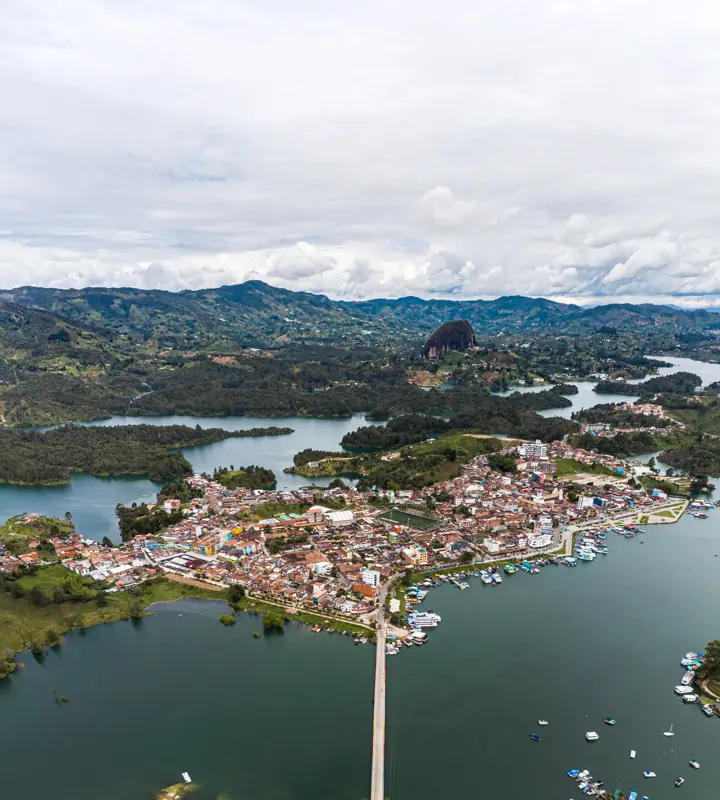
Antioquia rewards even a short trip out of town. The most popular day trip is to Guatapé, where the town's streets are lined with painted bas-relief plinths called zócalos and where the monolith known as La Piedra del Peñol rises 200 metres above a flooded reservoir; around 700 steps get you to the top for a view over a maze of green peninsulas. Further afield, Jardín is a tidy coffee town with a cable car over the valley, while Santa Fe de Antioquia preserves a colonial plaza and a long, hot river crossing on a rickety wooden bridge.
Plan on two or three nights in Medellín itself, and two more if you want to slow down in the countryside — the roads into the hills are winding and slower than they look on a map. The city works as a base year-round, with the driest conditions from December to March and again in July and August, and the Feria de las Flores in August filling the streets with parades and orchid displays.
Bogotá and the Andean Highlands: Gold, Salt and Mountain Views
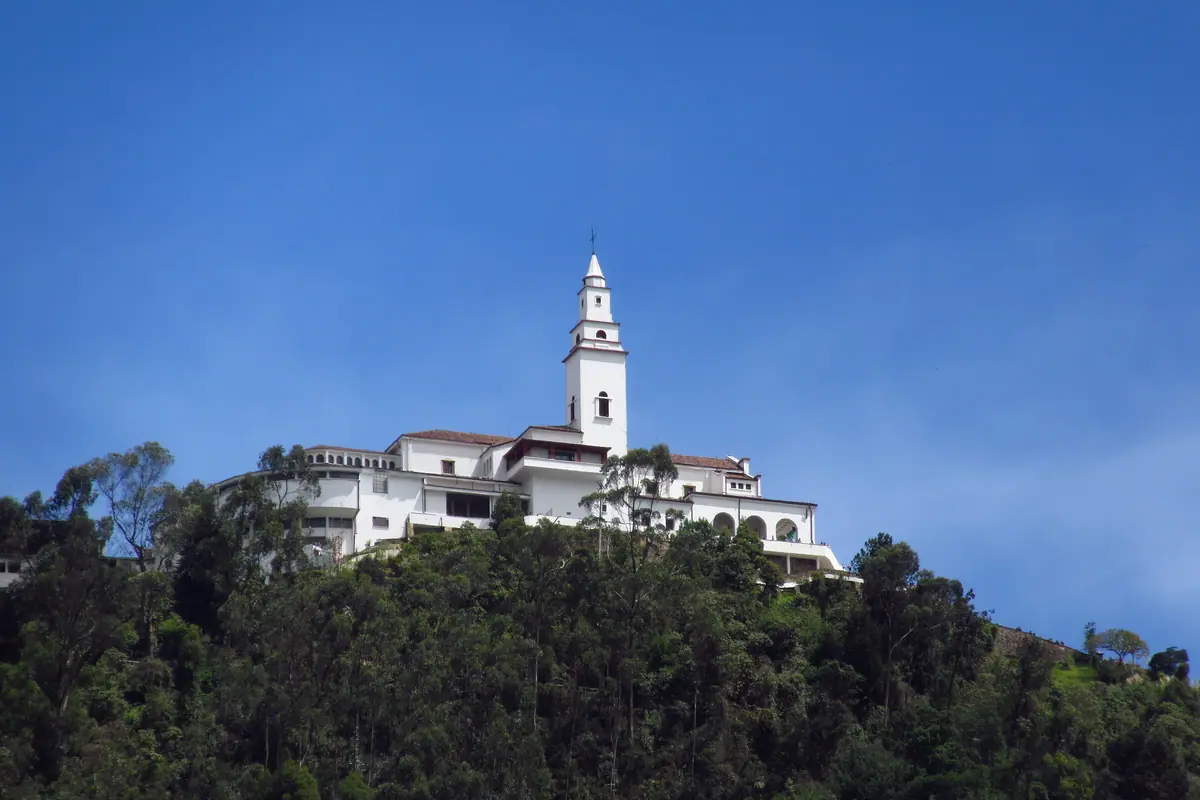
Bogotá sits high on a plateau at about 2,640 metres, so the air is thin and cool — expect 7°C to 19°C and a sky that flips from brilliant to grey within an hour. Start in La Candelaria, the colonial heart, where cobbled lanes lead to Plaza de Bolívar, the Primatial Cathedral and the Capitolio. The Museo del Oro is the city's unmissable stop: thousands of pre-Hispanic gold objects, from tiny votive figures to the raft that inspired the El Dorado legend. Then ride the cable car or funicular up to Monserrate, the white church on the ridge above the city, for the panorama that makes Bogotá's sheer scale finally make sense.
The highlands around the capital are full of easy escapes. Zipaquirá's Salt Cathedral is carved 180 metres inside a working salt mine, a series of underground chambers with dramatically lit crosses. Lake Guatavita, a crater lake ringed by forest, is the setting for the gold-raft ceremony legend, while Villa de Leyva — about four hours away — has one of the largest cobbled plazas in South America, plus a fossil museum and the startling blue pools of Pozos Azules nearby.
Give yourself a full day to acclimatise before tackling steep streets or long walks; hydrate, skip the biggest meal on arrival and take the first afternoon gently. Rain is heaviest in April, May, October and November, and mornings are usually clearer than afternoons, so front-load your sightseeing. On Sundays, many main roads close for cyclists and joggers, which turns the city into a huge, good-natured street party.
The Coffee Cultural Landscape: Salento, Cocora and Wax Palms
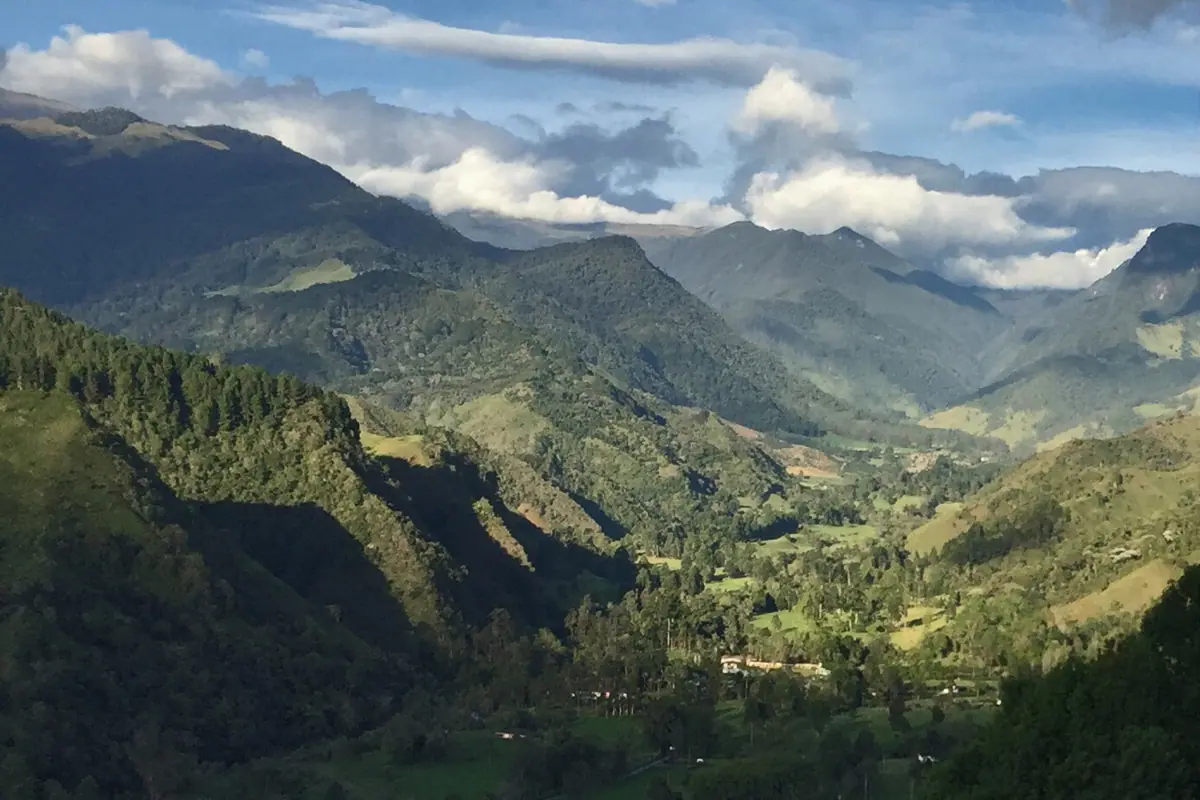
The coffee axis spreads across the departments of Quindío, Risaralda and Caldas, a rolling patchwork of green hills, bamboo groves and whitewashed farmhouses. Salento is the prettiest base, with a rainbow of shopfronts along Calle Real, a plaza full of men playing tejo, and trout served every way imaginable. Fincas in the surrounding hills offer tours that go well beyond a tasting: you'll pick ripe cherries by hand, watch the depulping and drying, and learn why shade-grown Colombian coffee tastes the way it does. Harvest season typically falls between September and November and again from April to June.
Just outside Salento, the Valle de Cocora is the region's showstopper — a misty valley where the Quindío wax palm, Colombia's national tree, grows up to 60 metres, the tallest palm species on earth. A loop trail of roughly four to six hours crosses hanging bridges, pasture and cloud forest; shorter walks and horseback rides are possible if you're pressed for time or the mud is deep. Go at dawn, when mist hangs in the valley and the light is soft, and carry a rain jacket no matter how clear the morning looks.
Round out the region with Filandia, whose hilltop lookout surveys the whole coffee landscape, and Manizales, the departure point for Los Nevados National Park and the snowcapped Nevado del Ruiz volcano. Between hikes, soak in the hot springs near Santa Rosa de Cabal. The driest months are December to March, but this is a rainforest-adjacent climate — pack layers, quick-drying trousers and shoes with grip.
Cali and the Pacific Coast: Salsa, Rainforest and Whales
Cali is Colombia's salsa capital, and the music isn't a performance for visitors — it's how the city spends its evenings. Dance schools take beginners, and the bars of Barrio San Antonio and Granada fill up late. By day, climb to the Cristo Rey statue for a view over the valley, wander the colonial lanes of San Antonio, and take a trip out to San Cipriano, where a rail cart on old tracks runs through jungle to a river of impossibly clear water and natural rock slides. Cali's climate is warm and consistent, around 24°C, with wetter spells from March to May and September to November.
The Pacific coast is a different Colombia altogether: the Chocó rainforest, one of the rainiest places on earth, meeting a warm, dark-sand sea. From the small towns of Bahía Solano and Nuquí, reached by short flights from Medellín, you can watch humpback whales breaching offshore between roughly July and October, when they come to calve in the warm bays. Sea turtles nest on the same beaches, and surf breaks and hot springs are scattered along the coast. Those willing to travel further can dive at Isla Gorgona, a former prison island turned national park with reef sharks, turtles and a reputation for big pelagic sightings.
This is not a region for tight itineraries. Flights are small and weather-dependent, ATM coverage is sparse so bring cash, and eco-lodges range from very simple to surprisingly comfortable. Expect rain at any time of year, embrace the mud, and book whale-season accommodation months in advance — it's the busiest stretch on the entire coast.
Wild Colombia: Caño Cristales, Ciudad Perdida and the Amazon
Caño Cristales, in the Macarena mountains south of Bogotá, is nicknamed the river of five colours, and for a few months a year the riverbed blooms with a native aquatic plant that turns the water red, yellow, green and blue simultaneously. The window is usually roughly June to November; outside it, the colours are far less vivid. Access is only with licensed local guides and capped by daily visitor limits, so trips are booked in advance via the nearest town, and you fly in from the capital. Expect several hours of walking over rock, plus swimming in natural pools.
In the north, the Ciudad Perdida trek — also called Teyuna — climbs through jungle to a stone city built by the Tayrona people more than a thousand years before Machu Picchu, with terraces, staircases and ceremonial platforms hidden under forest. It's typically a four-to-six day return hike from the Santa Marta area with licensed operators, involving river crossings, steep climbs and nights in hammocks or simple camps; permits and indigenous community approval are part of the deal. For a very different kind of wild, the Tatacoa Desert in the south offers red and grey badlands and some of the clearest night skies in the country, while the Llanos plains to the east are Colombia's safari country, with capybaras, caimans, river dolphins and enormous flocks of waterbirds.
The Amazon reaches Colombia around Leticia, where the country meets Brazil and Peru. From there, boats run to Puerto Nariño and into reserves where you can spot pink river dolphins, sloths and monkeys. It's hot, humid and insect-heavy all year, so bring repellent, long sleeves and a yellow fever vaccination sorted well before you travel. Whichever wild corner you choose, build in buffer days — weather, permits and small aircraft all have their own timetables here.
Frequently asked questions
When is the best time of year to visit Colombia?
Colombia doesn't have one single season. The most reliable drier stretches across the Andean interior and Caribbean coast are December to March and July to August. Cartagena and the north coast are hot and humid year-round, while the Pacific coast and Amazon are wet in any month. Two experiences are strictly seasonal: Caño Cristales shows its colours roughly from June to November, and humpback whale watching off the Pacific coast peaks between July and October.
How many days do I need for a first trip to Colombia?
Ten to fourteen days lets you cover three or four regions comfortably. A common shape is two or three nights in Cartagena, two or three in Medellín with a Guatapé day trip, three in the coffee country around Salento, and two to three in Bogotá. Colombia is large and the Andes make road journeys slow, so it's usually better to fly between regions and travel by road locally than to try to see everything overland.
Is Colombia safe for travellers?
The main tourist routes — Cartagena, Medellín, Bogotá's Candelaria, the coffee axis, Santa Marta and Tayrona — see large numbers of visitors every year and are generally fine with normal big-city caution. Use registered taxis or ride-hailing apps after dark, keep phones out of sight in busy streets, avoid travelling rural roads at night, and check current government advisories before you go, since a few border regions remain off-limits.
Do I need to speak Spanish in Colombia?
It helps enormously. Hotel and tour staff in Cartagena, Medellín and Bogotá often speak English, but outside those areas — buses, markets, small towns, taxi drivers — you'll get much further with basic Spanish. Learning greetings, numbers, directions and a few food words will noticeably change how your trip goes.
Do I need to worry about altitude in Bogotá or the Andes?
Bogotá sits at about 2,640 metres, and towns like Villa de Leyva and much of the coffee region are also high. Most visitors feel only mild breathlessness and fatigue. Take your first day slowly, drink plenty of water, avoid heavy alcohol on arrival, and save strenuous hikes for a day or two later. Higher Andean routes near Los Nevados and the Nevado del Ruiz area sit far higher again, so acclimatise beforehand.
Plan it — experiences in Colombia
Live search, booked directly with trusted providers.
Sort the rest of your trip
Everything for Colombia, in one place
Stay in Colombia
Hotels, guesthouses and apartments — compared in one search.
Search hotels
Transfer in Colombia
Private driver waiting on arrival — no queues, no surprises.
Book a transfer
Stay online in Colombia
Travel eSIM — data the moment you land, no roaming bills.
Get an eSIM