Tuvalu is a scatter of nine coral atolls flung across 1.3 million square kilometres of Pacific, with barely 26 square kilometres of dry land between them. It is the kind of place where the runway doubles as the football pitch, where turtles outnumber tourists, and where the ocean is not a view but the whole point.
Fongafale and Funafuti: Where the Runway Is the Town Square
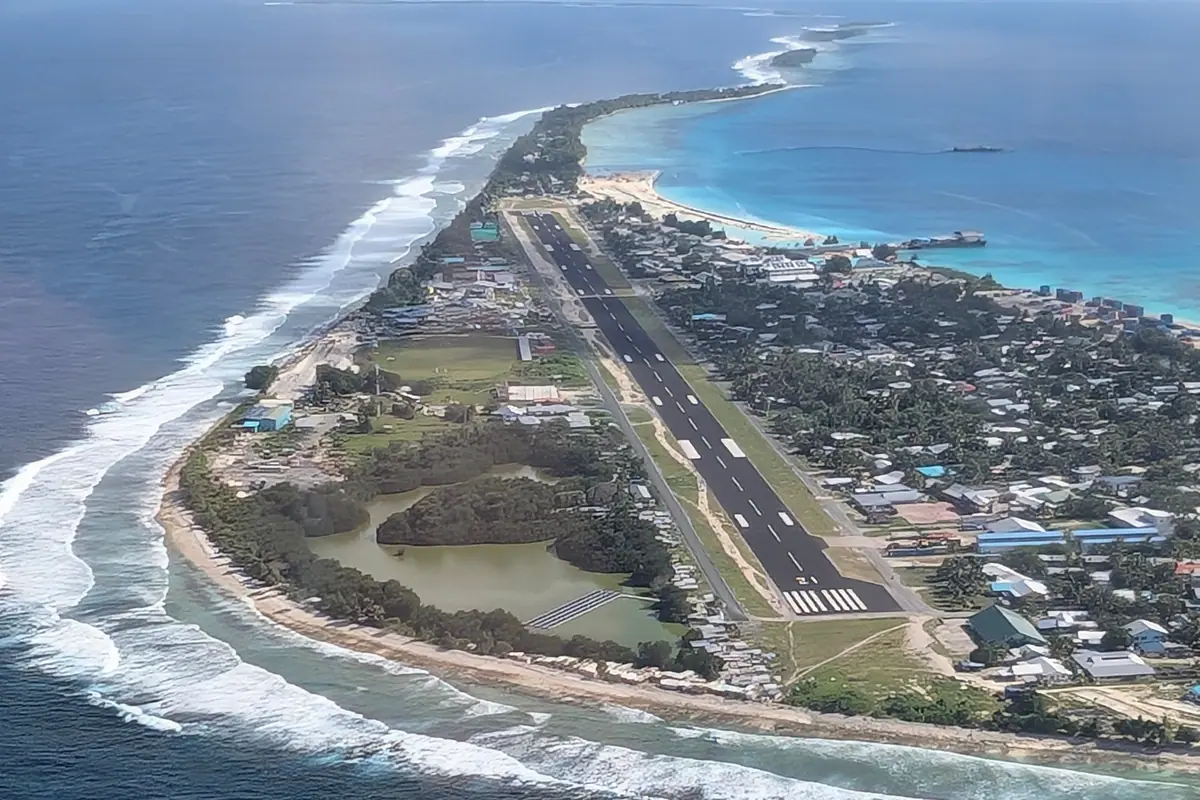
Almost every visitor lands on Fongafale, the ribbon of coral that carries Funafuti's airstrip and roughly half the country's population. The islet is about twelve kilometres long and only a few hundred metres wide at its thickest point, with the lagoon on one flank and the open Pacific reef on the other. Because only a couple of flights arrive each week, the strip spends most of its time as the island's de facto plaza: football and volleyball matches at dusk, toddlers on tricycles, families strolling the length of the tarmac in the cool of the evening. Standing in the middle of an international runway while a village plays sport is one of the genuine wonders of the Pacific.
The administrative heart sits at Vaiaku, on the lagoon side, where you will find the government offices, the national library and archives, the country's long-running philatelic bureau, and a string of churches whose hymns carry across the water on Sunday mornings. There is one road, no traffic lights, and a pace of life that rewards anyone willing to abandon an itinerary. Give Fongafale three to five days: long enough to settle into the heat, learn which side of the island catches the breeze, and stop treating the lagoon as scenery rather than a swimming pool.
Practicalities are simple but non-negotiable. The climate sits between 25°C and 31°C all year, humidity is high, and shade is precious. Guesthouses are few and small, so book well before you fly, and bring more cash than you think you need.
The Funafuti Conservation Area: Six Islets and a No-Take Lagoon
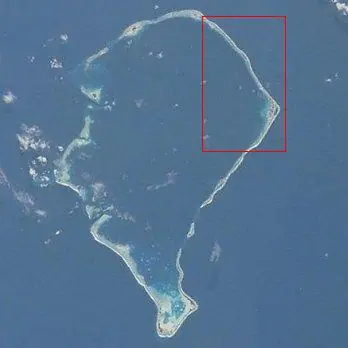
The single best reason to come to Tuvalu is Kogatapu, the Funafuti Conservation Area, a protected sweep of lagoon and reef established in 1996. It takes in six uninhabited islets — Tepuka, Tepuka Savilivili, Fualopa, Fuafatu, Fuakea and Tefala — where fishing is banned and the reef has been left to get on with being a reef. Boats leave from the lagoon shore near Fongafale and take roughly thirty to forty-five minutes, depending on which islet you are headed for and how choppy Te Namo is feeling that day. A small community fee applies, usually arranged through your guesthouse or the island council, and it goes straight back into looking after the place.
What you find out there is a version of the Pacific that has largely vanished elsewhere. Green turtles graze on seagrass in the shallows, giant clams gape from the coral, parrotfish crunch across the reef crest, and the islets are noisy with black noddies, terns and frigatebirds. Coconut crabs shuffle through the undergrowth on Tepuka, and Fualopa and Tefala are the classic stops for snorkelling and a picnic of cold rice and fresh tuna.
Go on a calm day — the crossing is far more pleasant between May and October, when the trade winds steady the weather. Wear reef-safe sun protection, take everything back with you, and resist the urge to pocket a shell; the whole point of Kogatapu is that nothing leaves.
Outer Atolls: Nanumea, Vaitupu, Nui and the Rest of the Nine
Tuvalu's nine islands are strung over hundreds of kilometres of ocean, and reaching most of them means boarding the government inter-island ship rather than a plane. Schedules are loose, sailings can be delayed for days, and a voyage to the northern group takes a day or more each way. This is not a destination for a tight itinerary; it is a destination for people who like the idea of watching nothing but water for thirty hours.
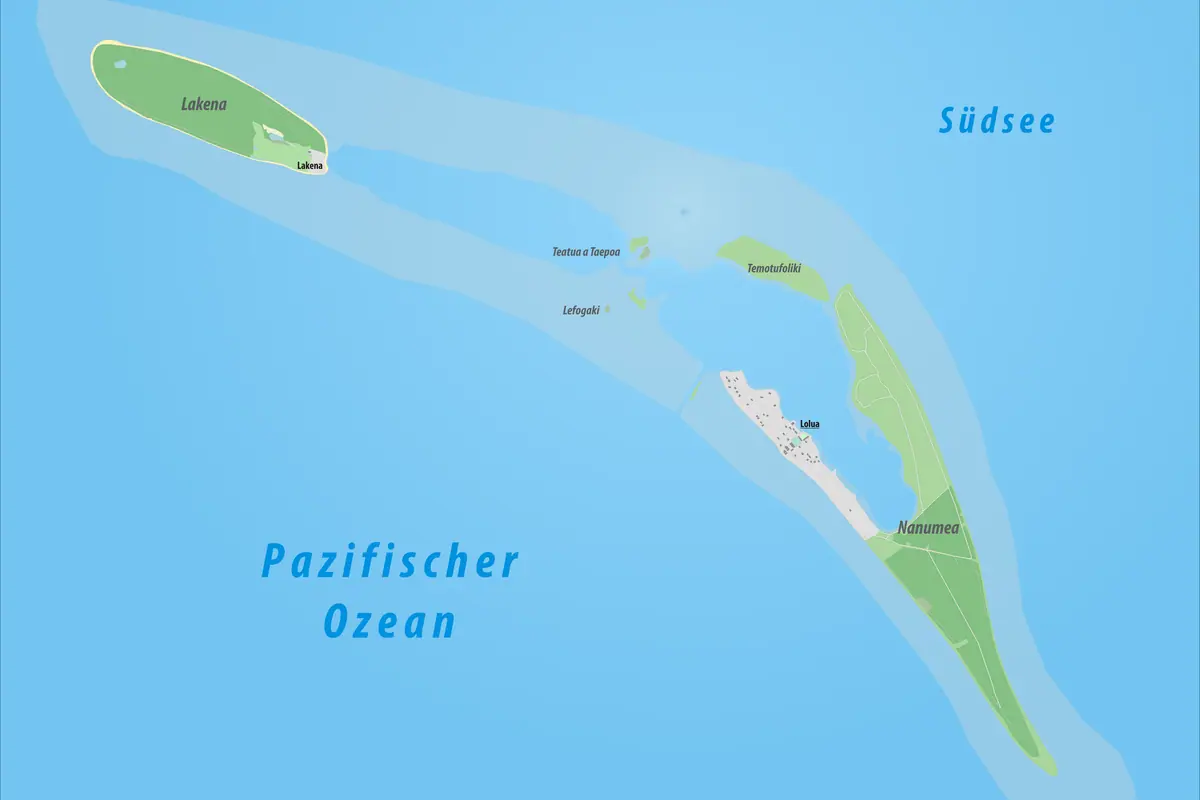
Each atoll has its own character. Nanumea, the northernmost, is famous for its weaving, its dancing, and the legend of the ancestor Tefolaha, and the remains of a wartime airfield still sit on the reef flat. Vaitupu, the second most populous island, is home to Motufoua, the country's only boarding secondary school, which draws teenagers from every atoll and gives the island an unusually youthful energy. Nui carries a strong Kiribati imprint in its language, food and dance, a legacy of settlers who came from the Gilbert Islands generations ago. Nukufetau shelters Motulalo, an islet that once held another Second World War airstrip, and its lagoon is enormous. Far to the south, Niulakita is the smallest and southernmost island, resettled from Niutao in the late 1940s and home to Tuvalu's highest ground — a dizzying 4.6 metres above sea level.
To visit the outer islands you generally need an invitation or at least a conversation with the island council, plus accommodation arranged in advance, which is usually a simple guesthouse or a room with a local family. Budget two to three weeks if you want more than one atoll.
Standing in History: Borrow Pits, Wartime Relics and a Victorian Borehole
Fongafale wears its twentieth-century history openly. In 1943, American forces arrived and carved an airfield out of the islet, dredging coral to build the runway and leaving behind a row of flooded borrow pits that still gash the middle of the island. They are part of everyday geography now — brackish, edged with scrub, a reminder of a war fought a very long way from home. Rusting relics and wreckage lie in the lagoon too, and snorkellers occasionally come across shapes on the seabed that are obviously not coral.
Older still is the story of the great coral borehole. In the late 1890s a scientific expedition drilled deep into the reef at Funafuti, hoping to settle a debate about how coral atolls form. The drill went hundreds of metres down and never struck volcanic rock — evidence that these islands are the thin living skin on top of a sinking foundation. A modest marker recalls the site, and it is worth a look before you spend an afternoon swimming over the very reef those Victorians were trying to understand.
Christianity arrived in 1861 with Samoan missionaries, and the Church of Tuvalu remains woven through daily life. Sunday is observed seriously: most shops shut, sport stops, and the singing from the churches is worth planning your week around.
Culture, Food and Everyday Rituals: Fatele, Te Ano and Pulaka
Tuvaluan culture is not performed for visitors; you are simply lucky if you happen to be around when it happens. The fatele is the centrepiece — a dance and song cycle that starts gently and builds, verse by verse, until the whole maneapa is clapping, stamping and roaring. The maneapa itself, the traditional thatched meeting house found on every island, is where community decisions, welcomes and celebrations take place, and being invited inside is a genuine privilege. Traditional games survive too, including te ano, a vigorous ball game played with a heavy ball woven from pandanus leaves, usually between villages on national holidays.
Food comes from the land and the reef: fresh tuna and reef fish, breadfruit, taro, coconut in every form, and pulaka, a giant swamp taro grown in carefully tended pits that have been handed down through families. Those pits are also a barometer of the country's troubles, as saltwater pushes into the water table and stunts the crop. Meals are filling rather than fancy, and eating with a family is far more memorable than any restaurant.
For a small souvenir with real significance, the philatelic bureau in Vaiaku still issues stamps that collectors around the world chase, and locally woven mats and fans make far better gifts than anything imported.
When to Go, How to Move Around and What to Expect
The dry, breezy window from May to October is comfortably the best time to visit: steadier trade winds, less rain, and calmer lagoon crossings to the conservation area. November to April brings heat, humidity, downpours and the cyclone season, though plenty of travellers still chance it and are rewarded with empty guesthouses and dramatic skies. Water temperatures hover around 27°C to 30°C year-round, so swimming is never a question of courage.
International access is limited to a couple of flights a week from Fiji, so build a buffer of a day or two at either end in case of delays. The currency is the Australian dollar, English and Tuvaluan are both spoken, and cash is king — card facilities are scarce and unreliable. On Fongafale you can walk most places, hire a scooter for the length of the island, or take a taxi; there is no bus network worth mentioning, and the internet is slow enough to force a proper holiday.
For a first visit, four to seven days on Funafuti is realistic, with a day trip to the conservation area and time set aside for the runway at sunset. Add the outer atolls only if you have weeks and a flexible return date. Pack light clothing, reef shoes, a mask and snorkel, a good book, and patience — Tuvalu runs on island time, and it is all the better for it.
Frequently asked questions
How do you get to Tuvalu?
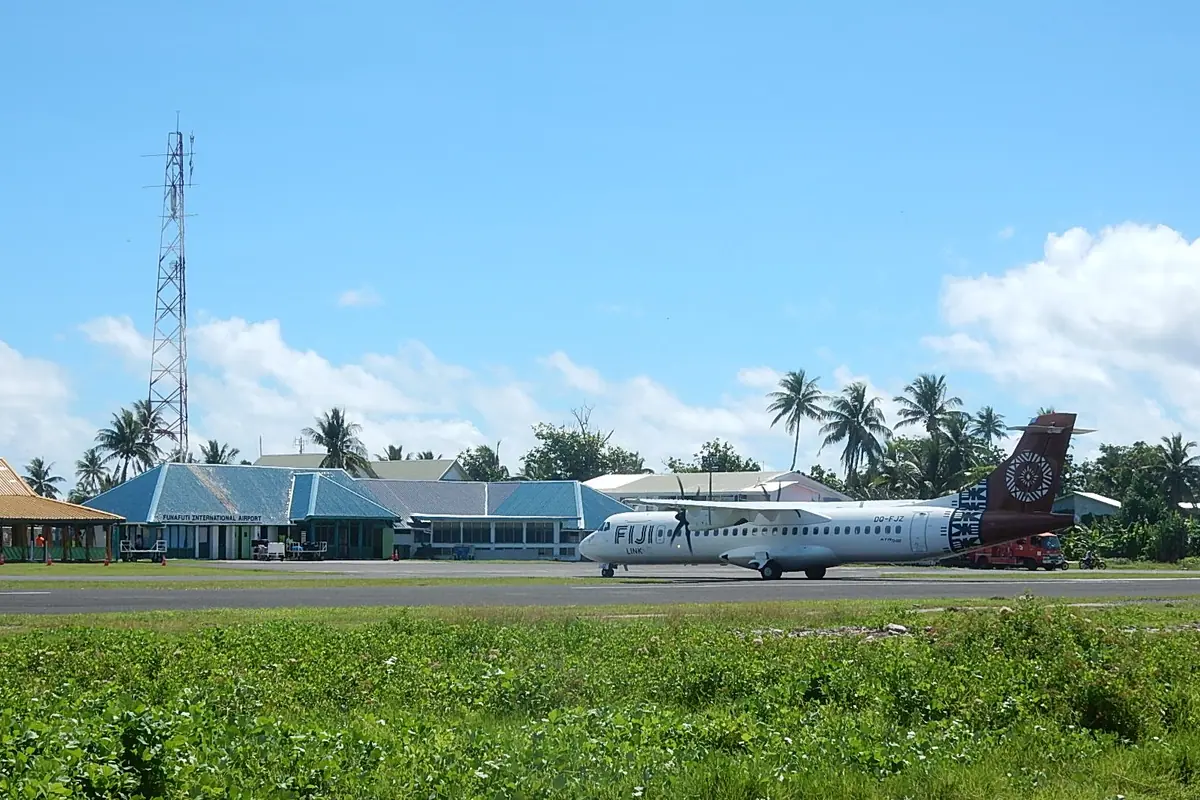
Almost everyone arrives by air from Fiji, on one of only a couple of weekly flights into Funafuti International Airport. There is no other scheduled international service, luggage allowances are tight, and seats sell out months ahead, so book early. A small number of visitors arrive by private yacht through the lagoon pass.
What is the best time of year to visit Tuvalu?
May to October, when the trade winds bring drier, slightly cooler and more stable weather, plus calmer seas for boat trips to the Funafuti Conservation Area. November to April is hotter, wetter and inside the cyclone season, though it can still be visited with flexibility.
How many days do you need in Tuvalu?
Four to seven days is a comfortable first visit, covering Fongafale, Vaiaku, the borrow pits and wartime sites, and a full day snorkelling the islets of the Funafuti Conservation Area. Adding outer atolls such as Nanumea, Vaitupu or Nukufetau requires two to three weeks because inter-island ship schedules are irregular.
What are the must-see sights in Tuvalu?
The Funafuti Conservation Area and its six islets — Tepuka, Tepuka Savilivili, Fualopa, Fuafatu, Fuakea and Tefala — top the list, along with the vast Te Namo lagoon, the airstrip that becomes a playing field each evening, Fongafale's flooded wartime borrow pits and coral borehole site, and the philatelic bureau in Vaiaku. Further afield, Motulalo in Nukufetau and the weaving traditions of Nanumea are worth the voyage.
Is Tuvalu difficult or expensive to visit?
It is small-scale rather than luxurious: a handful of simple guesthouses, limited restaurants, slow internet and few card facilities, so bring enough cash in Australian dollars. Expect to pay more than you might assume for modest accommodation, and keep your plans flexible, especially if you intend to travel between islands by ship.
Plan it — experiences in Tuvalu
Live search, booked directly with trusted providers.
Sort the rest of your trip
Everything for Tuvalu, in one place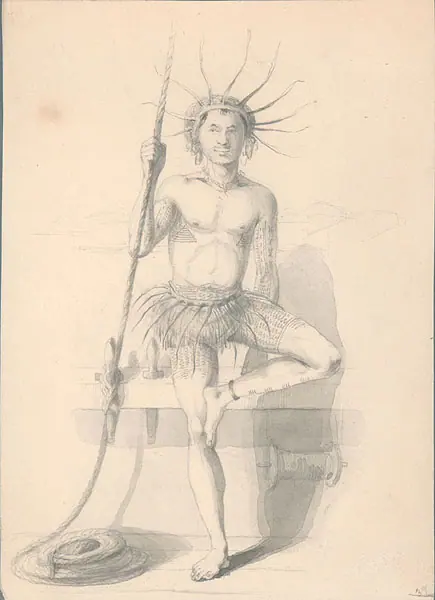
Stay in Tuvalu
Hotels, guesthouses and apartments — compared in one search.
Search hotels
Transfer in Tuvalu
Private driver waiting on arrival — no queues, no surprises.
Book a transfer
Stay online in Tuvalu
Travel eSIM — data the moment you land, no roaming bills.
Get an eSIM