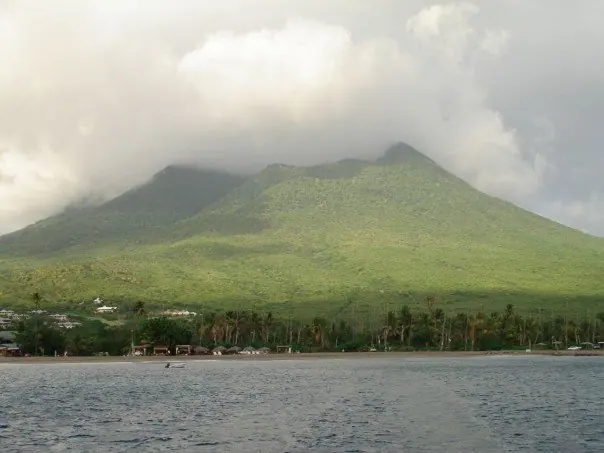
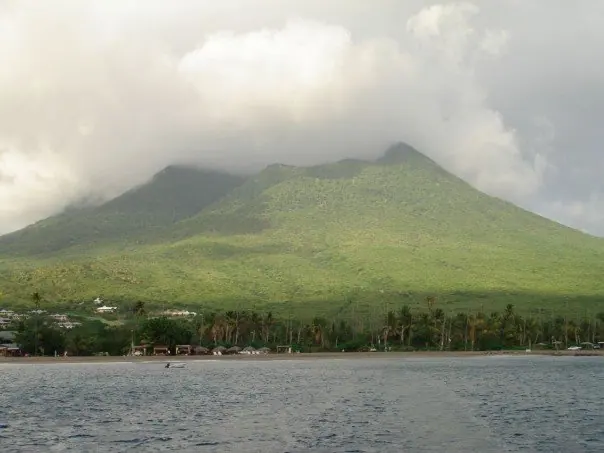
Two small volcanic islands off the eastern Caribbean chain, Saint Kitts and Nevis pack a UNESCO fortress, a cloud-wrapped rainforest peak and some of the region's emptiest beaches into a space you can cross in forty-five minutes by ferry. One island hums with sugar-era history and a lively capital; the other slows you to the pace of a donkey cart and a hot spring. Together they make a week that feels twice as long.
Brimstone Hill Fortress: The Sight You Cannot Skip
Rising almost 800 feet above the sea on Saint Kitts's northwest coast, Brimstone Hill Fortress National Park is the island's defining landmark and a UNESCO World Heritage Site. Begun by the English in the 1690s and expanded over the following century by enslaved labourers who cut and hauled the dark volcanic stone, the fortress earned the nickname 'the Gibraltar of the Caribbean'. Its ramparts, barracks, magazine and water cisterns survive in remarkable condition, and the view from the Prince of Wales Bastion sweeps across to neighbouring islands on a clear day. Allow two to three hours; the climb between the lower and upper tiers is steep, shadeless and best done in sturdy shoes before mid-morning.
Pair the fortress with the surrounding heritage belt along the island's west coast road. Just to the south sits Old Road Town, site of the first English settlement in the Caribbean, and Romney Manor, a former estate whose gardens are dominated by a saman tree believed to be several centuries old; a batik workshop on the grounds still dyes fabric by hand. Nearby Wingfield Estate preserves the stone skeleton of a sugar works and a rum distillery, and Bloody Point marks the river where the island's Indigenous Kalinago population was killed in the 1620s. Together these stops make an easy half-day loop by taxi or rental car.
Practicalities matter here: the fortress charges a modest entry fee, closes in the late afternoon, and the access road is narrow enough that many visitors prefer to let a local driver handle it. Cruise-ship mornings bring the heaviest crowds, so arriving just after opening gives you the ramparts almost to yourself.
Basseterre: Squares, Clock Towers and the Sugar Railway
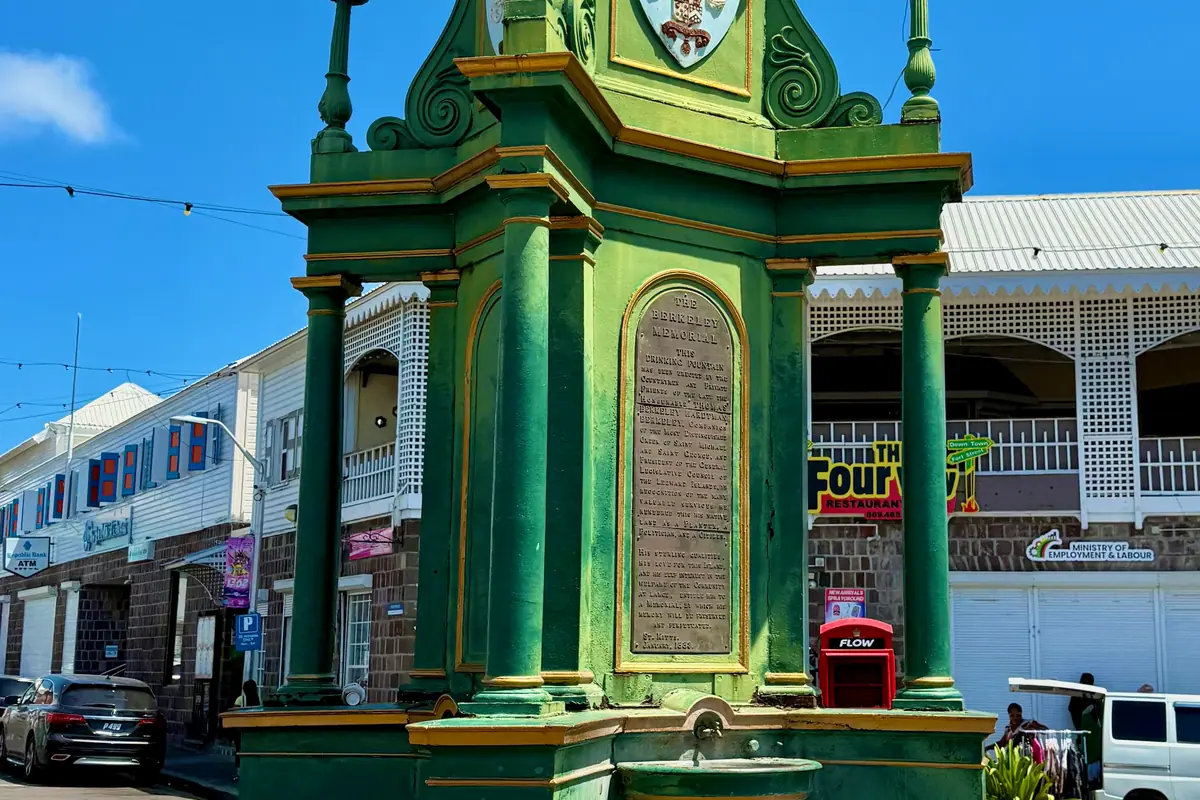
Saint Kitts's capital is small enough to walk in an hour and rich enough to reward a slow morning. The heart of town is the Circus, a roundabout modelled loosely on Piccadilly, with its ornate green Victorian clock memorial standing at the centre. A few steps away, Independence Square was once a slave market and now holds a fountain and a small park ringed by the dignified stone faces of St. George's Anglican Church and the Catholic co-cathedral. On the waterfront, the National Museum occupies the old treasury building and tells the story of sugar, slavery and independence with genuine local voice.
For a completely different angle on the island, board the scenic narrow-gauge railway that loops some thirty miles around the north coast. The three-hour journey runs through cane fields, past villages and fishing boats, along the volcanic Black Rocks, with a choir on board and views into the interior that no road provides. It departs from the Basseterre area and is the single best way to understand how the island's geography shaped its history.
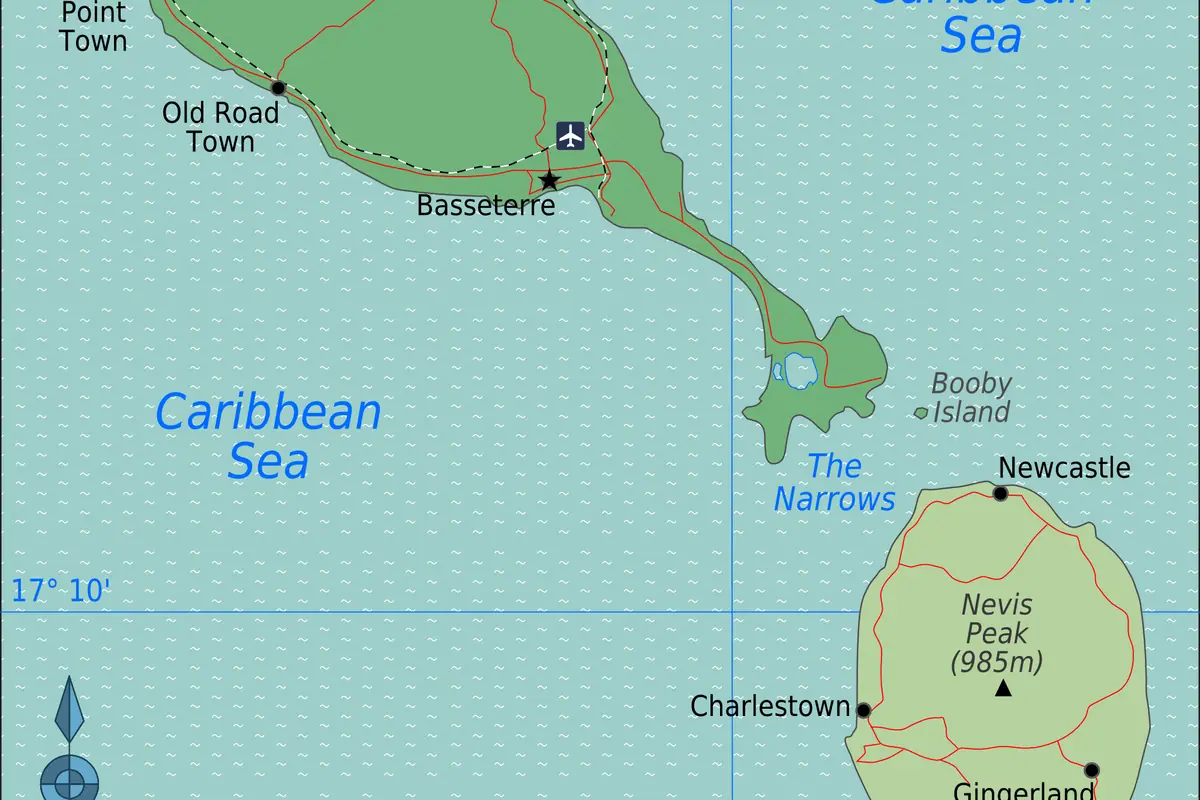
Basseterre is also your transport hub. Ferries to Nevis leave from the deep-water port, and the town's market, bakeries and small restaurants are where you'll find the island's everyday cooking — saltfish, rice and peas, and fresh-caught snapper.
The Southeast Peninsula: Frigate Bay, Friars Bay and Timothy Hill
Saint Kitts narrows into a low, salt-pond-studded isthmus at its southeastern tip, giving you two coasts within a five-minute drive. Frigate Bay splits into a calm Caribbean side and a breezier Atlantic side; the Caribbean beach is the swimming one, while the Atlantic shore is where bodyboarders and walkers go. Between them runs the Strip, a barefoot row of beach bars and grill shacks that comes alive at sunset and stays busy on weekends.
Continue along the peninsula and the beaches get quieter and prettier. South Friars Bay offers calm water and decent snorkelling over rocks and coral, while Cockleshell Bay at the far end looks straight across the channel to Nevis and is shallow enough for small children. Timothy Hill, the famous overlook on the road between them, is the postcard shot: green hills falling away on both sides, Atlantic to the left, Caribbean to the right, Nevis floating on the horizon.
On the island's northeastern shore, the Black Rocks are a short, dramatic stop where lava cliffs drop into surf. Sea turtles nest on some of the peninsula's beaches between roughly March and October, and evening hatchling walks are sometimes organised in season.
Mount Liamuiga and the Rainforest Interior
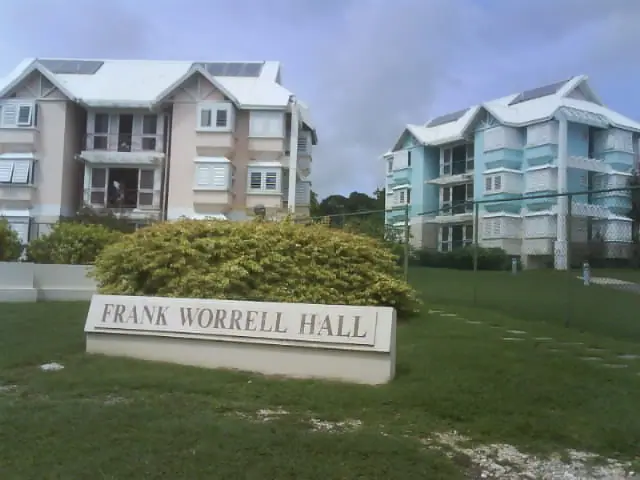
The island's highest point, Mount Liamuiga, is a dormant stratovolcano rising to about 3,800 feet, and hiking to its crater rim is the most rewarding half-day in Saint Kitts. Trails typically start from the Belmont Estate side and climb through farmland into true rainforest — gum trees, strangler figs, giant ferns, wild mango — before emerging at a viewpoint down into the crater, which holds a small lake and a thick green beard of vegetation. Expect four to six hours round trip depending on pace, an early start, plenty of water, and shoes you don't mind destroying in mud. A local guide is strongly advised, both for navigation and because the upper trail is genuinely slippery.
Vervet monkeys are everywhere in these hills, along with hummingbirds and the occasional mongoose, and the forest canopy is loud with them at dawn. If you would rather not climb, the lower rainforest trails near Old Road and the estate gardens give a taste of the same scenery with a fraction of the effort, and zip-line and canopy tours run through the trees above the old sugar works.
Below the waterline, the west coast offers the island's other big adventure: reefs and shipwrecks along the leeward shore around Sandy Point and Brimstone Hill, plus snorkelling and dive trips out to the peninsula. Visibility is generally best from December through April, when the trade winds settle and the sea flattens.
Nevis: Charlestown, Hot Springs and Pinney's Beach
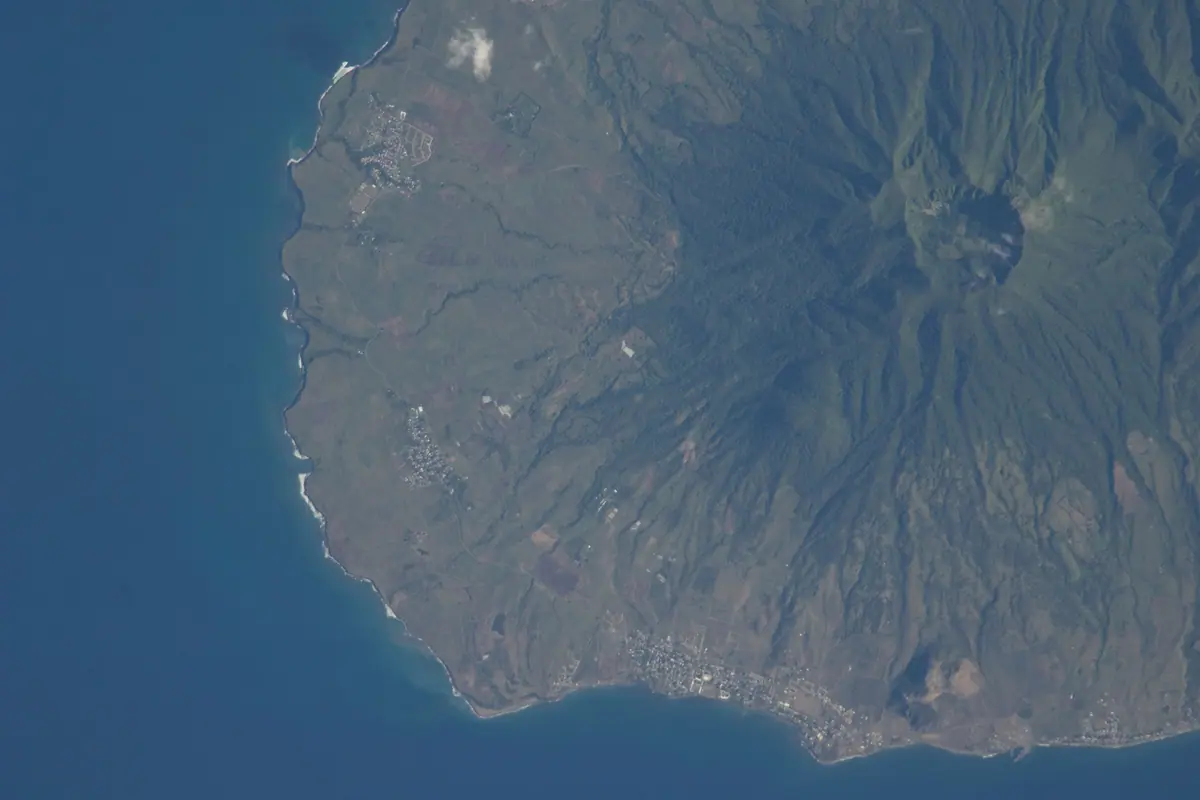
Nevis is Saint Kitts's smaller, sleepier sibling — a single volcanic cone fringed with beaches and dotted with stone ruins from its sugar and cotton past. The ferry from Basseterre takes about forty-five minutes into Charlestown, a tidy grid of Georgian buildings where Alexander Hamilton was born; his birthplace now houses the island's history museum. Nearby, the Bath Hotel, built in the late 1770s and one of the oldest resort buildings in the Caribbean, sits beside springs that still run hot enough to soothe a hiking leg — locals and visitors soak in the public baths for a token fee.
A short drive from town, the island's botanical gardens show off tropical plantings and the ruins of an old estate, while the small Jewish cemetery above Charlestown recalls a Sephardic community that flourished here in the 1600s. For the classic Nevis view, climb — or at least admire — Nevis Peak, the 3,200-foot cloud-capped summit that dominates every photograph of the island. The trail up is steep, rooty and muddy; treat it as a serious morning, not a stroll.
Then there are the beaches. Pinney's Beach is a long, soft ribbon of grey-gold sand with calm water and views back to Saint Kitts — long enough that you can walk for an hour and pass only a handful of people. Oualie Beach, near the northern ferry point, is the launchpad for diving and sunset sails, and the quieter coves around Nisbet and the island's plantation inns are where Nevis really feels like the Caribbean of fifty years ago.
When to Go and How to Get Between the Islands
The dry season from December to April is the sweet spot: temperatures in the mid-20s to low 30s Celsius, steady trade winds and the clearest water. It is also peak season, so book accommodation early. Late December brings the island's biggest party, the Sugar Mas carnival, with parades, calypso and street dancing running from Boxing Day into the first days of January. Late June brings a large music festival to Saint Kitts, and Nevis answers with Culturama at the end of July and the start of August. The wetter, riskier months run from roughly August to October, in the heart of hurricane season; September and October are also the quietest and cheapest.
Getting around is straightforward once you accept that you will drive on the left. Rental cars are available on both islands and are the most flexible option for exploring the southeast peninsula or Nevis's back roads, though narrow lanes, roundabouts and roaming livestock keep speeds low. Taxis are plentiful and drivers double as excellent guides for a half-day of sightseeing — the standard way to see Brimstone Hill, Romney Manor and the coast in one hit. Public minibuses run cheaply along the main roads.
The two islands are linked by a regular passenger ferry between Basseterre and Charlestown, plus a smaller vehicle ferry and short flights, so a split stay is easy: two or three nights on Saint Kitts for the fortress, the railway and the peninsula, then three or four on Nevis for hot springs, plantation inns and unhurried beach time. US dollars are widely accepted, the local currency is the Eastern Caribbean dollar, and service is relaxed — plan around island time rather than against it.
How to Build a Week Around Both Islands
Start with three nights based near Frigate Bay or the Basseterre area on Saint Kitts. Give your first full day to the northwest heritage belt — Brimstone Hill Fortress in the morning, Old Road Town, Romney Manor and Wingfield Estate in the afternoon — and your second to either the scenic railway or the Mount Liamuiga crater hike, finishing with sunset on the Strip. Squeeze the capital's Circus, Independence Square and waterfront museum into a half-day before or after.
Then take the ferry across and settle into Nevis for three or four nights. Spend one day on Charlestown's museum, the hot springs and the botanical gardens, one on Pinney's Beach with nothing scheduled at all, and one either climbing Nevis Peak or heading out on the water to dive, snorkel or sail. Because the islands are so compact, this rhythm leaves room for the thing both destinations do best: long, unscheduled afternoons with a rum punch and no particular plan.
Frequently asked questions
How many days do you need in Saint Kitts and Nevis?
Five to seven days is ideal. Three nights on Saint Kitts covers Brimstone Hill Fortress, Basseterre, the southeast peninsula and either the scenic railway or a Mount Liamuiga hike; three or four nights on Nevis adds Charlestown, the hot springs, Pinney's Beach and Nevis Peak. A long weekend only really works if you stick to one island.
What is the best time of year to visit Saint Kitts and Nevis?
December to April brings the driest weather, steady trade winds and clearest diving conditions, but it is also the busiest and priciest window. Late December means carnival on Saint Kitts, late June a major music festival, and late July Nevis's Culturama. August to October is the wettest and most storm-prone period, and also the quietest.
Is Nevis worth visiting, or should I stay only on Saint Kitts?
Nevis is absolutely worth the crossing. The passenger ferry from Basseterre to Charlestown takes about forty-five minutes, making it feasible as a long day trip, but an overnight or two lets you enjoy the hot springs, the plantation inns and long empty stretches of Pinney's Beach without watching the clock.
Do you need a car in Saint Kitts and Nevis?
Not necessarily. Taxis are easy to arrange and drivers often act as guides for half-day sightseeing loops, which suits the fortress and heritage-belt circuit well. If you want to explore the southeast peninsula or Nevis's back roads at your own pace, a rental car is more flexible — just remember traffic drives on the left and roads are narrow.
What should first-time visitors not miss?
Brimstone Hill Fortress National Park and the Timothy Hill overlook on Saint Kitts, plus the scenic sugar railway if time allows. On Nevis, prioritise Charlestown's historic quarter, the Bath hot springs and a slow afternoon on Pinney's Beach. Together they cover the history, scenery and beach time that define both islands.
Plan it — experiences in Saint Kitts and Nevis
Live search, booked directly with trusted providers.
Sort the rest of your trip
Everything for Saint Kitts and Nevis, in one place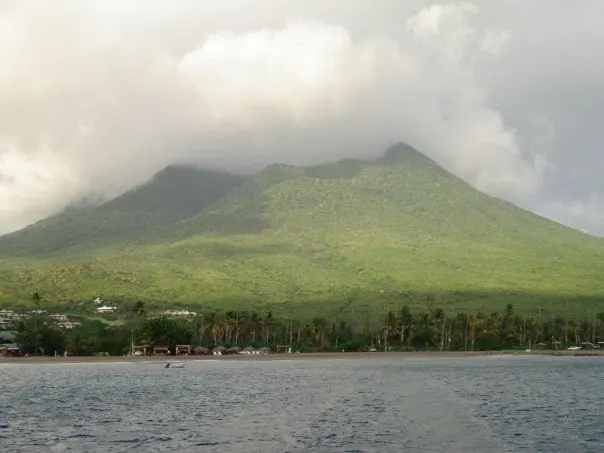
Stay in Saint Kitts and Nevis
Hotels, guesthouses and apartments — compared in one search.
Search hotels
Transfer in Saint Kitts and Nevis
Private driver waiting on arrival — no queues, no surprises.
Book a transfer
Stay online in Saint Kitts and Nevis
Travel eSIM — data the moment you land, no roaming bills.
Get an eSIM