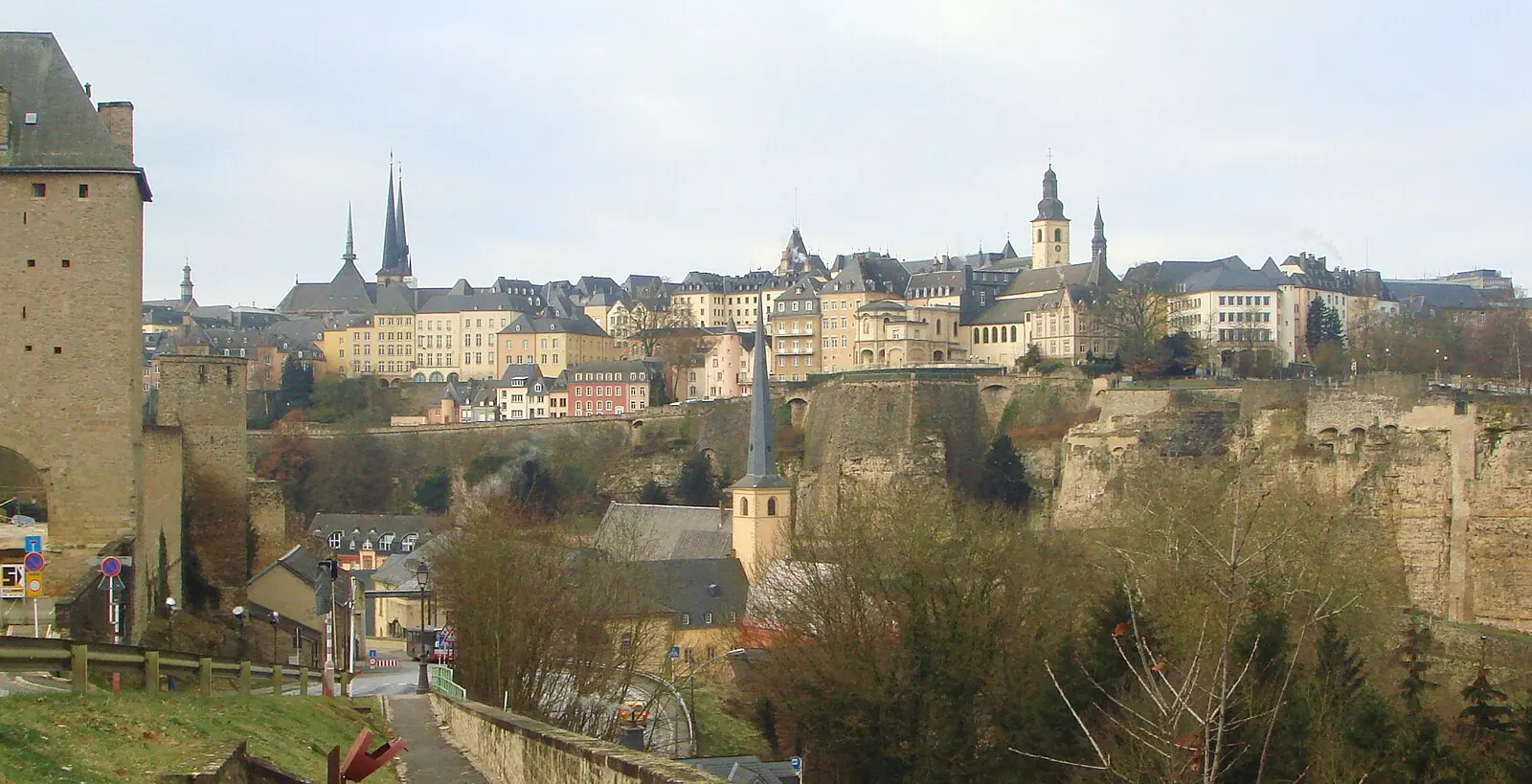
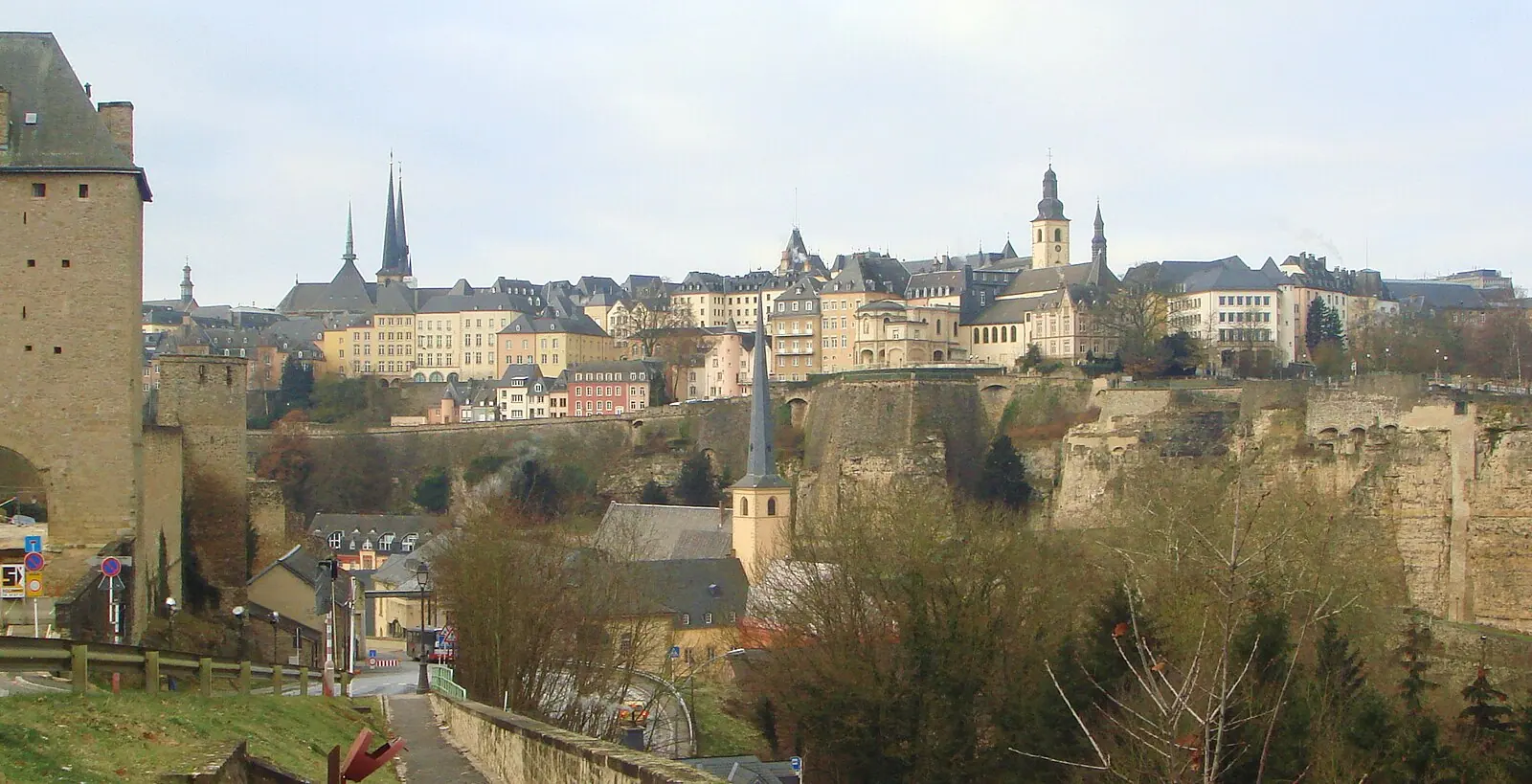
Luxembourg ambushes you with scale. A country you can drive across in an hour hides a capital balanced on cliffs above two rivers, a fortress city so improbable that the whole old quarter was handed UNESCO World Heritage status, and a countryside of medieval castles, wine villages and mossy gorges that most travellers never get to. This is where to spend your time.
Above and Below the City: The Chemin de la Corniche and the Bock Casemates
Luxembourg City sits on a rocky plateau that the Alzette and Pétrusse rivers have spent millennia slicing into gorges, and the best way to understand it is to start on the rim. The Chemin de la Corniche runs along the 17th-century ramparts between Rue Sigefroi and the Bock promontory, looking straight down onto the rooftops of the Grund below. Locals call it Europe's most beautiful balcony, and twenty minutes of walking here will convince you they aren't exaggerating — you'll stop at every bend.
Directly beneath the promontory lies the reason the city exists at all. The Bock Casemates are a honeycomb of subterranean galleries first cut into the rock by Spanish engineers in the 1640s and later stretched into some seventeen kilometres of tunnels, batteries and hiding places. They sheltered tens of thousands of people during the Second World War. Inside it stays cool and slightly damp all year, the ceilings are low and the footing uneven, so grippy shoes and a light jacket are sensible. Allow about an hour underground; the complex opens seasonally, roughly from spring through late autumn.
Come early for soft light and quiet, or time your descent for late afternoon, when the valley turns gold. The fortifications and old quarters were inscribed as a UNESCO World Heritage Site in 1994, and once you've stood on the Rham plateau looking back at the Bock, the reason is obvious.
Palaces, Squares and a Cathedral: The Old Town on Foot
The historic centre is compact enough to cover in half a day, and it rewards slow wandering rather than a checklist. Place d'Armes is the city's living room, ringed with café terraces and a bandstand that fills with music on summer evenings. A few minutes uphill, Place Guillaume II — universally known as the Knuedler — holds the equestrian statue of Grand Duke William II in front of the city hall, and hosts a produce and flower market several mornings a week.
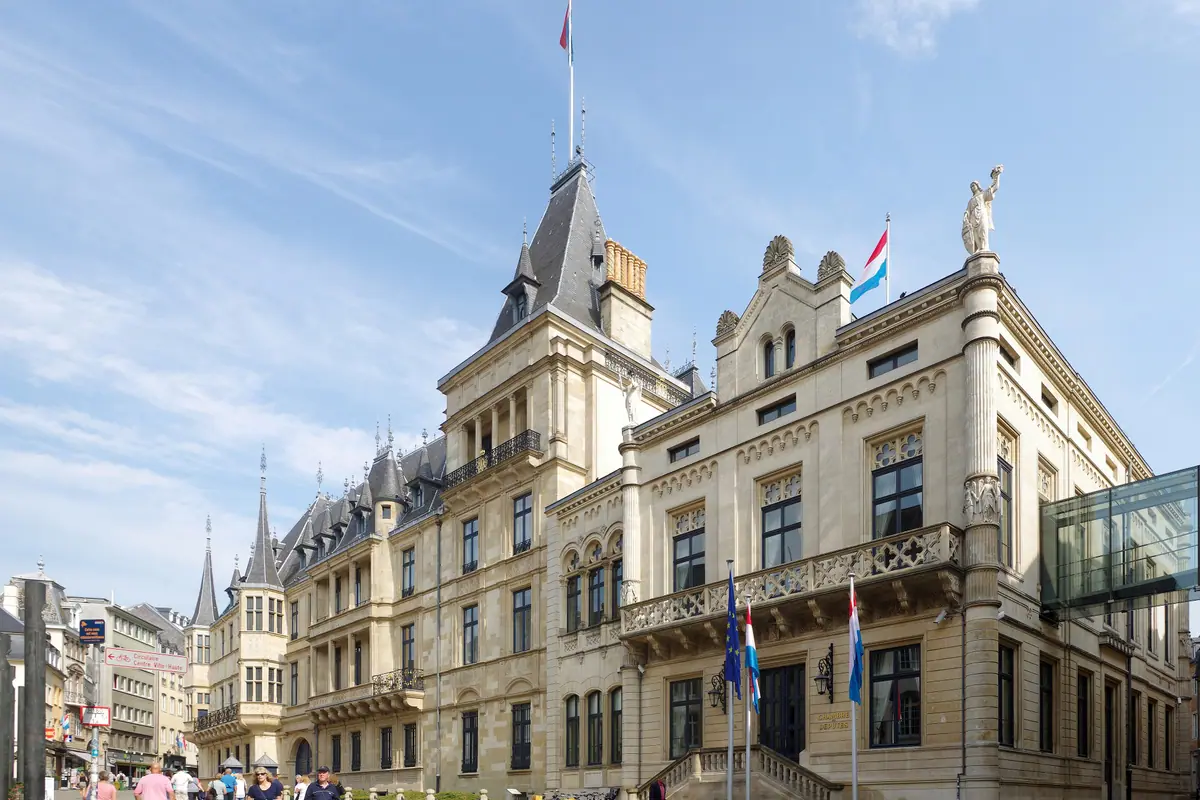
The Grand Ducal Palace anchors the old town, its Renaissance façade and turrets standing on a site that served as the city hall until the end of the 19th century. In summer, the guard-changing ceremony draws a small crowd outside the gates, and guided interior visits run during the warmer months only — book ahead, because places are limited. Two lanes away, Notre-Dame Cathedral began life as a 17th-century Jesuit church before being elevated to cathedral status, and its crypt holds the vault of the grand-ducal family. Entry is free, and the contrast between the plain exterior and the richly carved interior surprises most first-time visitors.
From there, follow the pedestrian lanes to Place de la Constitution, where the Gëlle Fra memorial gazes out over the Pétrusse valley. Just beyond it, the Pont Adolphe carries two decks — one for traffic, one for pedestrians — and the walkway gives you a long view down the wooded gorge. It's the single best free viewpoint in the city, and it's busiest in the hour before sunset.
Art, History and the Kirchberg Plateau
Luxembourg's museum scene punches well above the country's size. The Mudam, the city's museum of modern art, occupies a glass-and-steel building by I. M. Pei set in the park around Fort Thüngen, where the old fortress walls frame the new architecture beautifully. Contemporary exhibitions rotate through the galleries, and the atrium alone is worth the detour. Next door, the Dräi Eechelen museum tells the story of the fortress itself, from medieval stronghold to dismantled and rebuilt city.
Back in the old town, the National Museum of History and Art on Marché-aux-Poissons walks you from Roman Luxembourg to the present, and its centrepiece — a vast Roman mosaic floor unearthed at Vichten — is genuinely stunning. Nearby, the city history museum spreads across several floors of a restored patrician house and explains how a cliff-top fortress became a banking capital. Both are calm, well-labelled and rarely crowded on weekday mornings.
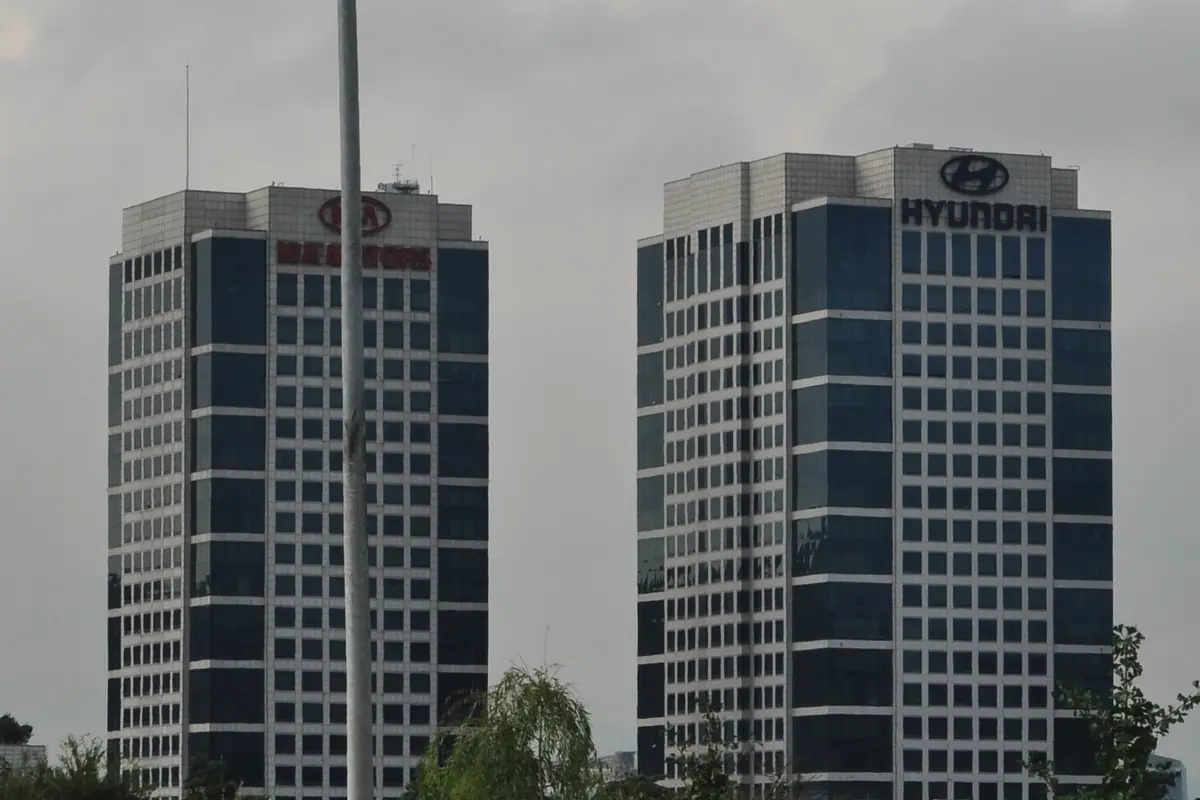
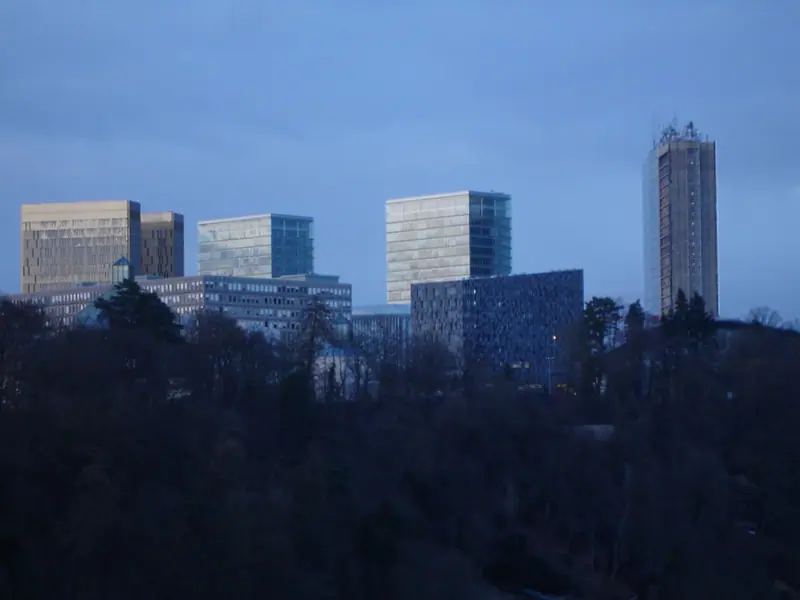
The Kirchberg plateau, a short tram ride across the valley, is the city's modern face: EU institutions, wide boulevards and the Philharmonie, a sweeping concert hall designed by Christian de Portzamparc with an acoustic reputation that draws major orchestras. The Grand Duchess Charlotte Bridge, known locally as the Red Bridge, links it to the centre and offers its own drama at night, when the valley below disappears into darkness.
Down in the Grund: Neumünster Abbey and the Valley Lanes
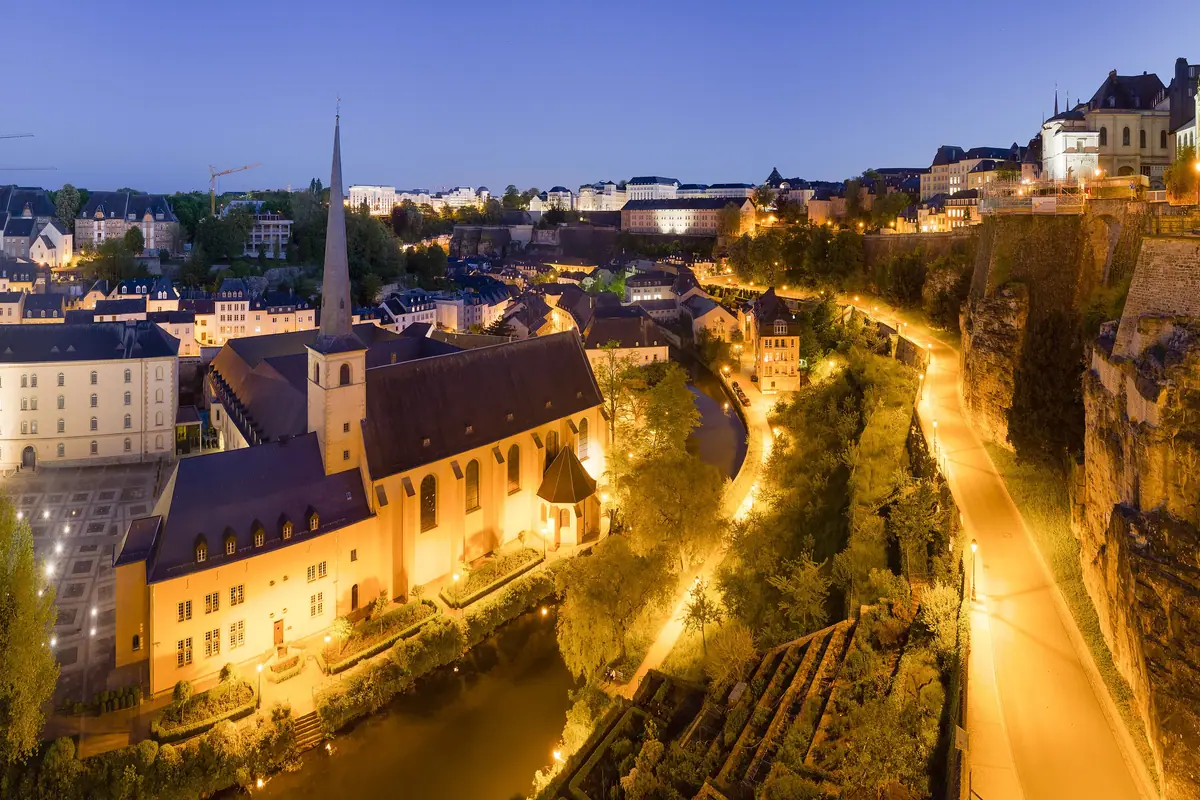
Descend into the Grund and the city changes character entirely. Cobbled lanes thread between stone houses along the Alzette, and the centrepiece is Neumünster Abbey, a former Benedictine monastery that now functions as a cultural centre hosting concerts, exhibitions and festivals. Beside it stands St John's Church, whose origins reach back more than a thousand years. In the evening, the Grund becomes the city's most atmospheric quarter for dinner and a drink, with small kitchens, wine bars and a low hum of conversation in the valley.
A second lower town, Pfaffenthal, is reached by a free glass panoramic lift from the upper city — a two-minute ride that feels like stepping into a different century. From the valley floor you can walk the riverside paths back toward the centre, past the Vauban towers, or take the funicular up to Kirchberg. These lift and funicular connections are the sort of quiet engineering detail that makes Luxembourg so walkable despite its gorges.
If you have time, continue downstream to Clausen, where the old breweries and riverside terraces sit beneath the cliffs. It's a gentle hour on foot from the Grund and a good way to see how the city knits its valleys together.
Beyond the City: Vianden, the Mullerthal and the Moselle
Vianden Castle is the postcard image of Luxembourg and deserves its reputation: a Romanesque and Gothic fortress restored from near ruin, perched above a small town on the River Our, with a chairlift rising over the valley for those who'd rather not climb. The writer Victor Hugo spent time in exile here, and the house where he stayed is open to visitors. It's roughly an hour from the capital by train and bus, making it an easy half-day or full-day outing.
North-east of the city, the Mullerthal region — nicknamed Little Switzerland — is a landscape of sandstone crags, fern-filled gorges and streams. The Mullerthal Trail runs 112 kilometres across three linked loops, but day walkers can sample the best of it around the Schiessentümpel waterfall near Echternach, a small town with a Benedictine abbey and a lakeside beach. Spring brings wildflowers and rushing water; October turns the beech woods copper and is arguably the finest month to walk here.
For something entirely different, head south to the Moselle valley, where vineyards terrace the riverbanks and villages such as Remich pour crisp Rieslings and crémant. Schengen, on the river's edge, is where the border-free travel agreement that reshaped Europe was signed in 1985, and it makes a quietly interesting stop between wine tastings. Farther north, in the Ardennes, Bourscheid Castle and the tiny loop of Esch-sur-Sûre offer the kind of fortified silence that city walls can't.
When to Go and How to Get Around
May, June and September are the sweet spots: mild temperatures, long daylight and a city that's lively without feeling squeezed. The national day on 23 June is an experience in itself, with torchlight parades, street parties and fireworks over the valley — book accommodation well ahead if you're coming for it. July and August are warm and busy, and a few independent restaurants close for part of the month, so check before planning a special dinner. Winter is quiet and grey, but the Christmas markets around Place d'Armes and the station district, along with the Winterlights illuminations, give the old town a genuinely festive glow.
Getting around is one of Luxembourg's great pleasures: public transport — buses, trains and the city tram — has been free to use nationwide since 2020, including journeys out to Vianden, Echternach and the Moselle. That makes day trips absurdly easy. Distances are short, but the terrain is vertical, so plan on a mix of walking and short rides rather than one long march.
Allow two full days for the capital — one for the old town, fortifications and museums, one for the Grund, Pfaffenthal and the Kirchberg plateau — then add two or three more for castles, walking and wine. Pack layers regardless of season; the valleys run cooler than the plateau, and rain arrives quickly. Book palace tours and popular castle visits in advance during summer, and you'll have the whole country without the friction.
Frequently asked questions
How many days do you need in Luxembourg?
Two full days cover Luxembourg City comfortably: one for the old town, the Chemin de la Corniche, the Bock Casemates and the museums, another for the Grund, Pfaffenthal and Kirchberg. Add two or three days if you want Vianden Castle, the Mullerthal Trail and the Moselle wine villages. Because public transport is free nationwide, day trips cost you only time.
Are the Bock Casemates worth visiting?
Yes — they're the single best introduction to why Luxembourg City looks the way it does. Expect roughly an hour underground in cool, dim, low-ceilinged galleries carved from the 1640s onwards. Wear shoes with grip, bring a light jacket even in summer, and check seasonal opening dates, as the casemates close outside the warmer months.
Is public transport really free in Luxembourg?
It is. Since 2020, buses, trains and the city tram have been free to ride across the entire country, including regional routes to Vianden, Echternach, Remich and the Moselle valley. You simply board — no ticket, no validation — which makes spontaneous day trips genuinely easy.
What is the best day trip from Luxembourg City?
Vianden Castle is the classic choice, about an hour away by train and bus, with a restored medieval fortress, a chairlift over the Our valley and Victor Hugo's former exile house. If you prefer walking, head to Echternach and the Mullerthal for sandstone gorges and the Schiessentümpel waterfall; if you prefer wine, the Moselle villages around Remich are the answer.
When is the best time to visit Luxembourg?
Late May through June and September into October offer the best balance of mild weather, long days and manageable crowds. June 23 brings the national day celebrations and fireworks. December is cold but atmospheric thanks to the Christmas markets and Winterlights. July and August are busiest, and some restaurants close for holidays during that period.
Plan it — experiences in Luxembourg
Live search, booked directly with trusted providers.
Sort the rest of your trip
Everything for Luxembourg, in one place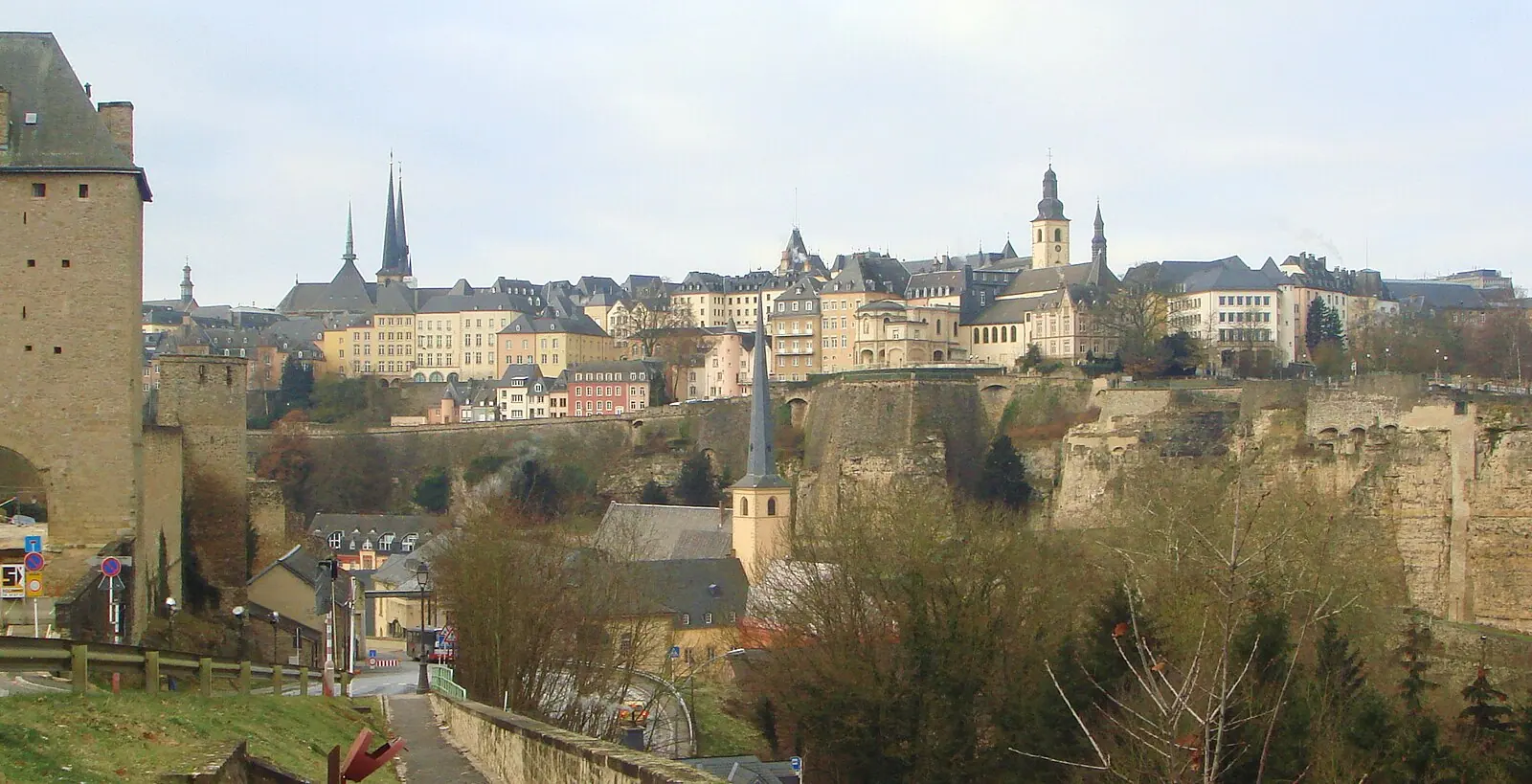
Stay in Luxembourg
Hotels, guesthouses and apartments — compared in one search.
Search hotels
Transfer in Luxembourg
Private driver waiting on arrival — no queues, no surprises.
Book a transfer
Stay online in Luxembourg
Travel eSIM — data the moment you land, no roaming bills.
Get an eSIM