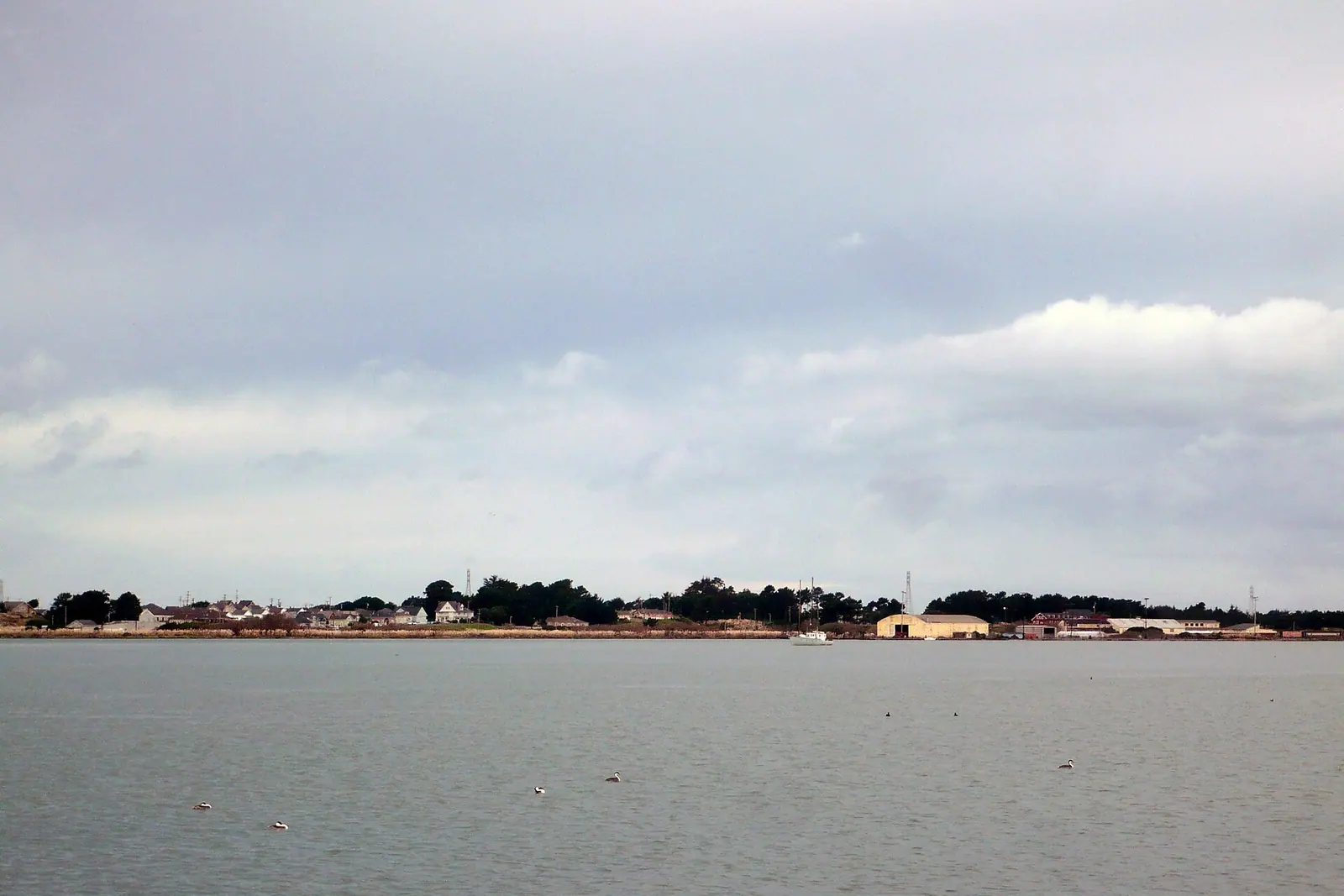
Samoa decides what kind of traveller you are the moment you land: do you want a harbour-view room a short walk from Apia's markets, or a thatched fale with sand for a floor and the reef breaking ten metres away? The reward for choosing well is an archipelago where the two main islands, Upolu and Savai'i, pack volcanic craters, lava-tube pools, blowholes and some of the South Pacific's whitest sand into a week of easy driving.
Apia and the Harbour: Samoa's Capital Base
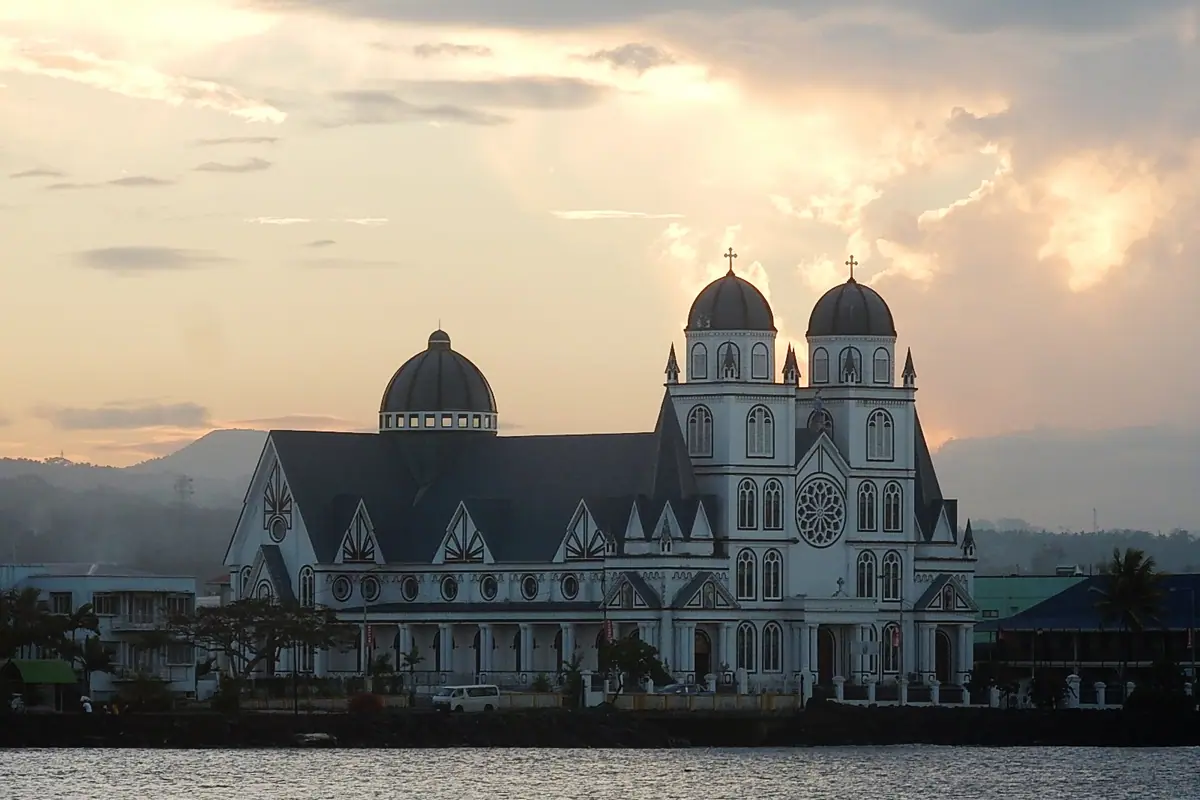
Most first nights start in Apia, the country's small, low-rise capital on Upolu's north coast, where the international airport at Faleolo is roughly a 45-minute drive west. Stay along Beach Road or out on the Mulinu'u Peninsula and you get harbour sunsets, a string of restaurants, and the easiest access to town sights you can walk to in an afternoon: the white Immaculate Conception Cathedral with its painted ceiling, the noisy, colourful stalls of the Maketi Fou produce and fish market, and the handicraft sellers along the seawall.
This is also the base for Samoa's literary pilgrimage. The Robert Louis Stevenson Museum at Vailima preserves the villa where the author spent his last years, with his desk, library and grave up a steep track on Mount Vaea — allow an hour for the house and another 90 minutes for the climb and the view back over Apia. A ten-minute drive from the centre, the Palolo Deep Marine Reserve offers snorkelling straight off the beach at high tide, a shallow coral garden that suits beginners and children.
Apia accommodation spans restored colonial-era waterfront buildings with verandas and ceiling fans, modern air-conditioned hotels with pools used by business travellers and government visitors, and small family-run guesthouses in the villages just outside town. Rooms here are about convenience: reliable power, hot water, airport transfers and a base for day trips east and south. If you only have three nights in the country, this is where to anchor the first and last.
Apia sleeps early by Pacific standards, and Sundays are noticeably quiet, with most shops shut and church choirs audible across the whole valley. That rhythm is worth planning around rather than fighting.
Upolu's South Coast: Beach Fales and Coral Lagoons
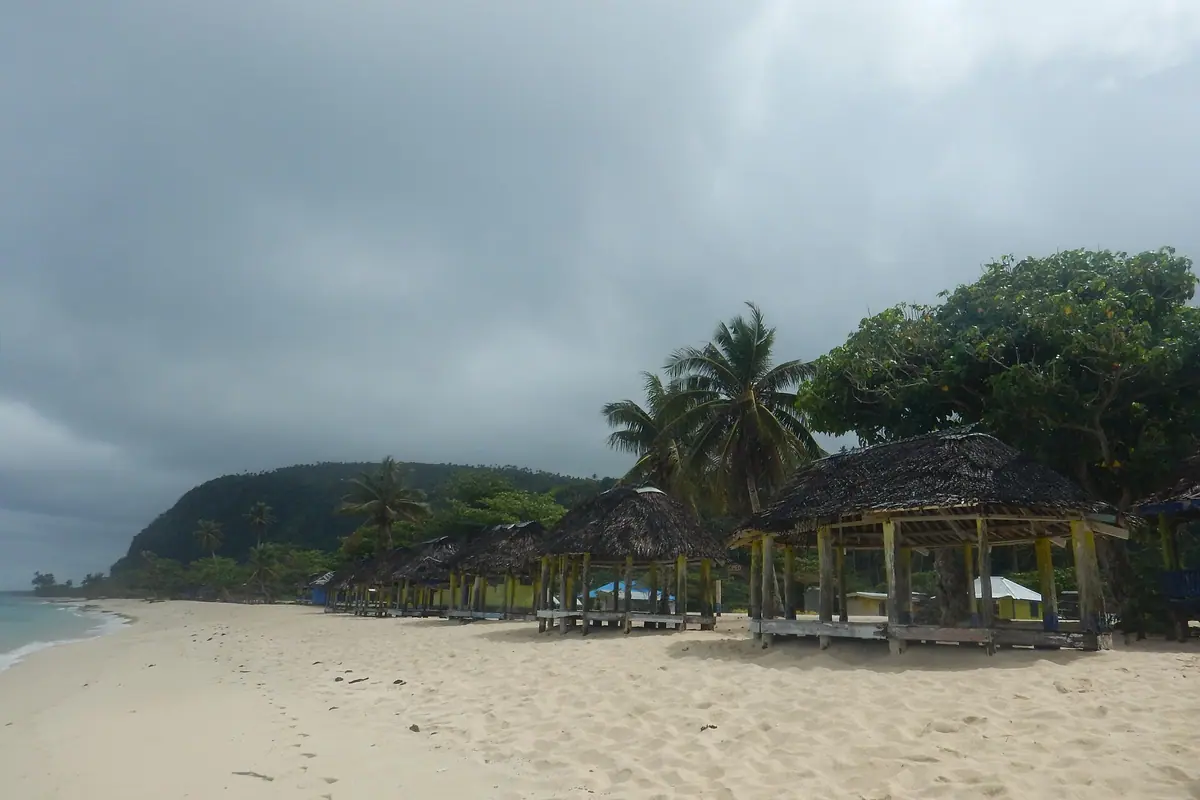
Drive the Cross Island Road south from Apia and the landscape turns to taro plantations, waterfall gullies and, eventually, a coast of pale sand and turquoise lagoon. Lalomanu Beach on the southeast tip is the postcard: a long curve of white sand backed by open-sided fales, with Namua Island reachable by a short boat ride and good snorkelling on the outer reef. Most travellers stay here in traditional beach fales — a mattress, a mosquito net, a woven blind for privacy, shared cold-water showers and communal meals cooked by the family who owns the land.
A little further west, the villages of Salamumu, Maninoa and Saanapu hold a cluster of boutique resorts set in gardens behind the sand, where the rooms are enclosed, the bathrooms private and the kitchens ambitious. The Saanapu mangrove forest nearby is worth a guided paddle, and the coastline between them hides small, near-empty beaches you can have to yourself on a weekday. The trade-off for this stretch is rain: the south coast catches more of it than Apia, so pack a light rain shell even in the dry season.
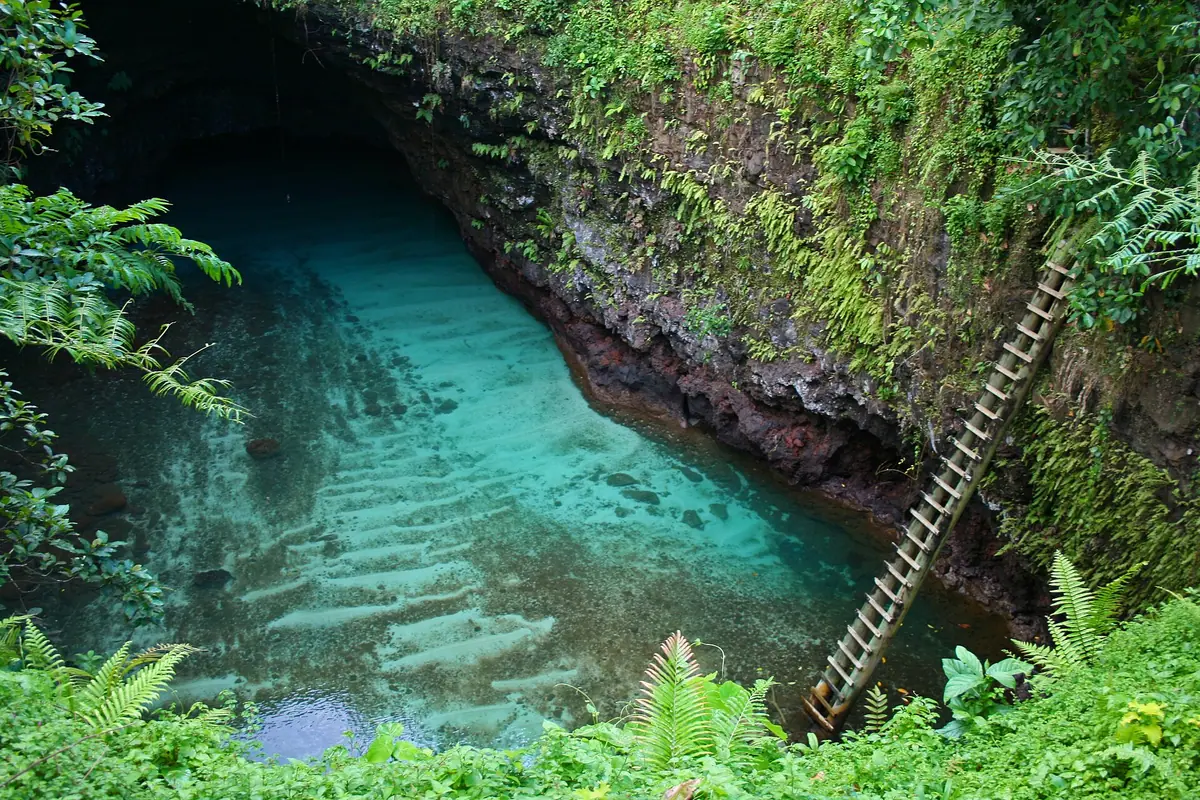
Wherever you sleep on this coast, you are within a short drive of the country's single most photographed sight, the To Sua Ocean Trench — a collapsed lava tube filled with brilliant green seawater, reached by a steep wooden ladder, with a second natural pool and clifftop gardens beside it. Go early, before the day-trippers arrive from Apia, and bring reef-safe sun protection.
Savai'i: Where Samoa Slows Down
Samoa's largest island feels a generation quieter than Upolu. You reach it by ferry from Mulifanua wharf on Upolu's northwest tip to Salelologa, a crossing of roughly an hour to ninety minutes, or by a short domestic flight. Salelologa has the island's main market and ATMs, but most visitors drive straight on to the northern villages of Manase and Fagamalo, where beach fales and small resorts sit on a calm lagoon where turtles graze on the seagrass and the sunsets are the best in the country.
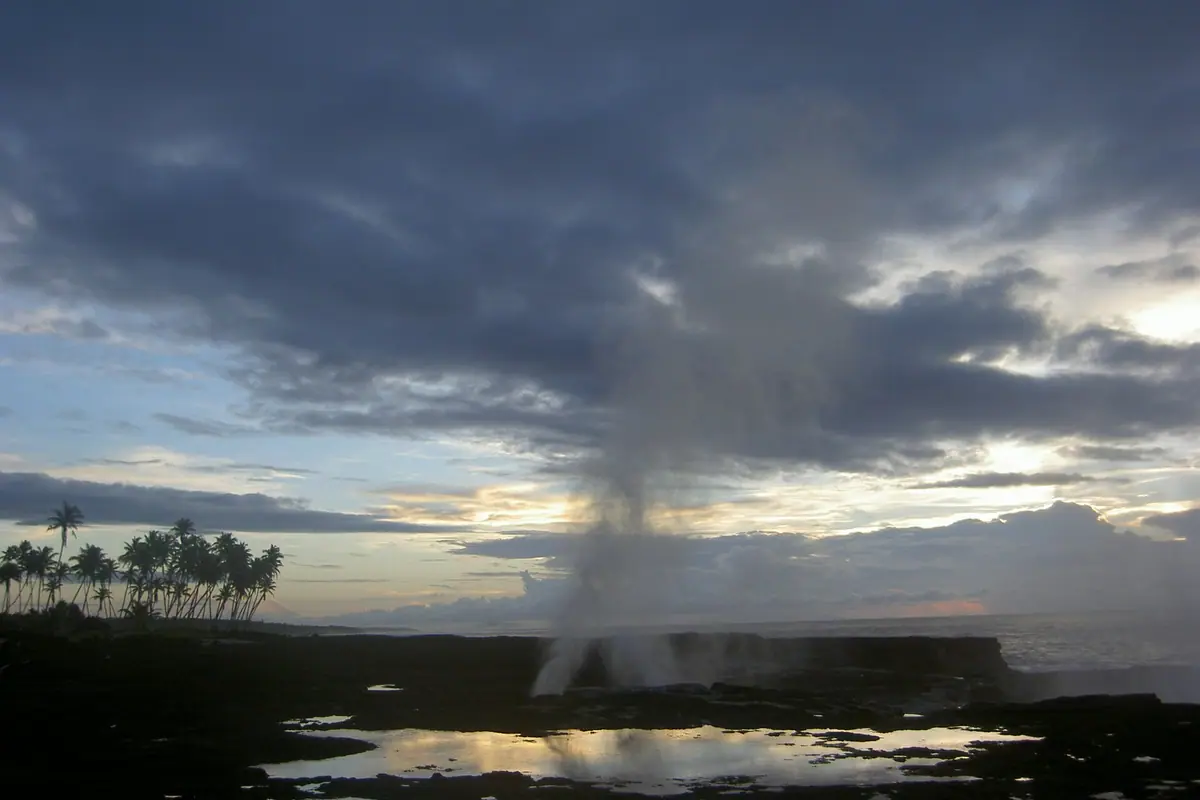
Savai'i's west and south are the wild side. At Taga, the Alofaaga Blowholes fire jets of spray high above the black lava shelf — a local guide will crack a coconut into the surge to show you the height. Nearby, the Saleaula Lava Fields from the early 1900s eruption half-buried a church, leaving the walls standing in a sea of rock. Further west at Falealupo you can walk a suspended canopy walkway above the rainforest and, at Cape Mulinu'u, stand at what is often called the last place on earth to see the sunset each day.
Round out a Savai'i stay with the Tafua Peninsula Rainforest Preserve, run by the village and good for birdlife and crater-edge views; the Afu Aau Waterfall near Palauli, a cool freshwater swim in a jungle basin; and the star-shaped mound of Pulemelei in the Letolo plantation, the largest ancient structure in Polynesia. Savai'i rewards a rental car and two or three unhurried nights — buses exist but run to their own timetable, and taxi fares add up fast.
Must-See Attractions Within Easy Reach of Your Room
The joy of Samoa is that the headline sights sit on a single loop road rather than at the end of expedition-grade detours. On Upolu's east coast, the Piula Cave Pool is a freshwater lava tube open to the sea, with small fish drifting through the clear water and a small entry fee paid at the theological college above. A short drive inland from the south coast road, the Papapapaitai Falls plunge into a forested gorge visible from a roadside lookout, and the O Le Pupu-Pue National Park protects the ridge country in between, with the tiered Togitogiga Falls and swimming holes a fine picnic stop.
Hikers should put Mount Vaea and the Lake Lanoto'o track on the list. The Vaea climb to Stevenson's tomb takes about 45 minutes up through scrub with a steep, humid push at the top; Lanoto'o, a crater lake in the hills above Apia, needs a guide and a half day, and is famous for its introduced goldfish and orchid-edged banks. Both are best tackled in the early morning before the heat settles.
On Savai'i, add the Falealupo canopy walkway and the coastal blowholes to any itinerary, and consider the boat trip to Namua Island off Lalomanu for a half day of snorkelling. Set aside two hours for To Sua Ocean Trench, an hour each for the Stevenson museum and Piula, and a full day for any cross-island drive — Samoan roads are slow, villages have speed humps, and you will want to stop constantly.
Choosing Your Stay: Fales, Resorts and Fa'a Samoa Etiquette
Samoa's accommodation ladder runs from open beach fales, where you sleep behind a woven blind and share a cold shower block, up through enclosed fales with private bathrooms and ceiling fans, to garden resorts with pools, air conditioning, hot water and restaurant menus, and finally to Apia's business-standard hotels. Prices climb steeply with each rung, and the cheapest fales often deliver the most memorable nights — waves audible all night, meals of fresh fish and taro served at a long table, and a genuine welcome from the family that owns the land.
Expect some practical quirks regardless of tier. Wi-Fi is patchy and often slow, power can flicker in remote villages, and many resorts run on solar or generators. Air conditioning is common in Apia and rare on the coast; ceiling fans and open louvres do most of the work. Cash matters: small entry fees at waterfalls, trenches and reserves are paid in tala, and ATMs are concentrated in Apia and Salelologa, so carry more than you think you need.
Village etiquette is not optional. Wear a lava-lava or something covering shoulders and knees when walking through a village, never in swimwear; ask before photographing people or a fale; and keep voices low during evening prayer, when the whole country pauses. Sundays are for church and family, most businesses close, and the sight and sound of massed a cappella singing is one of the country's great free experiences. Respect the reef, too: stand on sand rather than coral, and choose reef-safe sunscreen.
When to Go and How to Book
The dry season, roughly May to October, brings lower humidity, steadier trade winds and the most reliable beach weather — this is peak season, and rooms on the south coast and in Manase fill up weeks ahead, especially during school holidays and around the Teuila Festival in Apia each September, when fautasi longboat races and choirs take over the harbour. The wet season, November to April, is hotter, greener and cheaper, with short heavy downpours rather than all-day rain, but it overlaps the cyclone season from December to March, so travel insurance and flexible plans are wise.
Two cultural dates are worth building a trip around. White Sunday in October is a nationwide children's church celebration, with villages in white and feasts after the service. Late October and November bring the palolo rising, when reef worms are harvested at dawn and sold in markets — ask locally before joining, as it is a village affair. Independence celebrations on 1 June fill Apia with parades and dancing.
For logistics, fly into Faleolo and decide early whether you are splitting your stay between Upolu and Savai'i or staying put. Splitting means ferry timings to Salelologa, so book the crossing or the short domestic hop in advance during peak months. If you plan to drive, arrange a rental car and a local driving permit — issued through the rental company or police, and required even for a short hire. Drive on the left, take the coastal road slowly, and book your first night near the airport or in Apia so that a late arrival does not mean a night drive on unfamiliar roads.
Frequently asked questions
What is the difference between a beach fale and a hotel room in Samoa?
A beach fale is a traditional open-sided thatched hut, usually with a mattress, mosquito net and woven privacy blinds, shared cold-water showers and meals cooked by the owning family. A hotel or resort room is enclosed, with a private bathroom, and often adds hot water, air conditioning, a pool and a restaurant. Fales are far cheaper and much more atmospheric; resorts are more comfortable and private.
Should I base myself on Upolu or Savai'i for a first visit?
Upolu is the easier introduction: the international airport, Apia's hotels and markets, the Stevenson museum, Piula Cave Pool, Lalomanu Beach and the To Sua Ocean Trench are all within a day's driving. Savai'i is quieter and wilder, with the Alofaaga Blowholes, the Saleaula Lava Fields and the Falealupo canopy walkway. With a week or more, split your stay; with three or four nights, stay on Upolu.
When is the best time to visit Samoa?
May to October is the dry season, with lower humidity and the best beach conditions, and it is also the busiest and priciest period. November to April is warmer and wetter with occasional heavy showers, and carries a cyclone risk from December to March. September's Teuila Festival and October's White Sunday are the standout cultural dates.
Do I need to rent a car in Samoa?
It helps enormously. Public buses exist but are infrequent and follow village schedules, and taxis get expensive over long distances. Rental cars are available in Apia and at Salelologa, and you must buy a temporary local driving permit, usually arranged through the rental company or the police. Samoans drive on the left, and village speed humps make journeys slower than the map suggests.
Are shops, restaurants and attractions open on Sundays?
Mostly not. Sunday is reserved for church and family in Samoa, so shops, markets and many restaurants close, and some beach fale operations restrict activities out of respect for the Sabbath. Larger hotels usually keep a restaurant open for guests. Plan travel days, fuel and cash around Saturday, and treat the sound of village choirs as part of the experience rather than an inconvenience.
Sort the rest of your trip
Everything for Samoa, in one place
Transfer in Samoa
Private driver waiting on arrival — no queues, no surprises.
Book a transfer
Things to do in Samoa
Skip-the-line tickets, guided tours and standout experiences.
See experiences
Stay online in Samoa
Travel eSIM — data the moment you land, no roaming bills.
Get an eSIM