Samoa arrives in stages: the first warm, rain-heavy breath of air on the tarmac at Faleolo, the long green sweep of coconut palms along the coast road, then the pastel waterfront of Apia and the smell of woodsmoke drifting from open-sided fales. A single week is enough to do both main islands properly — Upolu's waterfalls and colonial history, Savai'i's blowholes and black lava fields — provided you plan around flight times, ferry departures and Sundays, when the whole country slows to a hymn.
Landing at Faleolo International Airport: Arrival and Your First Night in Apia
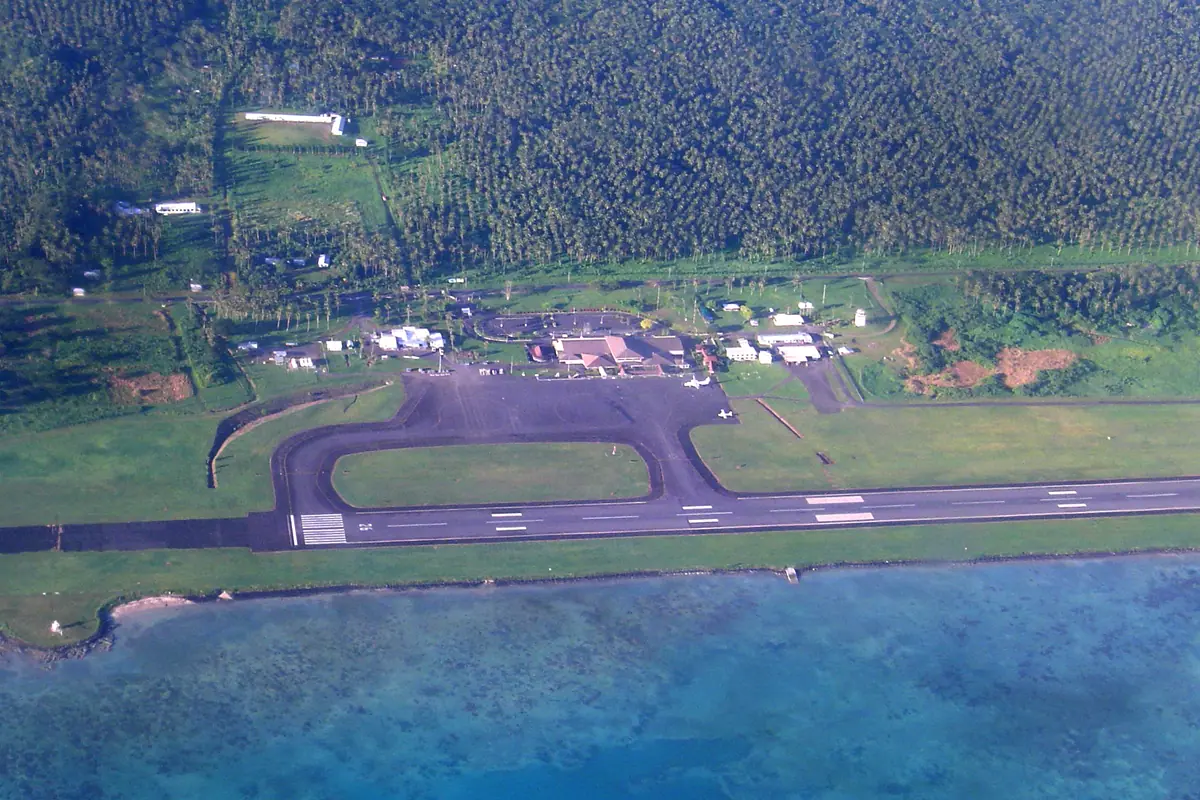
Almost every international flight into Samoa touches down at Faleolo International Airport, a low, single-terminal strip on Upolu's northwest coast about 35 to 45 minutes' drive west of Apia. The airport itself is small and straightforward, but a good number of long-haul arrivals land late at night or in the small hours, so book your first night's accommodation before you fly and arrange a transfer rather than hoping to improvise. Taxis and shuttle vans wait outside arrivals, fares are usually agreed before you set off, and having some Samoan tala in cash makes the first day far easier.
The drive into Apia is your first real taste of the country: villages of open-sided fales, breadfruit and taro plots, laundry strung between palms, and the reef on your right for most of the run. Get there in daylight if you can, because the coast road is slow, curving and full of dogs, children and lumbering buses, and drivers here keep left with speed limits dropping sharply through every village. Check in, eat something simple — a bowl of oka, raw fish cured in coconut cream, or a plate of chop suey from a family-run eatery — and sleep off the flight before you start exploring.
Days 1–2: Apia's Landmarks, the Mulinu'u Peninsula and the Vailima Hills
Begin in the compact centre of Apia, where the clock tower on Beach Road, the crowded Maketi Fou produce market and the bright white Immaculate Conception Cathedral all sit within a few minutes' walk of one another. The market is the best place to get your bearings: piles of taro and green bananas, strings of kava root, brightly printed lavalava cloth and a swarm of taxis outside. Just west, the Mulinu'u Peninsula is the ceremonial heart of the nation, holding the Parliament buildings, the Fale Fono meeting house and the tomb of the Malietoa, with a good view back along the harbour.
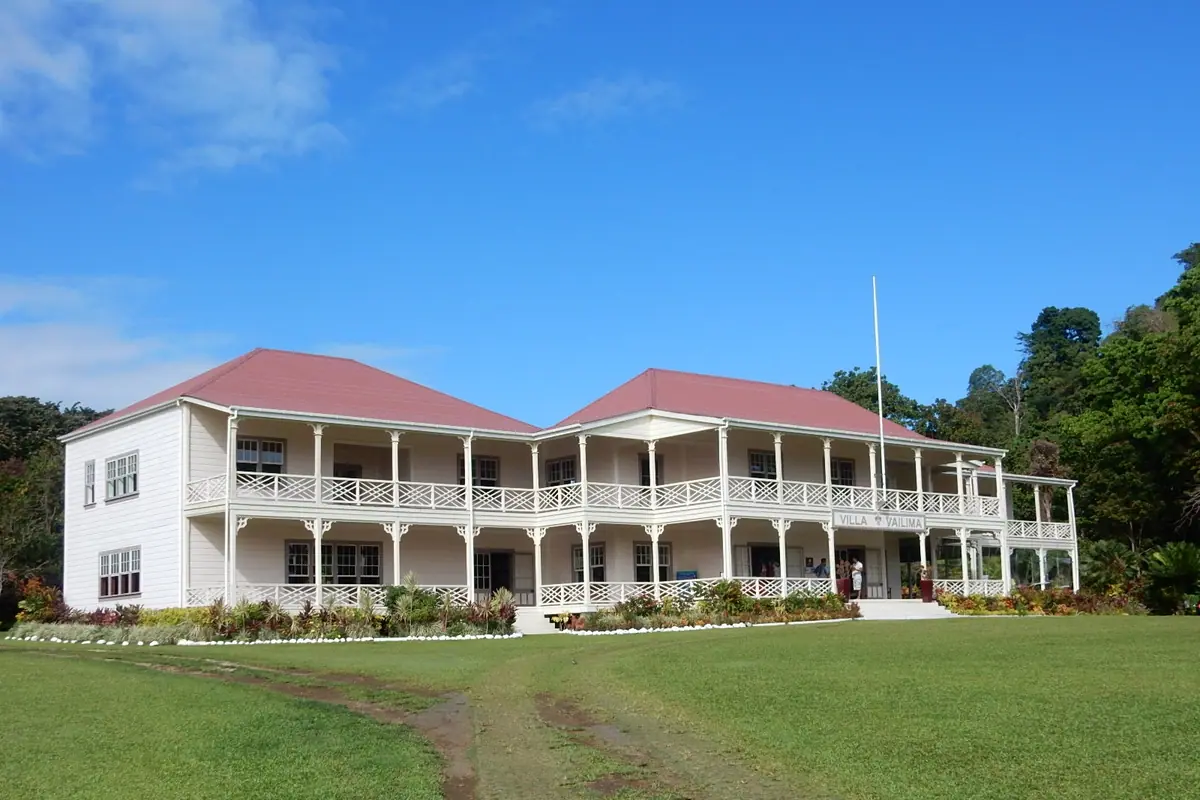
Spend the afternoon four kilometres inland at Vailima, the hill estate where Robert Louis Stevenson spent his last years. The timber house is now a museum, its rooms still holding his furniture, his books and the piano he shipped out from Europe, and the surrounding gardens are thick with frangipani and rainforest birds. Behind the house, the Mount Vaea walking track climbs through dripping forest to his tomb in roughly 45 to 60 minutes — steep, humid and utterly worth it for the view over Apia and the reef line beyond. Finish with a late swim at Palolo Deep Marine Reserve, a short walk east of town, where a marked snorkelling trail loops through coral and shoals of reef fish just offshore.
Evenings in Apia revolve around food and, if you're lucky, a fiafia show of drumming, fire-knife dancing and singing. Two days is right for the capital: enough for the museum, the market, Mount Vaea and a snorkel, without eating into the beaches further along the coast.
Day 3: Piula Cave Pool, Papaseea Sliding Rocks and the Cross-Island Road
Take the north coast road east for a day built around freshwater. Piula Cave Pool at Lufilufi is a spring-fed basin lying inside a lava tube, tucked beneath the grounds of a theological college with the ocean only steps away across the road. The water is cool, deep and glass-clear, and if you float quietly the small fish will come and nibble at your ankles. Modest dress is expected on the college grounds, and a small entry contribution is customary.
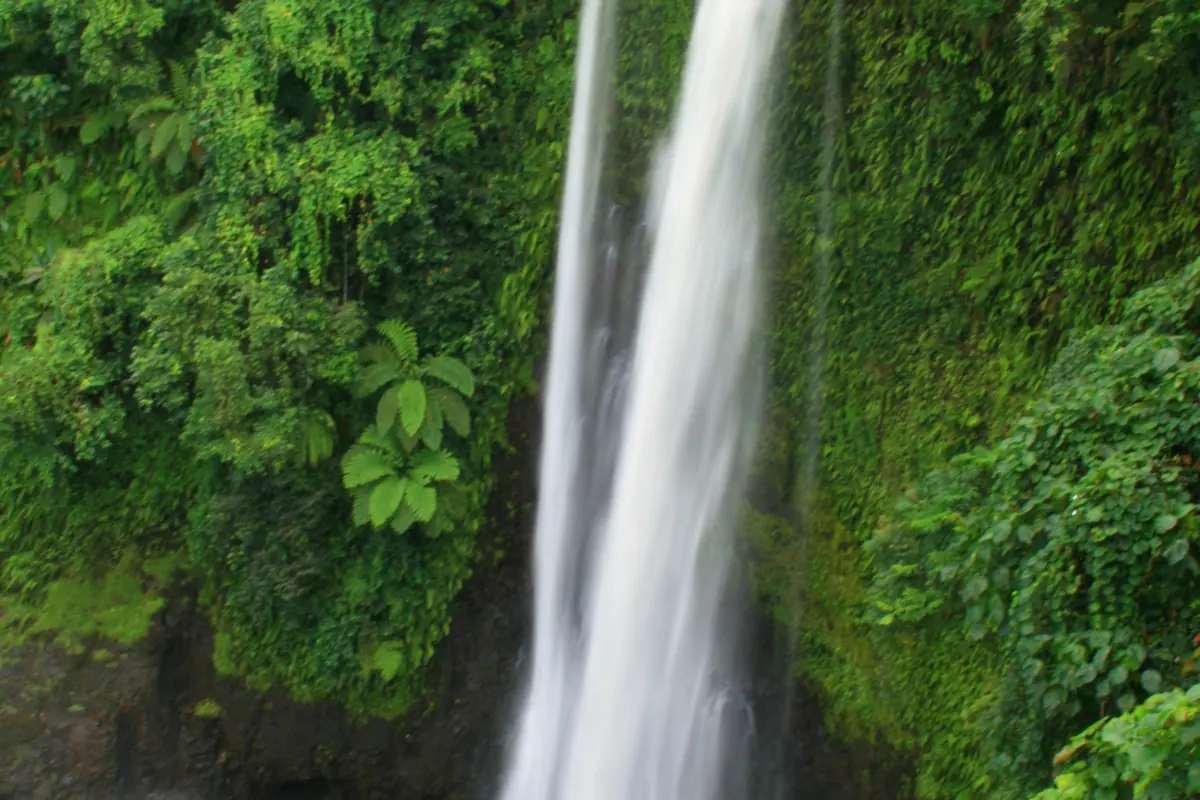
Work your way back via Falefa Falls, a wide, easy-to-reach cascade beside the main road, and Papaseea Sliding Rocks outside Apia, where decades of water have polished a stream bed into smooth chutes that locals and visitors slide down on their backs — check conditions before you commit, and never slide when the water is running hard. If you'd rather stay on foot, the cross-island road cuts through O Le Pupu-Pu'e National Park, Samoa's oldest protected area, where Togitogiga Falls tumbles into a series of swimmable pools surrounded by mossy lava and fern. Old lava cliffs meet the sea on the park's coastal edge, and the whole route makes a satisfying full-day loop back to Apia before dark.
Days 4–5: The South Coast — To Sua Ocean Trench and Lalomanu Beach
Head south on the coast road — allow around two hours from Apia — and make your first stop To Sua Ocean Trench at Lotofaga, arguably Samoa's signature sight. It is a collapsed lava tube some 30 metres deep, filled with seawater and reached by a long, near-vertical wooden ladder that drops you into a green, sunlit pool; the surrounding gardens, sea arches and blowholes make it easy to spend a couple of hours here. Go early, when the light falls straight into the trench and the ladder is quiet.
Continue east to Lalomanu, a long curve of white sand backed by beach fales and one of the most photographed stretches of coast in the Pacific. Offshore lie the uninhabited islands of Namua and Fanuatapu, ringed by shallow reef that is superb for snorkelling and, between August and October, for watching humpback whales pass. Sleep in a beach fale if you can — woven blinds, foam mattress, the reef a few metres away and a sky of stars overhead. On the way back west, break the journey at Vavau with its sheltered swimming bay, or paddle a kayak through the mangroves at Saanapu, where the roots arch over glassy channels and herons stalk the shallows.
Days 6–7: Crossing to Savai'i, Blowholes and the Rainforest Canopy Walkway
Savai'i is the larger island and the quieter one, reached by ferry from Mulifanua wharf, close to Faleolo airport, to Salelologa. The crossing takes roughly an hour to ninety minutes depending on conditions and the vessel; arrive well before departure, expect to reverse a car onto the deck, and sit up top or in the sheltered lounge if the channel is choppy. There is no dependable scheduled air link between the two islands, so treat the ferry as your flight and build your day around it. Base yourself in Salelologa for convenience or in the northern beach village of Manase for sunsets and swimming.
Savai'i rewards a fast, full day of driving. At Taga on the south coast, the Alofaaga Blowholes fire seawater through lava tubes with a boom you feel in your chest — locals sometimes toss coconuts in and watch them rocket skyward. Further west, the Tafua Peninsula Rainforest Preserve protects crater forest above a lava coast, while the Falealupo Rainforest Canopy Walkway swings you out on a suspended bridge above the treetops, close to Cape Mulinu'u, one of the last places on earth to see the sun set each day. Inland, the Afu Aau Waterfall near Palauli pours into a cool swimming basin, and the Sale'aula lava fields still show the raw black rock that buried villages when Mount Matavanu erupted in the early 1900s, with the half-buried church walls the most haunting sight of the trip.
Flying Out: Seasons, Sundays and Practical Notes for the Week
The driest and most comfortable months run from May to October, when the trade winds blow and humidity eases; November to April is hotter, wetter and officially cyclone season, so factor in travel insurance and flexible plans. September brings the Teuila Festival to Apia, a week of dance, carving and canoe racing that is worth arranging your trip around. International departures from Faleolo often leave late at night, and the terminal is small, so check in a full three hours before an international flight, eat beforehand and keep a light layer handy for the air conditioning.
Sunday is genuinely a day of rest here: most shops, markets and restaurants close, buses run rarely, and families head to church in white. Plan a beach day, a long lunch or a drive on Sunday rather than a shopping trip, and if you pass a village during evening prayers, stop and wait quietly until the bell sounds again. Elsewhere, pack reef shoes for the lava and coral, strong sunscreen, mosquito repellent, and modest clothing — shoulders and knees covered, hats off in villages — plus cash for the small entry fees that many village-owned attractions charge. Tipping isn't expected, and the pace of fa'a Samoa, the Samoan way, is something to lean into rather than fight.
Frequently asked questions
Where do flights to Samoa land, and how far is the airport from Apia?
Nearly all international flights arrive at Faleolo International Airport on the northwest coast of Upolu, roughly 35 to 45 minutes' drive from central Apia along the coast road. It's a small single-terminal airport, so allow time for the drive rather than the terminal, and pre-book a transfer if you land at night.
Do I need a domestic flight to reach Savai'i from Upolu?
No. The reliable link is the vehicle ferry from Mulifanua wharf, near Faleolo airport, to Salelologa on Savai'i. The crossing takes about one to one and a half hours, and scheduled inter-island air services have come and gone over the years, so don't build an itinerary that depends on them.
What is the best time of year for a one-week Samoa itinerary?
May to October is the sweet spot: drier, slightly cooler and outside the November-to-April cyclone season. September is especially lively because of Apia's Teuila Festival, though it's also busier. The wet season still works well for a short trip if you're flexible and happy with sudden heavy showers.
Can you see both Upolu and Savai'i in a single week?
Yes, with discipline. Give Apia and the Vailima hills two days, the south coast around To Sua Ocean Trench and Lalomanu another two, then cross to Savai'i for two days covering the Alofaaga Blowholes, Tafua Peninsula and the Falealupo canopy walkway, leaving your final day free for the ferry back and your flight home.
What should I know about Sundays and village etiquette in Samoa?
Sunday is reserved for church and family, so expect shops, markets and most eateries to be closed and buses to be scarce. In villages, dress modestly with shoulders and knees covered, remove hats, ask permission before swimming or photographing, and keep voices low during the evening prayer curfew.