Liechtenstein is a country you can cross in a long morning, yet it fits a fairy-tale princely castle, two of the Alps' quietest ski slopes and wine terraces older than most European capitals inside its 160 square kilometres. Choosing a hotel here is less about star ratings and more about altitude and village: the Rhine valley floor for museums and vineyards, the mountainside for snow, silence and sunrise on the ridge.
Sleeping in a Principality: How Hotels in Liechtenstein Actually Work
Liechtenstein holds roughly forty thousand people across eleven municipalities, so its hotel stock is counted in hundreds of beds rather than thousands. That scarcity shapes every booking: you reserve earlier than you would in a large Alpine city, and you decide between the flat Rhine valley floor — Vaduz, Schaan, Triesen, Balzers — and the mountain villages of Triesenberg, Malbun and Planken several hundred metres above it. The valley gives you restaurants, museums and flat cycling; the mountains give you clean air, snow and a view that starts at your balcony rail.
The country has no airport, which surprises first-time visitors. Most people arrive by train to Buchs or Sargans in Switzerland or to Feldkirch in Austria, then continue by bus; the network is small, punctual and frequent, and many hotels hand guests a guest card that covers local bus travel for the length of their stay. Once you are in, distances collapse — Vaduz to Malbun is about twenty minutes by car — so a single base genuinely covers the entire country, castles included.
Timing matters more than amenities. Mid-June to early October is walking weather, with long light evenings and the vineyards at their best. January to March belongs to Malbun, the only ski resort, where snow is reliable and the slopes stay mercifully uncrowded midweek. May and November are the quiet, misty, cheapest months — good value if you accept that the high trails may still be closed.
Vaduz: Valley-Floor Hotels Below the Princely Castle
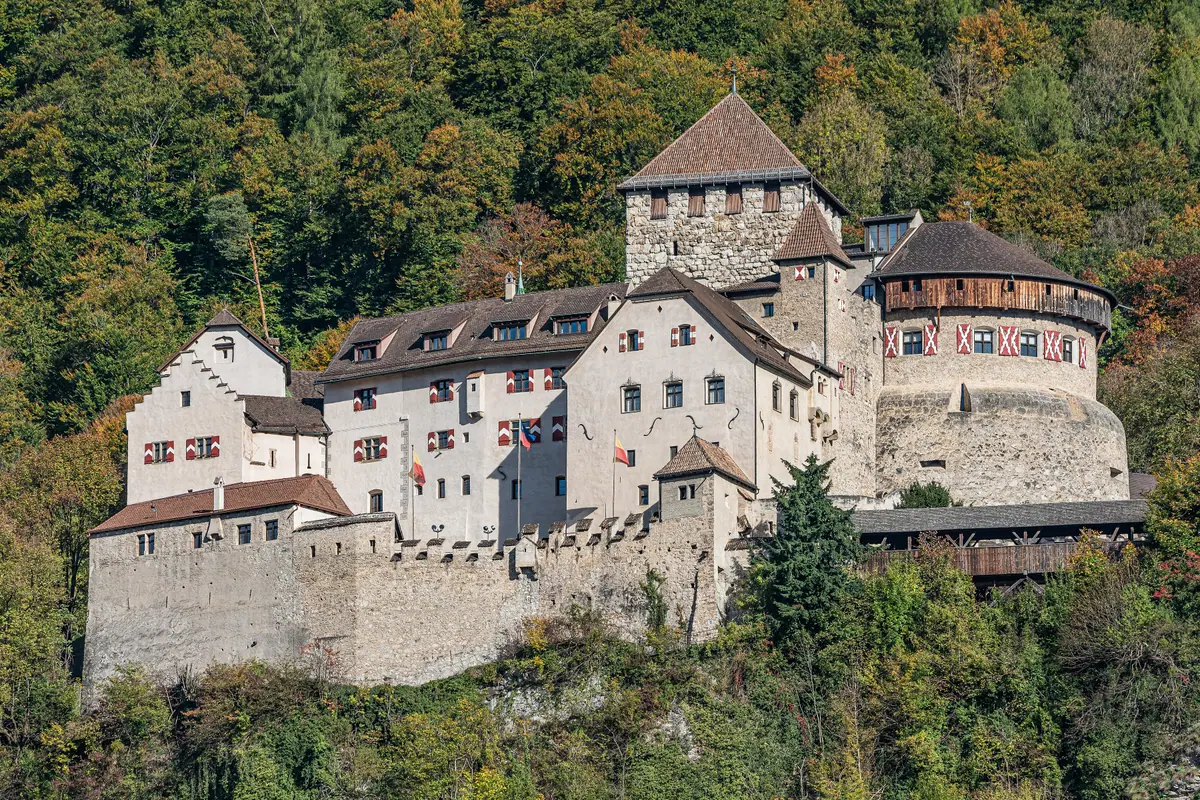
The capital is tiny and completely walkable — the whole Städtle, or main street, takes about twenty minutes end to end — so anywhere you sleep in Vaduz puts the sights on your doorstep. Accommodation ranges from a handsome spa hotel on the wooded slope above town, with the best view of the castle, to small family-run inns and a handful of business-style rooms along the main street. Staying central means you can wander out after dinner for the lit-up castle without thinking about buses.
Vaduz Castle is the emblem of the country, a medieval fortress with twelfth-century origins that has been the residence of the princely family since 1938. It is not open to the public — the family lives there — but the castle path climbs through vineyards and woods to a viewpoint above the rooftops, and the silhouette from the valley floor is the photograph everyone takes home. On National Day, 15 August, the grounds open and the whole country gathers for the celebration.
Everything else clusters within a few minutes of the hotels: St. Florin Cathedral with its slender spire, the Liechtenstein National Museum with its princely collections, the Kunstmuseum's black basalt cube of modern and contemporary art, the Postal Museum, and the treasury where the family's historic treasures are displayed. Below the castle, the Herawingert vineyard slopes down toward the Rhine, and the princely winery pours tastings — this is one of the very few capitals in the world that produces its own wine.
Triesenberg and Malbun: Where Liechtenstein Sleeps Above the Clouds
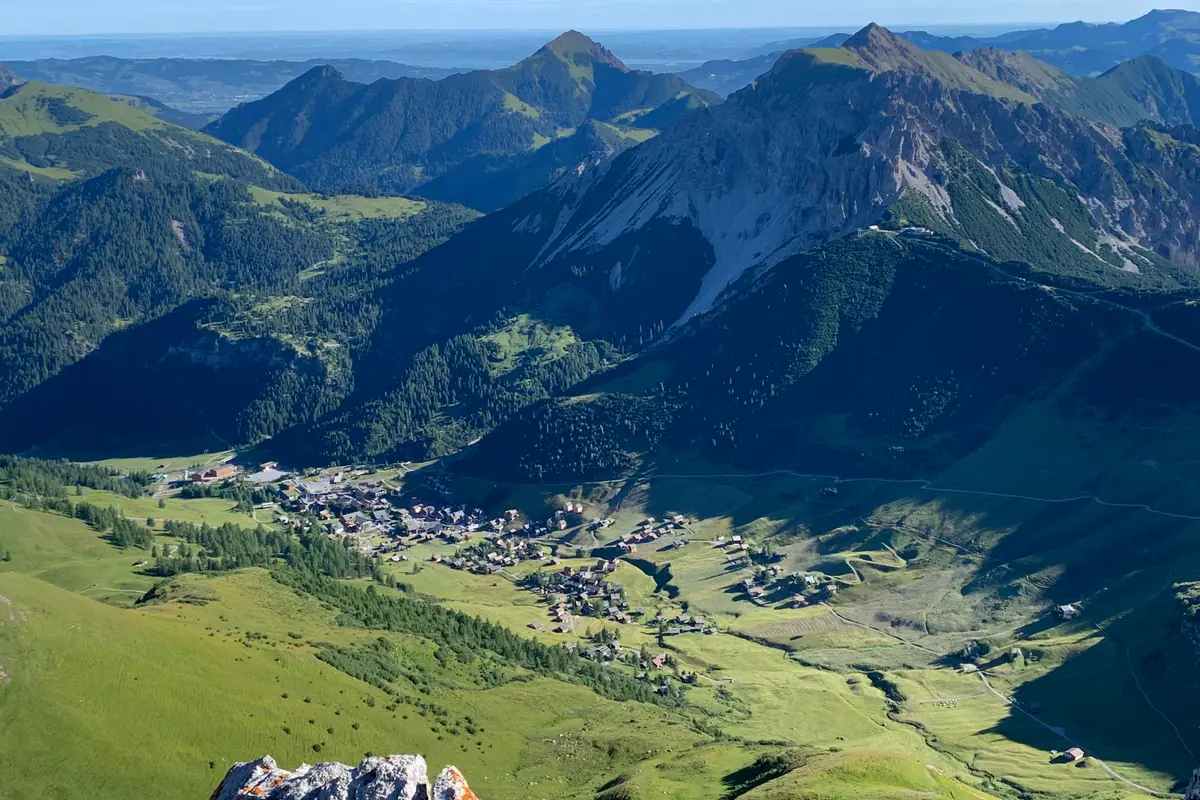
Triesenberg sits at around 900 metres on a sunny terrace above the Rhine valley, a Walser village founded by settlers who came from the Valais in the Middle Ages and left behind a distinct dialect, shingled farmhouses and the excellent Walser heritage museum. The church of St. Josef anchors the village, and on winter mornings the terrace often floats above a sea of fog that blankets Vaduz below — a strong argument for booking a mountain hotel between November and March rather than a valley one.
Higher still, at roughly 1,600 metres, Malbun is the country's only ski resort and refreshingly unpretentious: a compact, sun-catching bowl with gentle beginner slopes, a handful of lifts and ski-in, ski-out lodges run by families who have been there for generations. The Sareis chairlift runs in summer too, opening up walks to the Augstenberg and the ridge above the village, and the road continues to Steg and the quiet Valüna valley for easier valley-floor hiking.
Above Triesenberg begins the Fürstensteig, the classic Liechtenstein ridge traverse beneath the Drei Schwestern, or Three Sisters. It is a proper alpine path with exposure, metal cables in places and roughly four hours of walking, so boots, a head for heights and a settled forecast are essential. Sleep in Triesenberg or Malbun and you are on the trailhead at dawn, long before the day-trippers arrive from the valley.
Balzers, Schaan and the Eschnerberg: Castles, Romans and Quiet Farm Stays
Balzers anchors the southern tip of the country, dominated by Gutenberg Castle, a medieval fortress perched on a rocky outcrop above the village. It houses a small museum and hosts concerts and cultural evenings in summer, and the walk up through the vineyards takes only a few minutes. The village itself is compact and well placed for the Swiss border, Sargans and the southern Rhine, with a scattering of guesthouses that fill quickly in the warmer months.
Schaan is the largest municipality and the country's industrial heartland, which means more conventional business hotels and the best transport links in Liechtenstein — buses converge here and the rail connections at Buchs are a short hop away. It also has genuine sights of its own: the excavated Roman villa, one of the most significant archaeological sites in the Alps, the parish church of St. Peter, and easy access to the Rhine cycle path and the Duxgraben ravine.
North of Vaduz, the low wooded ridge of the Eschnerberg carries the villages of Eschen, Mauren, Schellenberg, Gamprin and Ruggell. This is farm country: prehistoric settlement traces on the hillside, Schellenberg's two castles and its timber-framed Biedermannhaus, and Ruggell's Rhine nature reserve, where gravel banks and side channels attract waders in spring. Guesthouses here are small, quiet and handy for Austria's Feldkirch.
The Must-See List: Landmarks Within Minutes of Any Liechtenstein Hotel
Even a two-night stay can cover the icons. Start with Vaduz Castle and the walk up through the vineyards, then work through the Kunstmuseum Liechtenstein, the National Museum, the princely treasury and St. Florin Cathedral, all within a few streets of one another. Cross the river on the old covered wooden bridge at Vaduz–Sevelen, one of the last of its kind over the Rhine, and follow the Rhine Park paths, where sculpture, gravel banks and a fast green river run the length of the country's western edge.
For landscape, the Liechtenstein Trail is the masterpiece: a long-distance route of around 75 kilometres that links all eleven municipalities, usually walked in three or four comfortable days with luggage moved between hotels. Shorter options include the Fürstensteig beneath the Drei Schwestern, the panorama path from Malbun toward the Augstenberg, and, for the ambitious, a scramble toward the Grauspitz, at 2,599 metres the country's highest point.
The calendar gives you two more reasons to book. National Day on 15 August fills Vaduz with fireworks, music and an open castle, and the whole principality turns out in one place. In February, Fasnacht brings masks and brass bands to the villages, while Advent puts a small, handsome market on the Städtle in Vaduz. September and October are harvest time, when the vineyards below the castle are picked and the wine terraces are at their most photogenic.
Practical Hotel Wisdom: Seasons, Bookings and Small-Country Logistics
Book further ahead than you would expect. With so few beds, summer weekends, the February ski weeks and the nights around National Day sell out months in advance, and several family-run guesthouses close entirely for a few weeks in November and after Easter. Half-board is common in the mountain villages, which is a blessing given how early some kitchens stop serving — if you want a late dinner, eat in Vaduz or check your hotel's hours before you arrive.
On the ground, life runs on the Swiss franc, cards are widely accepted, and Sundays are genuinely quiet: shops shut, many restaurants rest, and the rhythm slows. German is the official language, English is spoken almost everywhere, and tipping is a matter of rounding up rather than calculation. Ask at check-in about the guest card, which typically unlocks free local buses and sometimes discounts on lifts and museums.
Getting around without a car is easy on the valley floor and perfectly feasible up to Triesenberg and Malbun by bus, though your own wheels help for trailheads such as Gaflei and Steg. Pack real hiking boots if the Fürstensteig or the Drei Schwestern are on your list, and remember the local weather trick: the valley can sit under fog while the mountain terraces bask in sun. In winter, that alone is worth the climb.
Frequently asked questions
Which town in Liechtenstein is best for a first stay?
Vaduz suits most first visits: it is walkable, packed with the main museums and the castle viewpoint, and has the widest choice of hotels and restaurants. Choose Malbun if you are skiing, Triesenberg if you want valley views and quick access to the high trails, and Schaan if transport links matter most.
How many days do you need in Liechtenstein?
Two nights covers Vaduz, the castle path, the museums and a short Rhine walk comfortably. Three or four nights let you add a day in Malbun, a section of the Liechtenstein Trail, or a proper hike such as the Fürstensteig without rushing.
Do you need a car to stay in Liechtenstein?
No. Buses connect the valley towns and climb to Triesenberg and Malbun, and guests often receive a card giving free local travel. A car is useful mainly for reaching remote trailheads like Gaflei, Steg and the upper Valüna valley at your own pace.
When is the best time of year to stay in Liechtenstein?
Mid-June to early October is best for hiking, vineyards and long evenings. January to March is for skiing in Malbun. May and November are the quietest and cheapest months, though some mountain trails and guesthouses may still be closed.
Can you visit Vaduz Castle?
The castle is the private residence of the princely family, so interior tours are not offered. You can walk the castle path for the classic view over Vaduz, and the grounds traditionally open to the public on National Day, 15 August. The princely treasures are displayed in the treasury in town.
Plan it — hotels in Liechtenstein
Live search, booked directly with trusted providers.
Sort the rest of your trip
Everything for Liechtenstein, in one place
Transfer in Liechtenstein
Private driver waiting on arrival — no queues, no surprises.
Book a transfer
Things to do in Liechtenstein
Skip-the-line tickets, guided tours and standout experiences.
See experiences
Stay online in Liechtenstein
Travel eSIM — data the moment you land, no roaming bills.
Get an eSIM