Equatorial Guinea is Africa's least-visited mainland destination and one of its strangest, most beautiful: a volcanic island capital of pastel colonial houses, a Caribbean-like archipelago of black-sand coves, and a dense mainland rainforest that still hides forest elephants and lowland gorillas. It is not an easy country to travel, but for the small number of visitors who make it here, the rewards are enormous.
Malabo: A Spanish Colonial Capital on the Rim of a Volcano
Start in Malabo, the capital, sitting on the northern tip of Bioko Island inside a drowned volcanic crater. The city is small enough to walk in an afternoon but has a peculiar, faded grandeur: wooden balconied houses, peeling shuttered facades and a cathedral whose twin neo-Gothic towers are the city's signature silhouette. The Cathedral of Santa Isabel anchors the old centre, a few streets from the Plaza de la Independencia, the palm-lined square where much of Malabo's public life unfolds.
The seafront promenade is the best introduction to the city's rhythm. You can watch container ships and fishing boats in the harbour, look across the water at the hills behind the port, and eat grilled fish in the open-air places that fill up in the evenings. Malabo's market, the Mercado Central, is a loud, colourful education in local produce — plantain, cassava, smoked fish, tropical fruit — and a good place to sample a plate of grilled chicken with fried plantain.
The Estadio de Malabo, one of the country's most striking pieces of modern architecture, sits at the northern edge of town and is worth a look even outside match days. Allow a full day for the capital, more if you plan to use it as a base for excursions up the volcano.
Pico Basilé and the High Road Above Bioko
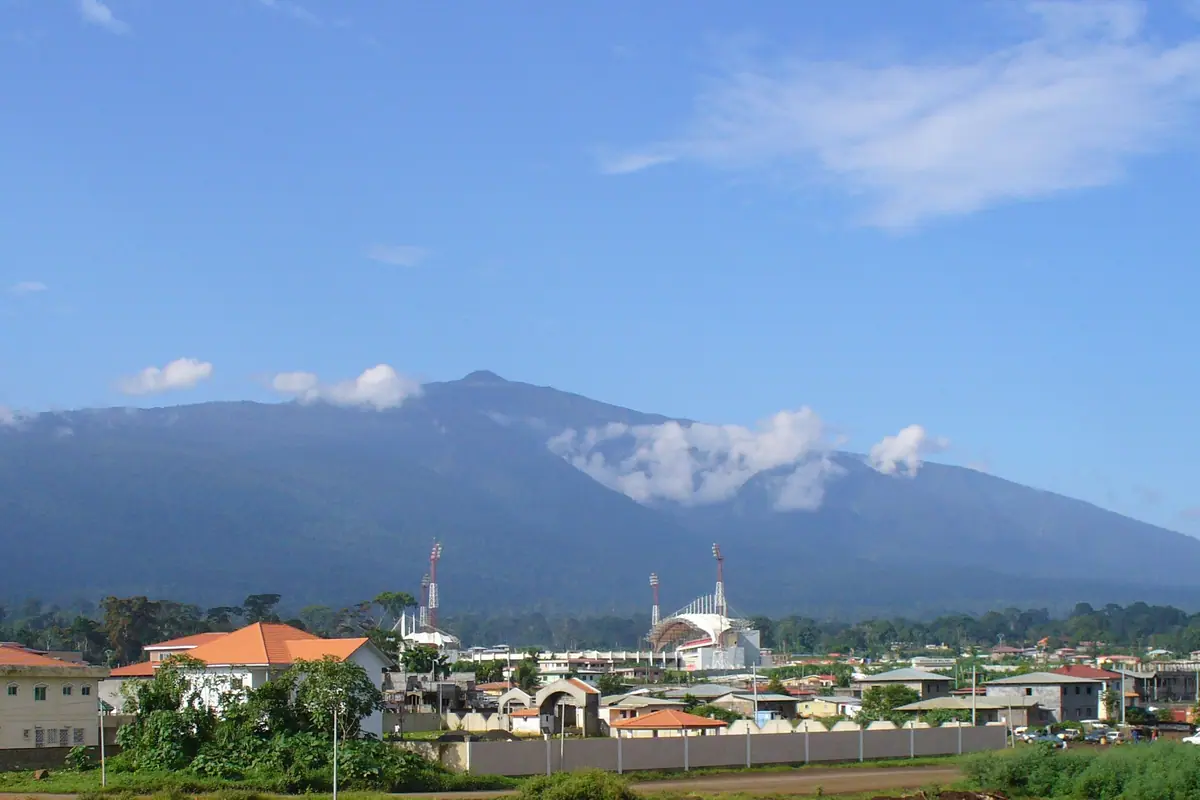
Bioko's spine is Pico Basilé, the country's highest point at just over 3,000 metres, and the single most rewarding day trip from Malabo. A rough but drivable road climbs from the coastal plain through farmland and dripping montane forest, passes the little hillside settlement of Basilé, and eventually emerges above the cloud line into cool, wind-bent heathland. The temperature up here can be fifteen degrees lower than in the capital, so bring a jacket.
The reward at the top is one of the great panoramas of West Africa. On a clear morning you can see the whole northern coastline of Bioko spread out below, the capital's white buildings, the offshore oil installations, and — on exceptionally clear days — the faint blue cone of Mount Cameroon across the water. Go early: clouds usually swallow the summit by late morning, and the road is more comfortable before the heat and rain arrive.
Along the way, watch for monkeys and hornbills in the forest canopy, and for the strange, moss-draped trees of the upper cloud forest. A four-wheel-drive vehicle and a local driver are strongly recommended; independent travellers should arrange transport in advance rather than relying on finding a ride at the base.
The Wild South of Bioko: Ureca, Arena Blanca and the Sea Turtles
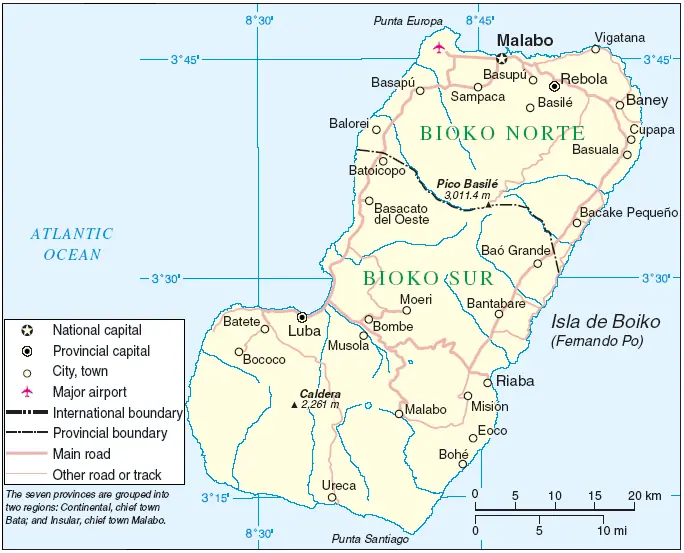
The southern half of Bioko is the country's most spectacular wilderness. Beyond the town of Luba, where the enormous Luba Crater — a collapsed volcanic caldera — drops to black-sand coves and small fishing villages, the road turns to dirt and the island becomes genuinely wild. This is the realm of the drill monkey, one of Africa's rarest primates, along with red colobus monkeys, duikers and an extraordinary density of forest birds.
The highlight is the far south around Ureca and Arena Blanca, a beach of pale sand and volcanic black water that ranks among the most beautiful on the continent. Between roughly November and February, leatherback, green and hawksbill turtles haul themselves ashore here to nest, and local conservation work has made night-time turtle walks one of the country's signature experiences. Sitting on a dark beach listening to the surf and watching a metre-and-a-half-long leatherback dig her nest is unforgettable.
Access to the south requires permits and pre-arranged transport, and the journey is slow and bumpy. Plan on at least two or three days, stay in simple local guesthouses, and go with someone who knows the tracks. Also worth a detour on the way south are the Moka waterfalls, tumbling through farmland and forest in the island's green interior.
Mainland Equatorial Guinea: Bata and Monte Alén National Park
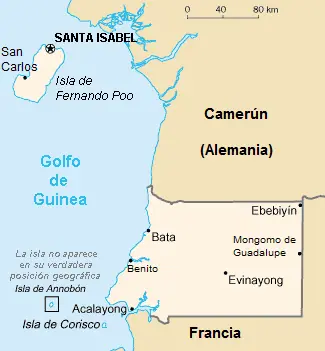
On the mainland — the region known as Río Muni — the anchor is Bata, the country's largest city and commercial engine. Bata is hot, busy and unmistakably West African, with a wide seafront boulevard, a sprawling market, a cathedral, and a nightlife scene that can surprise visitors expecting a sleepy provincial town. It is the natural launching point for the interior and for the coast south towards Mbini, where the river mouth and long empty beaches offer some of the country's easiest coastal escapes.
Inland, Monte Alén National Park protects roughly 2,000 square kilometres of dense Atlantic rainforest. It is the best place in the country to look for forest elephants, lowland gorillas, chimpanzees and mandrills, though sightings are far from guaranteed — this is deep, thick, noisy jungle, and animals are shy. The park's network of trails and clearings, and the calm waters of Lake Atoc, make it the most rewarding trekking destination on the mainland.
Practicalities matter here. Reaching the park involves long drives on rough roads from Bata, and you will need a vehicle, a guide and permits arranged ahead of time. Bring more water than you think you need, expect mud in the wet months, and treat the journey itself — passing through villages, cocoa groves and palm-oil plantations — as part of the experience.
Annobón and Corisco: The Far Islands
Annobón is the country's strangest and most remote possession: a small volcanic island far out in the Gulf of Guinea, settled centuries ago by Portuguese- and Spanish-speaking islanders whose culture and Creole language set them apart from the rest of the country. Reaching it is an expedition in itself, by a long, infrequent boat crossing or a small-plane flight, and few travellers ever make it. Those who do find crater lakes such as Lago A Pot, dramatic cliffs, seabird colonies, and some of the clearest water in the region.
Closer to the mainland, Corisco is a low, palm-covered island just off the coast near the Gabon border, with a sleepy, decaying colonial-era settlement and long empty beaches. The tiny neighbouring islands of Elobey Grande and Elobey Chico were once the administrative heart of Spanish Río Muni, and their abandoned buildings have an eerie, romantic quality. Boat trips from the mainland can be arranged locally, but schedules are unpredictable.
These islands are for travellers with time, patience and a tolerance for improvisation. There is very little tourist infrastructure, few places to stay, and no reliable timetable for anything. Go with a spirit of expedition rather than expectation, and bring cash — cards are of limited use outside the main cities.
When to Go, Permits and Getting Around
Equatorial Guinea is hot and humid year-round, so the deciding factor is rain. The driest months on Bioko generally run from December through March, which also coincides with the turtle-nesting season in the south. On the mainland, December to February and June to August tend to be drier. The heaviest rains fall roughly from March to May and again from September to November, when roads turn to mud and flights are more likely to be disrupted.
Most visitors need a visa arranged before arrival, and travel outside the main cities — particularly to national parks and the south of Bioko — typically requires permits and advance organisation. Photography is restricted around government buildings, ports, airports and military sites, and police checkpoints on roads are common, so carry identification at all times. A local guide or fixer makes an enormous difference to how smoothly a trip runs.
Domestic flights link Malabo and Bata in well under an hour and are far preferable to the long, slow coastal route; smaller airstrips serve a handful of other towns. Spanish is the main language, with Fang, Bubi and Annobonese widely spoken, and French increasingly useful near the borders. The currency is the Central African franc, and cash is essential. A realistic first visit — Malabo, Pico Basilé, a couple of days in the south of Bioko, and Bata with Monte Alén — needs around ten days to two weeks.
Frequently asked questions
Do I need a visa to visit Equatorial Guinea?
Most nationalities need a visa arranged in advance through an embassy or consulate, and applications usually require proof of accommodation and sometimes an invitation or letter of support. Travel to national parks and some rural areas also requires permits, so arrange these before you arrive rather than trying to sort them locally.
What is the best time of year to visit Equatorial Guinea?
December to March is generally the driest and most comfortable period, especially on Bioko, and it coincides with sea-turtle nesting in the far south. On the mainland, June to August is a second drier window. March to May and September to November bring the heaviest rain, muddier roads and more travel disruption.
How long do I need in Equatorial Guinea?
Ten days to two weeks is a sensible minimum if you want to see both the island and the mainland. That allows time for Malabo, a day trip up Pico Basilé, two or three days in the wild south of Bioko, a flight to Bata, and a trekking excursion into Monte Alén National Park.
Where can I see wildlife in Equatorial Guinea?
The south of Bioko, around Ureca and Arena Blanca, is best for sea turtles and primates including the rare drill monkey. On the mainland, Monte Alén National Park offers the country's best chance of forest elephants, gorillas and chimpanzees, although sightings require patience and a knowledgeable guide.
Is it easy to travel between Malabo and Bata?
Domestic flights cover the distance in under an hour and are the practical option; the coastal alternative by road and boat takes days and is far less reliable. Flights are limited in frequency, so book well ahead and keep some flexibility in your itinerary in case of cancellations.
Plan it — experiences in Equatorial Guinea
Live search, booked directly with trusted providers.
Sort the rest of your trip
Everything for Equatorial Guinea, in one place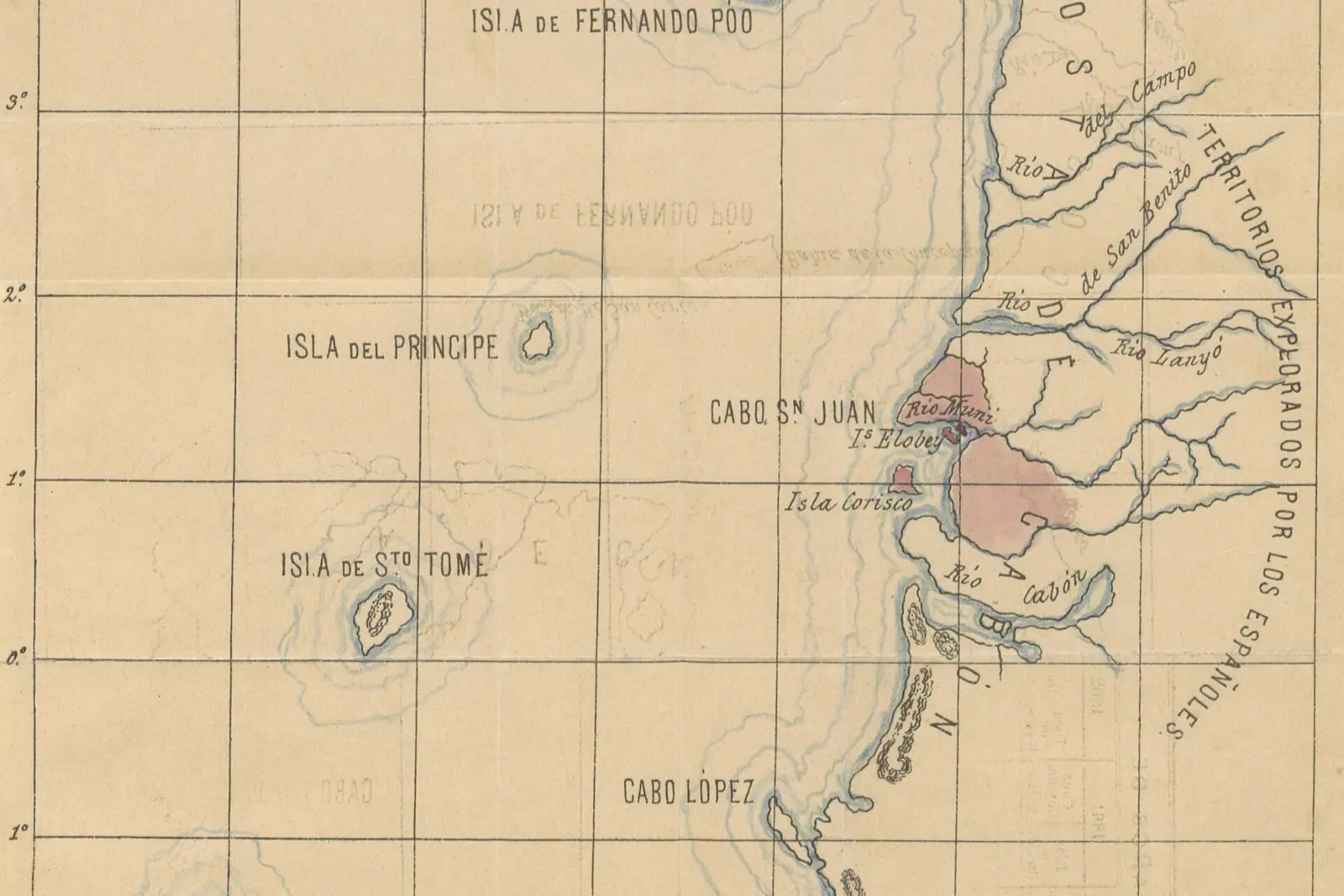
Stay in Equatorial Guinea
Hotels, guesthouses and apartments — compared in one search.
Search hotels
Transfer in Equatorial Guinea
Private driver waiting on arrival — no queues, no surprises.
Book a transfer
Stay online in Equatorial Guinea
Travel eSIM — data the moment you land, no roaming bills.
Get an eSIM