Belize is a country you can cross in half a day, yet it hands you a barrier reef, a Maya ruin on a hilltop and a jungle river full of howler monkeys before lunch. The trick to loving it is picking the right patch of it to sleep in — sandy island, southern beach village or inland rainforest lodge — and letting the rest be day trips.
How Belize's Sleep Zones Actually Work
Belize is small enough that your choice of bed is also a choice of scenery. Roughly speaking, the country splits into four lodging belts: the northern cayes and atolls, where you wake to the reef; the southern coast around Placencia and Hopkins, where sandy beaches meet Garifuna villages; the western Cayo district, all river valleys and jungle lodges within reach of the big Maya sites; and the northern mainland plus Belize City, which is mostly about practical stopovers, ruins and birding lagoons. Most travellers combine two of these zones rather than trying to see everything from one base.
Timing matters more than most people expect. The dry season runs roughly December to April, bringing clear water, blue skies and the highest room rates on the islands — Christmas, New Year and Easter week sell out months in advance. May and June are shoulder months with warm seas but patchy seaweed along some beaches. The green season, from June through November, means lower rates, lush jungle, short afternoon downpours and the theoretical risk of a storm, which peaks in September and October. Dive and snorkel visibility stays rewarding well into the wet months off the outer atolls.
Accommodation styles range widely. On the islands you'll find thatch-roofed beach cabanas, small family-run guesthouses with ceiling fans, and polished resorts with docks and dive shops attached. Inland, the signature stay is a jungle lodge — wooden cabins set in botanical gardens or above a river, with howler monkeys as an alarm clock. Caye Caulker leans budget and barefoot; Ambergris Caye and Placencia offer the widest mid-range choice; the Cayo lodges sit at the comfortable-to-upscale end.
Ambergris Caye and San Pedro: Reef-First Living
Ambergris Caye is Belize's largest island and its busiest holiday address, a 25-mile sandbar fringed by the barrier reef. San Pedro, the only town, is a compact grid of sandy streets, golf carts, seafood grills and dive shops, with resorts strung north and south along the beach. Almost everyone's first booking decision here is north or south of town: the north is quieter and pricier, the south is closer to restaurants and the airstrip, and the town itself suits travellers who want to walk everywhere.
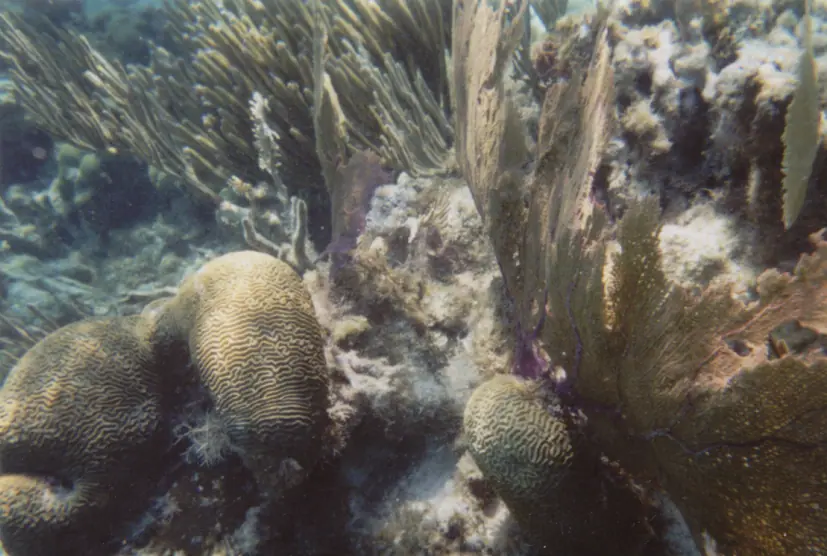
The reef is the reason you're here. Hol Chan Marine Reserve, a short boat ride away, is a protected channel where stingrays, nurse sharks, turtles and clouds of snapper glide over coral in water shallow enough for nervous first-time snorkellers. Neighbouring Shark Ray Alley delivers exactly what its name promises. Further north, Bacalar Chico National Park and Marine Reserve marks the border with Mexico and protects mangrove channels and a slice of remote reef, while the west-facing beaches near Secret Beach have become the island's sunset and swimming hangout.
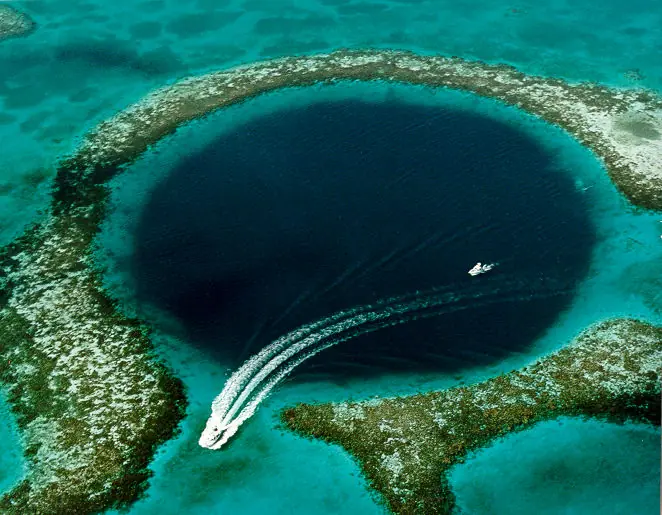
Most visitors also use San Pedro as a launchpad. Boat trips run out to the Great Blue Hole in Lighthouse Reef, a near-perfect circle of deep blue surrounded by coral, with stops at Half Moon Caye and its resident red-footed boobies — a long day, but the classic Belize experience. Closer to home, a water taxi across to Caye Caulker takes around half an hour, which makes an easy change of scene without repacking.
Caye Caulker and the Outer Atolls: Go Slow Islands
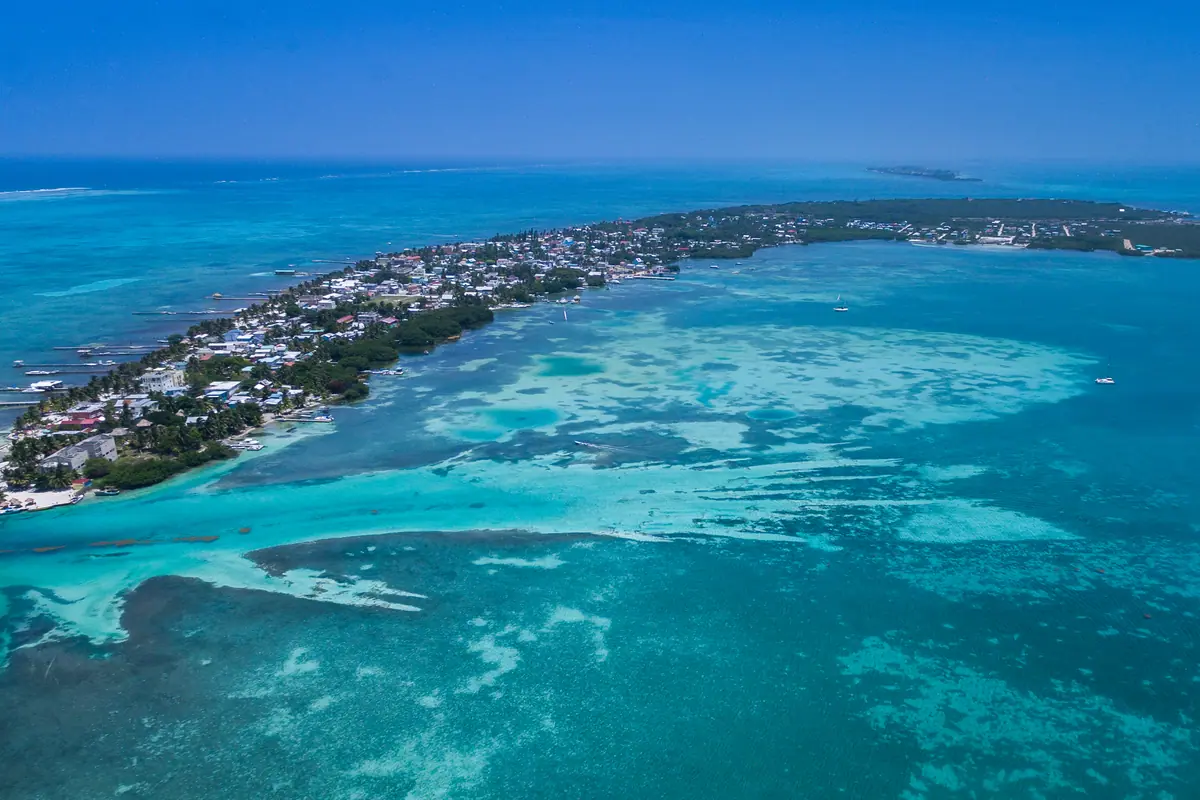
Caye Caulker is what people picture when they say Belize: a flat, car-free island of three sandy lanes, bicycles, wooden guesthouses and a bar-lined split at the northern end where the island broke in two during a hurricane and locals turned it into a swimming hole. Rooms here are simpler and cheaper than on Ambergris, ranging from basic fan-cooled rooms to small boutique beachfront hotels, and the whole place is walkable in twenty minutes. It suits slow mornings, snorkel sails and sunsets rather than nightlife.
The outer atolls are where serious divers and escapists stay. Turneffe Atoll, Lighthouse Reef and Glover's Reef sit beyond the main barrier, each with a handful of small resorts and liveaboard moorings. Lighthouse Reef contains both the Great Blue Hole and Half Moon Caye Natural Monument, a nesting island for boobies and frigatebirds with a historic lighthouse at its tip. Turneffe's flats and walls attract anglers and divers, while Glover's Reef, further south, is a marine reserve with crystal lagoons.
For day-trip snorkelling from the cayes, Laughing Bird Caye National Park off the southern coast is a tiny, protected islet with a coral garden that's ideal for beginners. If you're basing yourself on Caye Caulker, book accommodation early for the dry season, since room counts are small and the best beachfront places fill up fast over holidays. Everything else — dive boats, water taxis, bike rentals — can be arranged on arrival.
Placencia and Hopkins: Southern Beaches with Garifuna Roots
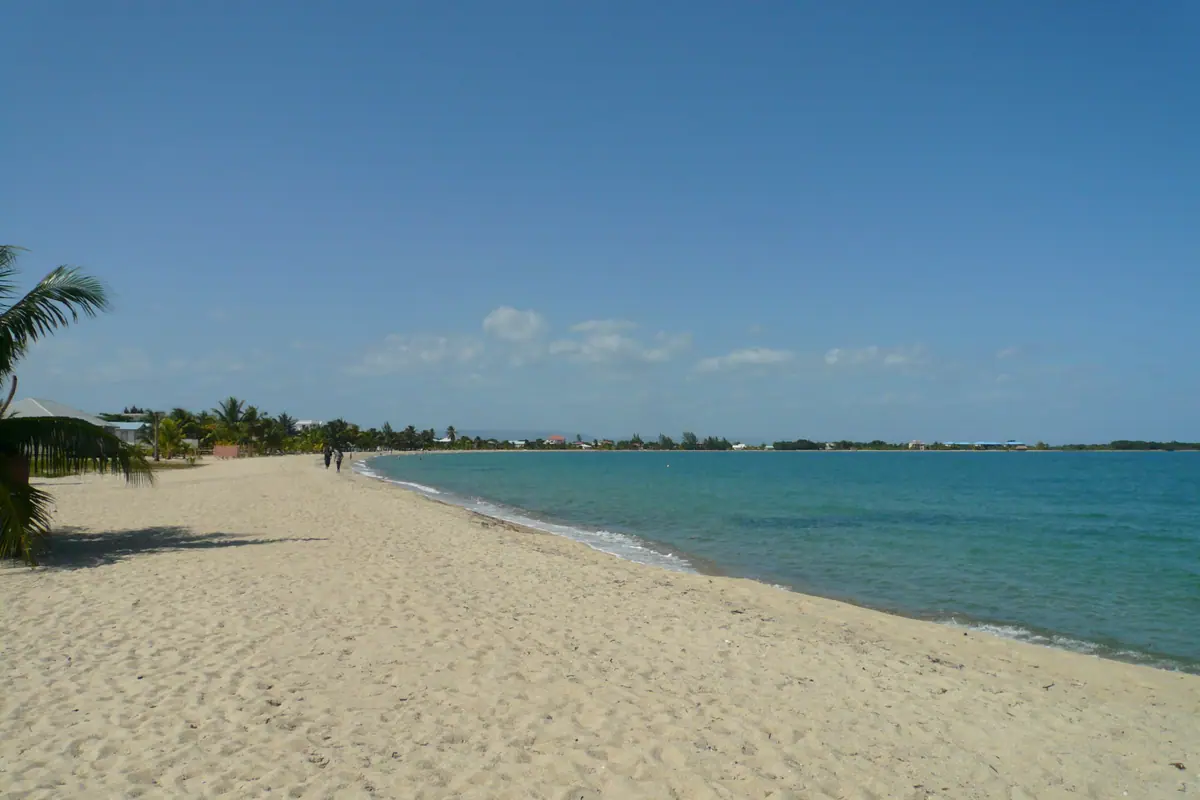
The Placencia Peninsula is a 16-mile strip of sand with the Caribbean on one side and a lagoon on the other, ending in Placencia village — famous for its narrow concrete footpath, known simply as the sidewalk, which runs past guesthouses, bars and cafes to the tip. Accommodation spreads from the lively village to quieter Maya Beach and Seine Bight, a Garifuna community, so you can choose between walking distance to dinner and near-total seclusion. Placencia is the main southern gateway to the reef, with dive and snorkel trips to Laughing Bird Caye and Glover's Reef.
Inland from the coast, Cockscomb Basin Wildlife Sanctuary is the world's first jaguar preserve, a vast protected watershed of steep forested ridges where you're more likely to see tracks than the cats themselves. Hikers head for the waterfall trail and the lookout over the basin, and tubing down the South Stann Creek river is a favourite half-day when water levels allow. The sanctuary is an easy drive from Hopkins and a longer but doable one from Placencia.
Hopkins itself is a Garifuna village with a strong cultural identity — drumming, punta rhythms and cassava bread are part of daily life, and several small guesthouses along the beach are locally owned. From here you can reach South Water Caye and Tobacco Caye, small islands on the reef, in under an hour by boat. If you continue south toward Punta Gorda in Toledo, the Maya ruins of Nim Li Punit and Lubaantun sit in the hills and see a fraction of the visitors of the western sites.
San Ignacio, Belmopan and the Cayo: Jungle Lodges and Maya Cities
The Cayo district is Belize's inland heart, a landscape of river valleys, limestone hills and citrus farms centred on the easygoing town of San Ignacio. Hotels here range from budget guesthouses in town, walkable to the Cahal Pech ruins on the hill above, to riverside lodges strung along the Macal River where you can swim off a dock before breakfast. Belmopan, the small capital, is mostly a transit point rather than a place to stay.
West of San Ignacio, Xunantunich is the region's showpiece: you cross the Mopan River on a hand-cranked ferry, then climb the huge pyramid known as El Castillo for views that reach into Guatemala. Deeper in the Chiquibul Forest, Caracol is Belize's largest Maya city, with towering structures and a jungle setting so remote that the drive is part of the adventure. North of town, Actun Tunichil Muknal — the ATM cave — involves wading, swimming and scrambling to reach a ceremonial chamber of crystallised skeletons, one of the most memorable archaeological visits in the region.
The Mountain Pine Ridge Forest Reserve offers a different inland day: Rio on Pools, with its natural rock pools and small cascades, Big Rock Falls, and the long drop of Thousand Foot Falls. Roads here are rough, especially after heavy rain, so a four-wheel-drive vehicle or a guided tour is the sensible move. Dry-season months from December to May give the most reliable access to ruins, caves and forest tracks, and jungle lodges often offer the best value in the green season when the forest is at its most vivid.
Belize City, the Northern Coast and Birding Lagoons
Belize City is rarely anyone's dream stay, but it earns its place as a transit hub: water taxi terminals run express boats to the cayes, the international airport sits just outside town, and the old capital has a compact historic core worth a few hours. The Museum of Belize occupies a former colonial prison, the Swing Bridge over Haulover Creek still swings, and Fort George area has the small maritime museum and waterfront views. Most travellers spend a night before or after a flight, staying in guesthouses or boutique hotels near the water.
North of the city, Altun Ha is the most accessible major Maya site in the country and yielded the famous carved jade head, now a national symbol. Further north, Crooked Tree Wildlife Sanctuary protects a network of lagoons that fill in the wet season with jabiru storks, herons and kingfishers — birders often base themselves in the village of Crooked Tree or in Orange Walk, using slow boat trips up the New River to reach the riverside ruins of Lamanai.
Continue north and the pace drops again. Corozal, on the bay near the Mexican border, has the small sites of Santa Rita and Cerros, plus a quiet seaside promenade, while Sarteneja is a fishing village with a strong sailing and manatee-watching tradition. If you're driving the Western Highway to San Ignacio, the Belize Zoo makes a worthwhile stop — a small sanctuary dedicated to native species, from tapirs to jaguars, kept in forested enclosures rather than cages.
Frequently asked questions
When is the best time to visit Belize?
December to April is the dry season and the most reliable window for reef trips, Maya ruins and forest hikes, though it's also the priciest and busiest. The green season from June to November brings afternoon showers, lower room rates and lush jungle, with diving still good on the outer atolls. If you want both value and decent weather, aim for late November or early May.
Should I split my stay between the cayes and the jungle?
Yes — it's the classic Belize itinerary and the two experiences are only a few hours apart. Three or four nights on Ambergris Caye or Caye Caulker followed by three or four nights in the Cayo district around San Ignacio covers reef snorkelling, Maya ruins and jungle lodges without constant packing. Domestic flights between the coast and the interior take under half an hour; shuttle drives run two to three hours.
How do I get between the islands and the mainland?
Water taxis connect Belize City with Caye Caulker and San Pedro several times a day, taking roughly 45 to 75 minutes, with a shorter hop between the two islands. Small domestic flights are quicker and pricier. On Ambergris Caye and Caye Caulker, boats, bicycles and golf carts replace rental cars entirely.
Which area is best for diving and snorkelling?
Ambergris Caye gives the easiest access to Hol Chan Marine Reserve and Shark Ray Alley, while the outer atolls — Turneffe, Lighthouse Reef and Glover's Reef — offer the country's clearest walls and the Great Blue Hole. Caye Caulker and Placencia both run affordable snorkel trips to nearby protected cays, making them good bases if you'd rather not commit to a dedicated dive resort.
Do I need a rental car in Belize?
Not on the cayes, where golf carts and bikes are the norm. In the Cayo district a rental car helps for reaching Caracol, Mountain Pine Ridge and the more remote lodges, since roads are rough and public transport is limited, but guided shuttles and tours cover the same ground if you'd rather not drive. Speed bumps are everywhere on the highways, so allow more time than the map suggests.
Sort the rest of your trip
Everything for Belize, in one place
Transfer in Belize
Private driver waiting on arrival — no queues, no surprises.
Book a transfer
Things to do in Belize
Skip-the-line tickets, guided tours and standout experiences.
See experiences
Stay online in Belize
Travel eSIM — data the moment you land, no roaming bills.
Get an eSIM